Nōmanji Kofun: An Early Kofun-Period Burial Mound in Chiba, Japan
Site at a Glance
- Popularity
- Low
- Country
- Japan
- Primary era
- Classical
- Eras represented
- Classical
- Civilizations
- Unclassified
- Site type
- Burial
- Remains
- Burial Mound
On this page7 sections
History
Nōmanji Kofun is a fourth-century burial mound in Chōnan, Chiba Prefecture, Japan. Built during the early Kofun period, an ancient Japanese era named for its large burial mounds, it probably predates the second half of the century. Its date is also associated with the first half of the regional Kusakari II archaeological phase.
Regional importance
Nōmanji is among the earliest known early-period burial mounds on the Pacific side of the Bōsō Peninsula. Together with the later Toyohara burial mound, 1.5 km to the northwest, it helps researchers understand the region’s political situation. Two small round and two small square burial mounds are also grouped nearby, although their relationship to Nōmanji is unclear.
Investigations
An investigation in 1947 involved archaeologist Goto Shuichi and Meiji University’s Archaeology Research Laboratory; its findings were reported in 1949. A 1995 survey examined the mound’s perimeter, and the Chōsei District Cultural Properties Center, later called the Sōnan Cultural Properties Center, reported the survey in 1998.
Remains
Mound and burial deposits
Form and setting
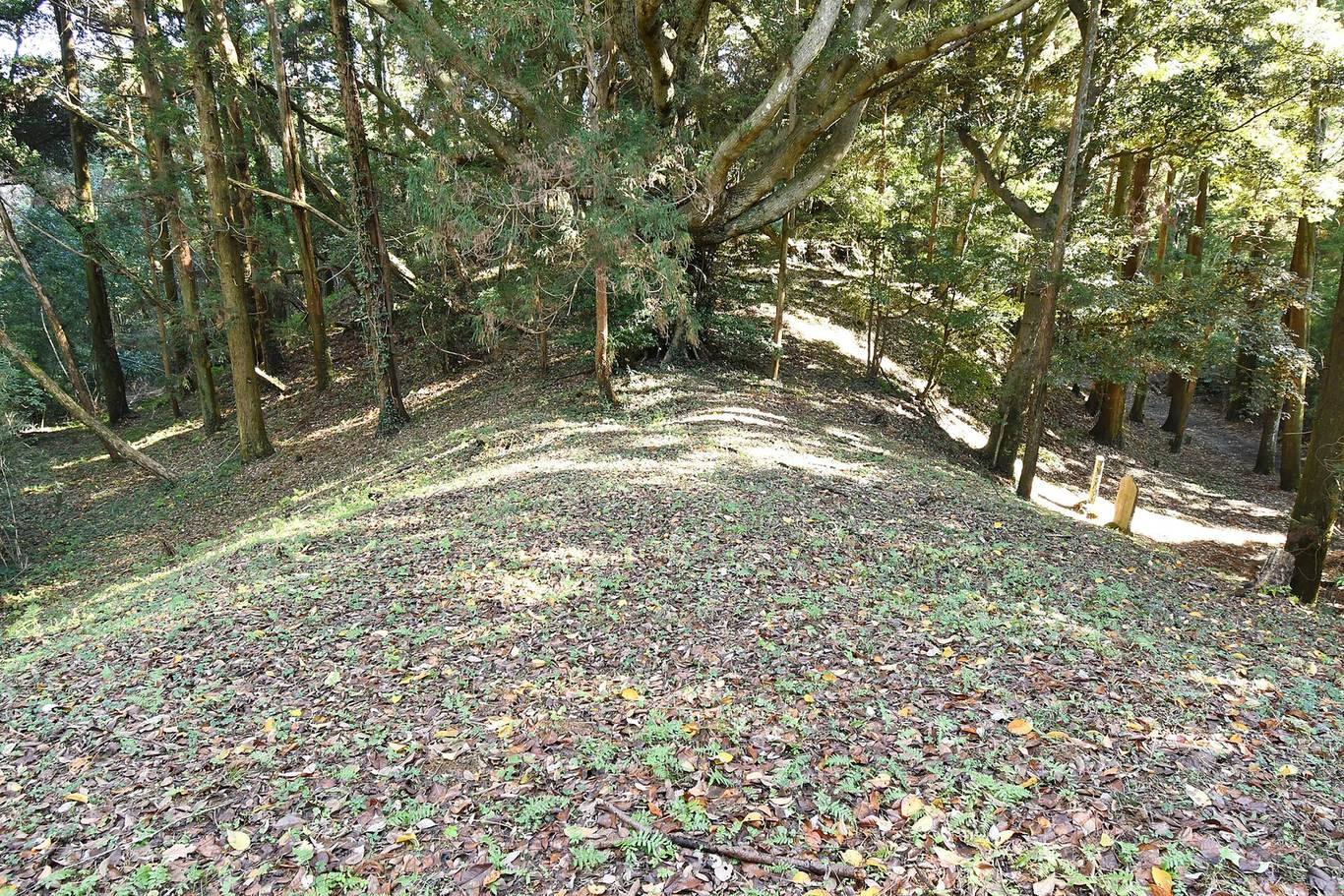
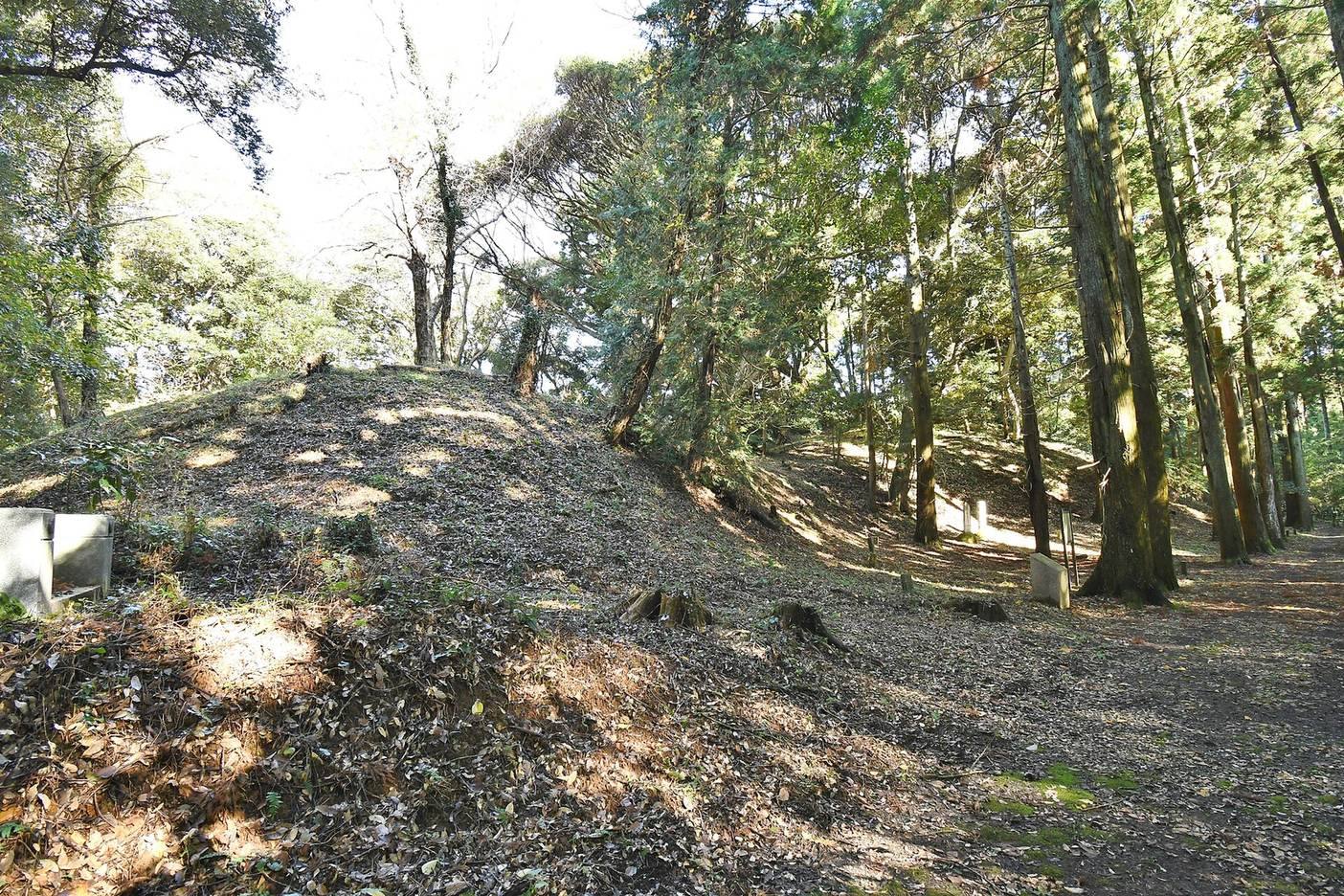
The mound stands on a hill west of the meeting point of the Habu and Chōrakuji rivers, tributaries of the Ichinomiya River, in central Chiba’s Sotobō region. It is keyhole-shaped, with a rounded rear and a projecting rectangular front that faces west. The mound measures 73.5 m in length and reaches 7 m in height at its rear circular section. Most of it is earthen, while part of the base was constructed differently. A shallow, depression-like feature lies at the foot of the rear section. Although the mound was once read as having square front and rear sections, it is now interpreted as front-square, rear-circular.
Burial and offerings
A charcoal outer coffin lies at the summit of the rear circular section, aligned lengthwise with the mound. Measuring 7.5 m by 2 m, it has an elongated oval upper surface and a sloping, boat-like base. Charcoal covered a wooden coffin within it. Bronze mirrors, personal ornaments, weapons, and agricultural tools were recovered from inside the burial enclosure. Fragments of Haji pottery, an ancient Japanese earthenware, were found broken above it. These included pedestal dishes, vessel stands, and jars with perforated bases, and are thought to relate to funerary rites. Finds from the mound are held and displayed at the Meiji University Museum in Tokyo.