Schalksburg in Württemberg: A Medieval Castle Site in Germany
Site at a Glance
- Popularity
- Medium
- Country
- Germany
- Primary era
- Medieval
- Eras represented
- Medieval, Modern
- Civilizations
- German, Holy Roman Empire
- Site type
- Military
- Remains
- Castle
On this page7 sections
History
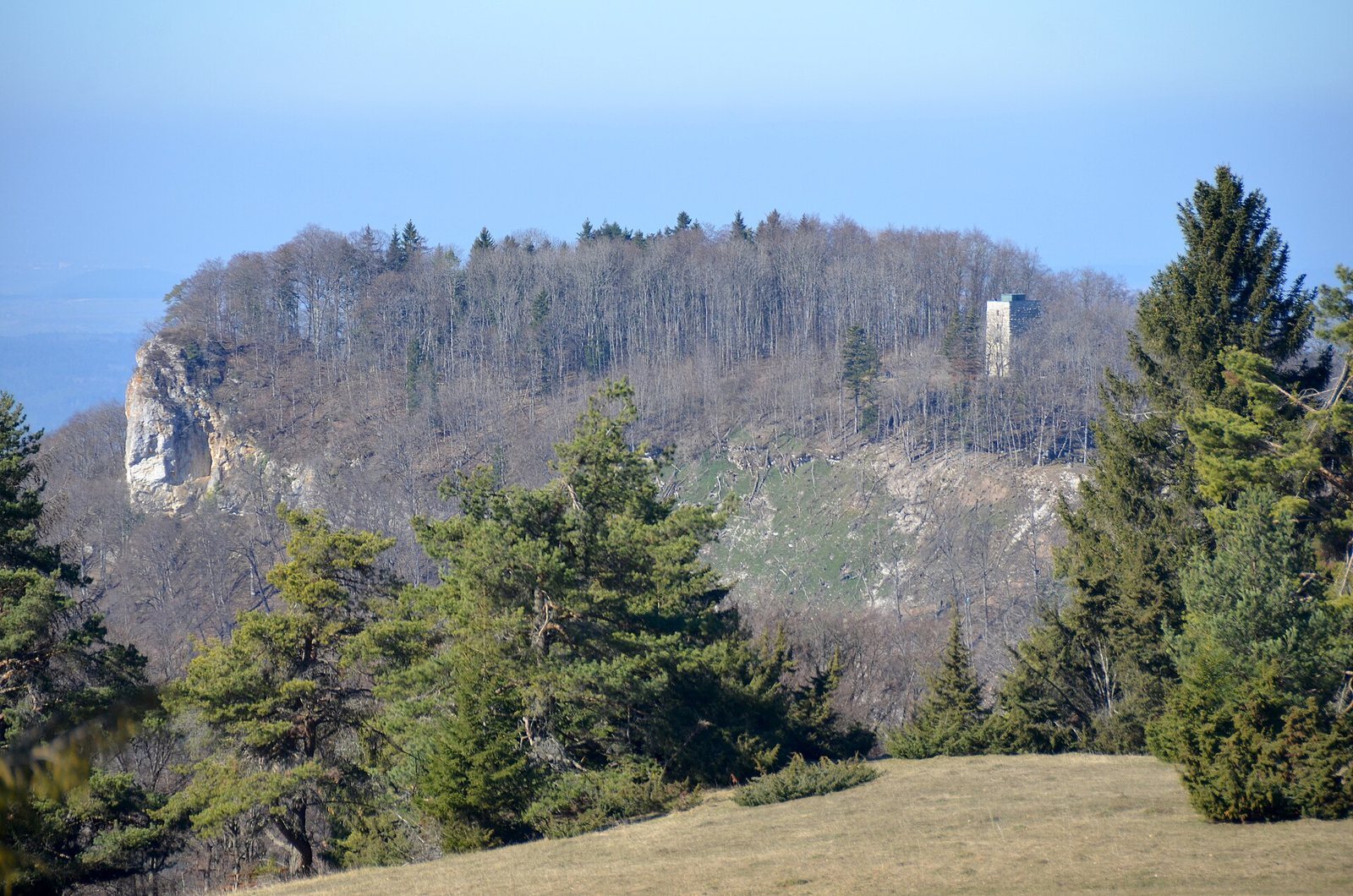
Schalksburg in Württemberg is a medieval castle site on Steinberg, between the Albstadt districts of Burgfelden and Laufen, Germany. Its castle complex dates to 1100 and later served at times as a residence of the Zollern-Schalksburg branch of the House of Hohenzollern, a German ruling dynasty.
Early Settlement and Noble Ownership
Settlement traces reach back to the Bronze Age and the La Tène period, an Iron Age culture. Fortifications may have stood here before AD 900. The Counts of Veringen held the castle until 1262, and by 1266 it was in the possession of the Counts of Zollern. Count Friedrich V of Zollern made the first documented mention of it that year.
Zollern-Schalksburg and Württemberg
After the Hohenzollern line divided in 1288, Friedrich I, known as the Younger, took up residence at Schalksburg. The castle later became associated with the Zollern-Schalksburg branch of the family.
In 1403, after the death of his only son, Count Friedrich V sold the lordship of Schalksburg, along with Balingen and 17 other settlements including Onstmettingen, to Count Eberhard III of Württemberg for 28,000 gulden. Friedrich V died in 1408, bringing the Zollern-Schalksburg line to an end. The transfer gave rise to the Hirschgulden legend, which claims that only one gulden was paid. Gustav Schwab and Wilhelm Hauff retold the story; Hauff included it in his novella The Inn in the Spessart, where a compass-maker recounts the castle’s origins.
Conflict, Demolition and Later History
In 1464, Count Jos Niklas I of Zollern destroyed Schalksburg on Württemberg’s behalf during a feud with Hans von Rechberg. The castle was rebuilt the following year. During the German Peasants’ War, a series of uprisings in German-speaking lands from 1524 to 1526, peasants from Pfeffingen and Dürrwangen besieged and captured it.
The castle was demolished in 1557 after falling into disrepair. By 1624, the site was described only as a castle site. Between 1957 and 1960, an observation tower was built on the remains of the medieval keep, with assistance from American army helicopters. The nearby settlement of Burgfelden takes its name from Schalksburg; its coat of arms shows the castle as a dividing line and uses the black-and-white colors associated with the Zollern lords.
Remains
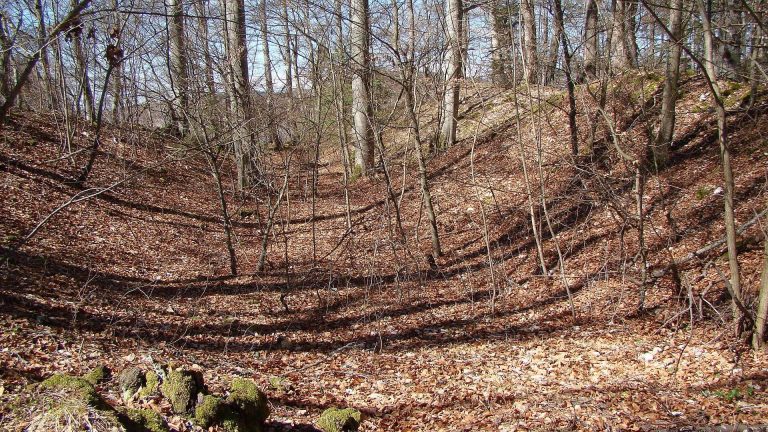
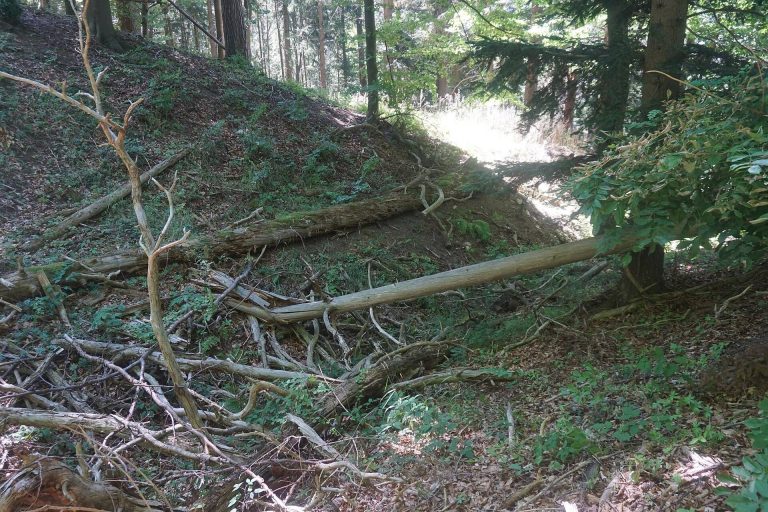
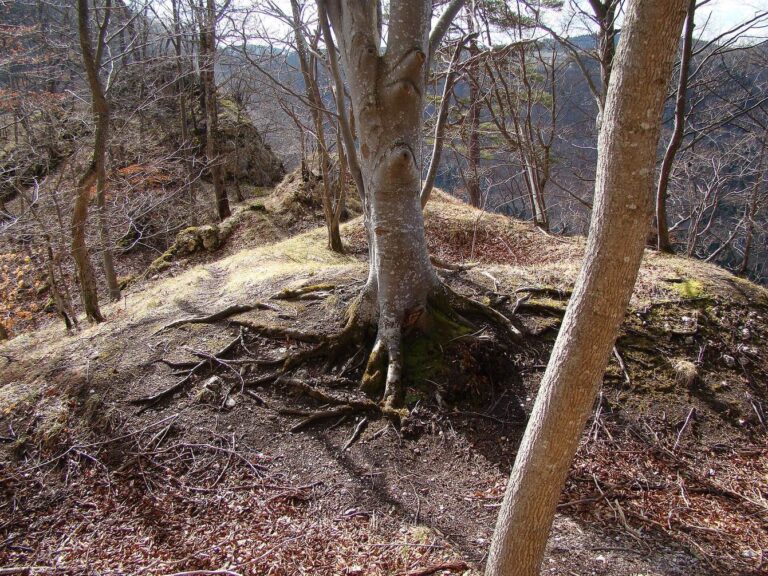
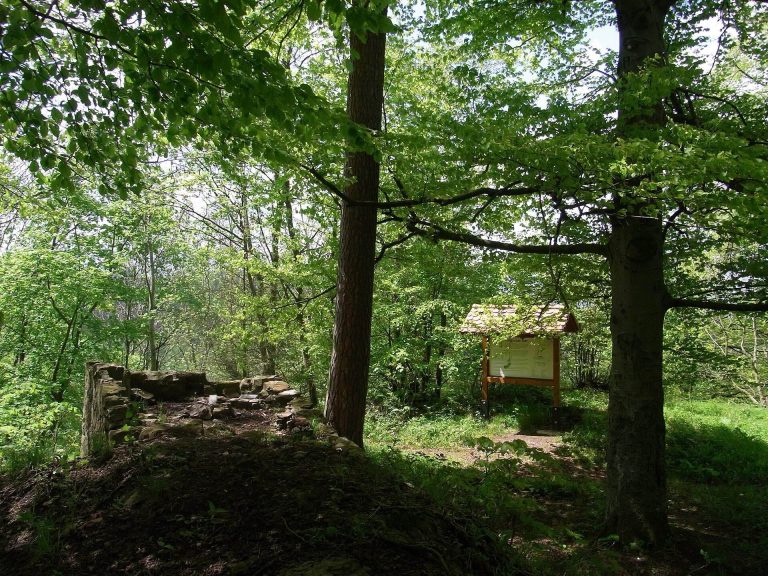
The hilltop site occupies the outermost tip of Steinberg at 910 metres above sea level. In the 14th century, the castle covered three hectares, making it among the largest castle complexes by area on the Swabian Alb. Its plan was isosceles, meaning it had two equal sides, with the Old Castle in the western part. The masonry includes small cut blocks, regular squared blocks, and blocks with projecting faces.
The Keep and Observation Tower
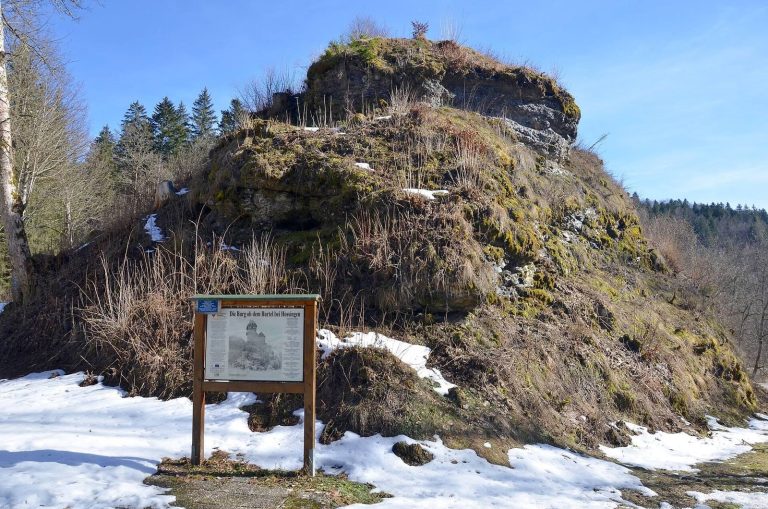
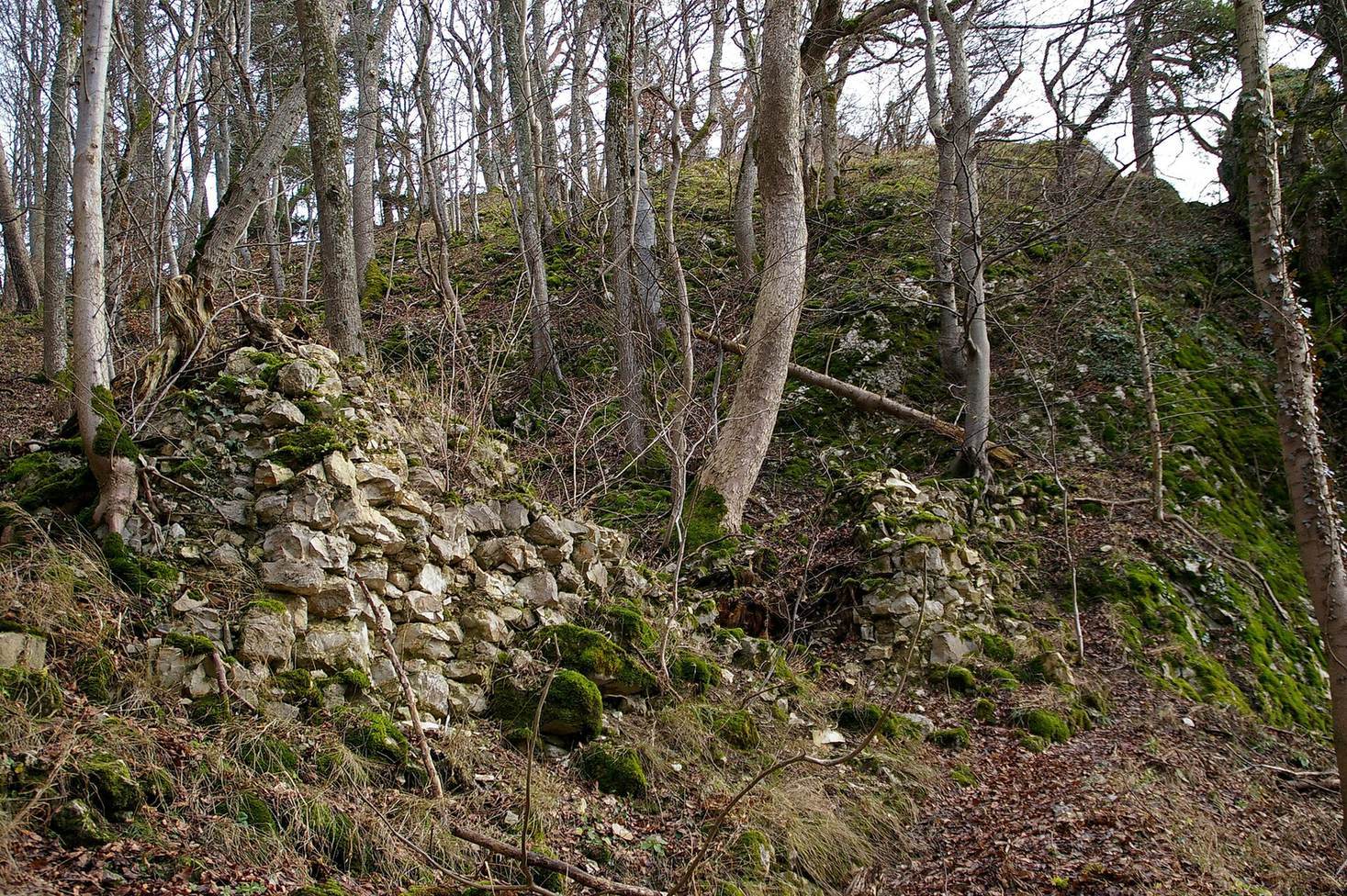
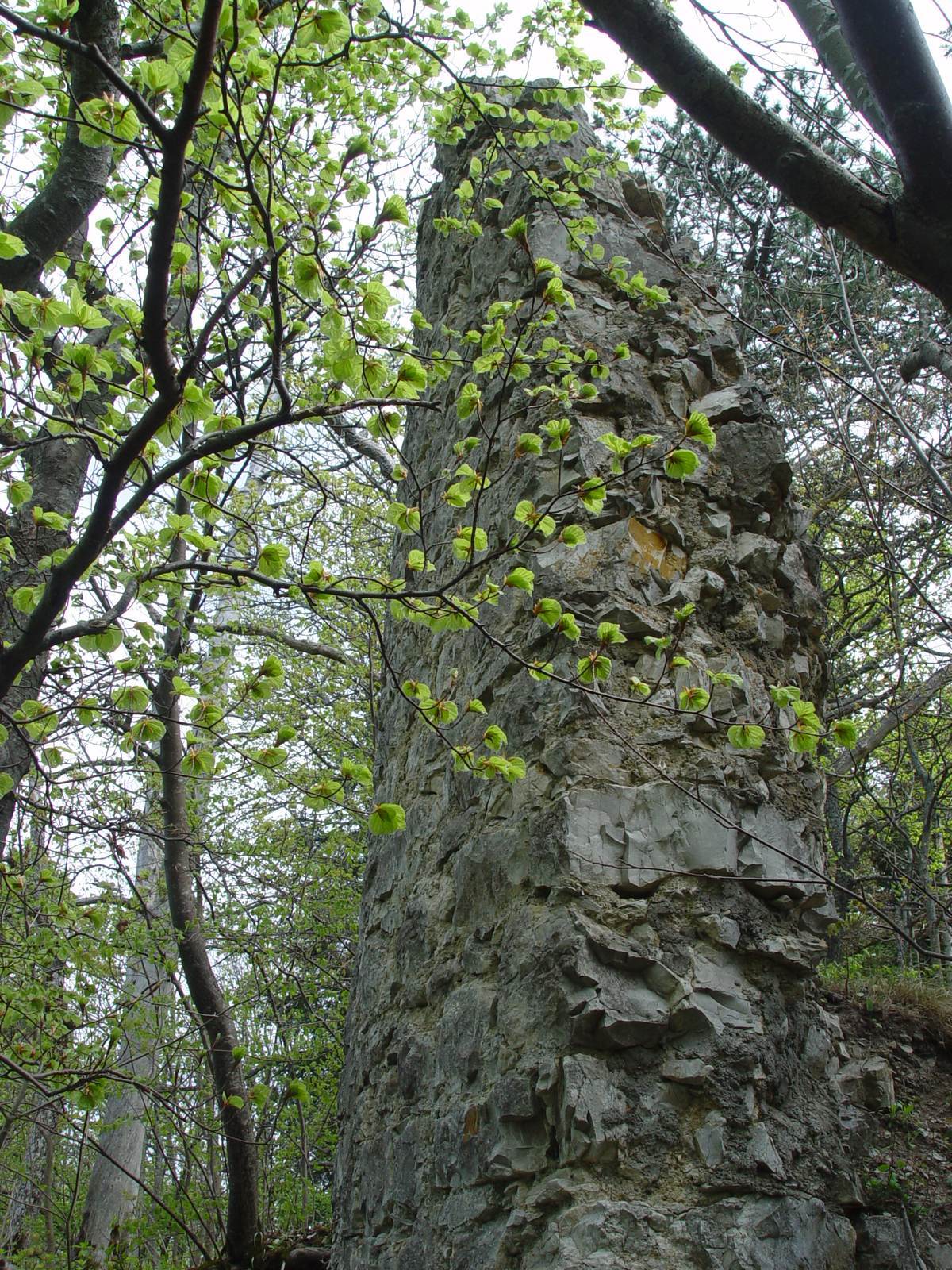
In the southern part of the site, surviving medieval keep walls preserve original masonry to a height of up to 3.50 metres. The keep stood on a base measuring 7.7 by 7.5 metres, with walls 2.75 metres thick. The observation tower now stands above the keep’s remains on the former castle grounds.
Archaeological Finds
Ceramic sherds from the site include material from the Middle Bronze Age and the late Bronze Age Urnfield period. Finds also represent the Hallstatt and La Tène Iron Age cultures, as well as the Roman period.