Nieuil Château: A Troubadour-Style Château in France


Site at a Glance
- Rating
- 4.6
- Popularity
- Low
- Country
- France
- Primary era
- Modern
- External website
- Open
- Eras represented
- Early Modern, Modern
- Civilizations
- French
- Site type
- Domestic
- Remains
- Castle
On this page7 sections
History
Nieuil Château is a historic château in France, rebuilt in the nineteenth century in the troubadour style, a revival of idealized medieval architectural forms. Its origins reach back to the reign of Francis I, when the French king, who ruled from 1515 to 1547, maintained a hunting lodge at the site.
The earlier château and its owners
The earliest known lord of Nieuil was Bernon Jaubert, an écuyer, a title often translated as esquire, who was recorded in 1467. A first château was built during the reign of Francis I. From the sixteenth through the eighteenth century, the estate belonged to the Green de Saint-Marsault family.
In 1724, Suzanne Green, Lady of Nieuil, married Jean Perry, a knight and lord of Montmoreau. The Perry family subsequently owned the château until the French Revolution, when the estate passed out of their possession.
The Dampierre rebuilding
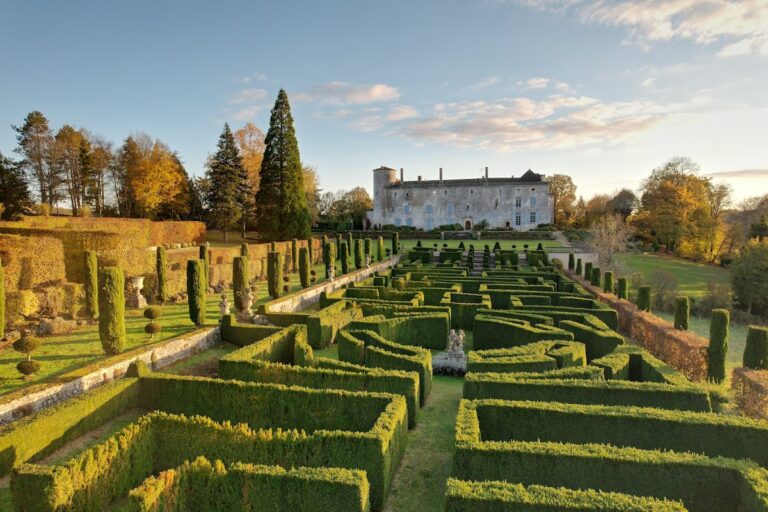
Count Guillaume-Guy de Dampierre purchased the estate in 1883 and completely rebuilt the present château with the assistance of Alexandre Mignon, an architect from Charente. The new building was erected on the formal level grounds, or parterre, of the former château. Only one tower from the earlier building survived this transformation.
In 1900, Guy de Dampierre planted the Brénanchie vineyard on the estate, a vineyard known locally by that name. The château entered a new phase in 1937, when it became one of the first French châteaux converted into a hotel under the Fougerat-Bodinaud family.
Modern uses and protection
Optical Center purchased Nieuil Château in 2022 for use as a place of retreat and renewal for its employees. Its current destination is a seminar centre. The château has been registered as a French historic monument since 2014, a legal heritage-protection designation for a building or site of historical or architectural interest. In July 2023, the courts ordered a preventive criminal seizure affecting the château.
Remains
The former plan and surviving tower
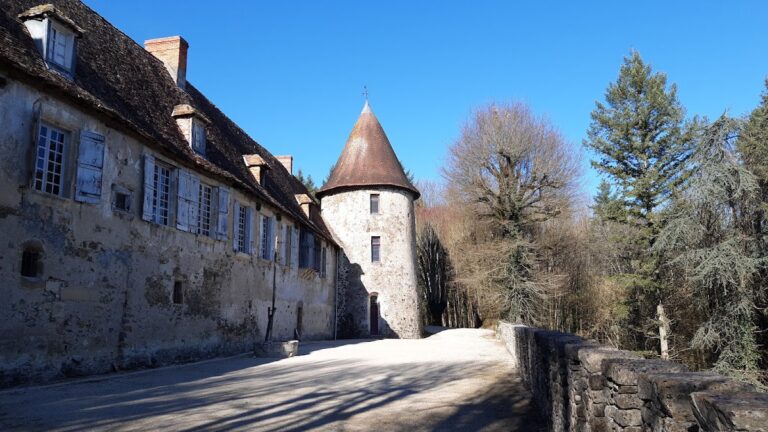
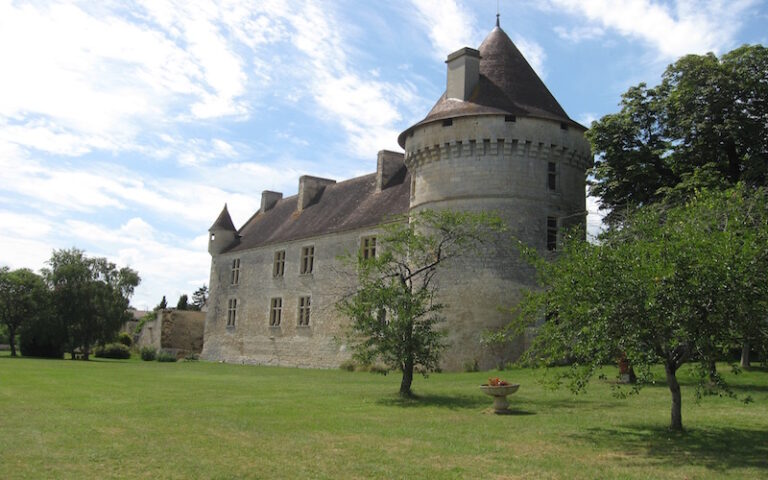
The layout of the earlier château is preserved in the 1818 cadastral record, an official land and property register usually accompanied by plans. It consisted of two wings set at right angles and was surrounded by basins, a configuration also associated with the present château. To the north of the current building stands a round, crenellated tower. It is the surviving part of the former château and retains the medieval architectural features later echoed by the nineteenth-century rebuilding.
The present château and surrounding waters
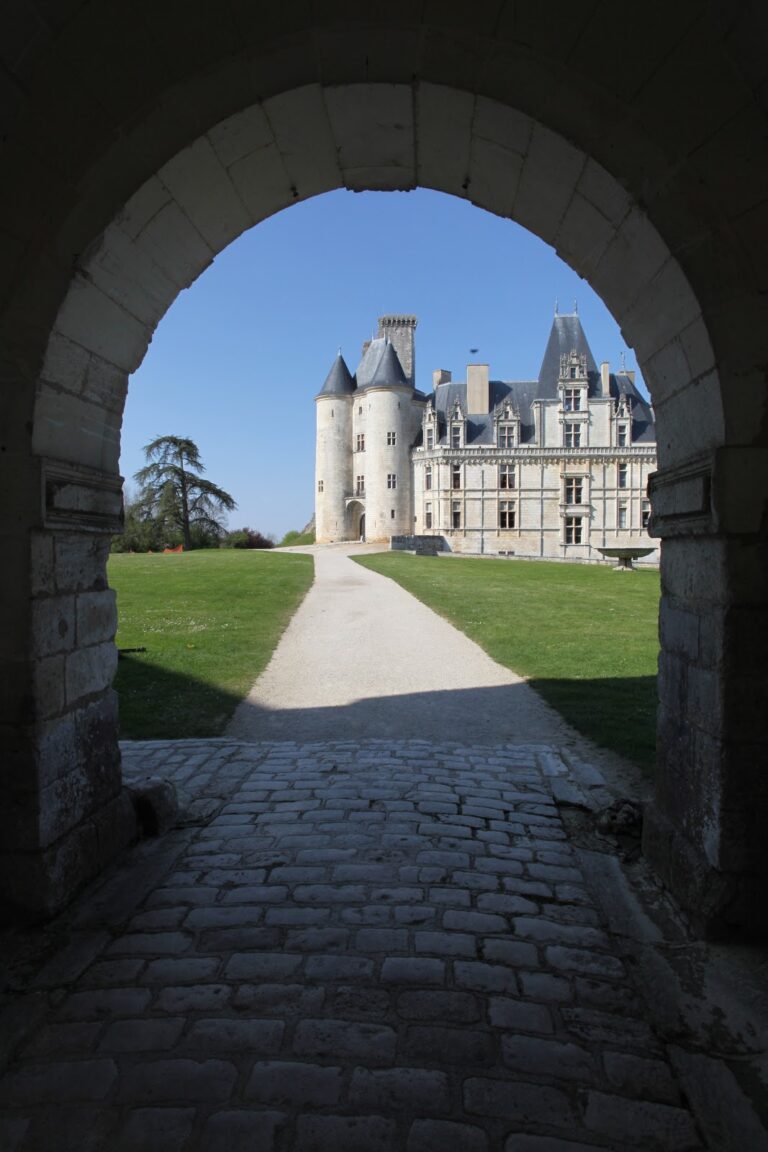
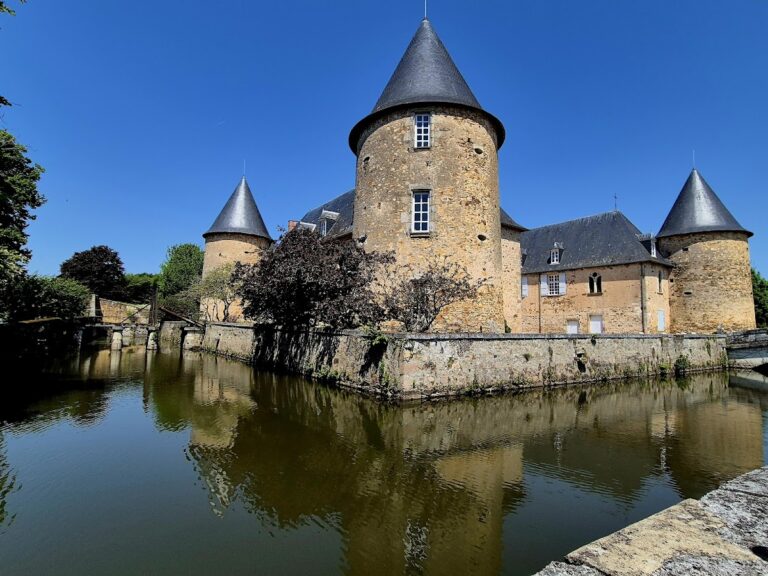
The present château is a nineteenth-century building in white limestone, with steep roofs covered in slate. A basin surrounds it on three sides, to the north, west, and south, preserving a water setting connected with the earlier arrangement. Within the private estate, the Étang de Nieuil lies 500 metres south of the château. The pond was formerly associated with a bar-guinguette, an informal waterside café and dance venue.
Nearby sites