Niederaltaich Abbey: A Benedictine Monastery in Bavaria
Site at a Glance
- Popularity
- High
- Country
- Germany
- Primary era
- Early Modern
- Eras represented
- Medieval, Early Modern, Modern
- Civilizations
- Duchy of Bavaria, Electorate of Bavaria, German, Holy Roman Empire, Kingdom of Bavaria
- Site type
- Religious
- Remains
- Monastery
On this page14 sections
History
Foundation and early growth
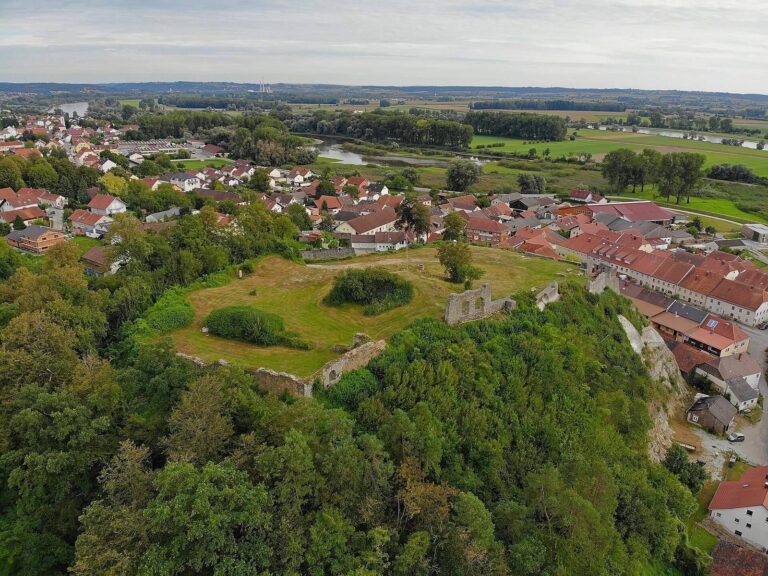
Niederaltaich Abbey is a Benedictine monastery in Niederalteich, Lower Bavaria, Germany, on the left bank of the Danube. Generally dated to 744–747, its foundation is attributed to Odilo, Duke of Bavaria. Benedictines are monks who follow the Rule of Saint Benedict. The community began with twelve monks from Alamannia, installed with the permission of Pippin the Younger and with the support of Heddo, Bishop of Strasbourg. Ettenheimmünster is a possible source for some of them, while the Ortenau region is more firmly associated with their origins. Odilo and his companions dedicated the foundation to Saint Maurice and his companions.
Earlier foundation dates include 741 and 731. The 731 dating, associated with the chronicler Hermann of Reichenau, linked Saint Pirmin and monks from Reichenau Abbey to the foundation. The monastery was called Altach until the twelfth century. Its first abbot, Eberswind, is regarded as the compiler of the Lex Baiuvariorum, an early law code of the Bavarian people. The community grew to 68 members during his leadership, and in 788 the abbey became an imperial monastery, placing it under the emperor’s authority.
The abbey cultivated extensive lands in Lower Bavaria and established 120 settlements in the Bavarian Forest. Under Charlemagne and Louis the German, its possessions reached eastward to the Wachau. Abbot Gozbald served Louis as archchancellor. The community gained the right to elect its abbots freely in 848, and in 857 it became directly subject to the emperor rather than to an intermediate territorial lord.
Reform and changing authority
Hungarian incursions contributed to a period of decline in the tenth century. From 950 to 990, the community functioned as a collegiate foundation, a religious community of canons rather than monks. Benedictine monks then returned. Under Abbot Gotthard, who led Niederaltaich from the late tenth century until 1022, the monastery entered a period of renewed prosperity and became a center of the Gorze Reform, a movement to renew monastic life. Gotthard worked with Wolfgang, Bishop of Regensburg, and Henry, Duke of Bavaria, who later became Holy Roman Emperor Henry II. Niederaltaich also helped renew or establish other monasteries. Gotthard later became Bishop of Hildesheim, where he was buried.
In 1152 Emperor Frederick Barbarossa transferred the abbey to the Bishop of Bamberg, ending its direct imperial status and making it the bishop’s proprietary monastery. The Wittelsbach dynasty inherited the abbey’s secular protection from the Counts of Bogen in 1242. Niederaltaich retained its lordly estate status until Bavaria’s secularization. Its parish church at Spitz in the Wachau belonged to the abbey from 1238 to 1803. By the early nineteenth century, Niederaltaich had three provostships and 28 incorporated parishes. Three archbishops, eight bishops, and 51 abbots of other monasteries came from its community; Saint Gunther was also among its monks.
Early modern fortunes and dissolution
Abbot Paulus Gmainer, who led the monastery from 1550 to 1585, made it a center of the Counter-Reformation, the Catholic reform movement that also responded to the spread of Protestantism. The Thirty Years’ War brought decline, but the abbey recovered after the Peace of Westphalia, the 1648 settlement that ended the conflict. Abbot Vitus Bacheneder, in office from 1651 to 1666, laid the economic foundations for later prosperity.
A fire in 1671 destroyed the monastery buildings down to their surrounding walls, and rebuilding proceeded slowly. Under Abbot Joscio Hamberger, who led the abbey from 1700 to 1739, the monastery and church underwent Baroque development, and a school was established. The Gothic church was remodelled during this period. The abbey was dissolved in 1803 as part of the secularization of Bavaria, and its buildings were sold to private owners. A lightning-caused fire at the church in 1813 began the demolition of much of the Baroque complex. The church subsequently served as the parish church.
Re-establishment and ecumenical work
The monastery was re-established in 1918 with two monks and a lay brother from Metten Abbey, aided by a legacy from Franz Xaver Knabenbauer, a theology professor born in Niederalteich. A small Latin school and seminary opened in 1925. In 1927 the Kinderfreund Benedictines moved from Burg Martinsbühel in Tyrol, bringing their library and increasing the community’s membership. The St.-Gotthard-Gymnasium, which had been closed under the Nazi regime, reopened in 1946. Niederaltaich became independent again in 1949 under Abbot Emmanuel Maria Heufelder.
Pope Pius XI charged the Benedictines in 1924 with introducing Western Christians to the theology and spirituality of Eastern Christianity. The abbey held its first Eastern Church Days in 1936, including a Divine Liturgy celebrated by Petro Werhun, a Ukrainian Greek Catholic church leader who later became an oblate, or lay affiliate, of the monastery. The work gained a permanent institutional base with a House of Encounter in 1955, which became the Ecumenical Institute in 1962. Heufelder was a leading figure in this effort. Pius XI had granted the former abbey church the honorary papal title of minor basilica in 1932.
The monks now follow both the Roman and Byzantine rites, Christian traditions with distinct forms of worship. They celebrate the Divine Liturgy and the Liturgy of the Hours, the church’s daily cycle of prayer, in German, using translations from Church Slavonic and Greek. About 30 Benedictine monks live and work at the abbey, which has been led by Abbot Marianus Bieber since 2001.
Remains
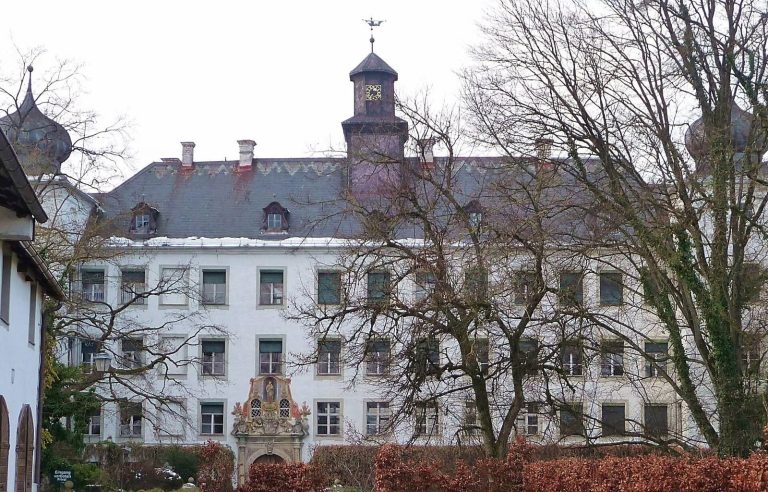
The surviving buildings combine the former abbey church, Baroque portions of the monastery, later connecting construction, and newer facilities. The church’s nine successive bays lead toward the high altar. Other spaces include two Byzantine-rite places of worship established in the former monastery brewery and a two-part sundial in the monastery courtyard.
Former abbey church
Plan and towers
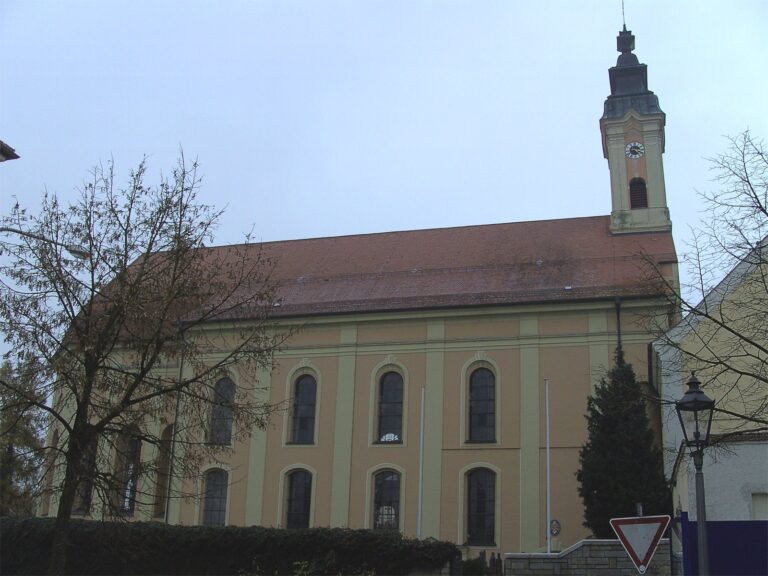
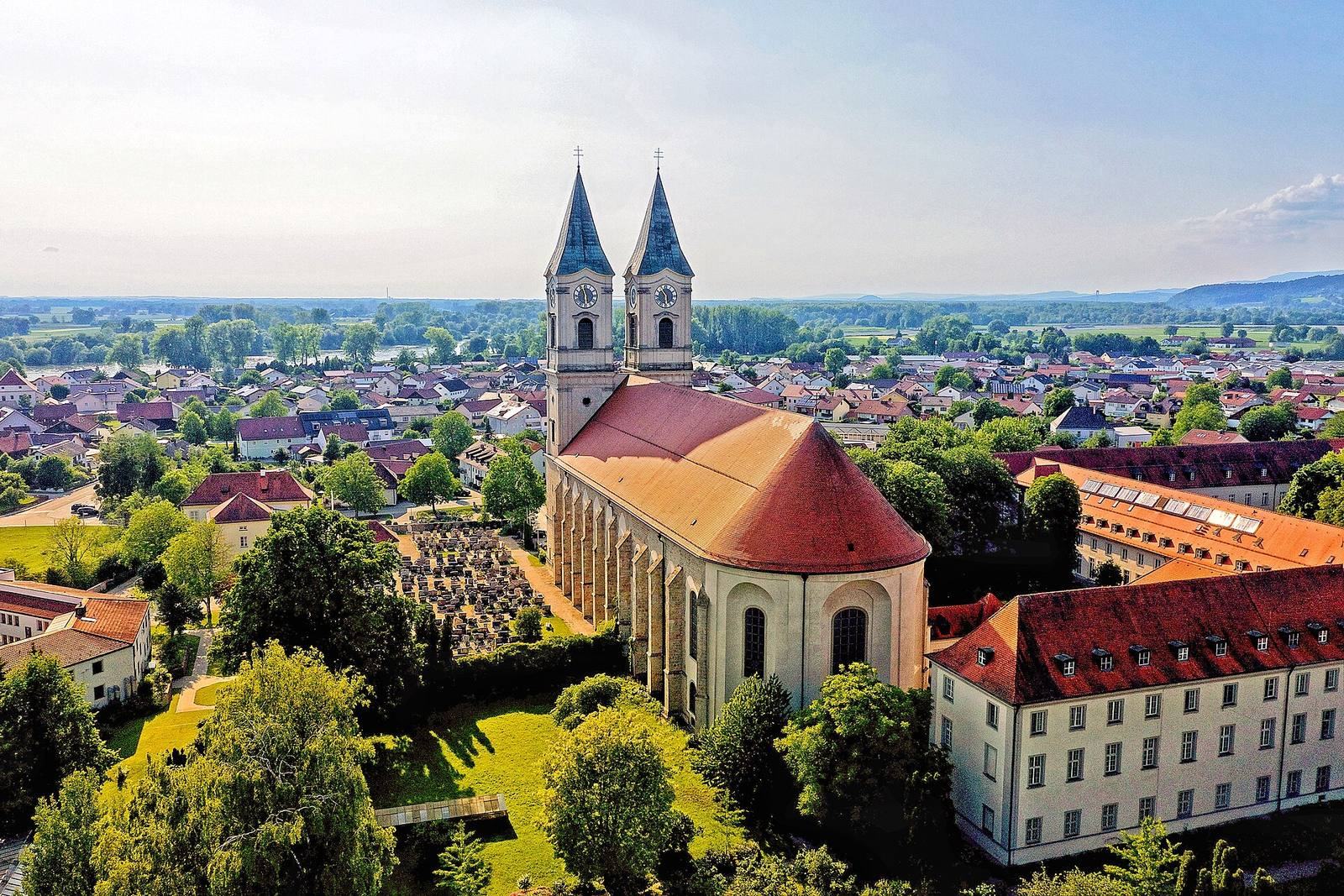
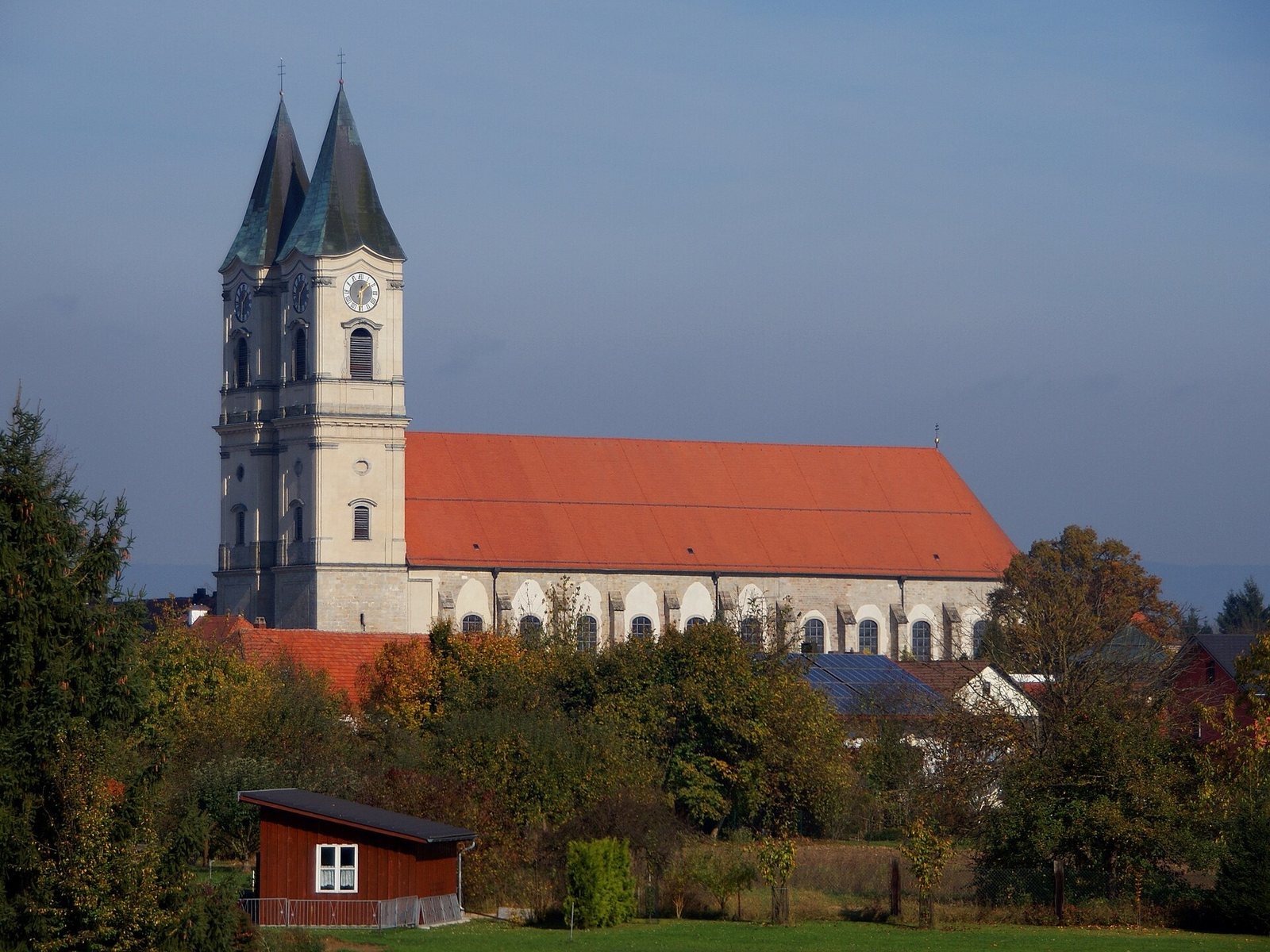
The church began as a Gothic hall church, with its nave and side aisles at similar heights, and now has an entirely Baroque interior. Its nine bays, or successive structural divisions, extend toward the high altar. Carlo Antonio Carlone built a tower in 1698, and a matching north tower followed in 1730–1735. After the 1813 fire destroyed the tower caps, they were replaced with tent-shaped roofs.
Altar and interior decoration
Jakob Schöpf made the high altar in 1703, placing it between the choir and the nave, the main body of the church. Its altarpiece, painted by Franz Josef Geiger in 1675, shows the martyrdom of Saint Maurice. Johann Baptist d’Aglio and Sebastian d’Aglio created the stucco decoration with the participation of Franz Josef Holzinger. Wolfgang Andreas Heindl painted the church’s extensive fresco cycle between 1719 and 1732.
Monastery buildings and courtyard
Monastic complex
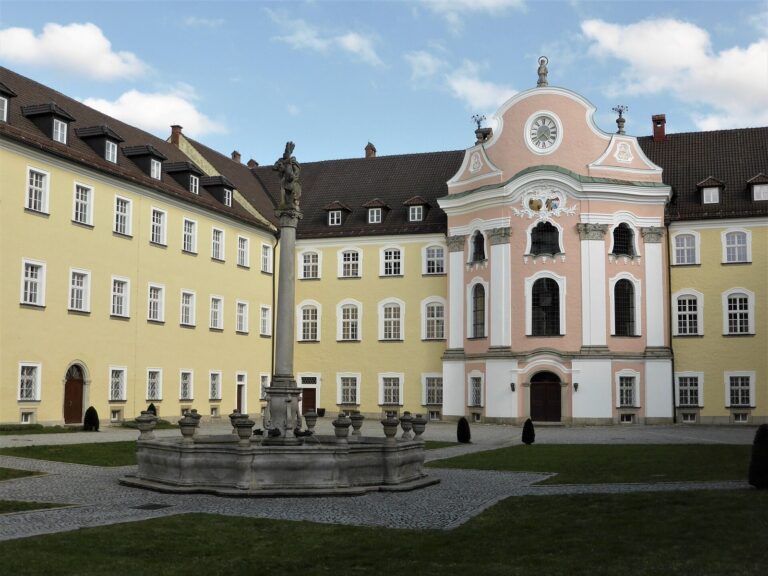
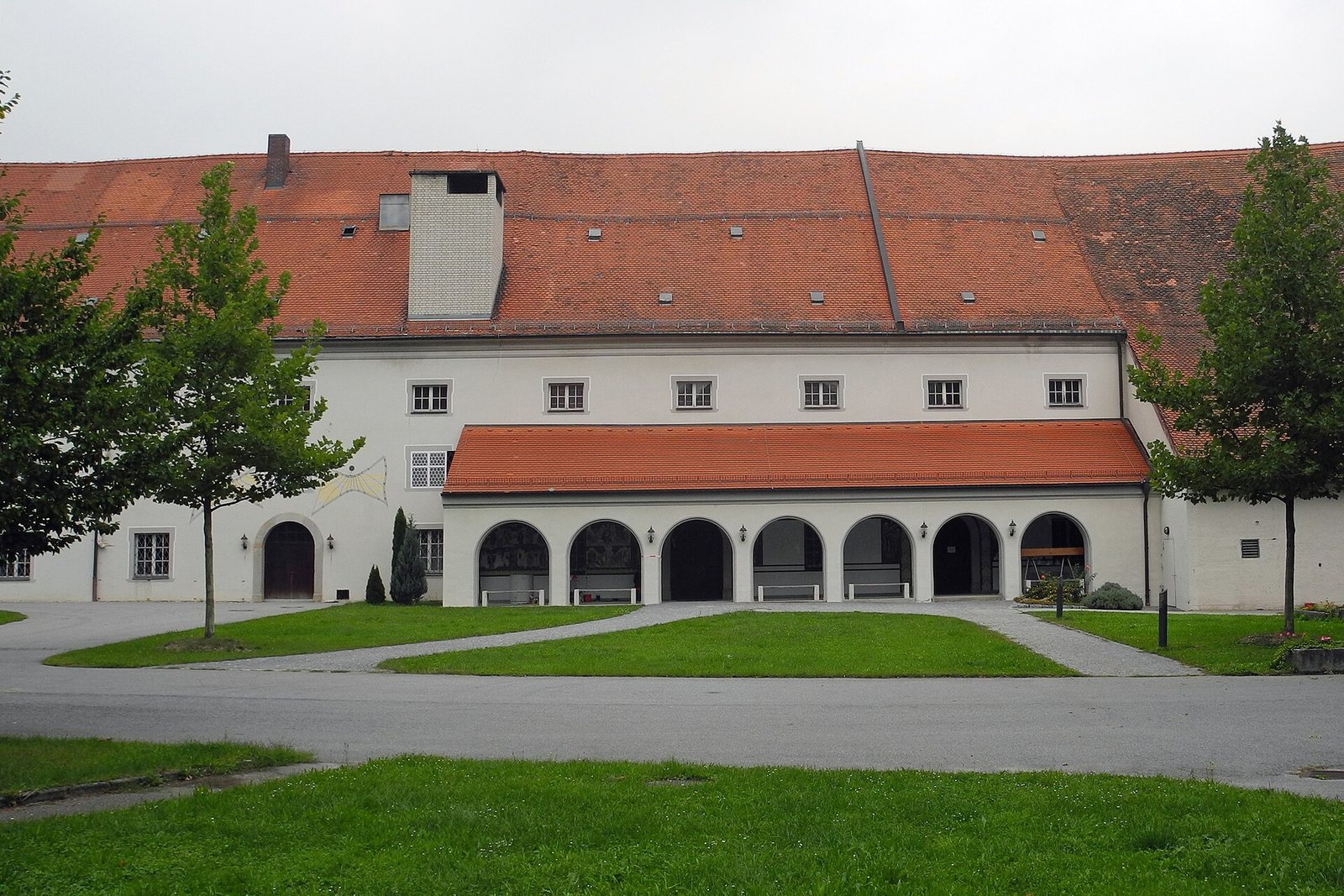
New construction joined the surviving Baroque portions of the monastery complex in 1953–1954, and those buildings were later renovated. The resulting complex incorporates historic fabric alongside later construction.
Courtyard sundial
A two-part sundial in the monastery courtyard was designed by Brother Gregor Baumhof and made with Georg Rick, who calculated its layout using a computer. Its hour lines curve rather than radiating as straight lines.
Byzantine-rite worship spaces
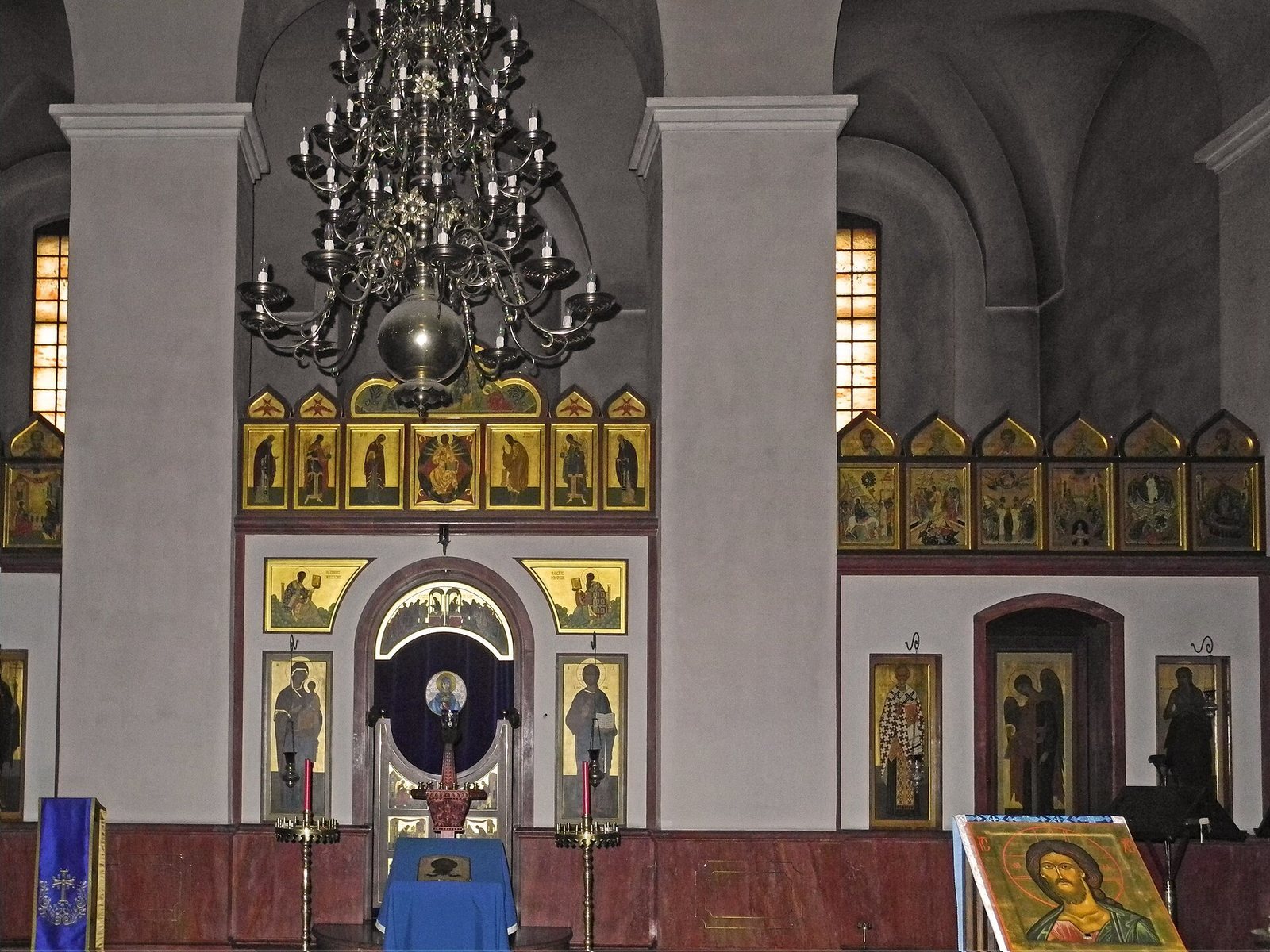
A church and a chapel for Byzantine-rite worship were established in the former monastery brewery in 1986. Both are dedicated to Saint Nicholas of Myra. Each has an iconostasis, a screen of icons separating the sanctuary from the main body of the church, and their icons evoke churches in Russia and Greece.
School and guest facilities
The St.-Gotthard-Gymnasium complex includes a school building erected in 1971–1973. Former boarding-school rooms were converted into the St. Pirmin conference and guest house in 1999–2001.