Nicolai Church: A Historic Evangelical Lutheran Church in Elstorf, Germany

Site at a Glance
- Rating
- 4.6
- Popularity
- Very Low
- Country
- Germany
- Primary era
- Early Modern
- External website
- Open
- Eras represented
- Medieval, Early Modern
- Civilizations
- Holy Roman Empire
- Site type
- Religious
- Remains
- Church
On this page11 sections
History
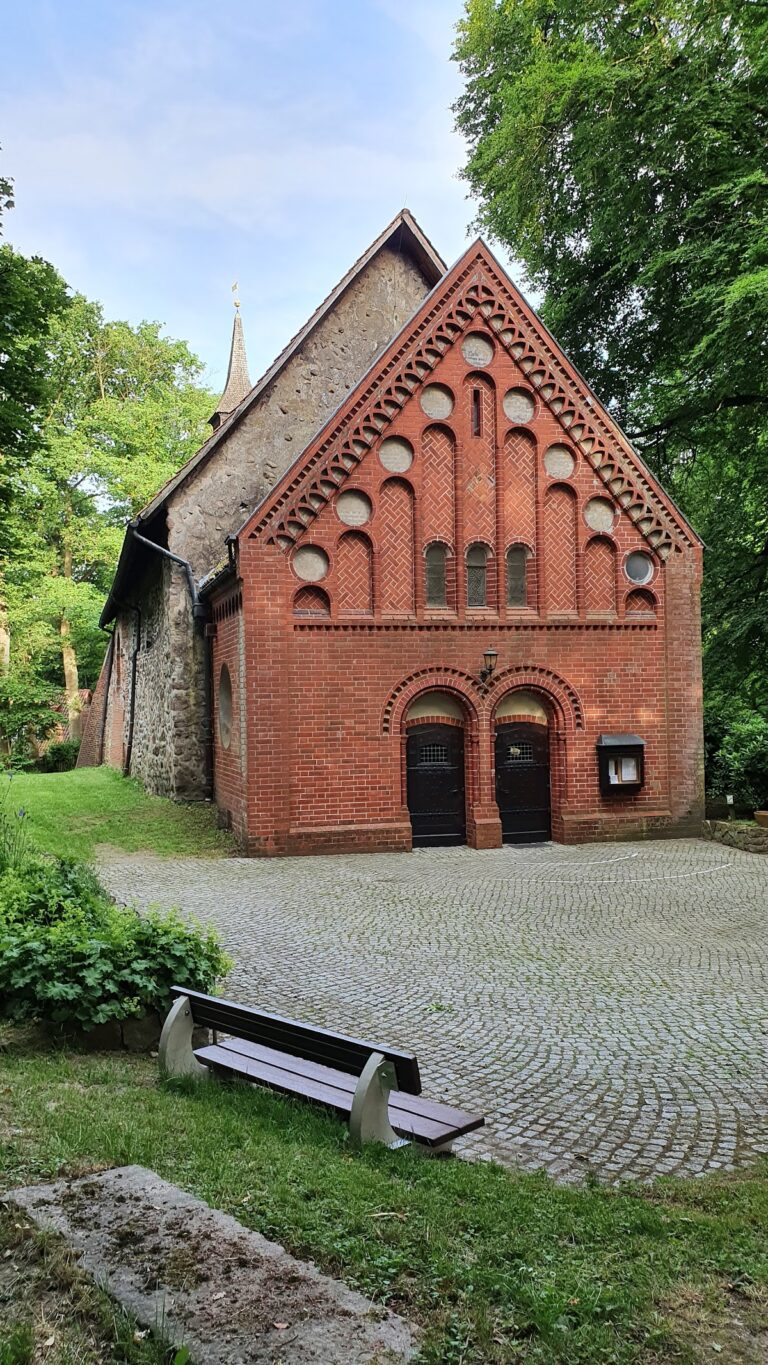
Nicolai Church is an Evangelical Lutheran church in Elstorf, Germany, now a district of the municipality of Neu Wulmstorf. Its name refers to Saint Nicholas, the fourth-century Christian bishop venerated as a saint. The church developed from a small wooden chapel known at Elstorf around 1000 and became a fieldstone church around 1200, whose basic form survives despite a rebuilding in 1704.
Medieval origins and parish development
The early chapel served a rural Christian community before being replaced by the larger fieldstone building. The Elstorf parish originally included eleven villages: Ardestorf, Daerstorf, Eilendorf, Fischbek, the Moisburg portion of Neugraben, Immenbeck, Ketzendorf, Ovelgönne, Schwiederstorf, and Wulmstorf, now Neu Wulmstorf. Neugraben, Fischbek, and Neu Wulmstorf later established their own churches, reducing the area served by the Elstorf parish.
Rebuilding and later history
The church was rebuilt in 1704, while retaining the basic form of the earlier stone building. Its wooden tower was constructed in 1729 and adjoins the church closely. Accounts from 1637 record an earlier tower, showing that the church already had a separate tower structure before the present one was built.
The church’s bells were repeatedly recast or replaced. During the First World War, the middle bell was surrendered in 1917 to the War Metals joint-stock company and returned in 1919 after a payment of 1,575 marks. A memorial plaque for those killed in that war was installed in March 1933. During the Second World War, the large bell was requisitioned and returned in 1947. When it was rehung, the rope broke and severely injured a carpenter. The church’s crucifix and candlesticks were stolen in 1979 and replaced in 1980 by new works made by the Glücksburg sculptor Siegbert Amler.
Nicolai Church belongs to the Hittfeld church district and the Lüneburg ecclesiastical district within the Evangelical Lutheran State Church of Hanover. A church district groups congregations administratively, while an ecclesiastical district forms a larger regional division.
Remains
The surviving church consists of a fieldstone building with a closely adjoining wooden tower. The stone church preserves the basic shape of the building erected around 1200, although its fabric was rebuilt in 1704. The tower, dating from 1729, forms a distinct timber element beside the stone structure. Inside, the plain church contains furnishings and equipment dating from the late seventeenth century to the twentieth century.
Stone church and interior furnishings
Pulpit altar
The wooden pulpit altar was made in 1701. A pulpit altar unites the altar and pulpit in one structure, placing preaching and communion within a single visual composition. The piece is painted black with gold decoration and rises to the ceiling through its pulpit. Its sculpture shows the risen Christ in a victory pose above a serpent representing evil and a skeleton representing death. Two angels hold instruments of martyrdom, while the altar also includes scenes of the Crucifixion and Resurrection.
Baptismal font
The wooden baptismal font dates from 1692. It holds a silver baptismal bowl donated by the municipality of Immenbeck in 1929, joining an early modern church furnishing with a twentieth-century addition.
Organ loft paintings and organ
A mechanical tracker-action organ made by E. Meyer of Hanover in 1853 stands in the church. Beneath the organ loft are paintings of Philipp Melanchthon and Martin Luther. Melanchthon was a leading sixteenth-century Protestant reformer and collaborator of Luther, who initiated the Reformation in Germany and became the central figure of the Lutheran tradition. The image of Luther is probably a Swedish lithograph from 1850.
Wooden tower and bells
Tower clock
The wooden tower contains a clock made in 1911 by J. F. Weule of Bockenem. The clock belongs to the later history of the tower, which was built in 1729 beside the fieldstone church.
Bell group
The oldest bell is documented in 1639. Pawel Voß of Lüneburg cast it by recasting an older bell, but it later cracked in either 1777 or 1797. It was replaced in 1819 by a bell made by Anton Keller of Tostedt, an Imperial French founder. The new bell was first rung during the victory festival held on 16 and 17 October 1819 to commemorate the Battle of the Nations, the 1813 defeat of Napoleon’s forces near Leipzig by an allied coalition.
A middle bell cast in 1801 by Christoph Heinrich Meyer of Bremen was recast in 1863 by F. Meyer of Linden. The small bell dates from 1968. Together, the bells reflect the church’s successive repairs, wartime requisitions, and replacements across the nineteenth and twentieth centuries.