Neuerburg (Wied): A Medieval Hilltop Castle Ruin in Germany


Site at a Glance
- Rating
- 3.9
- Popularity
- Very Low
- Country
- Germany
- Primary era
- Medieval
- External website
- Open
- Eras represented
- Medieval
- Civilizations
- Holy Roman Empire, Landgraviate of Thuringia
- Site type
- Military
- Remains
- Castle
On this page9 sections
History
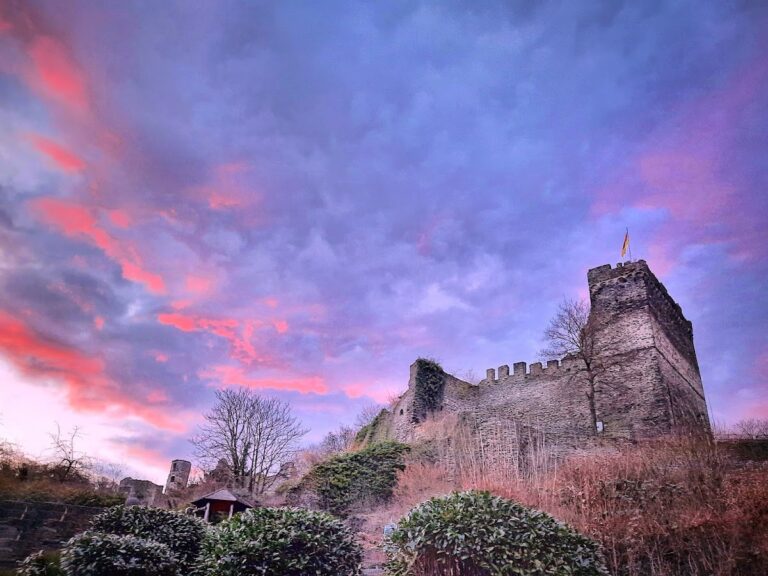
Neuerburg (Wied) is a medieval hilltop castle ruin near Niederbreitbach in Germany, built around 1170 during the period of Staufer influence and generally dated to between 1160 and 1180. It has been described as a prototype of a Staufer castle, referring to the German ruling dynasty associated with many fortified residences in the twelfth and thirteenth centuries.
Foundation and the Sayn connection
Ludwig II, Landgrave of Thuringia, ordered the castle’s construction. From 1218, a noble family of ministerials, or dependent officials serving a territorial lord, took its name from Neuerburg and became associated with Countess Mechthild of Sayn. After the death of her husband, Heinrich III of Sayn, in 1246 or 1247, Mechthild visited the castle from time to time. In 1250, she transferred Neuerburg to the Archbishopric of Cologne, a powerful ecclesiastical and territorial authority in the medieval Rhineland.
The castle precinct and Electoral Cologne
Neuerburg stood within the Hunschaft of Breitscheid, a historical local administrative district. Its castle precinct, the area and community placed under the castle’s jurisdiction, included residential houses for a forester, people responsible for the castle grounds, and administrative officials. Six such residents were usually drawn from Kelterhof, Kurtenacker, Ackerhof, Hegerhof, and Wolfenacker.
From 1290, an Electoral Cologne office was named after Neuerburg. Electoral Cologne was the archbishopric’s secular territorial polity, whose offices administered parts of its lands. The office was repeatedly pledged, at different times to the Isenburg-Grenzau and von der Leyen families. Its administrative territory continued to correspond with that of the later Waldbreitbach collective municipality, although Kurtscheid and Datzeroth retained a special historical status. The administrative seat, Huhns-Mühle, remained at Niederbreitbach until the modern period.
Decline, destruction, and conservation
The castle began to decline during the seventeenth century. Before 1850, the Princes of Wied demolished the remaining buildings, and the princely family of Wied became and remains the owner of the ruin.
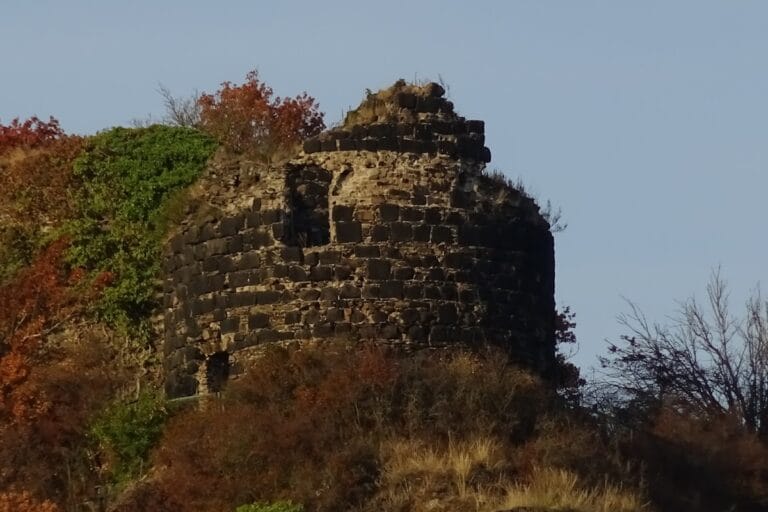
During the advance of American troops in 1945, artillery struck Neuerburg about 60 times. The bombardment destroyed the battlement passage in the inner castle, while the eastern and southern walls were demolished. About one-third of the shells hit the keep and its wall crown. Reconstruction began in 1946, with the intention of making the keep habitable. A private leaseholder and the leaseholder’s family have continued renovation and protection work for two generations.
Traditions and literary associations
Traditions from Neuerburg and the Fockenbach valley concern a monastery, a glassworks, a legendary treasure, and a princess’s love at the castle. Princess Elisabeth of Wied, who wrote under the name Carmen Sylva, composed a commemorative poem about Neuerburg. The poem links the castle with the forest and with Heinrich von Ofterdingen, the fictional medieval poet and minstrel at the centre of Novalis’s unfinished novel. A reconstruction model of Neuerburg is exhibited in the village museum of Niederbreitbach.
Remains
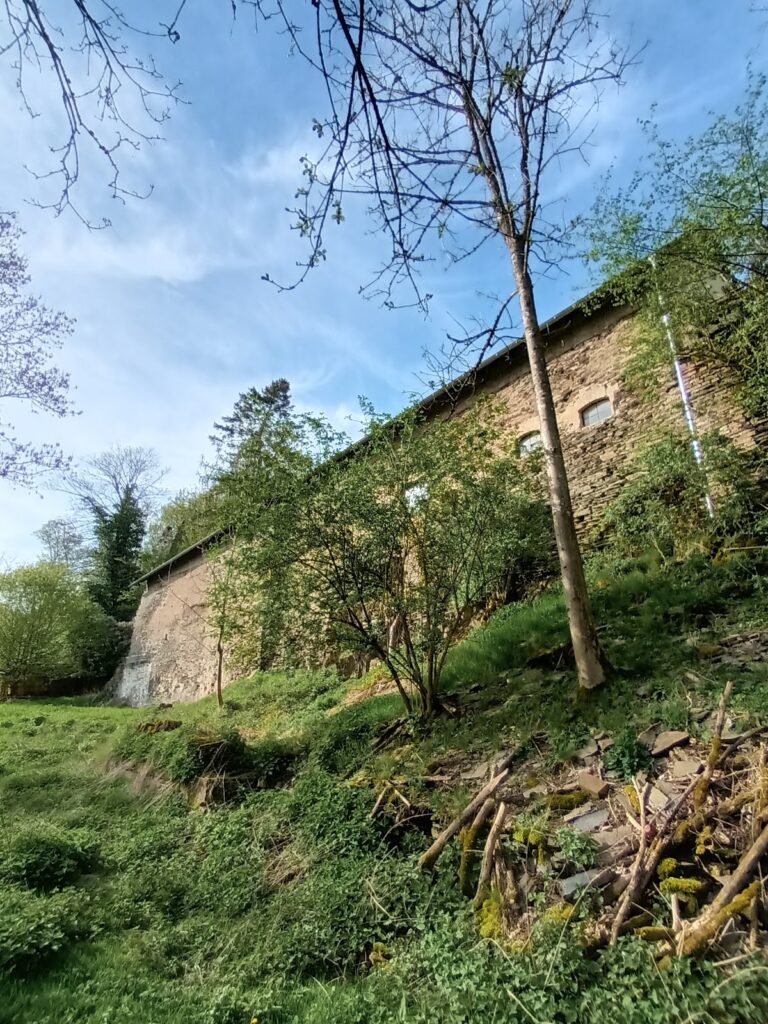
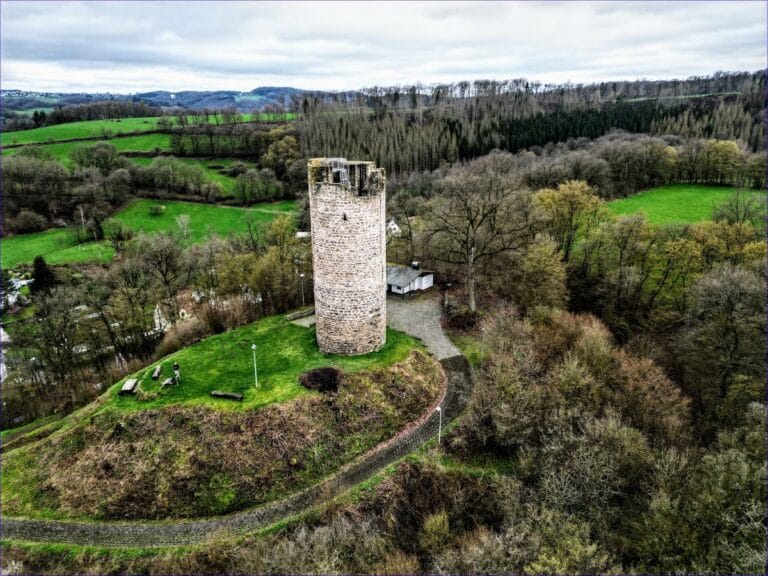
Neuerburg occupies a steep, valley-facing cliff above the left bank of the Fockenbach, about 2.5 kilometres northeast of Niederbreitbach and approximately 250 metres above sea level. The surviving castle is organized around a pentagonal residential tower, the enclosing ring wall, and an outer bailey outside the principal fortified enclosure. The ring wall contains masonry characteristic of the late twelfth century, while the outer bailey dates from around 1300.
Residential tower and inner enclosure
The pentagonal residential tower is preserved to three stories. Its form combined fortified construction with habitation and formed the principal surviving element of the inner castle. The ring wall enclosed this core, and its late twelfth-century masonry preserves part of the castle’s early construction phase.
Outer bailey
The outer bailey dates to around 1300 and occupied the area outside the principal fortified enclosure. It formed part of the later castle organization alongside the earlier tower and ring wall.
Castle precinct and associated landscape
The former precinct extended across Hegerhof, Kelterhof, Kurtenacker, Ackerhof, Wüscheid, and the western part of Kurtscheid. At Hegerhof, huts served Neuerburg’s hunters, who managed the surrounding forest and game. At Kelterhof, wall remains near the memorial chapel at Eppsteg belong to terraces connected with vine cultivation and wine processing. Further remains associated with viticulture in the Wied valley lie in the Farmersau between Niederbreitbach and Bürder. Nearby adits provide evidence of mineral extraction in the Fockenbach valley and its surroundings.
Nearby sites