Nerik: A Hittite Religious and Frontier City in Türkiye
Site at a Glance
- Popularity
- Medium
- Country
- Turkey
- Primary era
- Bronze Age
- Eras represented
- Bronze Age
- Civilizations
- Hittite
- Site type
- City
On this page14 sections
History
Hattic origins and Hittite sacred city
Nerik was an ancient city at Oymaağaç Höyük in Türkiye, founded by Hattic-speaking people and occupied during the Middle and Late Bronze Ages. It became a sacred city under Hittite rule and stood on the kingdom’s northern frontier.
The city’s founders called it Narak, while Hittite forms of its name include Nerik and Nerikka. Hattic and Hittite were distinct ancient Anatolian linguistic and cultural traditions. Under Hattusili I, the Hittites took control of Nerik.
An Old Kingdom law exempted Nerik from taxation, alongside Hattusa, Arinna, and Ziplanda. The city was sacred to Teşup, the Hittite Storm-god. Hittite kings visited to honor him through ceremonies and offerings, practices also described on tablets found at Nerik. Teşup was the personal protective deity of Hattusili III.
The Puruli, a spring festival honoring the Storm-god, was among the Hittites’ most important celebrations. Its rites included recitation of the Illuyanka myth, which tells of the Storm-god’s conflict with a serpent-like adversary and was associated with Nerik. After the city was ruined, the festival was transferred to Hattusa.
Kaška occupation and Hattusili III’s restoration
During Hantili’s reign, the Kaškas seized and ruined Nerik. These northern peoples repeatedly came into conflict with the Hittite kingdom. They still held the site by the time of Tudhaliya I, and the Hittites blamed them for its original destruction.
Around 1290 BCE, during Muwatalli II’s reign, his brother Hattusili III recaptured and rebuilt the city. He became its high priest and governor, and named his firstborn son Nerikkaili in its honor, although he later passed him over as successor. About seven years after Mursili III became king, around the 1270s BCE, Mursili assigned Nerik to another governor. Hattusili rebelled and became king.
End of settlement and rediscovery
Nerik was the northernmost city of the Hittite kingdom. Settlement ended around 1200 BCE, when the kingdom fell amid attacks by the Sea Peoples, a modern term for groups associated with attacks and migrations around the eastern Mediterranean near the end of the Bronze Age. Nerik then disappeared from the historical record.
Excavations at Oymaağaç Höyük began in 2005, and the site was identified as Nerik between 2005 and 2009. Rainer Maria Czichon led the work, with Jörg Klinger involved at its start.
Remains
Settlement mound and defenses
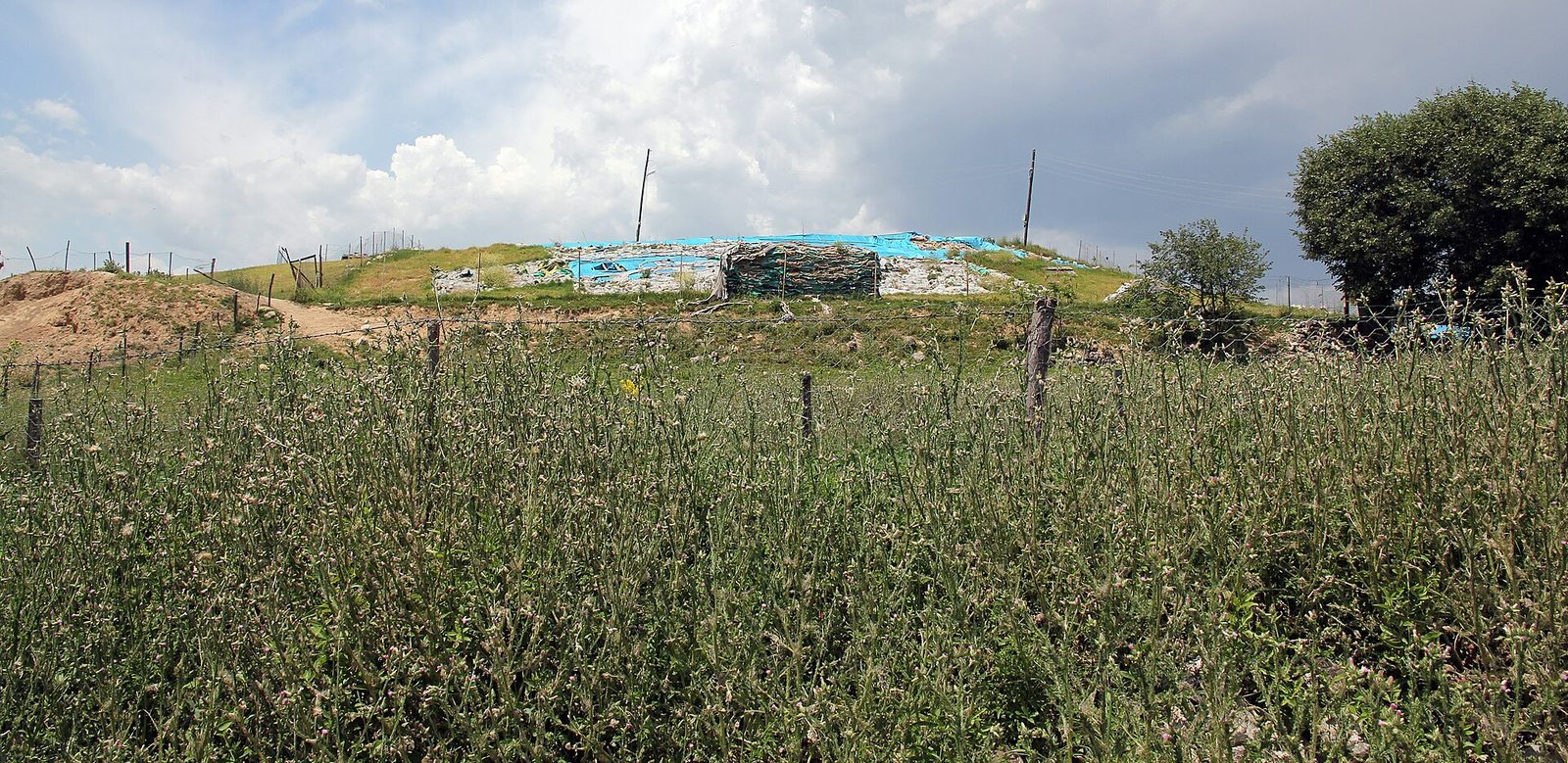
Oymaağaç Höyük lies on the eastern side of the Kızılırmak River, about seven kilometres northwest of Vezirköprü in Samsun Province. It is north of Hattusa and Sapinuwa, major Hittite political centers, and probably in the Pontic region. The mound is the northernmost known location in Anatolia with remains of the Hittite Empire. Excavations have revealed a defensive wall and gate, temple foundations, a well, a tunnel, and other features associated with large-scale Hittite building.
Temple and associated features
Temple
The foundations preserve three temple structures built one above another. The final phase dates to the 13th century BCE, covered about 2,500 square metres, and is estimated to have stood 2.5 metres high.
Well
Outside the temple, a well measures about 2.5 square metres in area and four metres deep. It was first interpreted as a water channel. Plaster at its bottom, together with obsidian knives and fragments recovered from the pit, has supported the possibility that it served as a storage pit instead.
Tunnel
The tunnel is about 50 metres long and has 40 steps. Early investigation suggested that it led to a sacred drinking-water reservoir, perhaps intended to supply water during a siege. Work inside stopped in 2013 after falling stones from its walls created a serious danger. Specialists from Istanbul Technical University, Amasya University, and Dokuz Eylül University examined the tunnel, and repairs in 2015 restored its function.
Excavated finds
Tablets and sealings
Finds from the first nine years of excavation included 13 clay tablets and three tablet fragments. Their cuneiform writing, a script made of wedge-shaped signs, helped identify the site as Nerik; some texts also mention mountains in the area. One sealing carries impressions from the seal of the scribe Sarini.
Ritual and craft objects
Bull-shaped vessels symbolizing Teşup and small vessels used in religious ceremonies were found at the site, along with stone objects and tools associated with weaving. Mining tools connect the finds with copper deposits at nearby Tavşan Mountain. An inventory list names tools, silver trays, and gold sealings associated with an unidentified shrine.
Other finds
Other excavated material includes mass graves thought to date to the Roman period and a bronze implement. A dowel-shaped object is believed to have been used at Nerik before the Romans used this type. Some objects from the site are displayed at the Samsun Archaeology and Ethnography Museum.