Necropolis of Ponte Messato: A Pre-Roman and Roman Burial Ground in Teramo
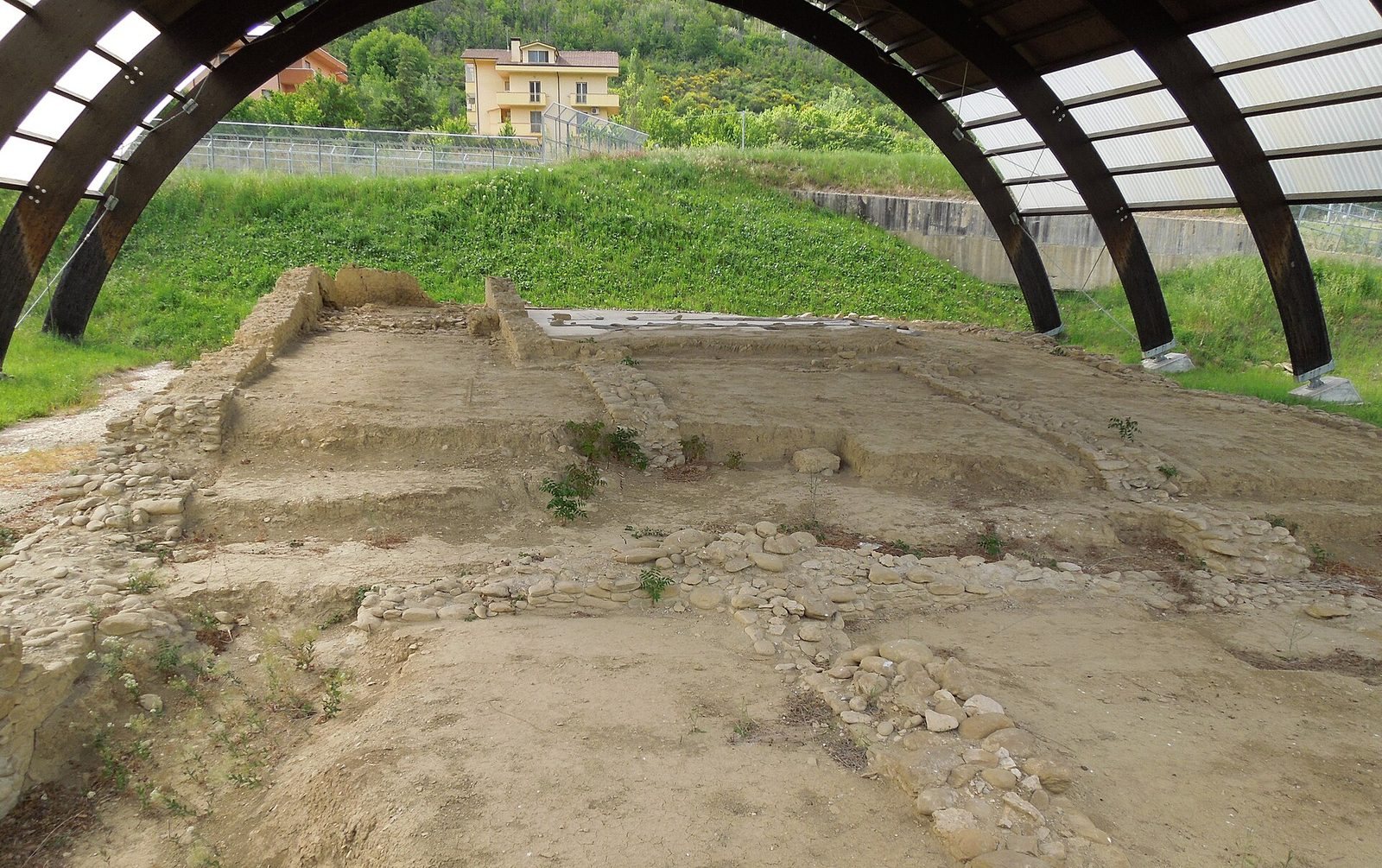
Site at a Glance
- Country
- Italy
- Primary era
- Classical
- Eras represented
- Iron Age, Classical
- Civilizations
- Roman
- Site type
- Burial
- Remains
- Necropolis
On this page8 sections
History
The Necropolis of Ponte Messato is a burial ground in Teramo, Italy, with origins before Roman rule and use that expanded under the Romans. It formed part of a ring of burial grounds around ancient Teramo, known in Roman times as Interamna Praetuttiorum. The Ponte Messato-La Cona necropolis may have been the most important and extensive burial ground in that outer ring.
Pre-Roman and Roman use
Burials in the excavated area span the Iron Age, when written records were not yet widespread, through the Roman imperial period. The burial ground grew under Roman rule, and the area nearer Ponte Messato is older than a burial area found farther southwest.
Discovery and archaeological research
The necropolis was found by chance in 1961, during construction of a bus garage for the former National Transport Institute. Workers broke large urns holding cremated remains, hoping to find gold. Teramo scholar Giammario Sgattoni was among the first to respond, and later recounted the discovery in a 1974 article. Adriano La Regina, then an official with the Superintendency of Antiquities for Abruzzo and Molise, excavated 16 mausoleums.
In 1982, the identification of another section of Roman road and mausoleums containing cremated remains prompted a second excavation campaign. Work led by Luisa Migliorati and Vincenzo D’Ercole from 1983 to 1985 revealed a wider archaeological area that included the road and monumental tombs.
From 1997 to 2014, Vincenzo Torrieri directed research and excavations connected with the creation of a park for the monumental necropolis of the Julio-Claudian period, Rome’s first imperial dynasty from Augustus through Nero. The work also uncovered a large temple from the Roman Republic, the period before imperial rule. In 2000, roadworks for Teramo’s ring road revealed another part of the Iron Age burial ground and a separate temple combining Hellenistic and Roman traditions.
Remains
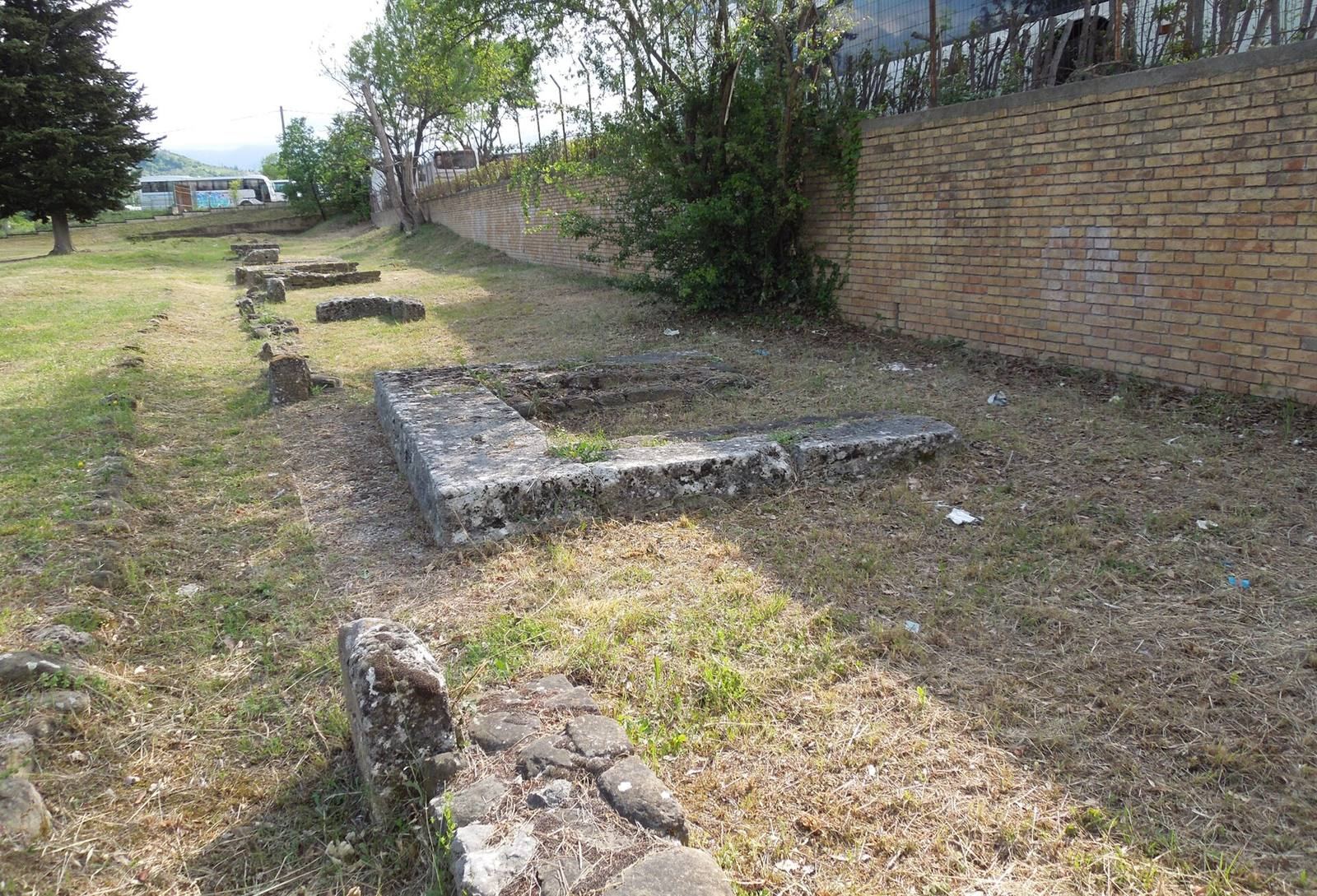
The necropolis is arranged along both sides of an ancient road lined with monuments. Its remains include roadside tombs, a terraced burial area, and two temples. The road is identified with the Via Caecilia, also called the sacred way of Interamnia, an ancient name for Teramo. A Roman road associated with the route is known as Interamnium Vorsus and is thought to have branched from the Via Caecilia, continuing through the upper Vomano valley toward the Sabina, a historic area of central Italy, and linking with the Via Salaria near Rome. The route is described as paved, while an excavated Roman stretch has a gravel surface.
Roadside tombs and burial areas
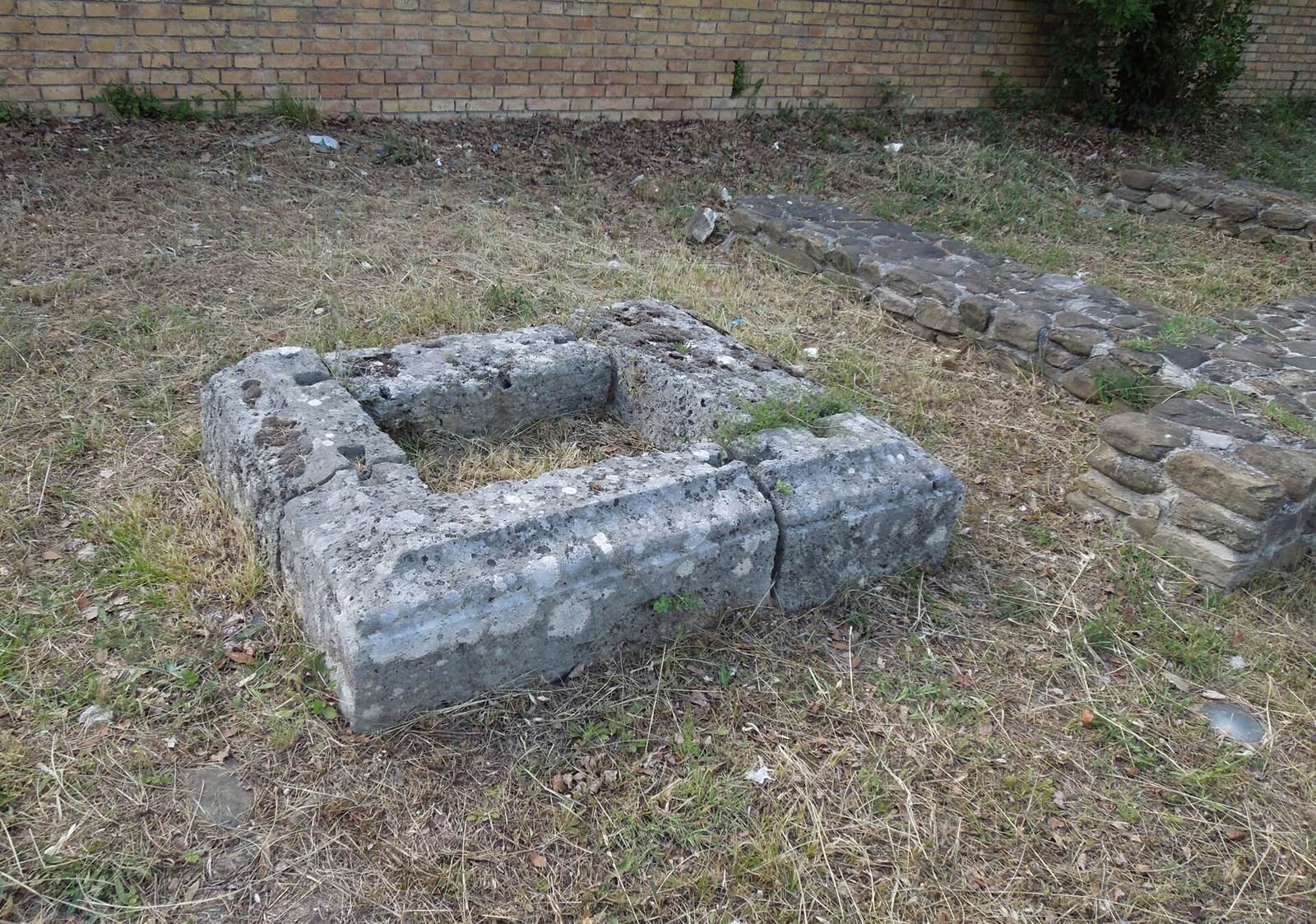
The early excavations covered 1,000 square metres. The mausoleums have square or circular ground plans and held vessels for cremated remains. The excavated examples date from the late first century BC to the early first century AD. Finds include glass urns, cremation jars, and small vessels used for oils, perfumes, or ointments.
A separate burial area lies about 300 metres southwest of the zone identified in 1982. Its terraced ground was used for burials from the early Iron Age into the Archaic period, dated here to the tenth through sixth centuries BC. This southern area is later than the burial ground closer to Ponte Messato.
Temple remains
Roman Republican temple
The large temple from the Roman Republican period measures 21 by 31 metres. Its design follows an Etruscan-Latial model, drawing on traditions from Etruria and Latium.
Hellenistic-Roman temple
A separate temple, found in 2000, belongs to a Hellenistic-Roman tradition combining Hellenistic and Roman elements.