Nativity of the Theotokos Church: Serbian Orthodox Church in Sremska Kamenica
Site at a Glance
- Rating
- 4.9
- Popularity
- Medium
- Country
- Serbia
- Primary era
- Early Modern
- Eras represented
- Early Modern
- Civilizations
- Habsburg, Habsburg Austria
- Site type
- Religious
- Remains
- Church
On this page11 sections
History
Foundation and construction
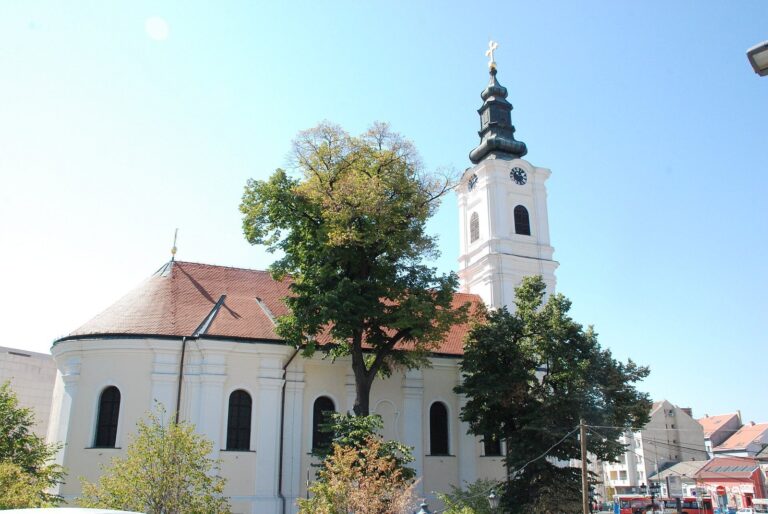
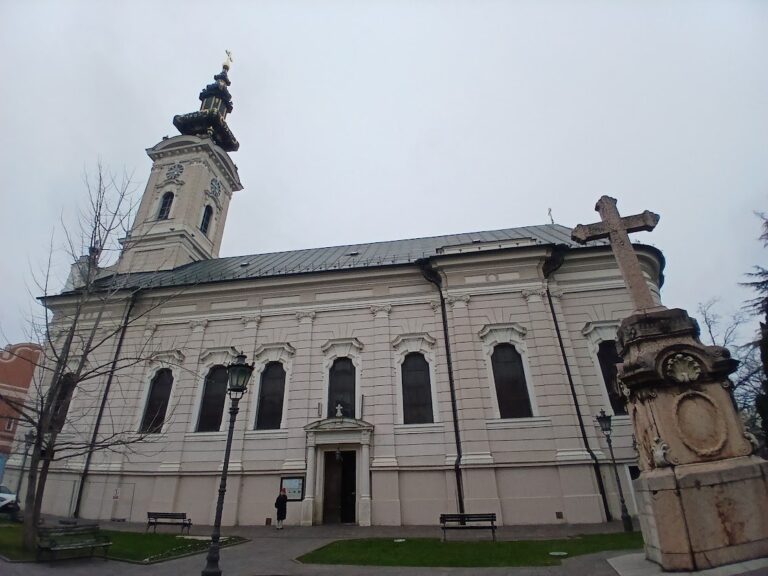
The Nativity of the Theotokos Church is a Serbian Orthodox church in Sremska Kamenica, Serbia. Theotokos means “Mother of God,” and the feast commemorates the birth of Mary. Built on the site of an earlier church dedicated to the Presentation of the Theotokos, a separate feast concerning Mary’s presentation at the Temple, the church belongs to the Eparchy of Srem, an Orthodox diocese. Construction began in 1737, and the main building work took place between 1737 and 1744. Its patron was Živan Crnogorac, an archpriest from Sremski Karlovci. The church combines traditional Serbian architecture with Baroque features, an ornate European style, and is identified as the last church built in the Moravian style, a Serbian medieval church tradition associated with the Morava region. Work on its decoration continued until 1758.
Political and modern history
In 1903, conspirators in the May Coup swore before the church’s image of the Archangel Michael that they would overthrow King Alexander I Obrenović. The coup overthrew and killed the king.
The church received cultural-heritage protection in 1949 and is classified as a Serbian monument of culture of great importance. Restoration and conservation work on the thrones and choir stands took place in 1968–1969 and again in 1994, followed by architectural repairs in 1996. A portion of Saint Petka’s relics has been kept in the church since 2002. Saint Petka is the Serbian name for Saint Paraskeva, a widely venerated Orthodox saint.
Remains
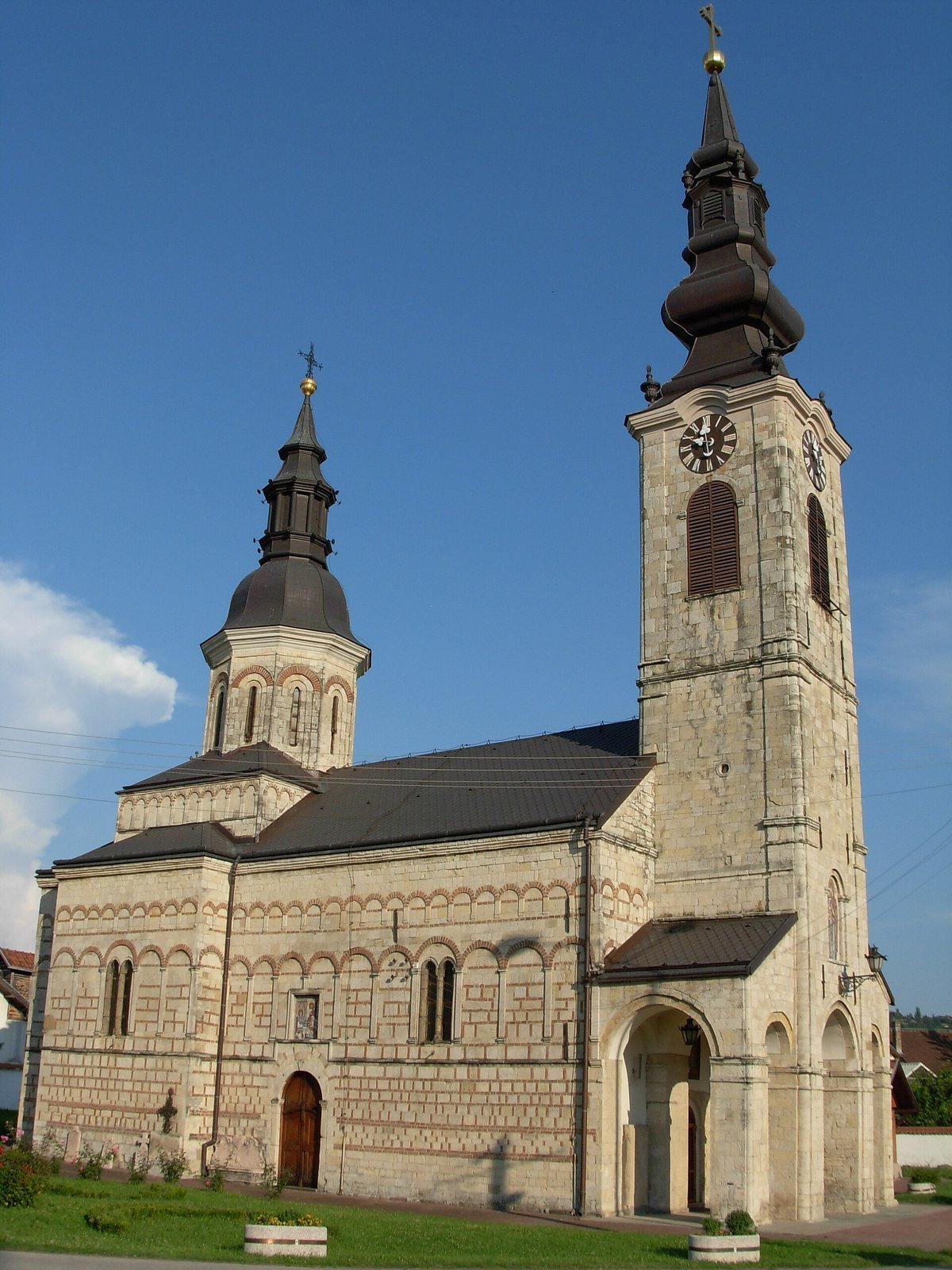
The church is a single-nave building with shallow projections on its north and south sides that give its plan a cross-like outline. Its brick-and-stone exterior and vaulted interior bring together Serbian architectural traditions and Baroque features.
Plan and interior structure
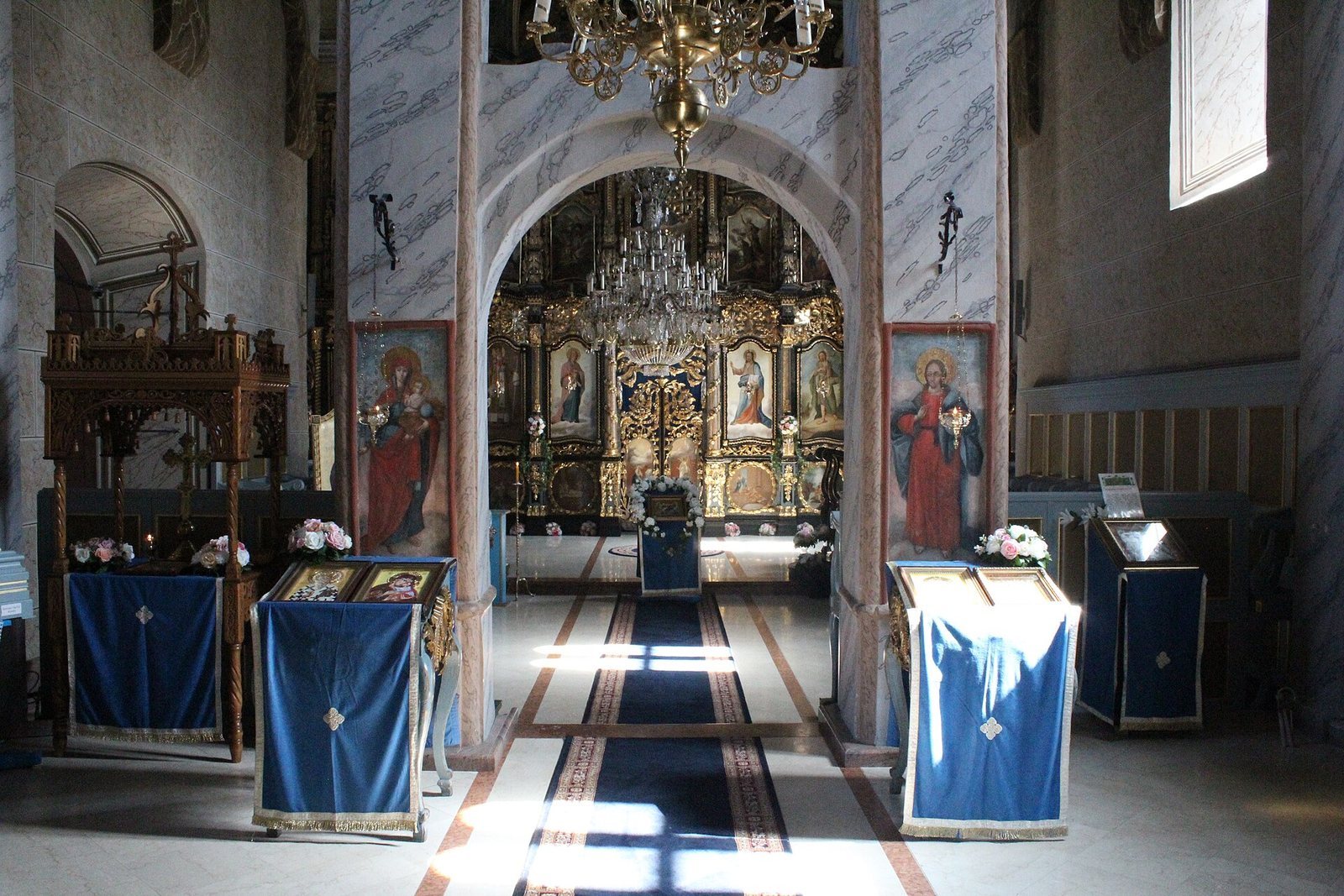
The nave, or main worship space, is covered by a barrel vault, a continuous tunnel-shaped ceiling. At the east end, a large altar apse, a projecting sanctuary space, has five sides on the exterior and a semi-dome covering. Columns linked by arches separate the narthex, the church entrance area, from the nave. Over the choir, a dome rests on four freestanding columns. Its drum, the structure supporting the dome, stands on a cubic base, while the dome’s exterior has a metal covering in a style combining Baroque and classical forms.
Exterior and bell tower
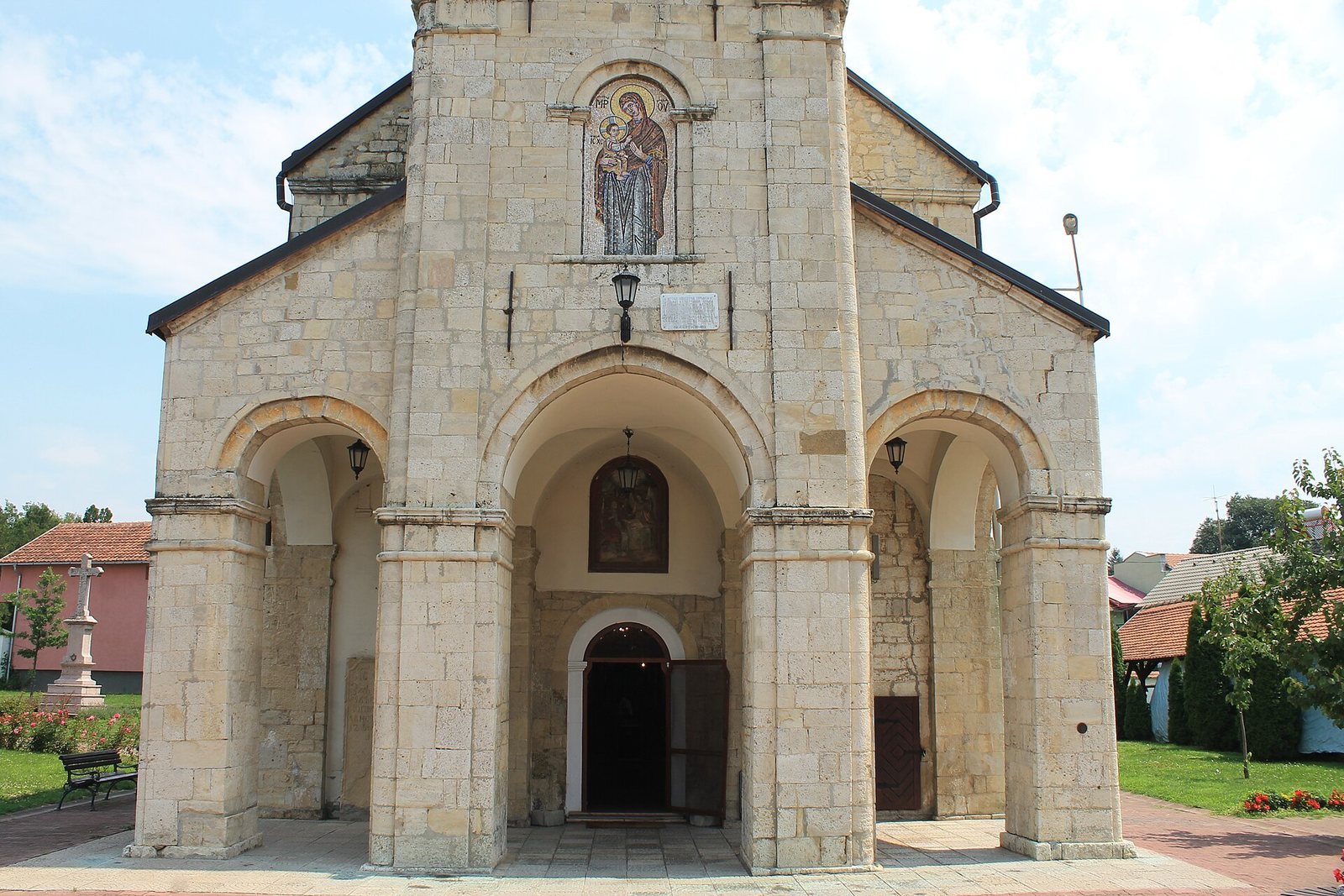
The façades are built of brick and stone and feature a projecting horizontal molding, known as a cordon cornice, above a double band of blind arcades. These are decorative arches set against the wall rather than openings through it. A three-storey stone bell tower was added against the west front in the mid-eighteenth century. It has a Baroque bulb-shaped cap and a porch, while a broad portico stands in front of the main entrance.
Screens, paintings, and furnishings
Original iconostasis and frescoes
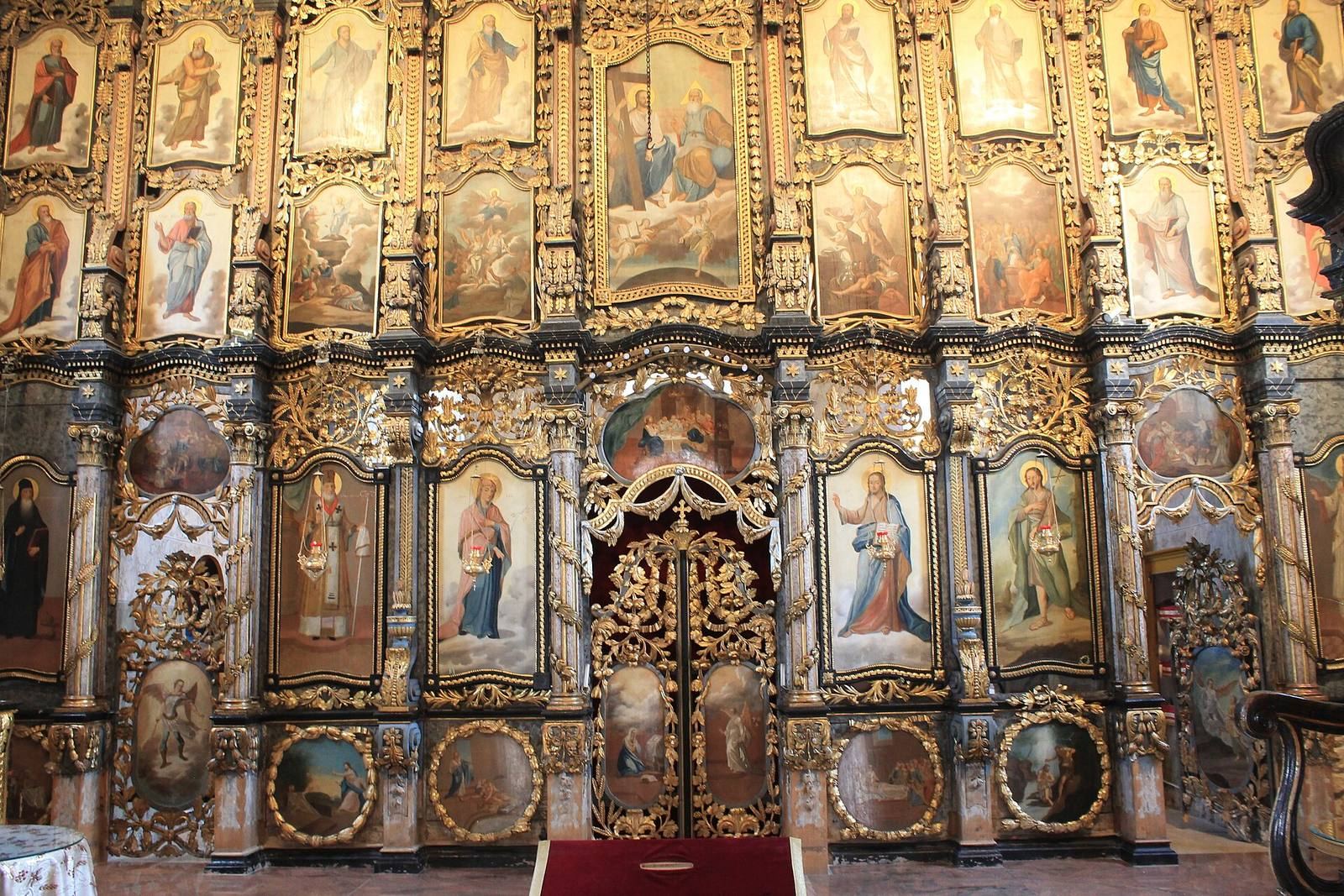
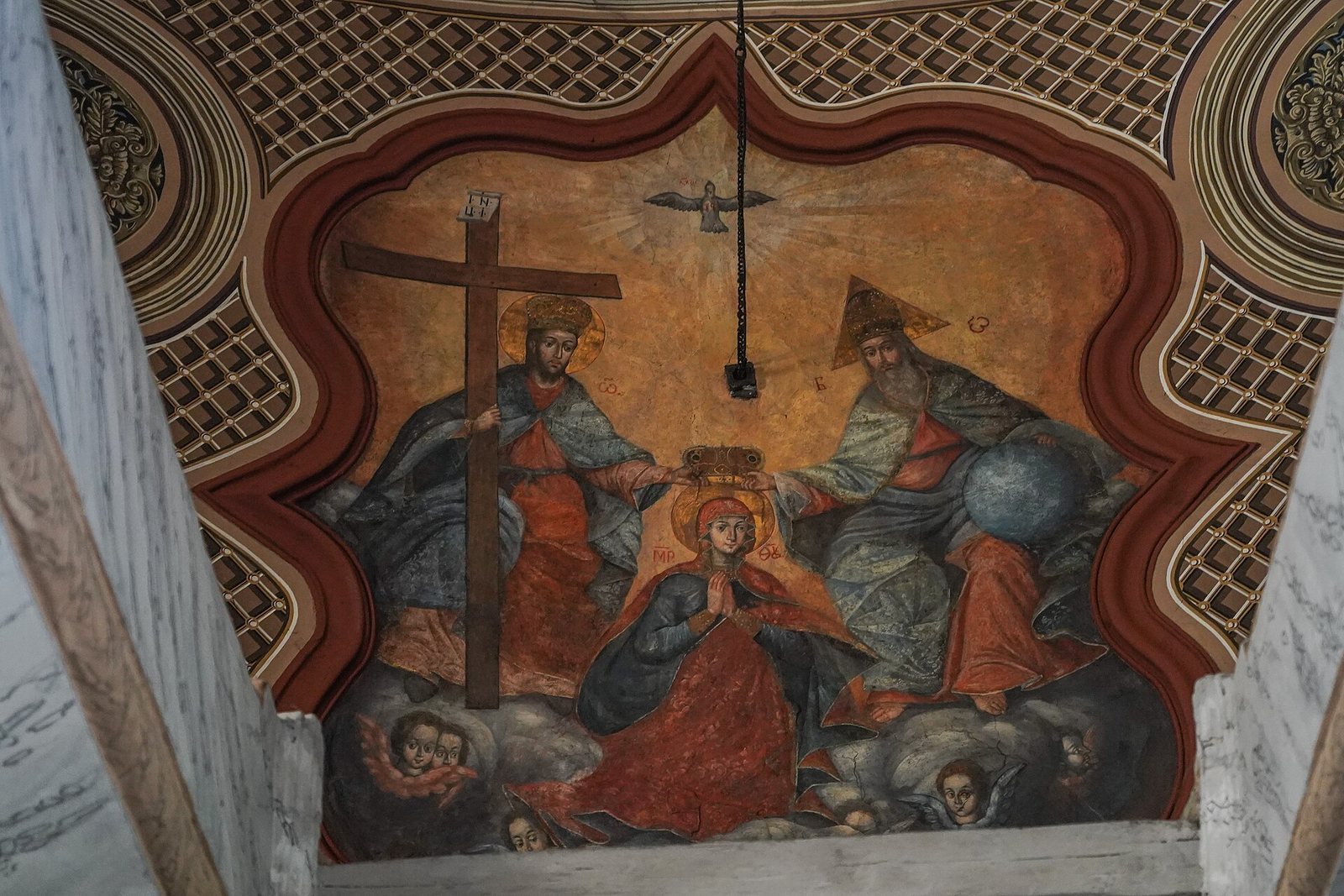
The original iconostasis, an icon-bearing screen separating the sanctuary from the main worship space, was carved in wood in 1753. Jov Vasilijevič and Vasilije Ostojić painted it, as well as frescoes in the apse and on the nave vault dated to 1754. The frescoes combine traditional Orthodox imagery with Baroque color and perspective.
Altar screen carved in 1797
Marko Vujatović carved a later altar screen in 1797, combining Baroque features with classical elements.
Iconostasis completed in 1802
A further iconostasis, carved in an elaborate Rococo style that developed from the Baroque, was painted by Stefan Gavrilović and completed in 1802. Its upper tier shows scenes from the life of Christ painted by Teodor Kračun. The screen also includes icons by Ambrosije Janković and Gavrilović.
Later icons and throne
Stevan Todorović painted the church’s icon of the Archangel Michael in 1856. Mihailo Radosavljević painted the Theotokos throne, a furnishing associated with Mary, in 1876.