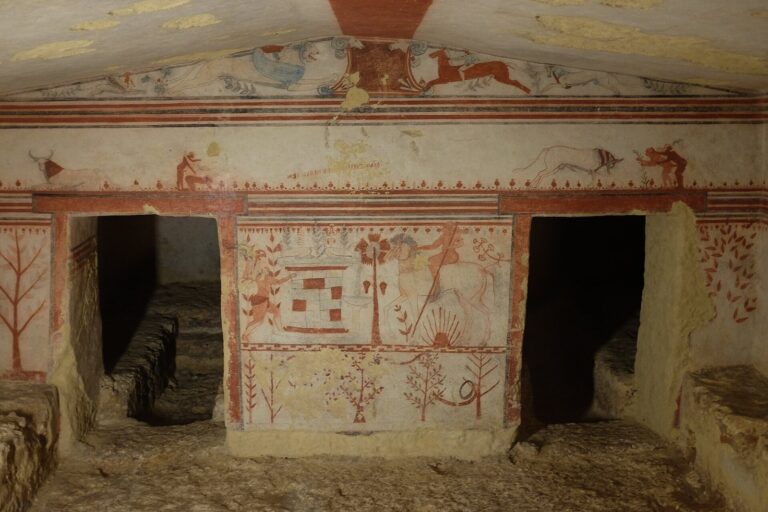
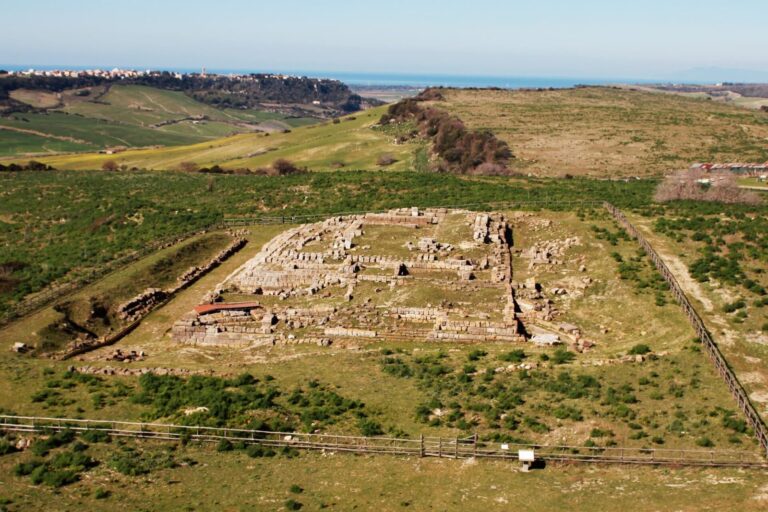
Tomb of the Leopards: An Etruscan Burial Chamber near Tarquinia
Site at a Glance
- Popularity
- High
- Country
- Italy
- Primary era
- Classical
- Eras represented
- Classical
- Civilizations
- Etruscan
- Site type
- Burial
- Remains
- Tomb
On this page7 sections
History
The Tomb of the Leopards is an Etruscan burial chamber in the Necropolis of Monterozzi near Tarquinia, Italy, dating to around 470–450 BC. The Etruscans were an ancient people of central Italy whose culture flourished before the region came under Roman rule.
The tomb was discovered in 1875. It belongs to the UNESCO World Heritage property Etruscan Necropolises of Cerveteri and Tarquinia, inscribed in 2004 under criteria recognizing human creative achievement, exceptional testimony to a cultural tradition or civilization, and an outstanding illustration of a stage in history.
Remains
The Painted Chamber
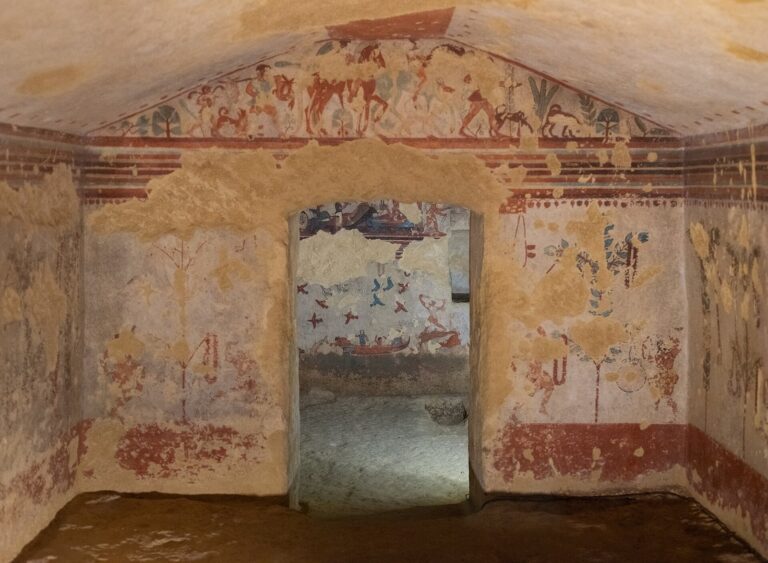
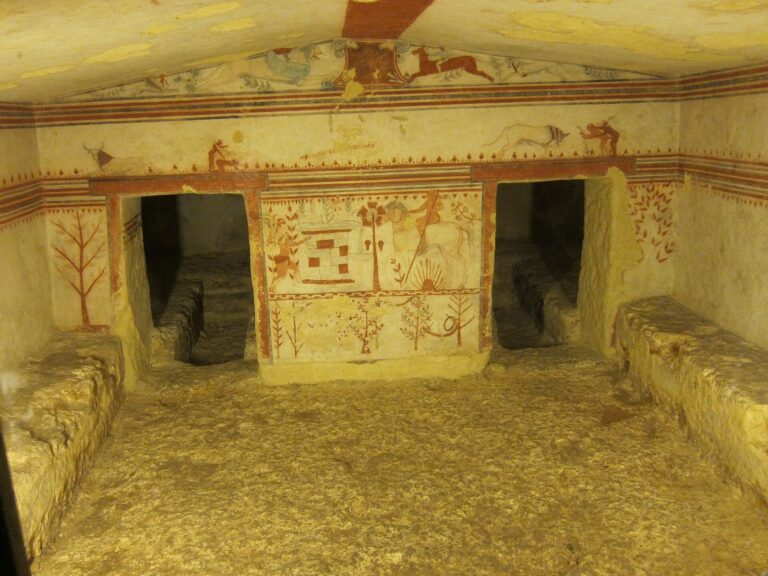
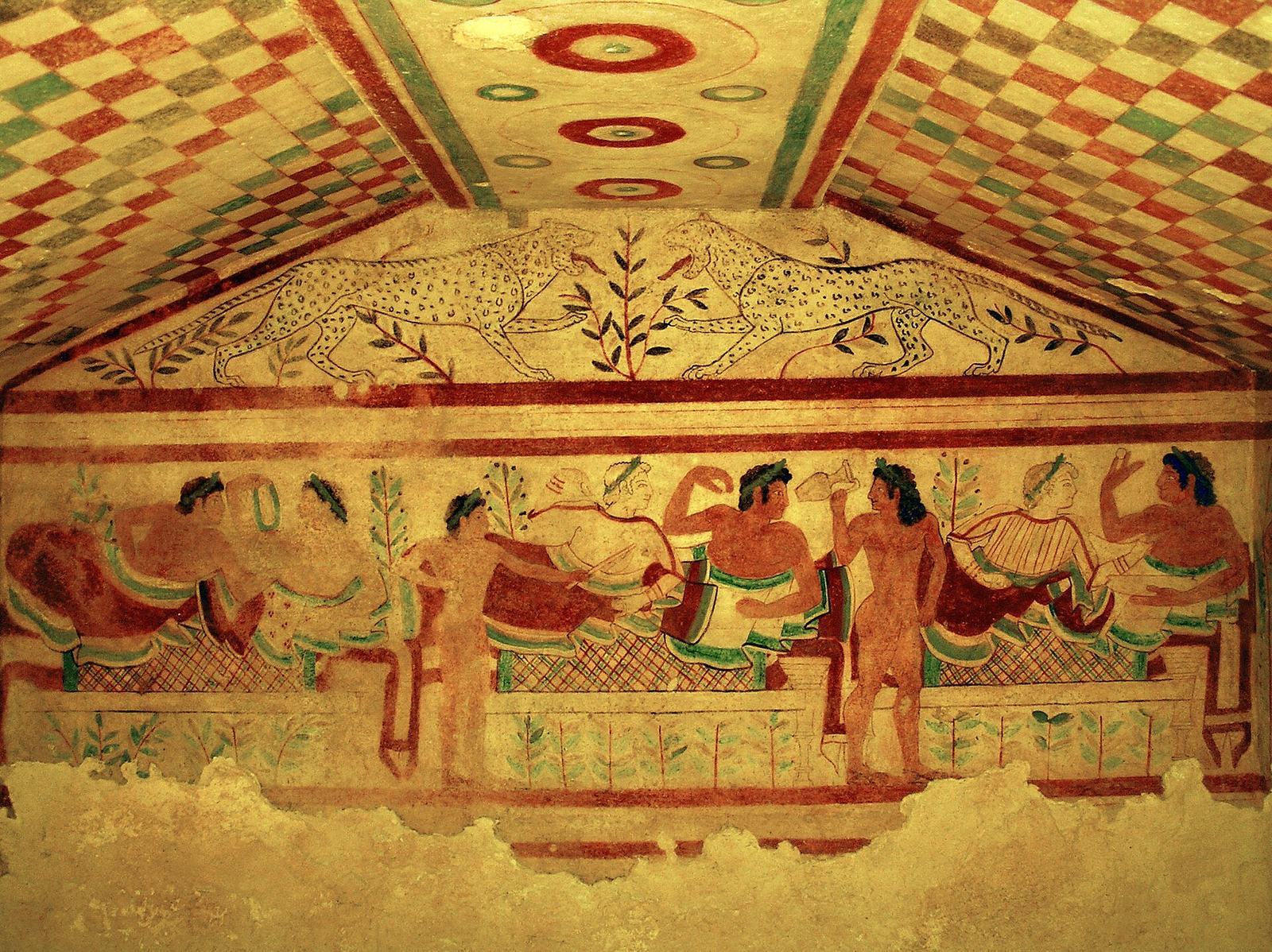
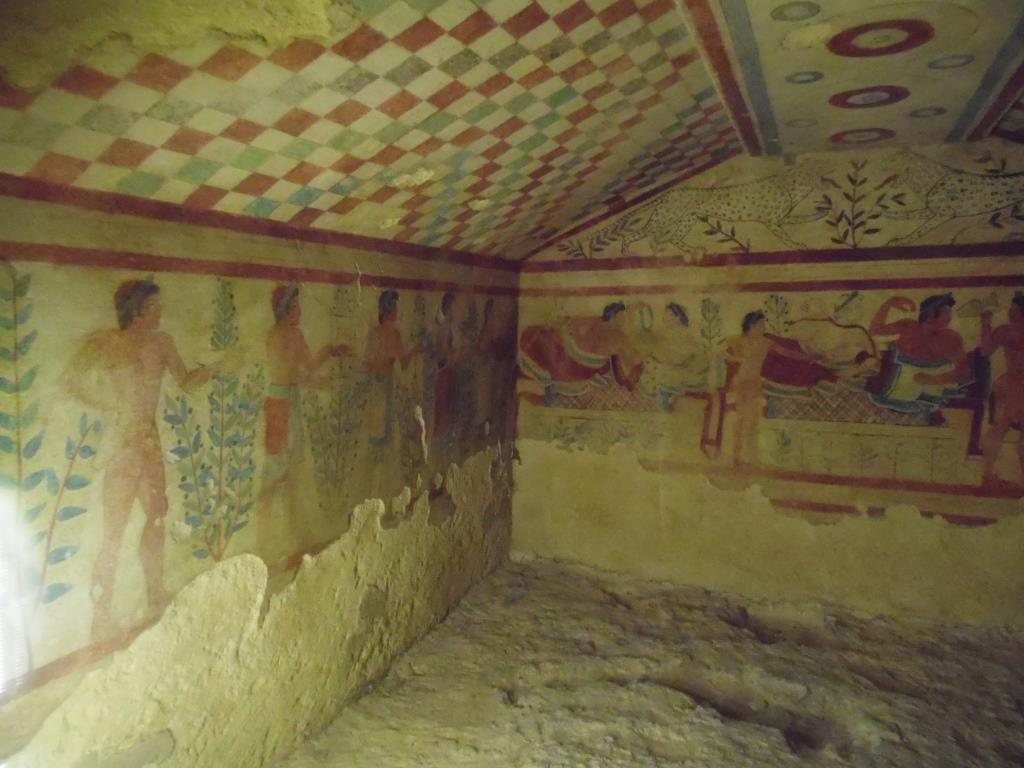
The chamber measures 3.52 by 3.30 by 2.16 metres. Its wall paintings include a banquet scene and processions, with the composition unfolding across three walls. The mural is among the best-preserved at Tarquinia, noted for its vivid colours and lively figures.
The Banquet and Leopards
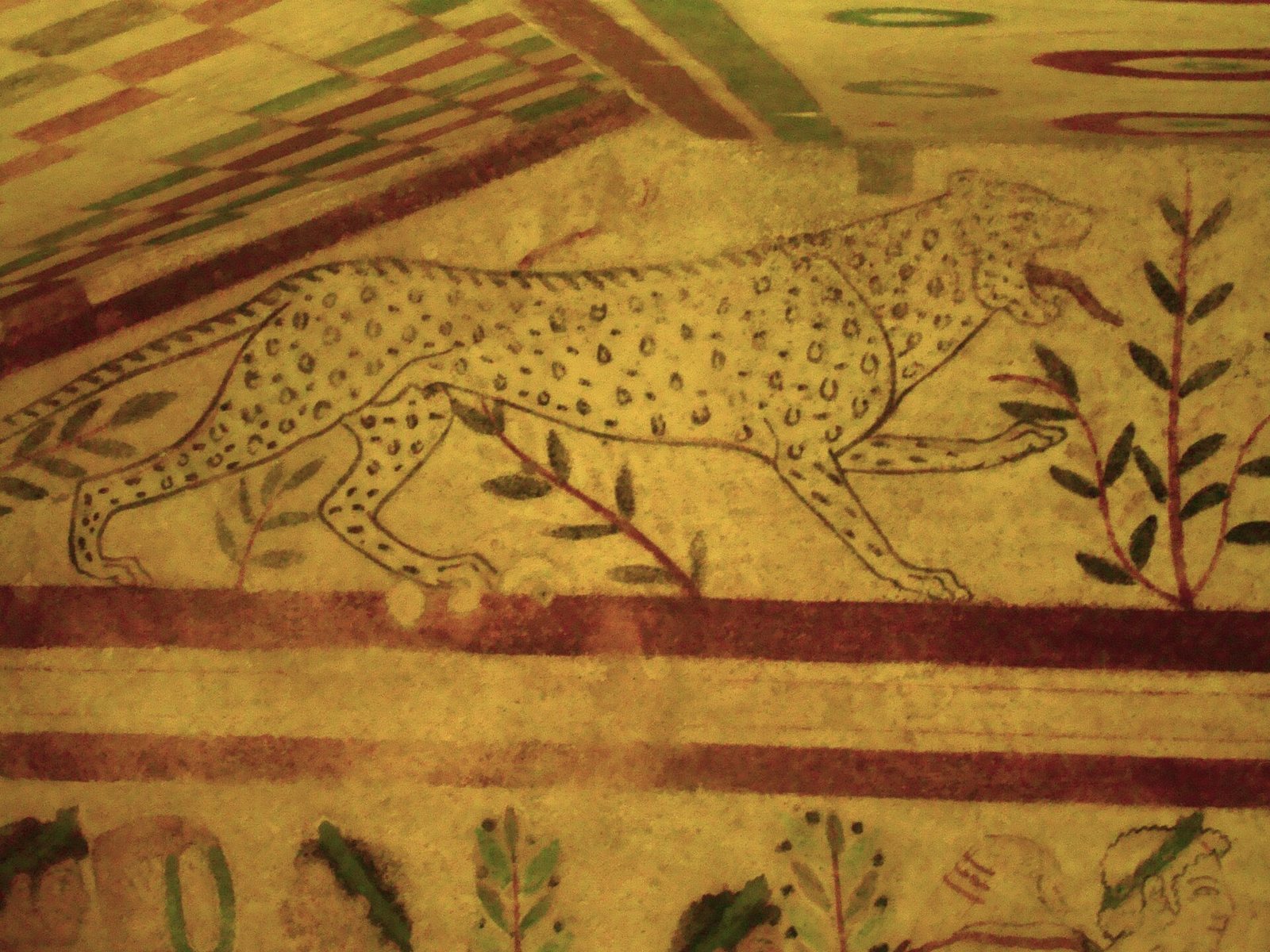
The tomb takes its name from two leopards painted facing one another above the banquet. Leopards were not part of Etruria’s local fauna and were probably rarely seen there. Their painted forms are thought to draw on Greek images of leopard hunting that had become popular in Egypt.
At the centre of the scene, three male-female couples in elegant clothing recline at a meal, attended by two nude boys carrying serving implements. The women have light skin and the men darker skin, following conventions also found in Archaic Greek, ancient Near Eastern, and ancient Egyptian art. The arrangement of the couples anticipates the Roman dining arrangement known as a triclinium, where diners reclined on couches.
Interpretations of the women vary: some readings identify them as courtesans, while more recent ones see them as free women sharing an equal standing with the men. The meal is commonly understood either as the deceased’s funeral banquet or as a family gathering held on the anniversary of his death. Its celebratory view of life differs from the more sombre tone of banquet scenes in earlier Etruscan tombs.
The man on the couch at the far right lifts an egg, a symbol of regeneration, while other diners hold wreaths. Slender trees and vegetation suggest an outdoor setting, perhaps beneath a canopy.
Processions and Musicians
Painted scenes on either side of the banquet show musicians and processions. On the right, wreathed figures and musicians approach the meal; on the left, six musicians and gift-bearers form a more formal procession. The sequence across the walls is read from right to left.
The musicians carry an aulos, a double-pipe wind instrument, and a chelys lyra, a lyre traditionally made with a tortoiseshell soundbox. Such instruments were mostly made of bone or wood, so painted scenes provide much of the archaeological evidence for them. One figure is thought to sing praise, and singing appears in other Etruscan tomb paintings as well.
Artistic Style
The central banquet draws on Greek art and marks a transition in Etruscan painting from the Archaic period, which preceded the Early Classical period, to Early Classical style. The processions retain a more distinctly Archaic character and were painted by different artists. The mural has also been judged less intricate and refined than the paintings in the Tomb of Bigas and the Tomb of the Triclinium.
Painted Vessel
A psykter, a vessel used to cool wine, was found in the tomb. It depicts an athlete, a servant boy, a youth, and a dog.