Nassouri’s Castle: A Qajar-Era Fortress in Bandar-e Tahari, Iran
Visitor Information
Google Rating: 4.2
Popularity: Very Low
Country: Iran
Civilization: Modern
Site type: Domestic
Remains: Palace
History
Nassouri’s Castle is situated in Bandar-e Tahari, Iran, and was built during the early years of the Qajar period. This fortress was commissioned by Sheikh Jabbar Nasori approximately 180 years ago, reflecting the architectural and cultural influences of that era in southern Iran.
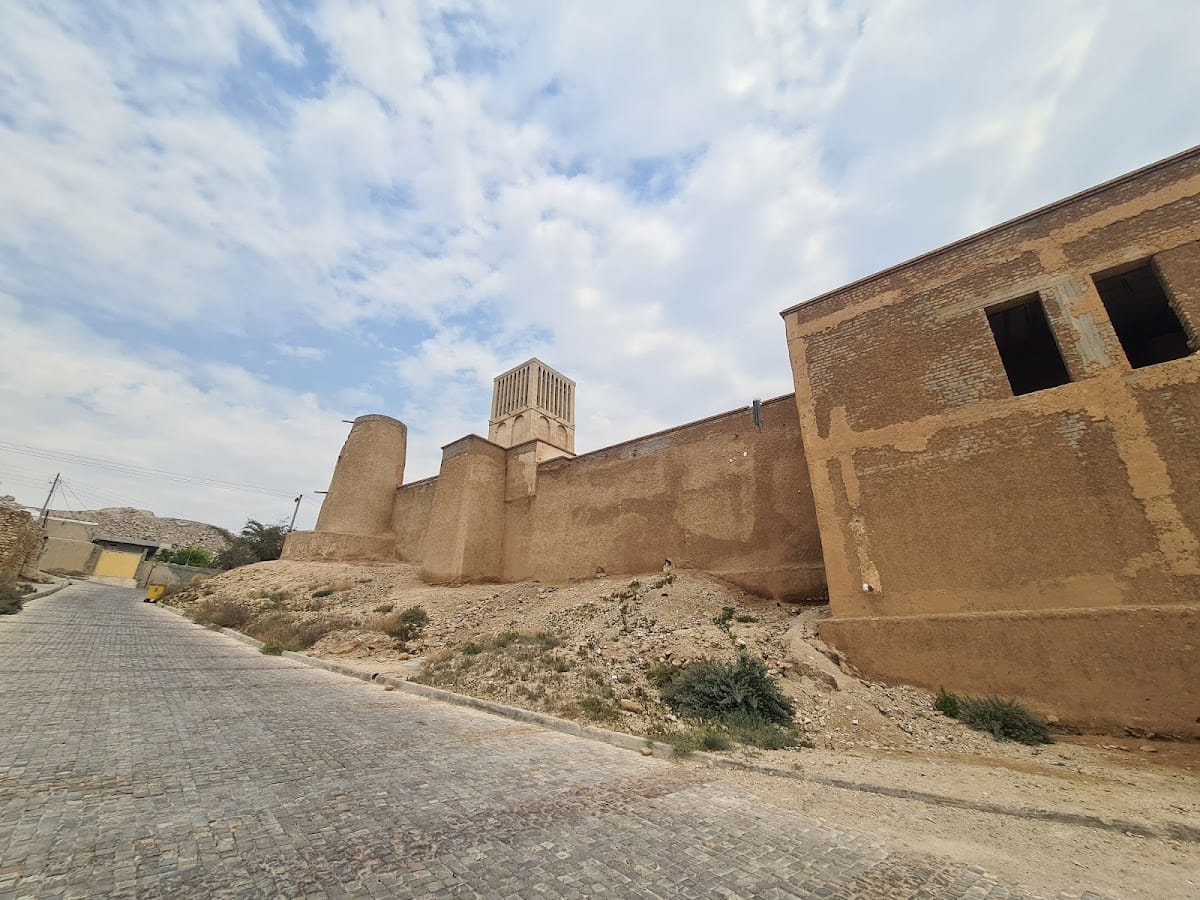
Constructed under Sheikh Jabbar Nasori’s direction, the castle served as a residence and possibly a local administrative center, given its strategic location near the Persian Gulf. The presence of windcatchers on the roof suggests an adaptation to the coastal climate, demonstrating the integration of regional architectural techniques. Its design was the work of the architect Ali Az’ar Shirazi, who incorporated both functional and decorative elements common to the period.
Since its construction in the early 19th century, Nassouri’s Castle has remained an important historical structure in the region. Recognizing its cultural and historical value, Iranian authorities officially registered the site as a national heritage monument on March 15, 2001. The registration marked an effort to preserve and protect the castle as a witness to the Qajar era’s architectural and social history within southern Iran.
Remains
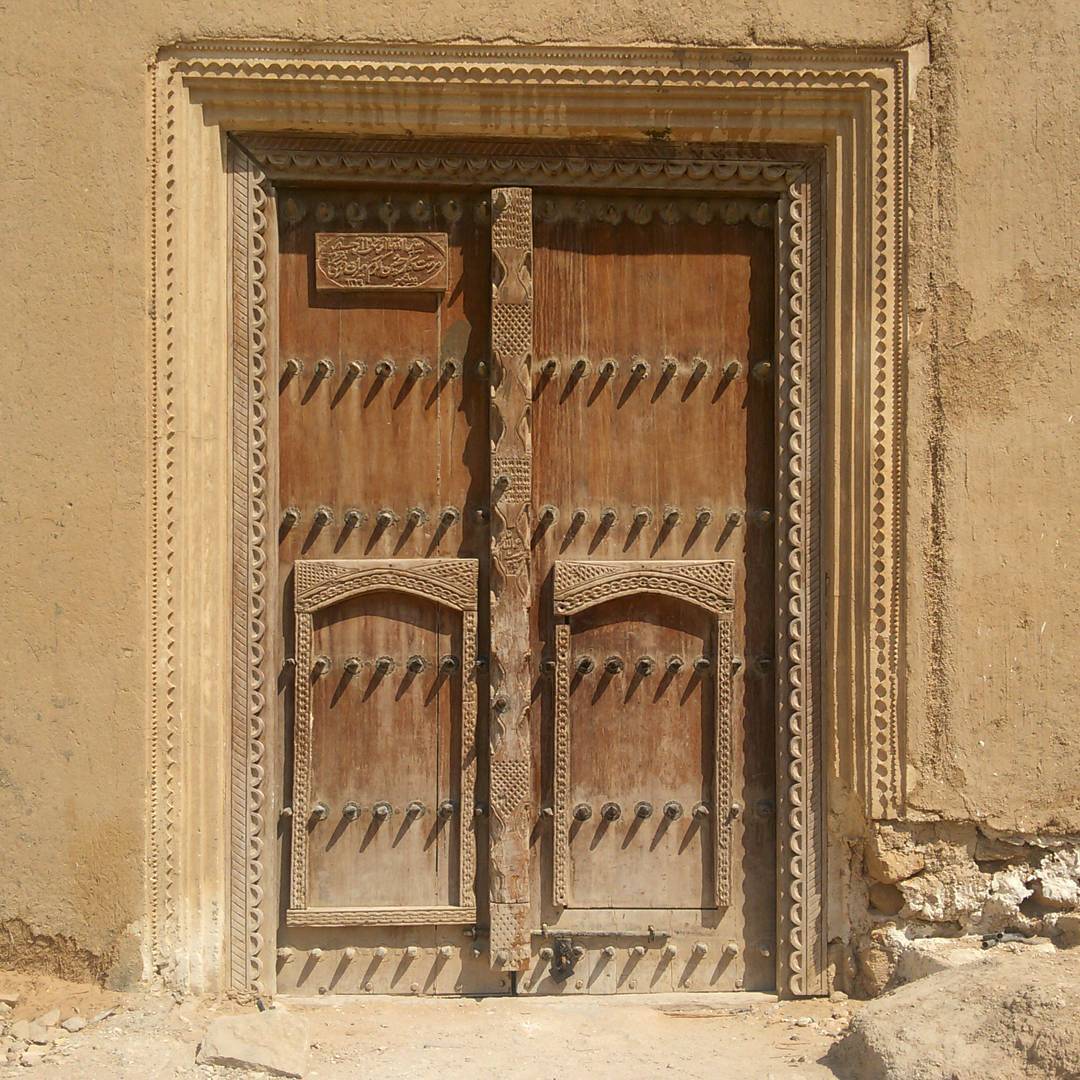
Nassouri’s Castle stands as a stone-built structure bonded with a mixture of clay and lime mortar, reflecting traditional construction methods of its time. The castle’s layout centers around a large southern entrance, oriented toward the Persian Gulf, which features a substantial wooden door richly adorned with iron nails arranged decoratively and intricate carvings enhancing its aesthetic appeal.
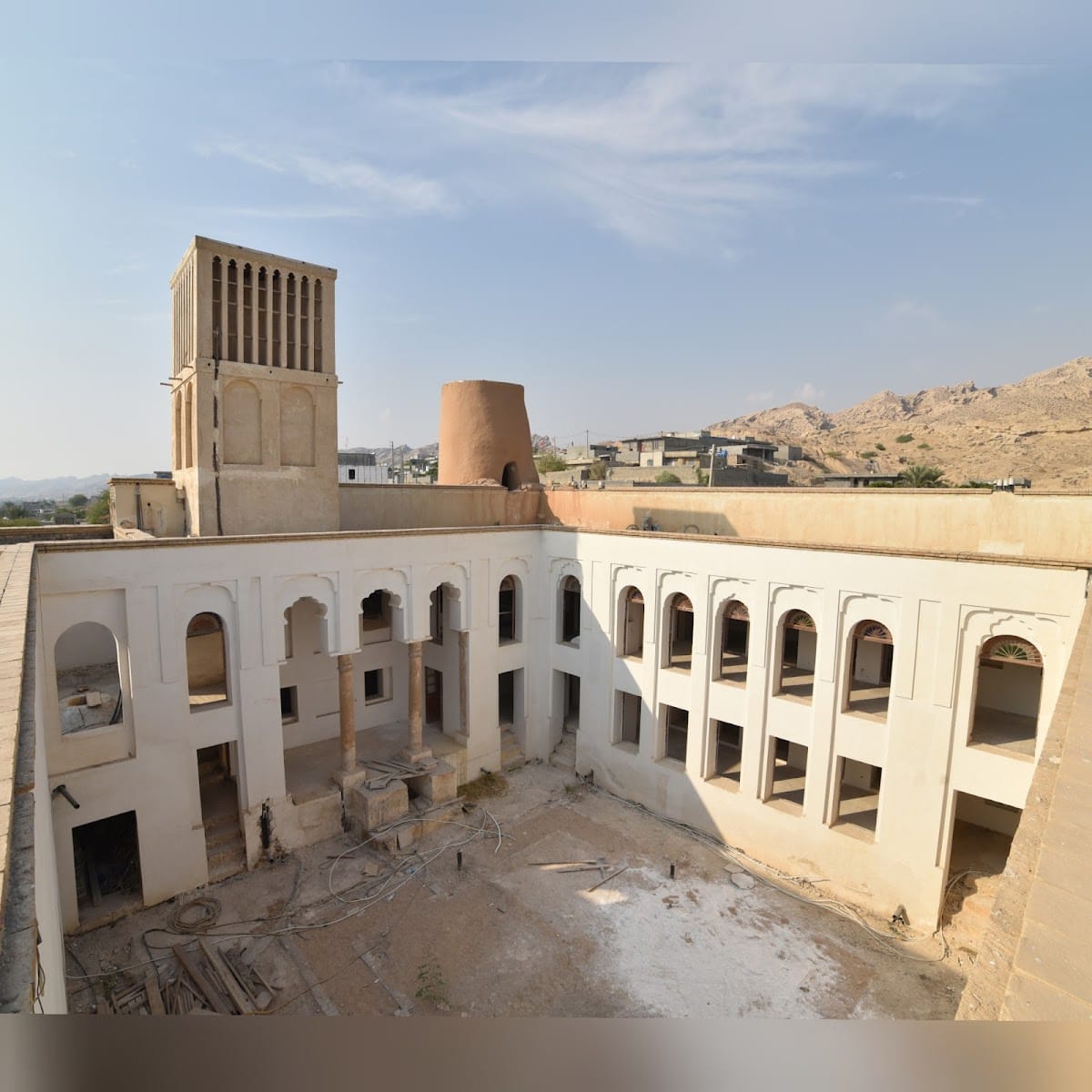
Immediately inside this doorway lies a spacious octagonal vestibule known locally as a hashti, a transitional space marked by eight simple niches embedded within its walls. Access to the upper floor is provided by two staircases: one positioned on the northern side leading from the outer courtyard through a plain wooden door into the inner quarters, and another on the western side that also ascends to the second level.
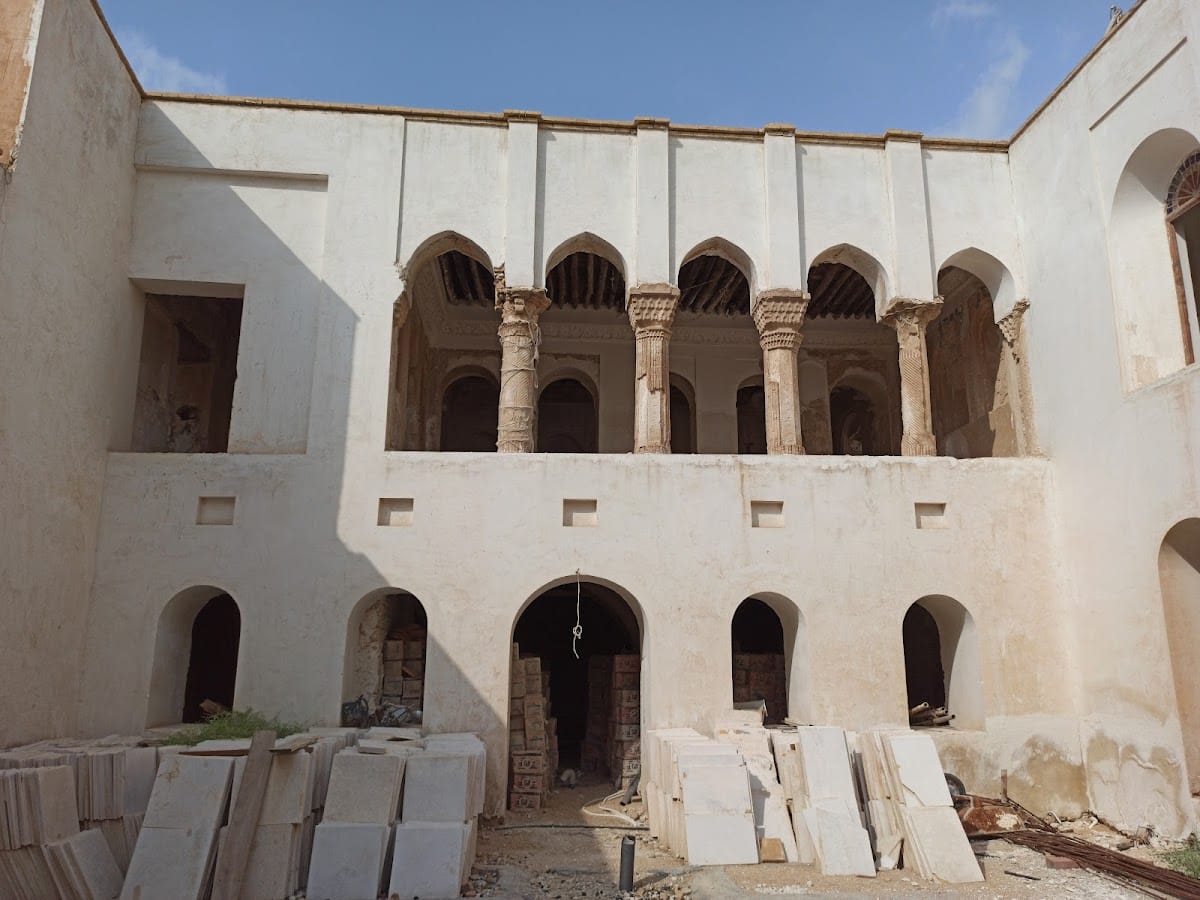
The upper floor is notable for its veranda, supported by robust stone columns detailed with gypsum plaster decorations reminiscent of the stylistic traditions found in Shiraz’s Vakil Bazaar. This veranda opens through a series of five wooden doors into a finely finished room on the western side, where marble flooring contrasts with plaster-covered walls embellished with floral and plant motifs, standing out in their simplicity and elegance.
On the rooftops, the castle features windcatchers, ventilation towers designed to harness the coastal breeze, characteristic of Persian Gulf architecture. Additional decorative elements include gypsum reliefs presenting motifs such as flowers, leaves, angels, and birds, adding to the castle’s visual richness while reflecting regional artistic traditions.
Together, these elements showcase Nassouri’s Castle as an enduring example of Qajar-period architecture adapted to its coastal setting, with a blend of functional design and ornamental craftsmanship preserved in its various components.