Narrow Water Castle: A Sixteenth-Century Tower House in County Down


Site at a Glance
- Rating
- 4.5
- Popularity
- Low
- Country
- United Kingdom
- Primary era
- Early Modern
- External website
- Open
- Eras represented
- Early Modern
- Civilizations
- Irish
- Site type
- Military
- Remains
- Castle
On this page8 sections
History
Narrow Water Castle is a sixteenth-century tower house in the United Kingdom, built by the Gaelic Irish Magennis family near Warrenpoint in County Down. The replacement complex was constructed during the 1560s as a fortified residence, while the wider site had earlier served a defensive purpose connected with the protection of Newry and the river approach.
Norman origins
A Norman keep, the principal fortified tower of a castle or defensive complex, stood at Narrow Water by 1212. It is associated with Hugh de Lacy, the first Earl of Ulster, an Anglo-Norman nobleman who held major land and political authority in medieval Ireland. The keep helped protect the Newry area from attacks by Irish clans seeking to recover lands taken by Anglo-Norman lords, including attacks approaching along the river.
The Magennis tower house
During the 1560s, the Magennis family, a Gaelic Irish noble family associated with County Down, built a replacement tower house and bawn. A bawn was an enclosed defensive courtyard adjoining a tower house or fortified residence. This sixteenth-century complex was damaged during the Irish Rebellion of 1641.
Hall family ownership
The property passed to the Hall family in the 1670s. The family continued to occupy the tower house until the early nineteenth century, when it built a large mansion in the Elizabethan Revival style, a nineteenth-century architectural style inspired by forms associated with the Elizabethan period. The mansion stands in the same townland but is distinct from the sixteenth-century tower house.
State care and the 1979 ambush
The sixteenth-century keep entered state care in 1956 and is a state-care historic monument within the Newry, Mourne and Down district. The nineteenth-century mansion remains a private Hall family residence.
On 27 August 1979, a Provisional IRA ambush near Narrow Water Castle killed 18 British Army soldiers. The Provisional IRA was a republican paramilitary organization active during the Troubles, the late twentieth-century conflict in Northern Ireland involving republican and loyalist paramilitary groups, British security forces, and disputes over the region’s constitutional status. The attack was the British Army’s greatest single loss of life during the Troubles and the IRA’s deadliest attack on the British Army during the conflict.
Remains
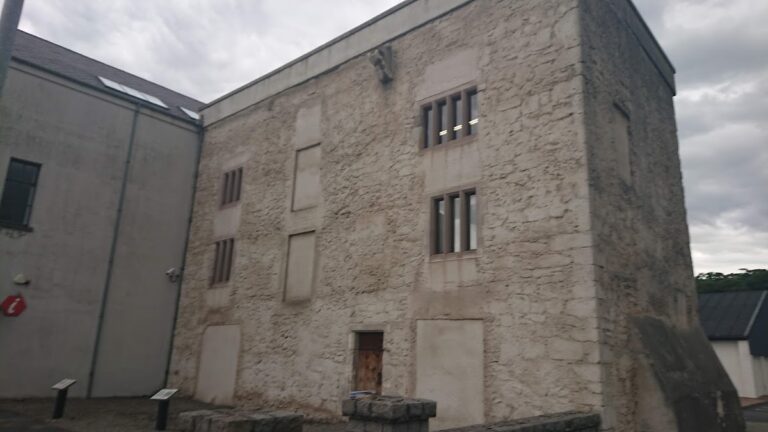
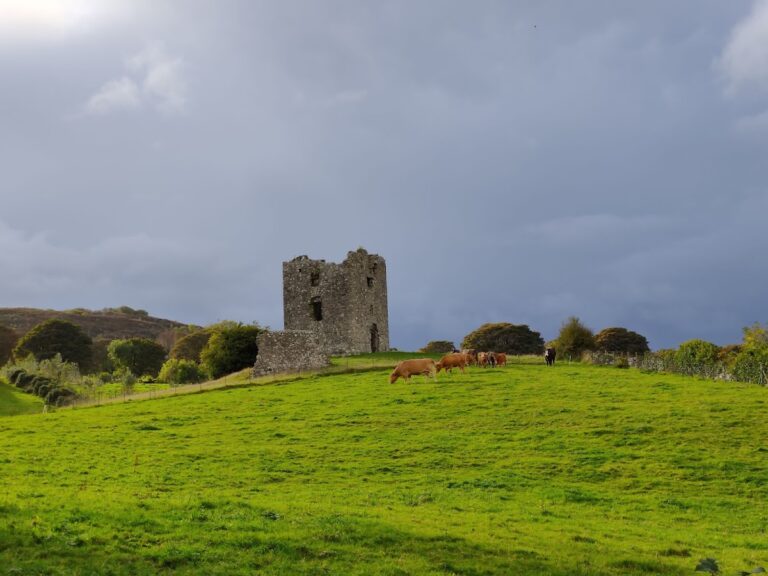
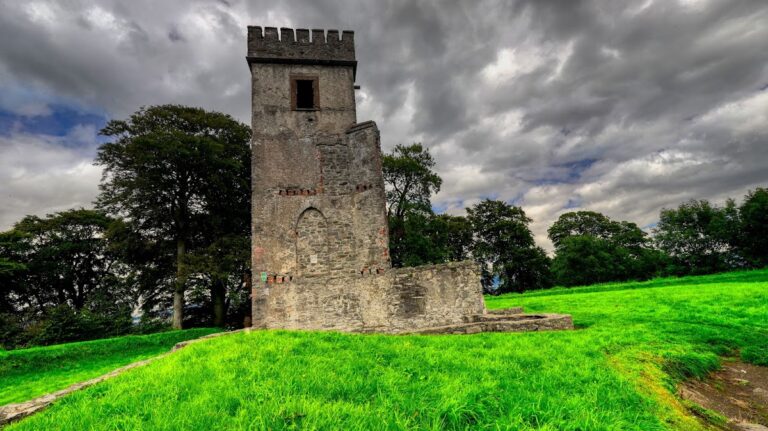
The surviving site includes a sixteenth-century tower house with a small bawn beside the A2 road on the County Down bank of the Clanrye, also called the Newry River. The river reaches Carlingford Lough about 1.6 kilometres to the south. The tower house forms the fortified historic core, while the later Elizabethan Revival mansion occupies the same townland as a separate residence.
Sixteenth-century tower house
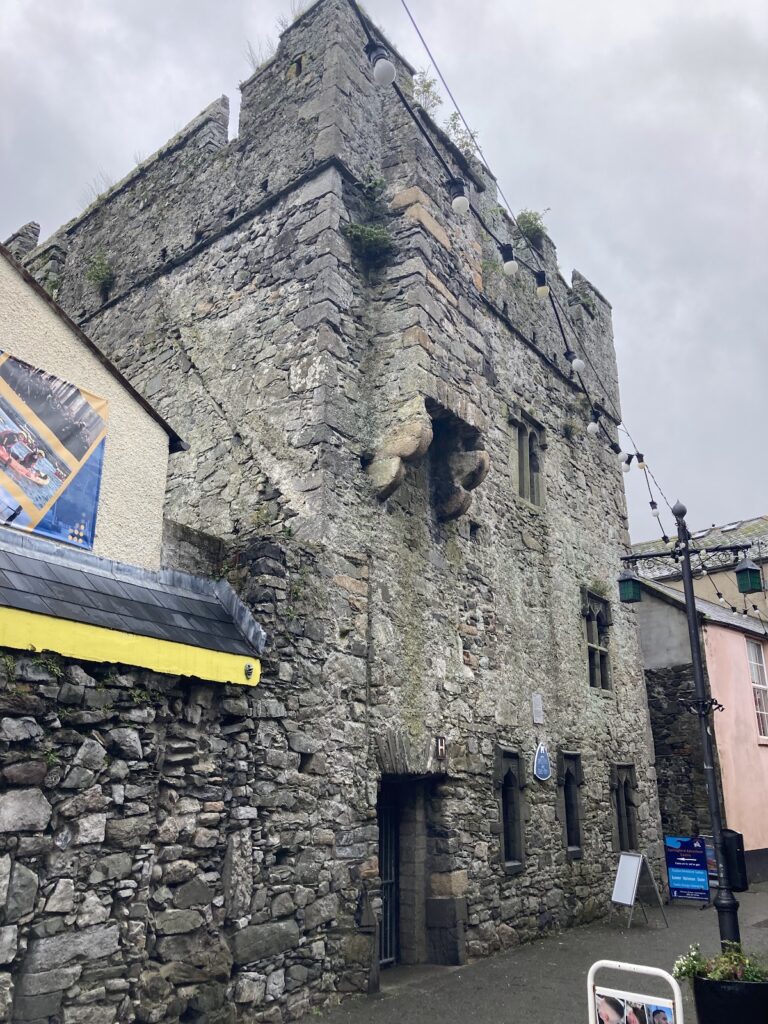
The tower house is generally rectangular in plan and rises at least three storeys. Its rooms are arranged one above another, with internal stairs, side chambers, closets, and latrines contained within the building. In places, the walls are about 1.5 metres thick. Some stairs, chambers, and latrines were built into this substantial masonry, while others were concealed within projecting corner turrets. Together with the adjoining small bawn, these features formed a compact fortified dwelling.
Elizabethan Revival mansion
The large nineteenth-century mansion was built for the Hall family in the same townland as the tower house. Its Elizabethan Revival design draws on architectural forms and details associated with the Elizabethan period. It is physically and historically distinct from the sixteenth-century fortified residence and remains a private Hall family home.