Killeavy Castle: A Nineteenth-Century Pseudo-Gothic Residence in Northern Ireland
Site at a Glance
- Rating
- 4.7
- Popularity
- Medium
- Country
- United Kingdom
- Primary era
- Modern
- External website
- Open
- Eras represented
- Modern
- Civilizations
- British
- Site type
- Domestic
- Remains
- Castle
On this page4 sections
History
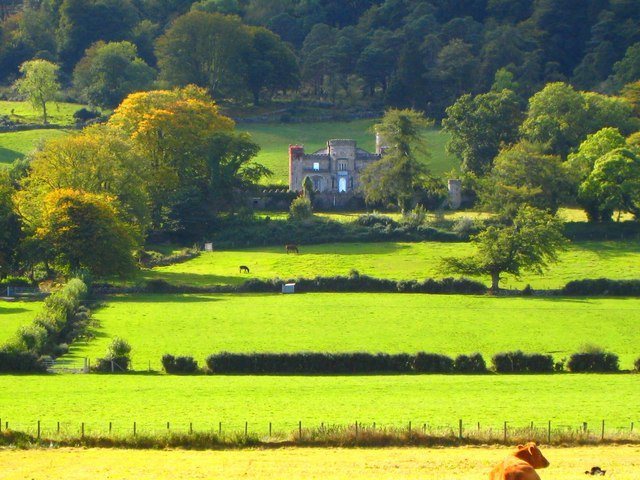
Killeavy Castle is a nineteenth-century pseudo-Gothic residence in the United Kingdom, located in County Armagh, Northern Ireland. Formerly known as Killeavy Lodge, it was associated with the Foxall family and was developed into a large castle on the eastern slope of Slieve Gullion.
The Foxall Residence
In 1836, Powell Foxall, a Newry banker, commissioned George Papworth, a Dublin-based architect who designed and developed buildings in Ireland, to develop the castle. By 1837, the property was recorded as the residence of John Foxall in the lands of Clonlum. The building was later expanded into an imposing pseudo-Gothic castle, a nineteenth-century revival of medieval Gothic forms.
The castle was offered for auction in 1852, but no buyer was found. The estate was then divided and sold in separate portions. By 1881, the castle was held by the Bell family, and it became locally known as Bell’s Castle. William G. Bell and his wife, Mary Bell, were buried at St Luke’s Church in Meigh, near the tomb of the Foxall family.
Decline and Proposed Restoration
When plans for its redevelopment were being considered, Killeavy Castle had stood vacant for more than ten years and had deteriorated severely. It was sold at auction for £1,190,000 to an anonymous Australian couple, who commissioned restoration plans for the castle and proposals for a nearby 36-room hotel. The Irish architect P. O’Haggan was preparing the restoration project. Killeavy Castle is recorded as a Grade A listed building.
Remains
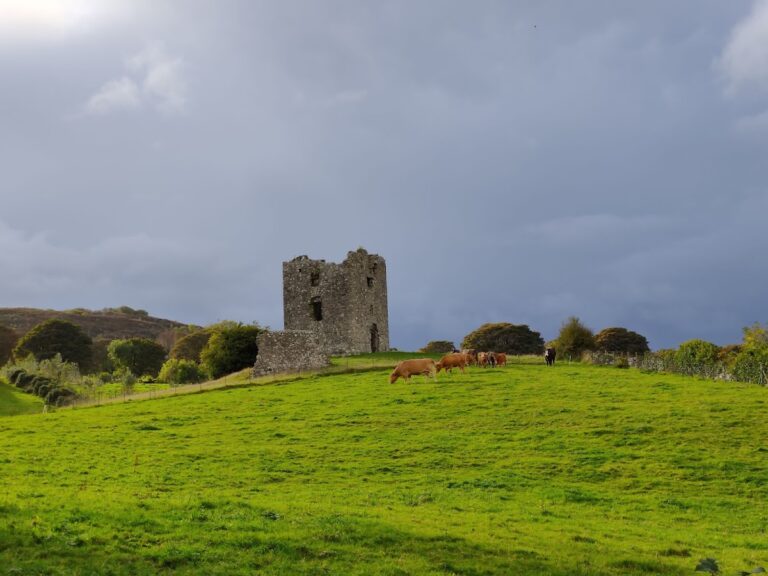
Killeavy Castle survives as a ruin within a 330-acre estate of land and woodland. Built from granite, the castle, its walls, gates, and garden were arranged as a single architectural complex. Its pseudo-Gothic design gives the surviving structure its nineteenth-century character, while the ruined condition reflects the long period of vacancy and severe deterioration before the proposed restoration.