Dún Dealgan Motte: A Norman Motte-and-Bailey Castle in Ireland


Site at a Glance
- Rating
- 4.5
- Popularity
- Low
- Country
- Ireland
- Primary era
- Medieval
- External website
- Open
- Eras represented
- Medieval, Early Modern
- Civilizations
- English, Irish, Norman
- Site type
- Military
- Remains
- Castle
On this page8 sections
History
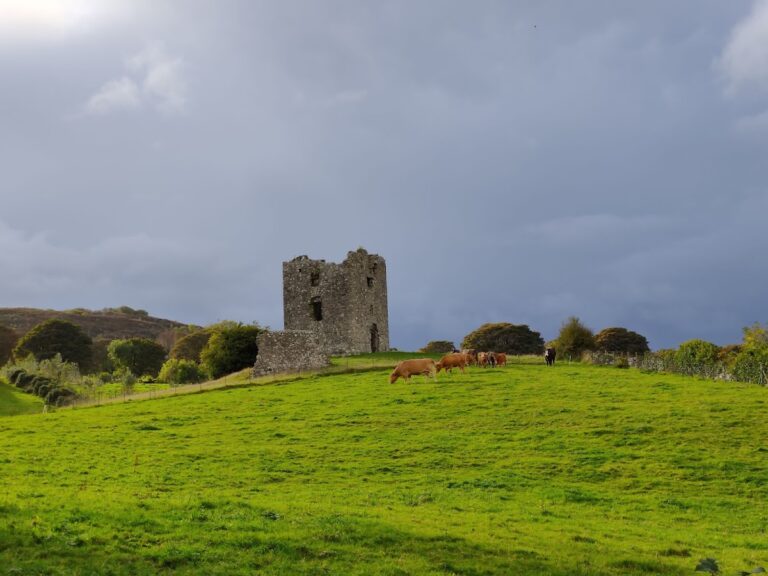
Dún Dealgan Motte is a Norman-period motte-and-bailey site in Ireland, located at Castletown near Dundalk. Built by the Cambro-Normans during the late twelfth century, it became part of the network of lordships associated with the medieval Old English community in Ireland. The site is a National Monument of Ireland, officially designated as Dun Dealgan, reference number 388.
Gaelic origins and legendary associations
An earlier Gaelic dún, meaning a fortified place, occupied the hill. The location has also been identified as an Iron Age circular fortification. Early records called the place Dealga, and the element dún was added after 1002, suggesting that a fort may not have been established on the hill until around that time. Irish legends associate Dún Dealgan with Cú Chulainn, the central hero of Irish mythology, identifying it as his birthplace and as the place where he based himself in the epic Táin Bó Cúailnge, which recounts a cattle raid involving Ulster and Connacht. The Annals of the Four Masters places a battle at the site in AD 500.
Norman occupation
Following the Norman invasion of Ireland, a wooden motte-and-bailey castle was built on the mound, probably in the late twelfth century by Bertram III de Verdun, a Norman nobleman whose family held estates and lordships in medieval Ireland and England. A motte-and-bailey castle combined an elevated earthen mound carrying a defensive tower or palisade with an adjoining enclosed courtyard, or bailey. In 1210, the stronghold belonged to Hugh de Lacy, 1st Earl of Ulster, an Anglo-Norman magnate and major lord in medieval Ireland. He abandoned it while being pursued northward by King John of England, whose reign lasted from 1199 to 1216.
Gothic rebuilding and later damage
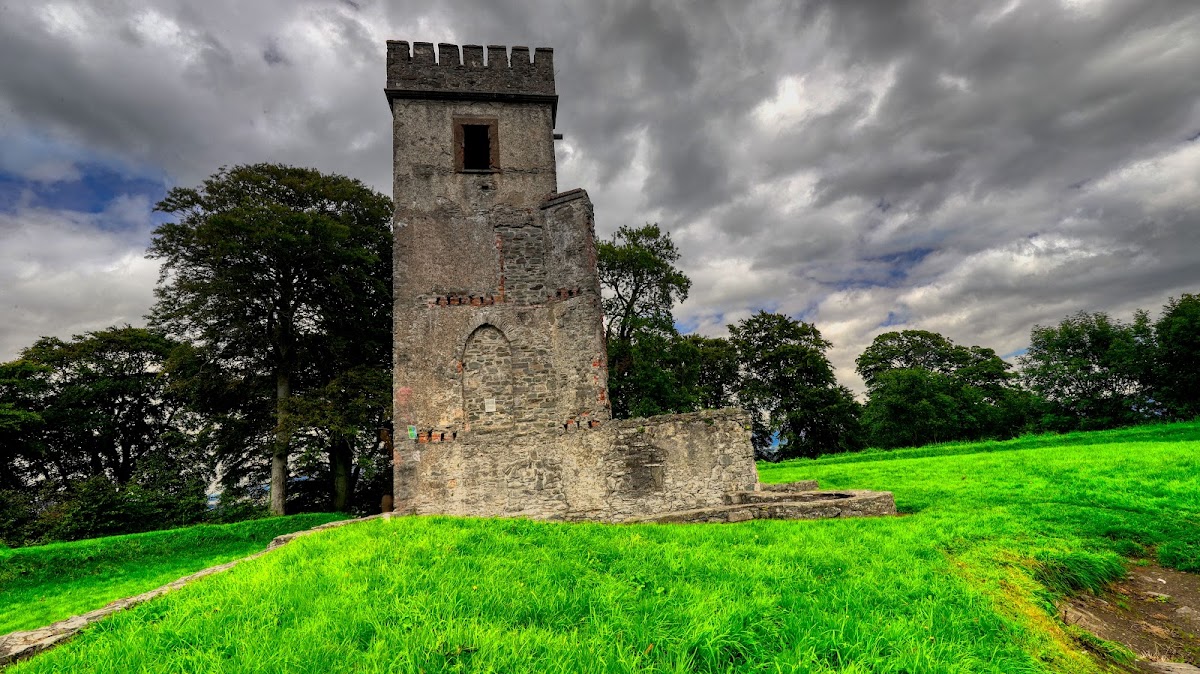
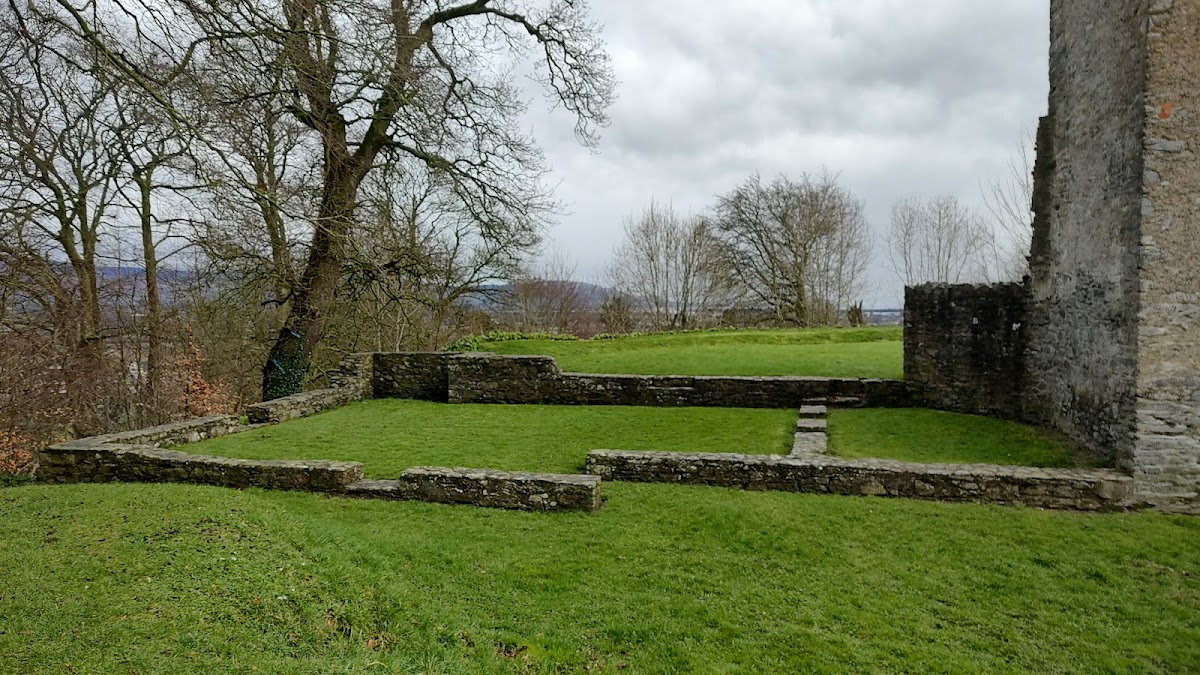
In 1780, the local landowner Patrick Byrne began constructing a Gothic house on the summit. The building was damaged during the 1798 Rebellion, an uprising against British rule in Ireland, leaving only a castellated tower known as Byrne’s Folly. Thomas Vesey Dawson rebuilt the house in 1850 as a country retreat. After the building fell into disrepair, the County Louth Archaeological and Historical Society acquired it for use as a museum. Armed men deliberately set the building on fire during the revolutionary period of 1919 to 1923, causing further damage.
Remains
Dún Dealgan Motte occupies a ridge immediately northwest of Dundalk and west of Mount Avenue, overlooking the Castletown River. Its position provided an extensive view, including a clear line of sight toward the river and the northern route from Ulster. The site covers about 0.85 hectares. Its principal surviving earthwork is the Norman motte, an earthen mound approximately 10 metres high, with a summit about 43 metres in diameter and a base about 68 metres across.
The Norman motte and bailey
The mound was designed to carry a wooden palisade and tower. A bailey lay to the southeast, forming the enclosed courtyard associated with the motte. Together, these earthworks represent the defensive arrangement established after the Norman invasion and preserve the basic physical organization of the medieval stronghold.
Earlier underground and landscape features
A Z-shaped souterrain, an underground passage or chamber, was cut into the hill during the Gaelic period. It is approximately 17 metres long and may have served as a refuge, storage space, or access route. An entrance to an artificial underground cavity was also found near the castle and is now blocked. A Bronze Age standing stone survived in a field near Dún Dealgan Motte, extending the known archaeological history of the surrounding landscape beyond the Gaelic and Norman periods.
Byrne’s Folly
The summit carries Byrne’s Folly, the Gothic castellated structure that survives from Patrick Byrne’s eighteenth-century house. The tower is the remaining visible part of the later country residence built on the medieval mound and reflects the site’s reuse after its period as a Norman stronghold.