Murō-ji Temple: A Shingon Mountain Sanctuary in Japan


Site at a Glance
- Rating
- 4.5
- Popularity
- Medium
- Country
- Japan
- Primary era
- Medieval
- External website
- Open
- Eras represented
- Medieval, Early Modern
- Civilizations
- Kamakura shogunate, Tokugawa
- Site type
- Religious
- Remains
- Monastery
On this page21 sections
History
Murō-ji Temple is a Shingon Buddhist mountain temple in Uda, Nara, Japan, whose principal foundation tradition places its establishment around 770–781, during the late eighth century. It developed as a secluded religious center on Mount Murō, combining ascetic practice, Buddhist learning, and rituals associated with a local dragon deity. The temple is affiliated with the Murō-ji school of New Shingon Buddhism and became its head temple in 1964.
Origins and foundation traditions
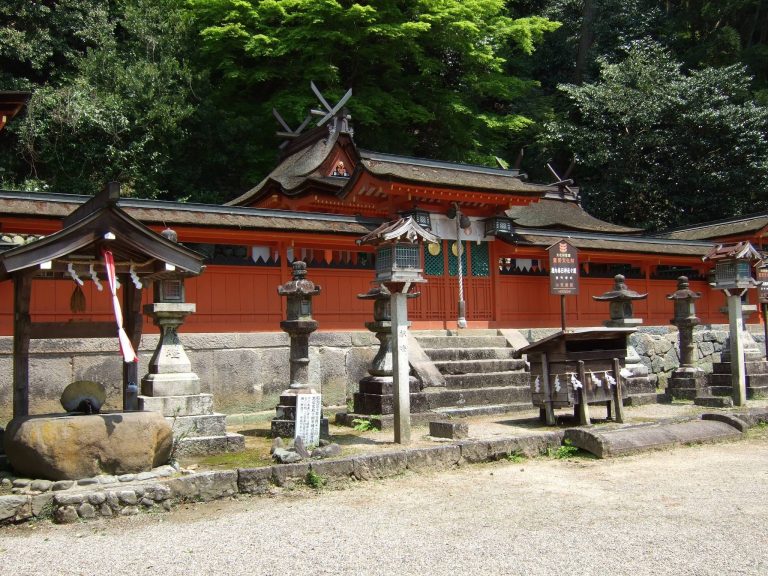
The Murō area is marked by volcanic rock formations and caves. A cave upstream along the Murō River was regarded as the dwelling of a dragon deity, and the place became associated with prayers for rain and for the end of rain. The imperial court made offerings there, and Ryūketsu Shrine had been established by the Heian period. These religious practices helped shape the sacred character of the mountain before and during the development of the temple.
Several traditions relate the temple to earlier religious figures. One attributes its foundation in 681 to En no Gyōja, the legendary mountain ascetic associated with the origins of Shugendō, at the request of Emperor Temmu. Another attributes a later restoration to Kūkai, the ninth-century founder of Japanese Shingon Buddhism. These accounts belong to later tradition rather than secure evidence for the temple’s earliest construction.
The principal foundation tradition places the temple in the Hōki era, around 770–781. When Prince Yamabe, later Emperor Kanmu, became ill, five monks were sent to Mount Murō to perform a ritual intended to extend his life. After the ritual succeeded, the imperial court is said to have ordered Kenkyō, a monk of Kōfuku-ji, to establish a temple at the site. Kenkyō was already in his sixties, and it remains uncertain how much of the complex had been completed during his lifetime.
Heian-period development
Shūen, who later became abbot of Kōfuku-ji, is therefore often regarded as Murō-ji’s practical founder. He had contact with Saichō, the founder of Japanese Tendai Buddhism. During Shūen’s lifetime, Shintai, a senior disciple of Kūkai, entered the temple. Around 835, the monks Enshū and another monk also joined the community. Enshū was a Tendai scholar and a disciple of Gishin, the first chief abbot of the Tendai tradition. The other monk was traditionally regarded as a disciple of Kūkai, although another lineage record identifies him as a disciple of Gishin.
Throughout the Heian period, Murō-ji functioned strongly as a subtemple of Kōfuku-ji, a major Buddhist temple historically based in Nara. It served as a secluded mountain retreat for ascetic practice and as a center where several Buddhist traditions were studied. Monks from Kōfuku-ji regularly came to the mountain for summer retreats devoted to prayers connected with the dragon deity. From the medieval period onward, Murō-ji became increasingly esoteric, while remaining subordinate to Kōfuku-ji.
The temple’s religious identity was closely connected with Zennyo Ryūō, a dragon deity associated with the wider belief in Ryūjin. Temple tradition holds that Shūen confined the local dragon deity within the vessel at the top of the pagoda. A Shinto shrine dedicated to the dragon cave was formerly part of the temple complex. In 1868, measures to separate Shinto and Buddhist institutions ended this institutional association, although the dragon tradition continued within the temple’s religious life.
Edo-period transformation and modern independence
In 1694, during the Edo period, Murō-ji came into the possession of Ryūkō, a monk of Gojō-in, and became a Shingon temple under Gokoku-ji. The following year, Keishōin, the mother of Tokugawa Tsunayoshi, donated 2,000 ryō, an Edo-period monetary unit. The donation financed repairs to the temple halls and pagodas. In 1698, Murō-ji became an independent temple of the Shingon Buzan school, a major branch of Japanese Shingon Buddhism.
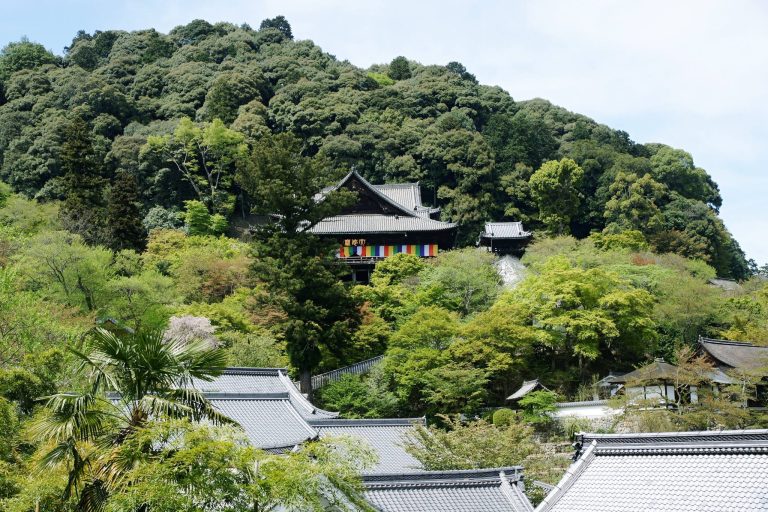
Murō-ji separated from the Shingon Buzan school in 1964 and became the head temple of the Murō-ji school of Shingon Buddhism. Its principal halls, pagoda, and several Buddhist sculptures hold National Treasure status, while other halls, sculptures, ritual implements, and related monuments are Important Cultural Properties. The complex remains a mountain sanctuary extending from the foot to the middle slopes of Mount Murō, with buildings and stairways distributed through woodland rather than arranged on a level compound.
Dragon worship and continuing tradition
Traditional dragon worship continues in an autumn festival associated with Ryūketsu Shrine. During October, straw dragon figures are placed at the temple and along the road to the shrine. The head priest processes between them while performing rituals. The former practice of making rain through these rites is no longer performed, but the dragon remains an important part of Murō-ji’s religious identity.
Remains
Murō-ji occupies the northern bank of the Murō River and the lower and middle slopes of Mount Murō. A vermilion drum bridge crosses the river at the approach. The administrative and monastic buildings, including the monks’ quarters, stand beyond the bridge, while the Niō Gate is farther to the right. From this lower area, steep stone stairs rise through woodland toward the principal Buddhist buildings, the pagoda, and the Oku-no-in.
Lower approach and ascent
Niō Gate
The Niō Gate is a modern gatehouse reconstruction. Its original Genroku-period gate was absent for many years after a fire, and the present structure was rebuilt in 1965. A small Benzaiten shrine stands beyond the gate. The approach then leads toward Yoroisaka, or “Armor Slope,” a steep stone stairway that climbs through shrubbery toward the upper complex.
Upper approach
At the top of Yoroisaka stands the Kondō, with the Kamakura-period Miroku-dō to its left. Farther uphill are the Hondō and the five-storied pagoda, which stands behind and above the hall. A further ascent of nearly 400 stone steps leads toward the Oku-no-in. Sacred caves and unusual volcanic rock formations occur around Mount Murō, including the cave upstream from the temple associated with the dragon deity.
Heian-period Buddhist buildings
Kondō
The Kondō is a single-story Buddhist hall with a hipped roof covered in wooden shingles. Its overall plan is five bays wide by five bays deep. The sanctuary occupies five bays by four, while a one-bay worship space projects from the front beneath a subsidiary eave. The front section extends over sloping ground and is supported by long posts beneath the floor. This is kakezukuri, a mountain-building technique in which a structure projects over a slope on a framework of supporting posts.
The sanctuary dates from the latter ninth century. It is described as the only surviving early Heian mountain-temple Buddhist hall of its type in Japan. Many structural members were replaced during a major repair at the end of the Kamakura period, and the projecting worship space was added in 1672. The hall preserves a group of Buddhist images and a painted plank mural that provide evidence for its changing ritual arrangement and the art of the Heian period.
Kondō sculptures
The principal image in the Kondō is a wooden standing Shaka Nyorai, 237.7 centimeters high, carved from a single block of kaya wood. It dates from the ninth century, and its original pedestal and halo survive. The halo shows the Seven Healing Buddhas, while the presence of the Twelve Heavenly Generals, protective attendants of Yakushi Nyorai, suggests that the image may originally have been made as Yakushi Nyorai, the Buddha of healing.
The hall formerly contained five standing images arranged in a row: Eleven-Headed Kannon, Monju, Shaka Nyorai, Yakushi Nyorai, and Jizō. Twelve Heavenly General figures stood before them. In 2020, the Eleven-Headed Kannon, Jizō, and six of the generals were moved to the temple treasure hall, along with other images. The arrangement of the central three bays indicates that the sanctuary may originally have held three principal images rather than five.
The standing Eleven-Headed Kannon is a ninth-century sculpture carved from one block of kaya and measures 195.1 centimeters high. Its halo is a later replacement. Together with the principal Shaka image, it displays the sculptural style known as the “Murō-ji style.” The Kondō also contains standing images of Monju and Yakushi Nyorai associated with the Heian period, traditionally attributed to Kūkai, while the Heian-period standing Jizō is now preserved in the treasure hall.
The images use flat painted plank halos, an unusual feature that preserves valuable evidence of Heian-period painting. The Jizō’s disproportionately large plank halo is thought to have originally belonged to another Jizō image, now preserved at Ansanji in Nakamura district. That sculpture is stylistically close to the Murō-ji Shaka, and its height corresponds to the halo.
Taishakuten Mandala
A painted plank mural known as the Traditionally Attributed Taishakuten Mandala is attached to the rear wall of the Kondō, behind the altar. It is painted in color on five vertically oriented hinoki boards joined horizontally and coated with a white-earth ground. The surviving panel measures 351.0 by 192.5 centimeters.
The mural presents a central triad slightly below the middle of the composition. Other figures are arranged in eight horizontal rows and fifteen vertical tiers, although extensive paint loss in the lower part suggests that the original design probably had sixteen tiers. The central figure wears a Chinese-style robe, sits on a woven textile seat, holds a vajra in the left hand, and holds an indistinct crescent-shaped object in the right.
The subject of the mural remains uncertain. It has been called a Taishakuten mandala since it was presented under that title in 1912, when the indistinct object in the figure’s right hand was interpreted as a fly whisk associated with Taishakuten. Its placement in only the central bay of a three-bay wall and its somewhat rough attachment have also led to the suggestion that it was transferred from another location. Its style is placed around the latter ninth century.
Kamakura-period halls
Miroku-dō
The Miroku-dō is a Kamakura-period hall and an Important Cultural Property. It formerly housed a standing wooden Miroku, a seated wooden Shaka Nyorai, and other Buddhist sculptures. The seated Shaka measures 106.3 centimeters high and was moved to the treasure hall in 2020. Its provenance is unknown, but the alternating thick, rounded and thin, sharply incised treatment of its robes places the sculpture stylistically in the early Heian period.
Hondō
The Hondō, also called the Kanjō-dō, is a Kamakura-period National Treasure. Its roof has an irimoya form, combining a hipped roof with gabled sections, and is covered with hinoki bark. The roof extends into a strongly curved projecting canopy. Inside is a wooden seated Nyoirin Kannon, the temple’s principal image. The hall’s alternative name refers to kanjō, a Shingon consecration ceremony involving initiation and ritual practice.
Five-storied pagoda
The five-storied pagoda was erected around 800, during the early Heian period. It is slightly more than 16 meters high, with a first story approximately 2.5 meters square. It is one of Japan’s oldest surviving outdoor wooden pagodas and is regarded as the smallest among outdoor wooden five-storied pagodas in Japan, as well as the second oldest after the pagoda at Hōryū-ji.
The tower is painted red and shows little reduction in roof size between the first and fifth stories. Its roofs project deeply, are relatively thick, and have gentle slopes. The structure uses unusually stout columns for its small scale, while the tower body narrows upward. The fifth story is about 60 percent the width of the first, but the bracket assemblies remain the same size, making them tightly spaced at the top. Complex timber framing is visible beneath the eaves.
The outer columns measure about 28 centimeters in diameter on the first story and about 23 centimeters on the upper stories. The roofs were probably originally covered with boards and were changed to hinoki-bark roofing during the repair of 1768. Instead of the usual water-smoke ornament above the finial, the pagoda has a vase-shaped hōbyō vessel topped by an octagonal hōgai canopy.
The pagoda retains original members together with elements from repairs in the late Kamakura period, the Edo-period work of 1768, and the Meiji period. Many side columns were replaced or moved from their original positions during the Edo and Meiji repairs. A copper plate attached to the central pillar records the 1768 repair, and the structure underwent partial dismantling and repair in 1900–1901.
On September 22, 1998, a cedar approximately 50 meters high fell onto the pagoda during a typhoon. The roofs and eaves on the northwest side were badly broken and sagged, while the central structural core, including the central pillar, remained intact. Restoration took place from 1999 to 2000. Tree-ring analysis of original timber during the work dated its felling to around 794, supporting the established construction date around 800.
Oku-no-in and memorial monuments
Mieidō
The Oku-no-in lies beyond the pagoda on a route that climbs toward a ridge, with part of the ascent formed by stairs. Its central building is the Mieidō, an early Muromachi-period Important Cultural Property. The small single-story hall has a square plan and a hōgyō-style roof covered with narrow boards. A stone finial completes the roof.
Stone monuments
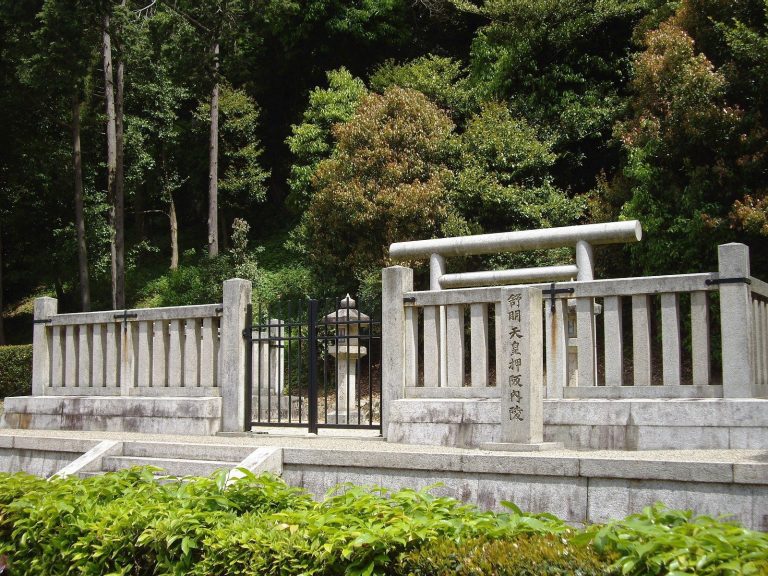
A stone two-story pagoda known as the Nōkyōtō dates from the late Heian period. The grounds also contain a Muromachi-period gorintō, a five-element funerary or memorial monument, accompanied by two smaller gorintō and a base. The group is traditionally identified as the grave of Kitabatake Chikafusa, a fourteenth-century court noble and historian associated with the Southern Court. A separate grave associated with Shūen stands beside the five-storied pagoda.
Treasure hall and temple landscape
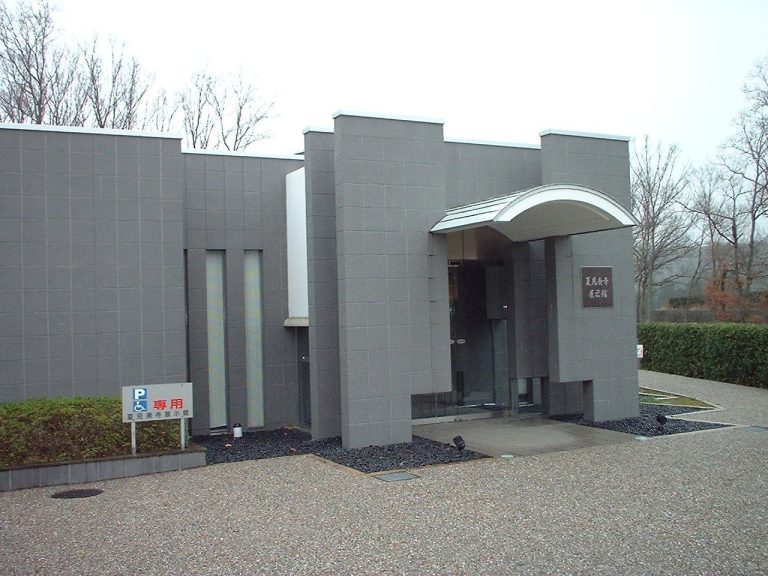
The temple treasure hall, opened in 2020, preserves sculptures that were formerly installed in the Kondō and Miroku-dō. These include the Kondō’s Eleven-Headed Kannon, Jizō, and six Twelve Heavenly Generals, as well as the seated Shaka from the Miroku-dō. Other associated works include a Heian-period standing Miroku in the Miroku-dō, a Heian-period seated Nyoirin Kannon in the Hondō, and additional images, some of which remain in the Kondō.
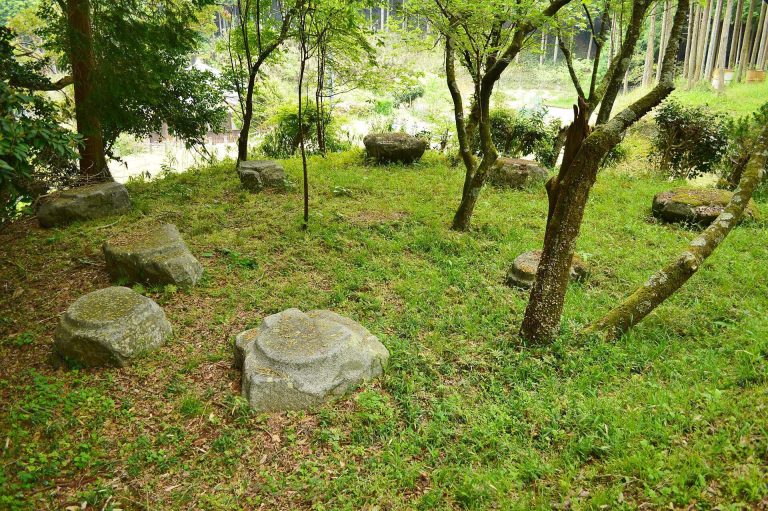
Murō-ji’s physical setting includes the caves and volcanic rock formations around Mount Murō, including the dragon-associated cave upstream along the river. Approximately 3,000 rhododendrons grow within the temple grounds, adding a distinctive plant landscape to the woodland sanctuary.