Eisan-ji Temple: A Historic Buddhist Temple in Gojō, Japan


Site at a Glance
- Rating
- 3.9
- Popularity
- Low
- Country
- Japan
- Primary era
- Classical
- External website
- Open
- Eras represented
- Classical, Medieval, Early Modern
- Civilizations
- Ashikaga shogunate, Kamakura shogunate, Yamato
- Site type
- Religious
- Remains
- Temple
On this page13 sections
History
Eisan-ji Temple is a Buddhist temple in Gojō, Nara Prefecture, Japan, traditionally founded in 719 and associated with the Fujiwara family and the Nara period. Its full name is Gakushō-san Eisan-ji, and it belongs to the Buzan school of Shingon Buddhism, an esoteric tradition centered on ritual, mantra, mandala, and Mahayana Buddhist deities. Its principal object of worship is Yakushi Nyorai, the Buddha of healing and medicine.
Foundation and Fujiwara patronage
The temple’s foundation is traditionally attributed to Fujiwara no Muchimaro, the eldest son of Fujiwara no Fuhito, although the foundation account is not securely documented. The temple was originally known as Sakiyama-dera. Tradition holds that it later took the name Eisan-ji after flourishing during the Heian period.
Muchimaro established the Southern House of the Fujiwara, a branch of the aristocratic family descended from him. From the Nara period onward, this branch controlled extensive estates in the surrounding region. Eisan-ji later became a branch temple of Kōfuku-ji and served as the Southern House’s memorial temple, or bodaiji, where rites for the family and lineage were performed. The temple flourished into the Kamakura period.
After Muchimaro’s death, his son Fujiwara no Nakamaro is traditionally said to have built the octagonal hall in his father’s memory. Muchimaro’s grave was moved in 760 from Sahoyama, north of Nara, to the mountain north of Eisan-ji. A Shōsōin document dated December 20, 763, refers to a construction office for a round hall, a reference understood to concern Eisan-ji’s octagonal hall. Its construction is therefore placed between 760 and 764, the year of Nakamaro’s death.
Religious and medieval history
Eisan-ji is traditionally connected with En no Gyōja, the semi-legendary figure regarded as the founder of Shugendō. This mountain-based religious tradition combines Buddhist, Shinto, and ascetic practices. The association also links the temple with the religious culture of mountain practice.
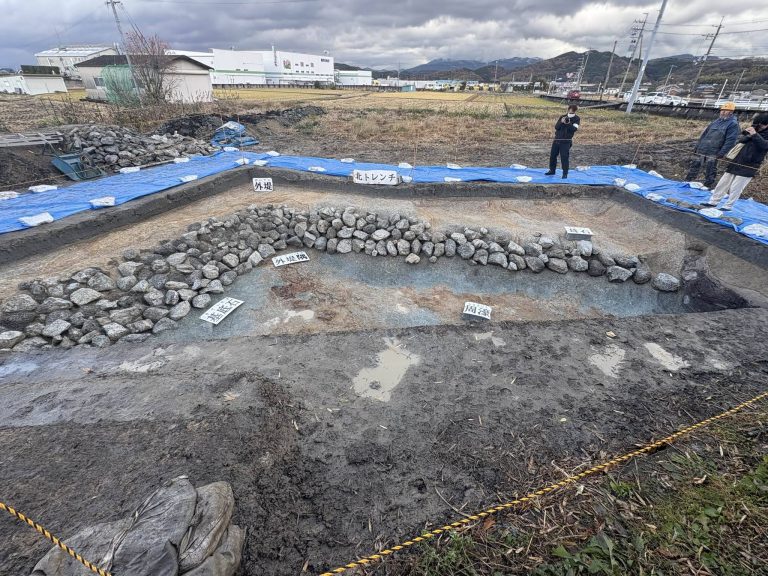
During the Nanboku-chō period, the era of rivalry between Japan’s Northern and Southern Imperial Courts from 1336 to 1392, Emperor Go-Murakami, Emperor Chōkei, and Emperor Go-Kameyama used Eisan-ji as a temporary imperial residence. The remains of these residences form the Eisan-ji Imperial Residence Site, which is designated a National Historic Site.
By the end of the Sengoku period, a time of prolonged political and military conflict in Japan, all of the temple buildings except the octagonal hall had been burned. The main hall, Amida Hall, and Tower Hall were later rebuilt, together with six subtemples. Eisan-ji temporarily became unoccupied in the early Edo period. It subsequently became a branch temple of Unryū-in, a subsidiary temple of Sennyū-ji in Kyoto, and later a branch temple of Gokoku-ji in Tokyo. Only one subtemple remains today.
Protected heritage and historical records
The octagonal hall and the temple bell are National Treasures, the higher of Japan’s two principal categories of legally protected cultural heritage named here. The stone seven-story pagoda, the Yakushi statue, the Twelve Heavenly Generals, the paintings in the octagonal hall, and the stone lantern are Important Cultural Properties.
Three historical documents formerly kept at Eisan-ji were acquired by national cultural authorities after the Pacific War and are now held by the National Museum of Japanese History. Together with the inscription connected with the octagonal hall, these records provide important evidence for the temple’s long history.
Remains
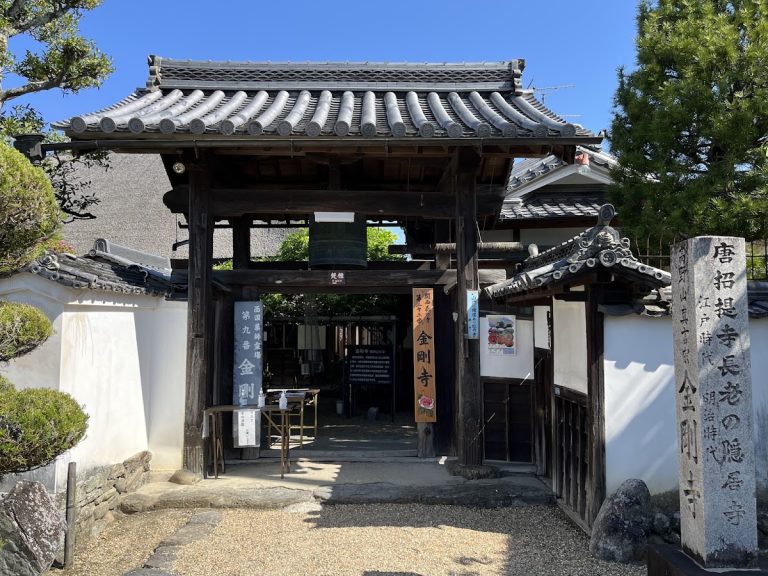
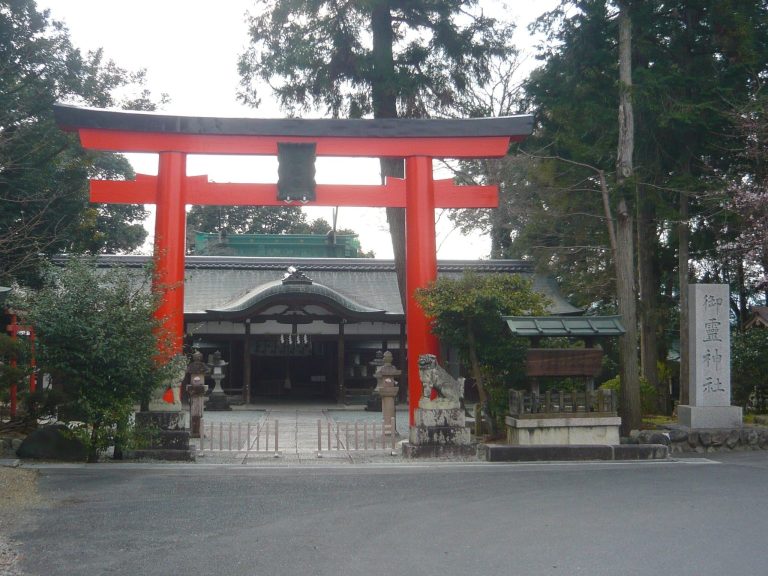
Eisan-ji stands above the Yoshino River. Its surviving complex includes the main hall, the octagonal hall, the Tower Hall or Dainichi Hall, a bell tower, the main gate, kitchen and living quarters, Goryo Shrine, and one remaining subtemple. The buildings and monuments represent several periods, from the Nara and Heian periods through the Muromachi period and later rebuilding.
Temple buildings and stone monuments
Main hall and stone lantern
The main hall, also called the Golden Hall or Yakushi Hall, was rebuilt in 1553 during the late Muromachi period. Its altar holds a seated wooden image of Yakushi Nyorai inside a black-lacquered shrine, accompanied by Nikkō and Gakkō Bosatsu and other Buddhist images. The standing heavenly figures are works of the late Heian period. A study or archive room stands behind the hall. In front of the building is a stone lantern bearing an inscription dated 1284. Much of its original form survives, and this type is known as an Eisan-ji-style lantern.
Octagonal hall
The octagonal hall is a tiled-roof Nara-period building traditionally attributed to Fujiwara no Nakamaro. Its construction is estimated between 760 and 764, making it possible to place the building’s creation within a particularly narrow period. It is a rare surviving Nara-period structure outside Heijō-kyō and Ikaruga.
The building has an octagonal exterior surrounding a square inner sanctuary. Four octagonal pillars around the sanctuary provide key structural support. Doors and lattice windows occupy its four sides, and the hall houses a seated statue of Dainichi Nyorai, the central cosmic Buddha of Shingon Buddhism.
Before the building was dismantled and repaired in 1911, its roof was thatched. The repair replaced it with a tiled roof and restored the roof jewel. Fragments believed to come from the original stone roof jewel are preserved separately.
Tower Hall and seven-story pagoda
The Tower Hall, also called Dainichi Hall, houses the image of Dainichi Nyorai. Beside it stands a late-Heian-period stone seven-story pagoda made of tuff. The pagoda is described as one of the oldest stone pagodas of its kind.
Paintings, sculpture, and bell
Octagonal-hall paintings
The four interior pillars, four upper flying tie beams, and ceiling of the octagonal hall retain severely flaking colored paintings. The pillars show bodhisattvas playing musical instruments. The tie beams depict flying celestial beings, human-faced birds, bodhisattvas, and immortals, while the ceiling carries a floral arabesque design. These paintings are valuable remains of Nara-period art and are designated separately from the building.
Twelve Heavenly Generals
The wooden standing statues of the Twelve Heavenly Generals bear inscriptions dating them to 1454 and 1455. Several Buddhist sculptors are thought to have carved them over one year. Their forms reflect the style of Muromachi-period heavenly guardian figures, and identifying zodiac symbols appear above their heads.
Heian-period temple bell
The bronze temple bell was made in 917, according to its inscription. Cast inscriptions cover all four sides, and tradition attributes their composition to Sugawara no Michizane and their calligraphy to Ono no Michikaze. The bell is regarded, together with those at Jingo-ji in Kyoto and Byodo-in in Uji, as one of the Three Great Bells of the Heian Period.
Fujiwara no Dōmyō, a fifth-generation descendant of Fujiwara no Muchimaro, donated the bell with his uncle Tachibana no Sumikiyo. It originally belonged to Dochō-ji in Yamashiro Province. That temple’s name was formed from one character of each donor’s name.