Munzingen Palace: A Renaissance Residence in Freiburg, Germany
Site at a Glance
- Rating
- 5
- Popularity
- Very Low
- Country
- Germany
- Primary era
- Early Modern
- Eras represented
- Early Modern
- Civilizations
- Habsburg, Habsburg Austria, Holy Roman Empire
- Site type
- Domestic
- Remains
- Elite Residence
History
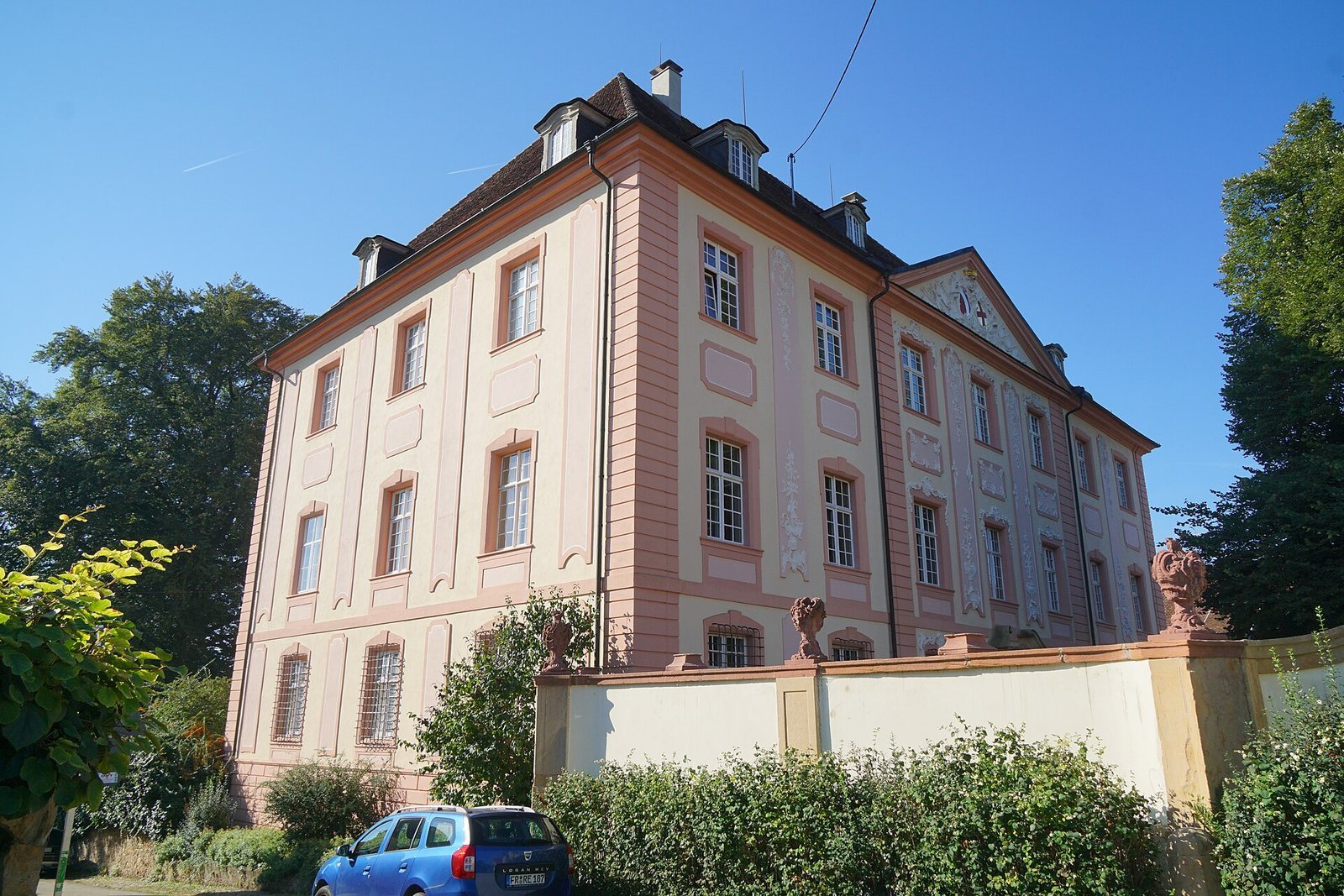
Munzingen Palace is a Renaissance residence in Munzingen, a district of Freiburg, Germany, built in 1672 by Johann Friedrich von Kageneck (1633–1705), a member of a German noble family. The Renaissance was a European artistic and architectural style. In the 18th century, Kageneck’s successor, Imperial Count Johann Friedrich Fridolin von Kageneck, remodeled parts of the palace in the later Baroque style. The title of Imperial Count was associated with the Holy Roman Empire. The work probably followed plans by Swiss architect Johann Jakob Fechter.
During the War of the Austrian Succession, a European conflict fought from 1740 to 1748, the Kageneck family fled to Switzerland. In 1744, French king Louis XV used the palace. French forces associated with Napoleon later destroyed the palace buildings.
During the Second World War, the Volkssturm, a German militia formed in the war’s final years, occupied the estate, followed by French troops. The Kageneck family has restored the palace buildings repeatedly and continues to use the palace. The buildings are protected historic monuments, and recent conservation work has included the historically important roof structure.
Remains
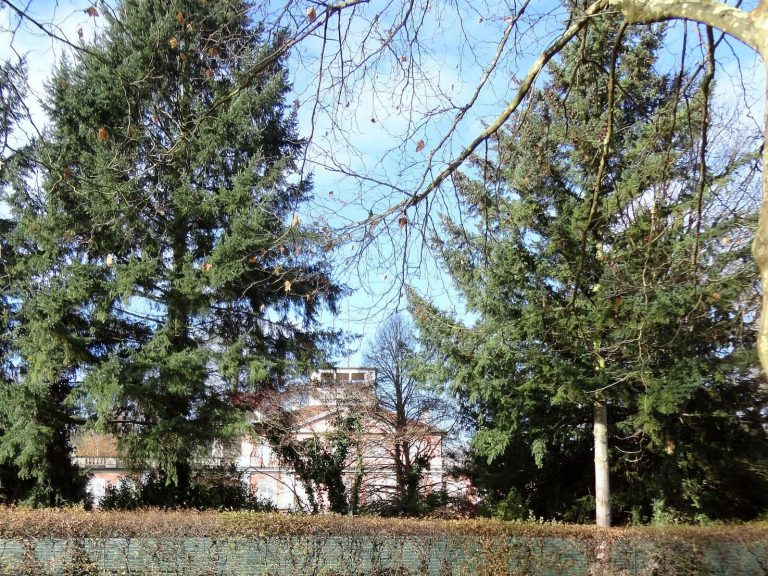
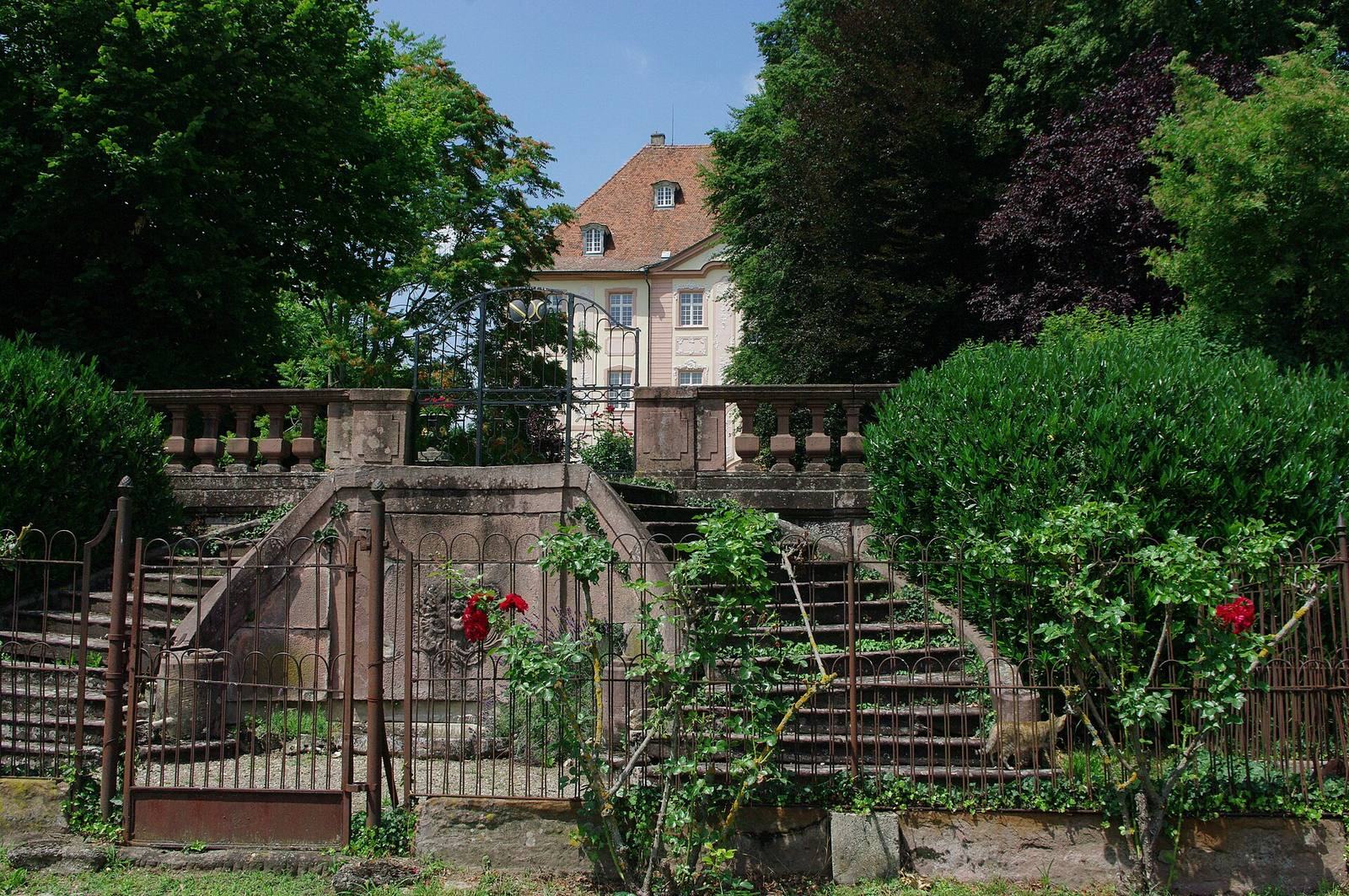
The palace stands on slightly elevated ground on the Schloßbuck. Its three-storey Renaissance-style building has a two-storey roof, and its façades were later given lavish Rococo decoration, an elaborate ornamental style. The grounds also include a park with an avenue of lime trees and a stand of old trees.
Interior and courtyard
The entrance hall has a pillar-supported cross vault, formed by two intersecting barrel vaults, and gives access to the house chapel. In the dining hall, church painter Simon Göser painted the ceiling with a scene of ancient deities. Single-storey buildings enclose the associated courtyard; they originally served as stables, storage spaces, and workshops.