Mstislavl Hillfort: A Medieval Fortified Settlement in Russia
Site at a Glance
- Popularity
- Medium
- Country
- Russia
- Primary era
- Medieval
- Eras represented
- Medieval
- Civilizations
- Unclassified
- Site type
- Military
- Remains
- Wall
On this page7 sections
History
Mstislavl Hillfort is the remains of a medieval fortified town at the present-day village of Gorodishche in Russia. Its major defenses were built in the twelfth century, and the town belonged to northeastern Rus, within lands associated with Suzdal and the Vladimir-Suzdal principality, a regional power in the northeast.
Early settlement and foundation
A settlement occupied the site between the seventh and tenth centuries and was probably associated with the Meryans, a Finno-Ugric people of northeastern Europe’s medieval forest zone. Slavic settlers reached the area during the tenth and eleventh centuries, as Slavic communities expanded into northeastern Rus.
The town’s foundation date is uncertain. One tradition places its establishment in the late eleventh century by Mstislav Vladimirovich, a son of Vladimir Monomakh who held the Rostov lands in 1094–1095. Another possibility is that Vladimir Monomakh founded the town and named it after his son.
Fortified town and regional conflicts
Mstislavl’s fortifications were built in the twelfth century. The town first appears in a chronicle in 1135. The Battle of Koloksha was fought nearby in 1177. In 1216, during conflicts among the princes of northeastern Rus, the Battle of Lipitsa took place in the area. It was one of the largest battles of the period before the Mongol invasion.
Destruction and later record
Mstislavl was devastated during the Mongol invasion of Rus in the thirteenth century. It later appeared in the List of Russian Cities Near and Far, a medieval geographical text compiled around the late fourteenth or early fifteenth century.
A burial-mound cemetery near the Gza River, dating from the eleventh to thirteenth centuries, was investigated by Alexei Uvarov in 1852 and may have served as Mstislavl’s pagan burial ground. The hillfort is recognized as a cultural heritage site of federal importance in Russia.
Remains
Fortifications
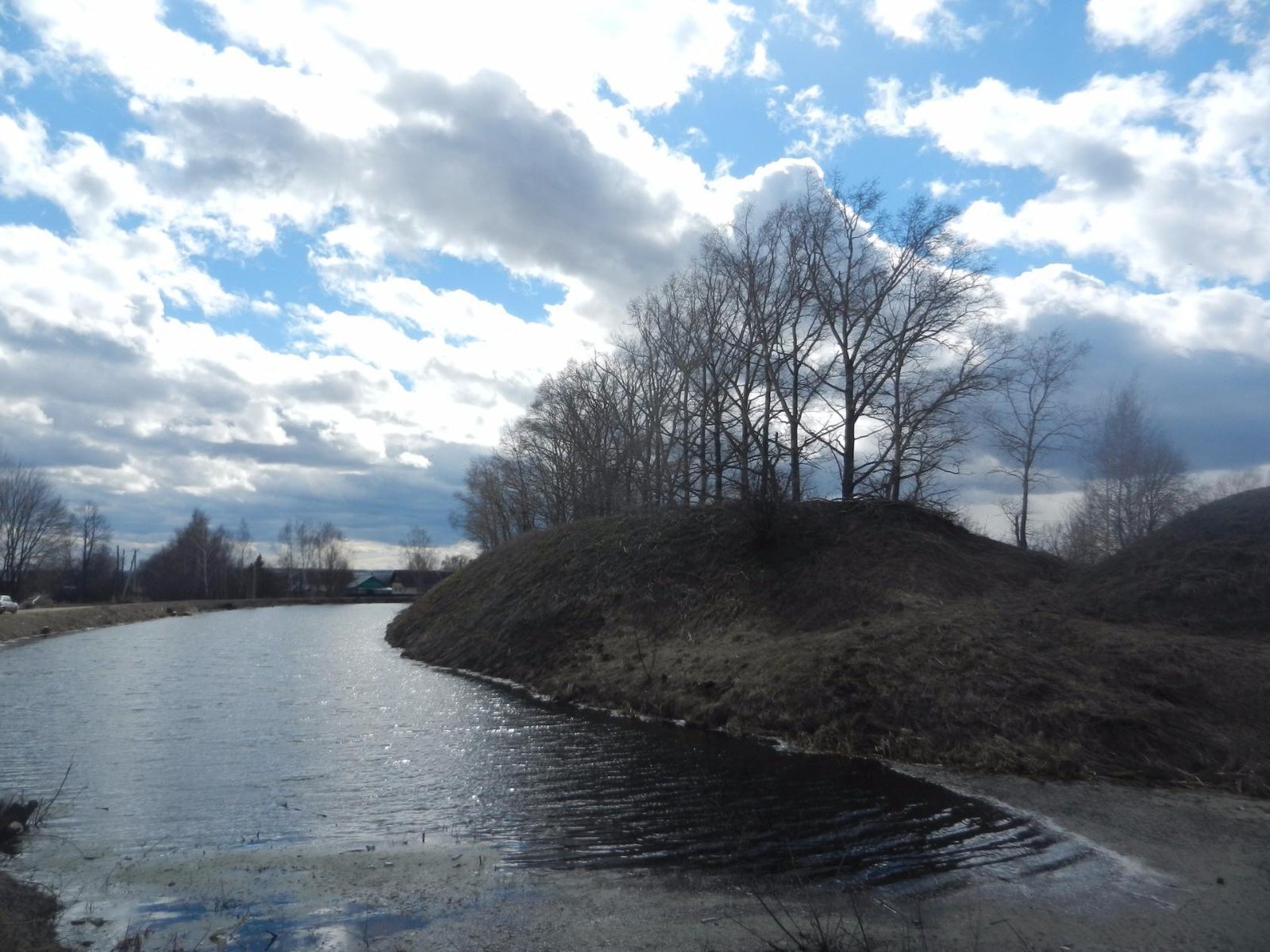
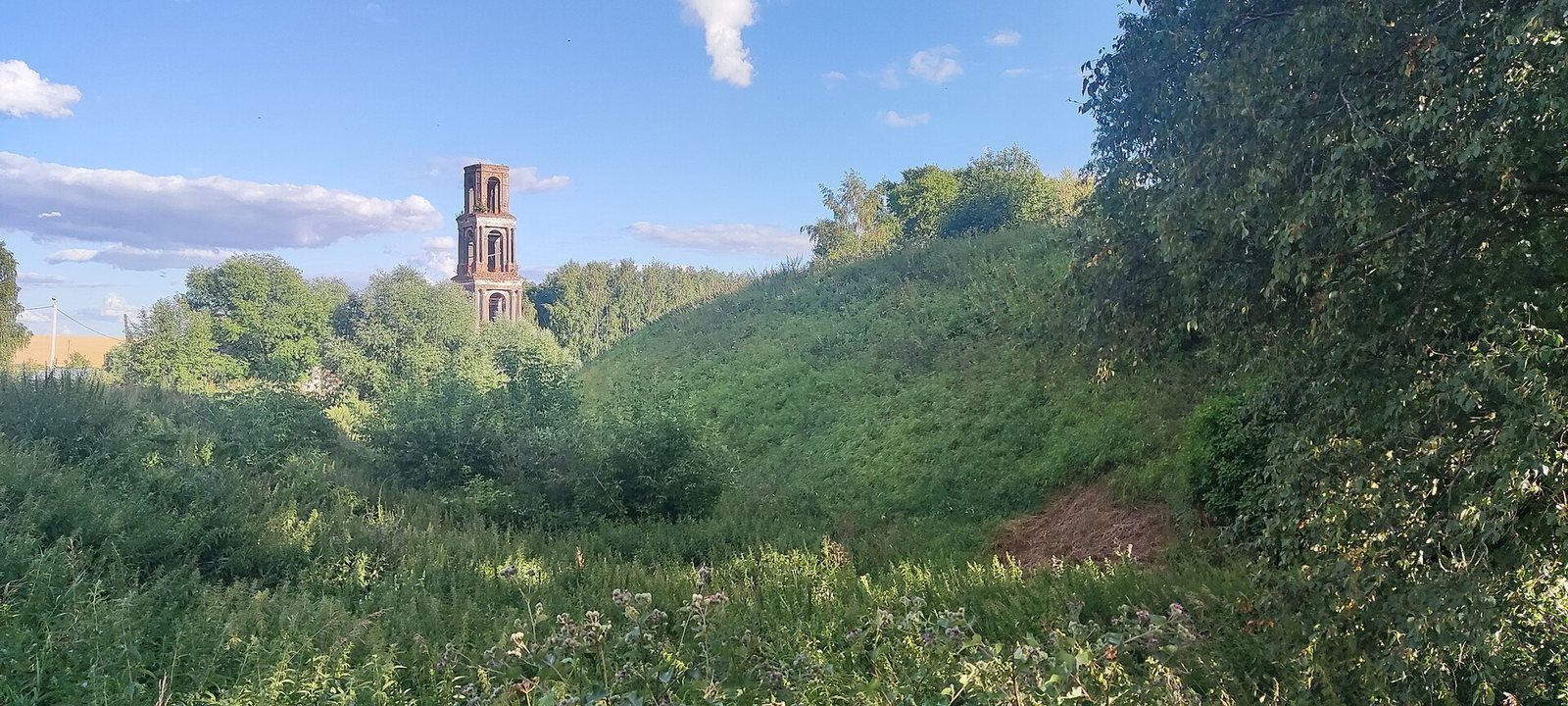
The hillfort lies on the right bank of the Gza River, about 10–11 km north of Yuriev-Polsky. Its surviving oval earthwork measures approximately 190 by 145 m and covers about 19,500 square metres. The encircling rampart is 565 m long and rises to 5 m. A surrounding ditch, 3–5 m deep, has slopes reaching 30 degrees and held water in some places.
Four gaps interrupt the rampart. The northern opening was an original gate, and the ancient entrance can still be traced on that side. The rampart’s foundation incorporated timber log structures about 4 by 4 m, aligned with the rampart and joined end to end. The town also had single-row log walls that reached about 3 m before the breastwork, a protective wall along the rampart, and about 5 m with it included.
Archaeological finds
The cultural layer mainly belongs to the Old Rus period, the medieval East Slavic world. Finds include handmade Meryan and Slavic pottery from the seventh to eleventh centuries, along with twelfth- and thirteenth-century wheel-thrown pottery, some with marked bases. Other objects include slate spindle whorls, fragments of glass bracelets, iron knives, springs from cylindrical locks, and part of a bone comb decorated with a pattern drawn using a compass.