Monte Testaccio: Rome’s Ancient Amphora Waste Mound
Site at a Glance
- Rating
- 4.3
- Popularity
- Low
- Country
- Italy
- Primary era
- Classical
- Eras represented
- Classical
- Civilizations
- Roman
- Site type
- Economic
On this page11 sections
History
Monte Testaccio is an artificial Roman waste mound in Italy, near Rome’s eastern bank of the Tiber. Formed mainly from broken amphorae, it began to grow as the port district expanded and large quantities of olive oil reached the capital, probably during the first half of the first century BC. Its earliest securely dated deposits belong approximately to AD 140–250. The mound preserves unusually detailed evidence for Roman trade, food distribution, and the administration of the imperial city.
A port for Rome’s food supply
In antiquity, Monte Testaccio stood in the port district near the Emporium, the Porticus Aemilia, and the Horrea Galbae warehouses. These facilities handled and stored state-controlled supplies, including olive oil. Oil was transferred from large amphorae into smaller containers at the warehouses. The emptied vessels, often still bearing traces of oil, were then taken to the mound, broken, and arranged as waste.
The disposal process was probably organized and supervised by the praefectura annonae, the Roman office responsible for managing the city’s food supply and related distributions. Inscriptions indicate that much of the oil entered state-controlled systems. Some consignments supplied the annona urbis, distributions for Rome’s population, while others belonged to the annona militaris, provisions supplied to the army. Several records identify deliveries to the praefectus annonae, the official in charge of this administration.
Imperial imports and the end of dumping
The scale of the deposits reflects Rome’s enormous consumption of olive oil. Around 53 million amphorae may have reached the city, carrying approximately 4–6 billion litres of oil, or perhaps about 6 billion litres. Imports appear to have reached their highest level toward the end of the second century AD. As many as 130,000 amphorae may have been deposited in a single year, representing at least 7.5 million litres of imported oil.
The trade involved more than the state alone. The inscriptions refer to individual entrepreneurs, partnerships, family businesses operated by fathers and sons, small workshops, and skilled freedmen. The export system therefore connected imperial administration with private commercial activity across the western Mediterranean.
Use of Monte Testaccio as an amphora dump seems to have ended around the 260s. The latest known tituli picti, painted or inked commercial labels that functioned as shipping and inspection records, date to approximately AD 261–266. The change may have followed the relocation of Rome’s quays, the introduction of smaller and thinner amphorae, or interruptions in state-controlled imports from Spain during the political disturbances of the 260s.
Amphorae still required disposal after dumping at Monte Testaccio ceased. During the fourth century, they were used as fillers or lightweight elements in the concrete construction of at least nine buildings in the Rome area. One example is the Circus of Maxentius, constructed between AD 308 and 312.
Medieval ceremonies and popular traditions
After the fall of the Roman Empire, the surrounding area was largely abandoned. During the Middle Ages, however, the mound became a setting for religious ceremonies, commercial gatherings, festivals, jousts, tournaments, horse races, urban hunts, animal sacrifices, and pre-Lenten carnival games. The so-called Games of Testaccio involved mounted and infantry participants, bullfights, and carts carrying pigs down the slope.
The earliest recorded form of the name, Mons Testaceus, appears in the eighth century on a relief from the portico of Santa Maria in Cosmedin. It derives from the Latin testa, meaning a pottery sherd. The popular Italian name Monte dei Cocci has the same meaning. A late medieval legend claimed that the mound marked the beginning or foundation of Rome, while another incorrectly treated the amphorae as containers for tribute sent to the city.
From the twelfth century, the meadow at the eastern foot of the mound was associated with Passion plays held around Easter. On Good Friday, Monte Testaccio represented Golgotha in Jerusalem during a papal Way of the Cross. Three crosses once stood at the summit, representing Jesus and the two thieves crucified beside him. A cross commemorating the procession remains on the summit.
Changing uses from the Renaissance to the nineteenth century
Carnival activities gradually moved elsewhere during the fifteenth and sixteenth centuries. In 1470, Pope Paul II transferred the horse races to the Via Lata and the bullfights to the Capitoline Hill. Pope Paul III briefly restored bullfighting at Monte Testaccio, but the mound was excluded from the principal carnival celebrations in the mid-sixteenth century. In 1594, the meadow served for artillery exercises by the Bombardieri company established by Cardinal Pietro Aldobrandini.
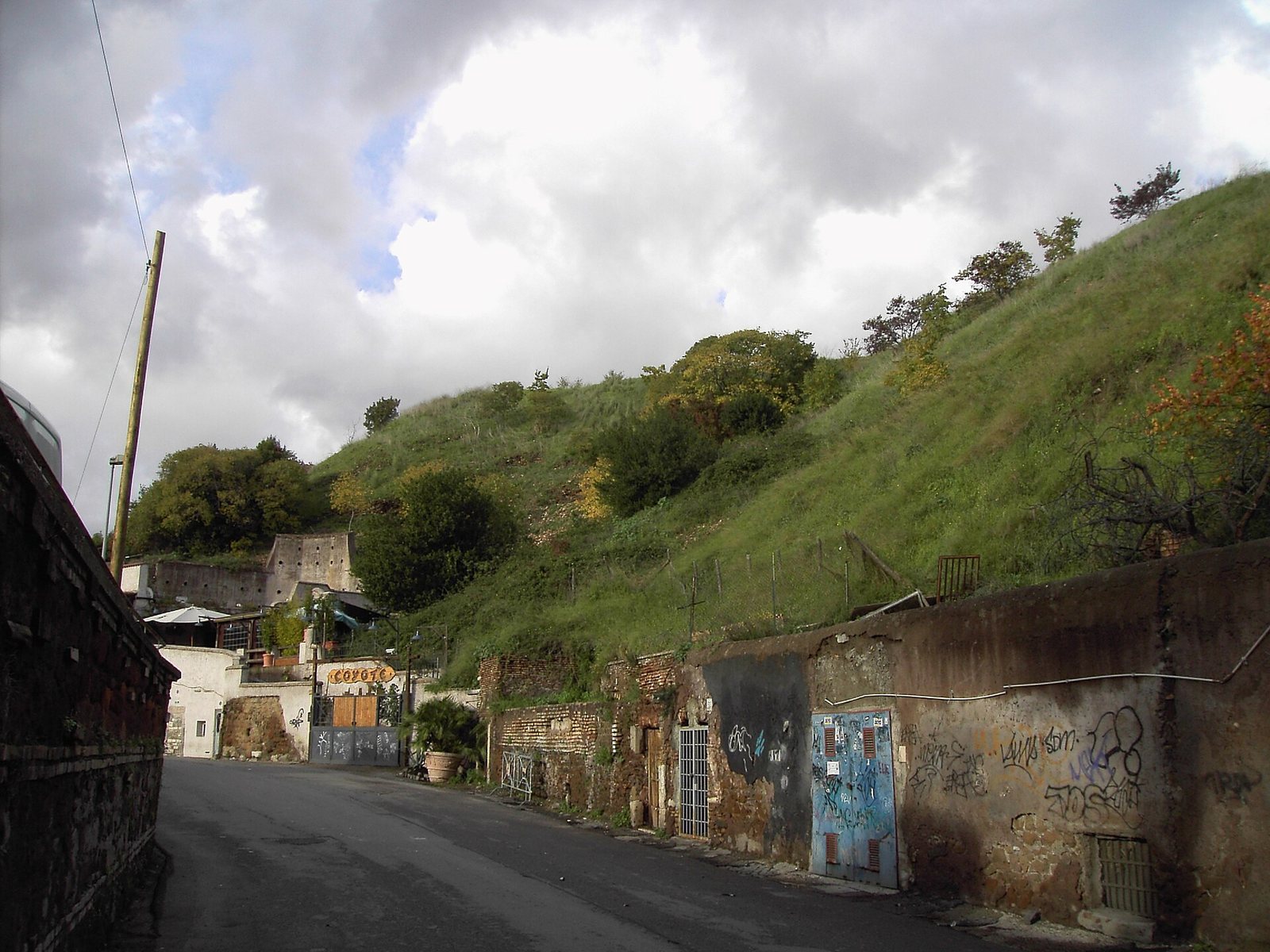
Caves and cellars were excavated at the foot of the mound from at least 1667 to store wine. The porous mass of pottery and the ventilation between the sherds kept the interiors cool. From at least the seventeenth century, people also quarried sherds for building repairs, including work on the marshy streets of the Testaccio district and on the vaulted ceilings of St Peter’s Basilica. Rome prohibited further removal of sherds and damage to the mound’s vegetation in 1744.
During the defence of Rome against the French army in 1849, an Italian artillery battery commanded by Giuseppe Garibaldi occupied Monte Testaccio. Garibaldi was an Italian military and political leader who commanded forces defending the Roman Republic against French intervention. After Rome was annexed to the unified Kingdom of Italy in 1870, the area became part of plans for an industrial and working-class district. Testaccio became one of modern Rome’s official districts in 1921.
Archaeological investigation
Heinrich Dressel began the first archaeological excavations in January 1872 and published his results in 1878. He deciphered black-ink inscriptions on the sherds, established an influential classification of Roman amphorae, examined almost 3,000 workshop stamps and nearly 1,000 ink inscriptions, and identified most of the vessels as products of Baetica, the region of the Guadalquivir River in present-day Spain.
Dressel’s work established Monte Testaccio as an important archive for the study of Roman trade, food supply, and olive-oil production. Archaeological research resumed in 1968 and continued during the 1970s and from the 1980s onward, especially through Spanish researchers working with Rome’s La Sapienza University. Emilio Rodriguez Almeida proposed that the mound developed through two main organized dumping phases, from its beginning to the middle of the second century and from then until the third century. Excavations in 1989 and 1991 examined its construction and deposits in greater detail.
Remains
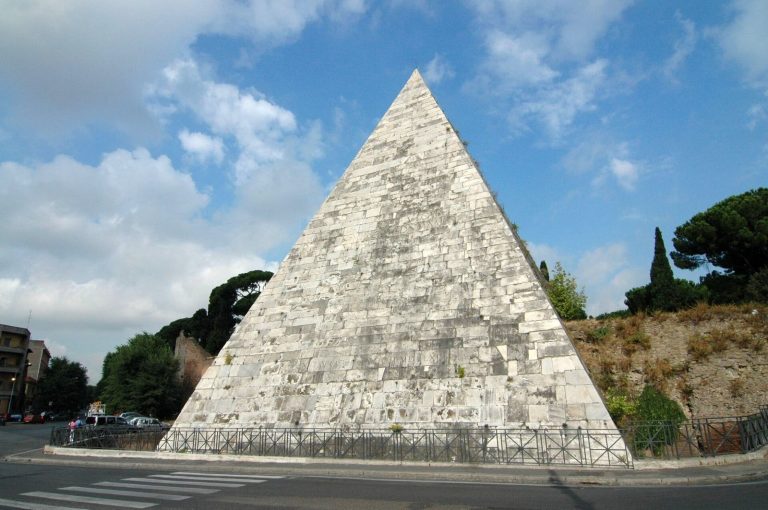
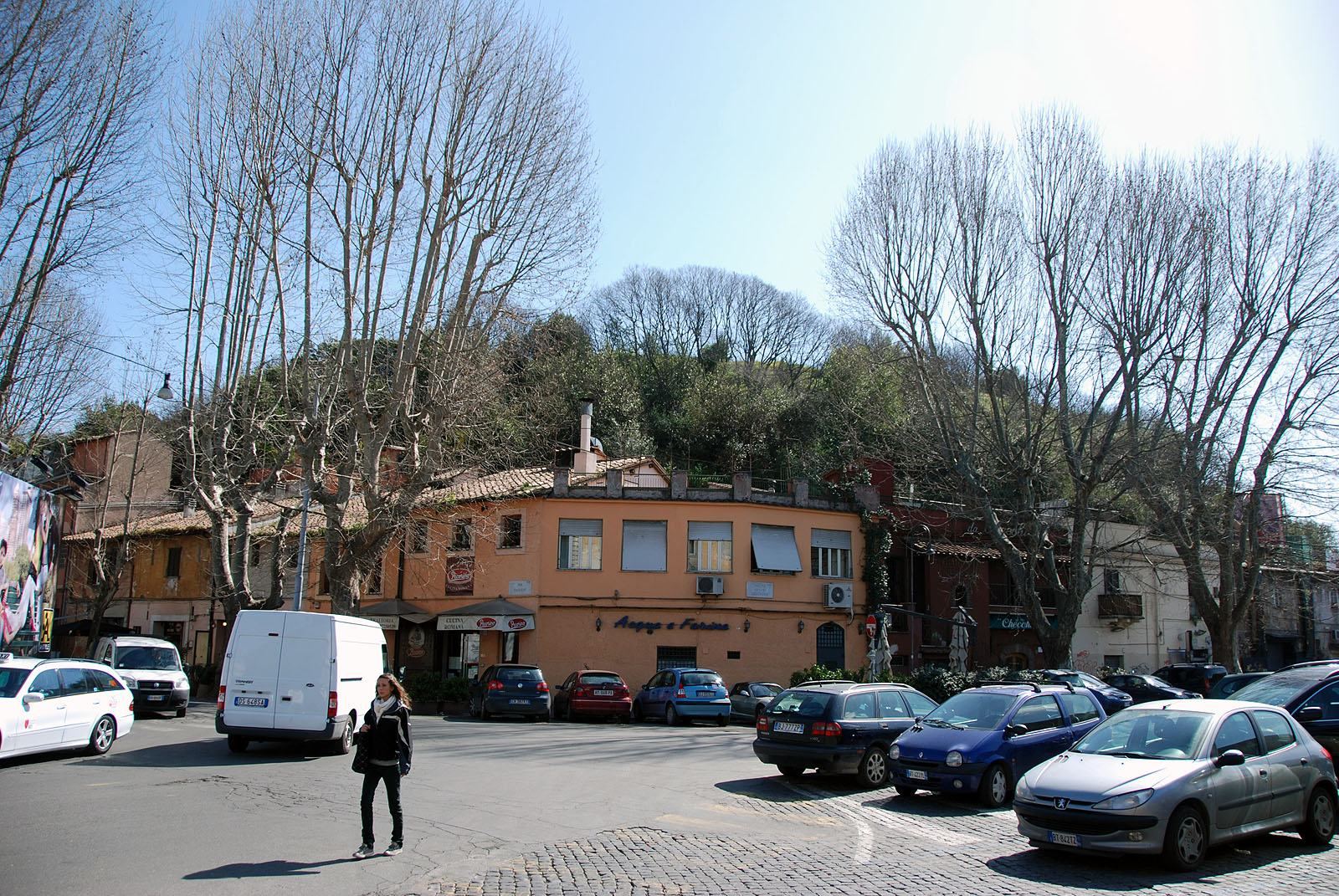
Monte Testaccio is a roughly triangular mound between the Tiber and the Aurelian Wall, close to the Pyramid of Cestius. Its base covers about 22,000 square metres, its circumference is nearly one kilometre, and its volume is approximately 580,000 cubic metres. The surviving mound rises about 35–36 metres, although it was probably higher in antiquity. Removal of sherds for building work reduced both its volume and height.
Mound structure and terraces
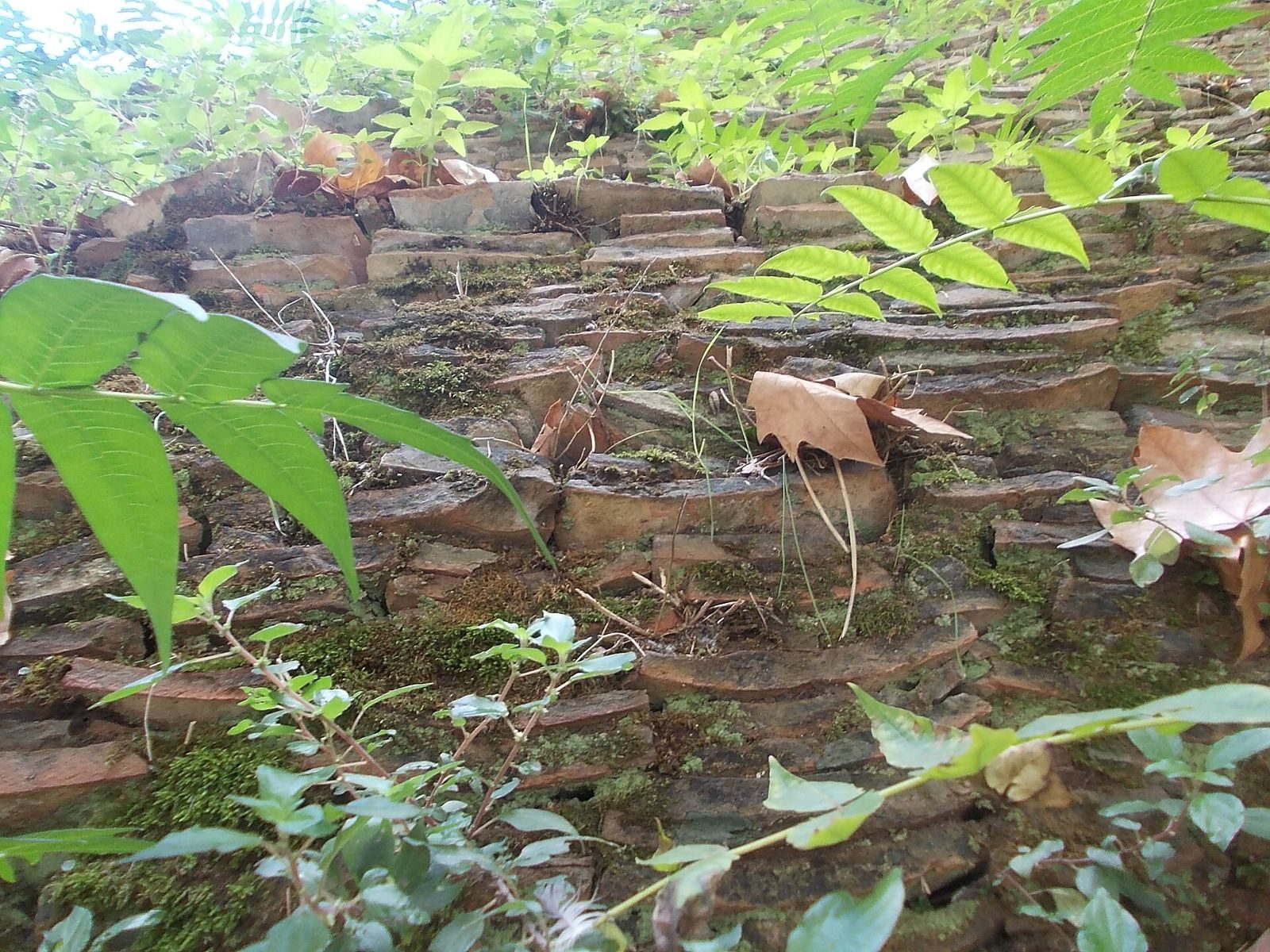
The mound consists almost entirely of fragments from broken Roman amphorae and contains the remains of an estimated 53 million vessels. It has two distinct platforms. The eastern platform is older, while a second platform was added at the northeastern foot during the third century AD. Deposits in the eastern section accumulated up to the middle of the second century. Later deposits first extended westward and then returned toward the east.
Excavations in 1991 revealed carefully engineered level terraces arranged in at least four stepped groups. Retaining walls were made from nearly intact amphorae filled with sherds. Their necks had been broken off so that the vessels could be anchored in position. Further layers were approximately 60 centimetres thick, a measurement that corresponds roughly to the diameter of the large Dressel 20 amphorae that dominate the mound. The lower deposits are less dense, suggesting that the earliest dumping was more irregular. Excavated layers date approximately from AD 140 to 250, while the oldest part remains difficult to date precisely.
Amphora deposits
About 85 percent of the fragments come from large, globular Dressel 20 amphorae, a modern archaeological type-name for the principal Roman olive-oil vessels at Monte Testaccio. Produced in workshops between the Roman settlements of Hispalis, Corduba, and Astigi in Baetica, these containers generally held about 70 litres. An empty vessel weighed approximately 30 kilograms, stood about 70–80 centimetres high, and measured roughly 60 centimetres across.
Dressel 20 vessels retained a recognizable globular form despite production in different workshops and changes in shape over several centuries. Their thick walls broke into large curved pieces, which made them difficult to reduce to small fragments or reuse. About 15 percent of the fragments came from North Africa, particularly Tripolitania in present-day Libya and Byzacena in present-day Tunisia. These African and Tripolitanian vessels also carried olive oil, but had thinner walls and more varied shapes. The remaining approximately 3–5 percent came from vessels associated with Gallic or Italian wine, Spanish fish sauce, and products from the eastern provinces.
Residual olive oil made many amphorae difficult to reuse. Oil could react with lime and create soap, impairing the quality of opus signinum, a Roman waterproof building material made from lime and aggregate. Dressel 20 vessels were also difficult to crush into suitable concrete aggregate. Other amphorae could instead be reused to transport goods, converted into drainpipes or flowerpots, or broken down for construction. Lime was spread over discarded sherds, apparently to neutralize the smell of rancid oil. The mound’s porous structure and the ventilation between the fragments later created cool conditions inside the wine cellars.
Inscriptions and commercial evidence
The sherds preserve several kinds of commercial marking. Stamps on amphora handles were applied before firing and could identify the owner of the oil, the producer, or the workshop. Incised marks and numbers could identify batches and sometimes record production dates or the workers responsible for supervision.
The tituli picti supplied more extensive information. Applied during or after filling, these painted or inked labels recorded empty and filled weights, the quantity of oil, the exporting merchant, the farm and district of origin, and the people responsible for weighing and inspection. They could also note taxes paid and checks carried out during transport. Some records mention the number of heminae, measures of approximately 0.27 litre, dispensed during retail sale or distribution.
The standardized order of the inscriptions reflects a formal system for inspecting and controlling the olive-oil trade. Many texts survived because lime covered the discarded pottery. Together, the stamps, marks, and painted labels provide a detailed view of the movement of food, the people involved in its production and administration, and the operation of Rome’s supply system.
Terraces, paths, and access for disposal
The sherds were laid in stable horizontal patterns rather than simply tipped into a heap. In some areas, layers of small fragments may have created paths for workers handling the waste. A ramp branching toward the northeast may have allowed carts to reach the dumping area. These features show how the mound’s growth was organized as its terraces expanded.