Monastery Sulz: A Premonstratensian Women’s Convent in Bavaria
Site at a Glance
- Popularity
- Low
- Country
- Germany
- Primary era
- Medieval
- Eras represented
- Medieval, Early Modern
- Civilizations
- Holy Roman Empire
- Site type
- Religious
- Remains
- Monastery
On this page12 sections
History
Monastery Sulz was a Premonstratensian women’s community in the village of Kloster Sulz, in the municipality of Dombühl, Bavaria, Germany. Probably founded around 1200 by the Lords of Wahrberg, it was dedicated to Saint Mary and belonged to the Catholic Premonstratensian order, whose women’s communities were made up of canonesses.
Foundation and community
The convent belonged to the Ilfeld circary, a regional grouping of Premonstratensian houses, under the abbot of Zell near Würzburg. The Burgraves of Nuremberg and, later, the Margraves of Brandenburg-Ansbach protected the community. A canon from Oberzell Abbey provided spiritual care and usually acted as provost, an ecclesiastical officer who oversaw the community.
Sulz was a small but wealthy convent that admitted women of noble birth. Unmarried daughters of nearby noble families could find a livelihood there. As many as twelve canonesses prayed and worked at spinning. Their superior, first titled “mistress and abbess” and later “Mistress of Sulz,” managed the convent’s finances, external relations, and discipline. Its leaders included women from the families von Brugberg, Rotenburk, Stetten, Ödendorf, Vinsterloe, Wallenhausen, Seckendorff, Crailsheim, Aufsess, and Lobenhausen. A charter dated 25 August 1275 names Heinrich von Aurach, dean of Feuchtwangen.
Fires and the Peasants’ War
A fire in 1260 destroyed the entire monastery complex and its archive, leaving no records of the community’s earliest decades. Margarete von Vinsterloe, one of its superiors, died in 1425 when a Nuremberg inn caught fire while she was travelling. Important papers she carried were lost in the blaze.
Under Brigitta von Aufseß, the convent church burned twice. Damage from a fire around 1500 was fully repaired by 1504. Further destruction followed during the Peasants’ War, a series of uprisings in German-speaking territories in 1524–1525. In 1525 the church was left in ruins, and the convent was plundered of livestock, horses, grain, hay, straw, and feather beds. Most of the women fled to their families. On 4 July, in Feuchtwangen and in the presence of Margrave Kasimir, a Hohenzollern prince and Franconian territorial ruler, a monk who had formerly preached at the convent was executed by the sword. He had written letters to the rebelling peasants.
Secularization and later use
The Reformation, the sixteenth-century movement that established Protestant churches in parts of Europe, led to the transfer of the convent into secular control. The Margrave of Ansbach began this process in 1531 as the religious community declined. It ended when its last member, Barbara von Seckendorff, died in 1556. In 1539 the Ansbach estates assembly assigned the convent’s property, together with that of Feuchtwangen’s Augustinian canons, a community of male religious clerics, to a proposed university at Feuchtwangen. When that plan failed, the convent building became a margravial hunting estate. The former convent church was restored as a Protestant parish church in 1573.
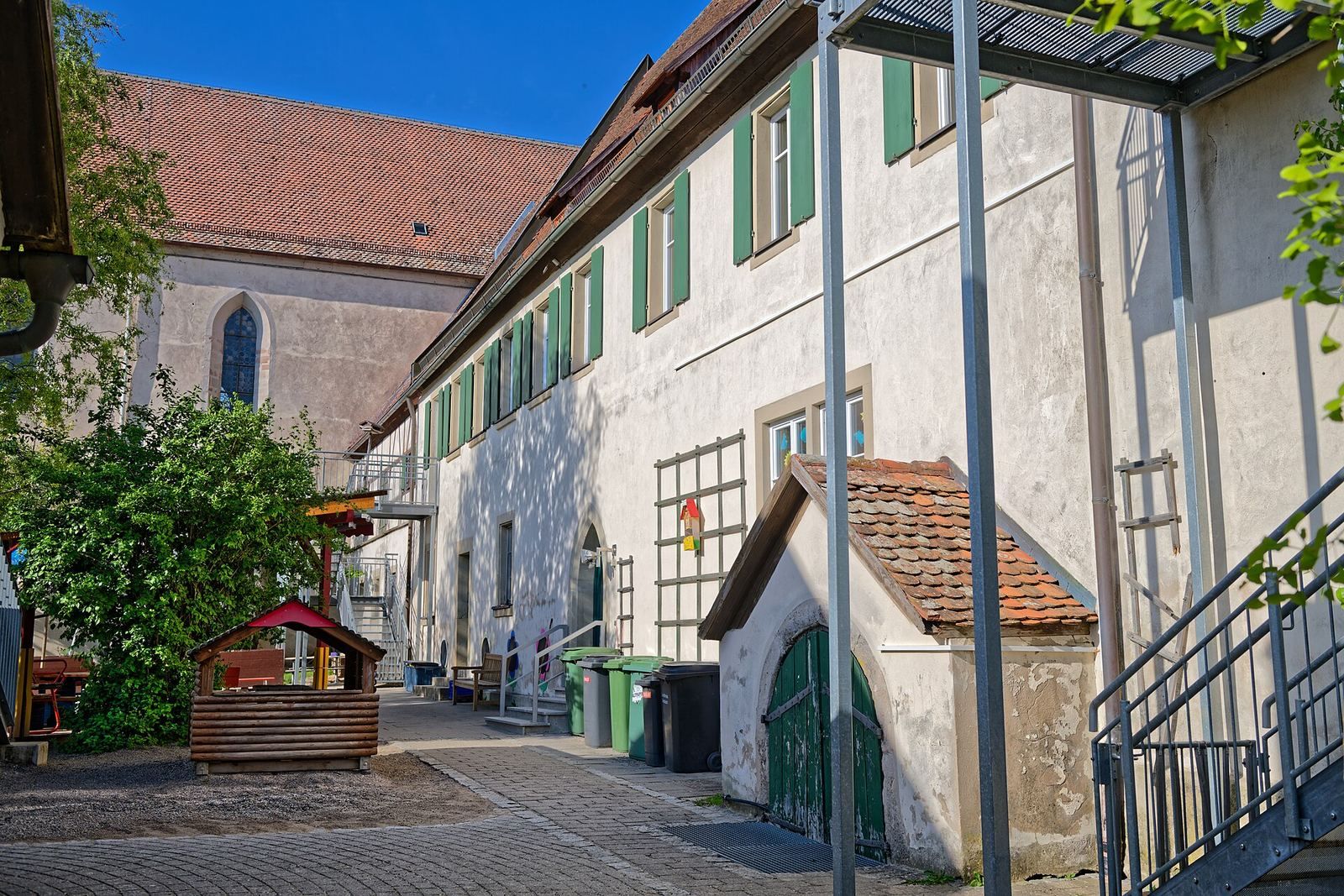
From 1802, the former convent building served as a school and teacher’s dwelling. It was repeatedly adapted and substantially altered, and in 1976 it became a kindergarten.
Remains
The surviving remains include the Gothic former convent church and the two-storey convent building immediately to its south. Parts of the monastery wall also remain. Beyond this group, the former monastery mill stands on the Sulzach, while a tributary rises from a spring in the rectory garden.
Church and convent buildings
Church of Saint Mary
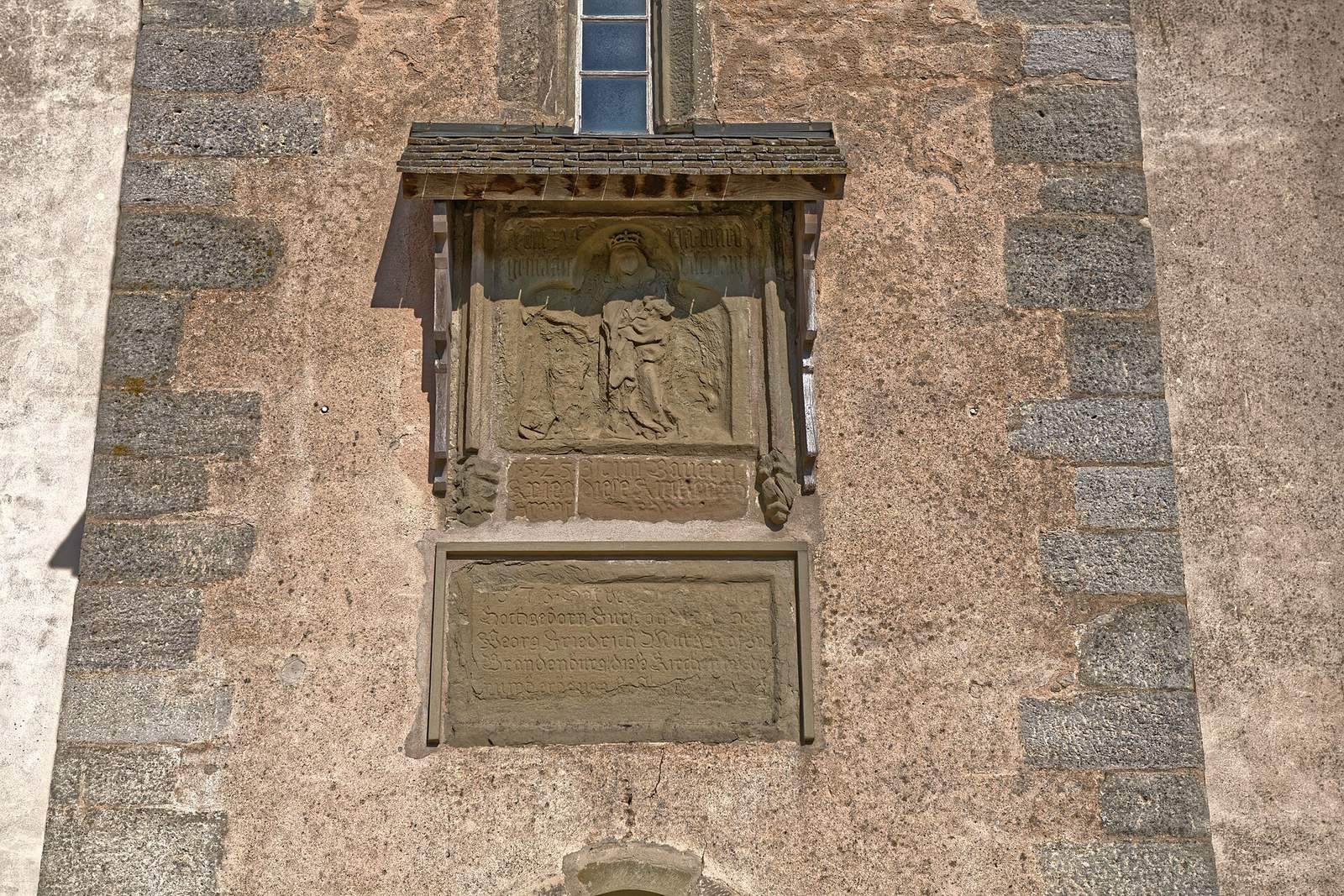
Built in the first decades of the fourteenth century, the former convent church is Gothic. Inside, a wooden memorial panel from around 1520 commemorates the Premonstratensian community at Sulz. Its style is associated with the Danube School, an artistic movement of the early sixteenth century linked to the Danube region.
Convent building
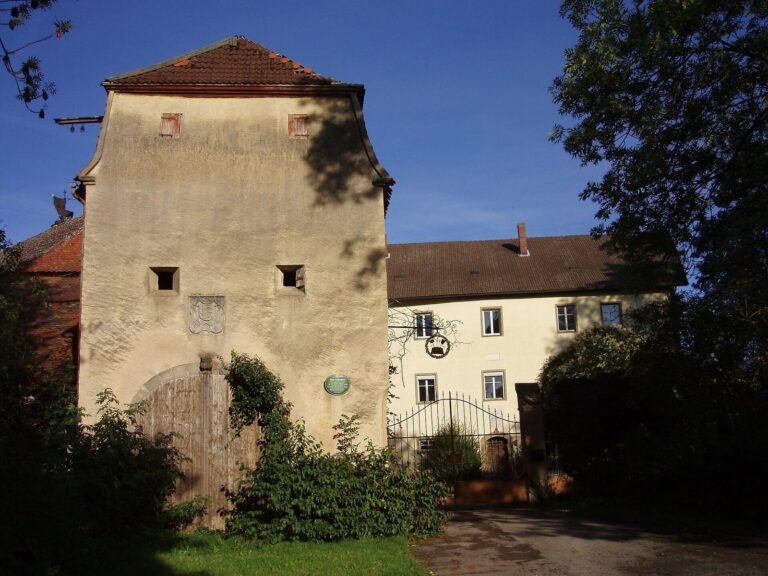
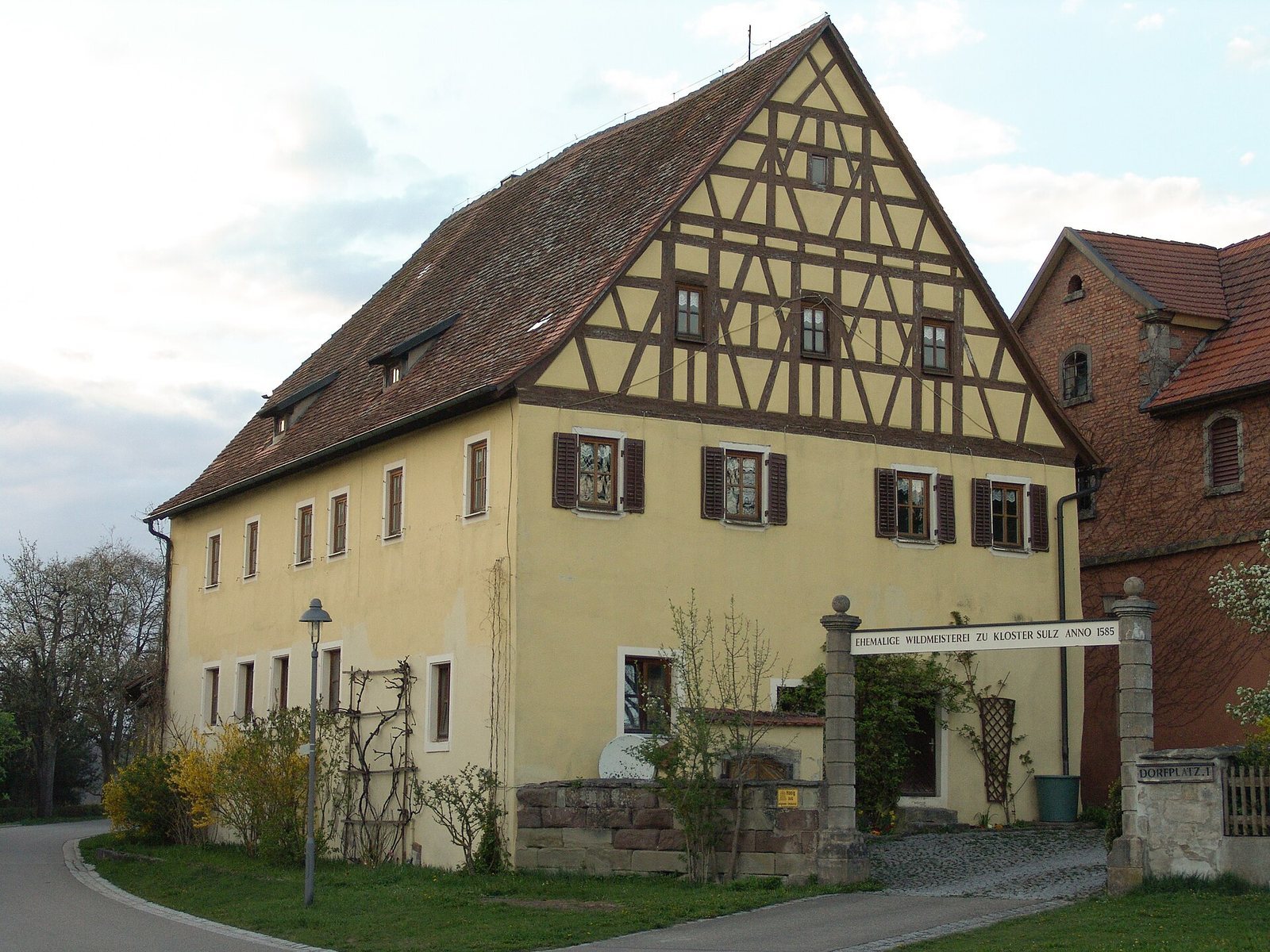
The convent building has been substantially altered. Two surviving fourteenth-century doorways have pointed arches with sharply peaked tops. A gamekeeper’s establishment associated with the building’s use as a margravial hunting estate also survives.
Monastery wall
Remains of the monastery wall are still present.
Mill and water features
Monastery mill
The former monastery mill is a substantial building on the Sulzach, dating to the fifteenth or sixteenth century. It has later alterations and associated ancillary buildings.
Spring and tributary
A tributary of the Sulzach rises from a spring in the rectory garden.