Monastery of San Román de Entrepeñas: A Medieval Benedictine Monastery in Spain
Site at a Glance
- Rating
- 4.6
- Popularity
- Very Low
- Country
- Spain
- Primary era
- Medieval
- Eras represented
- Medieval
- Civilizations
- Kingdom of León
- Site type
- Religious
- Remains
- Monastery
On this page8 sections
History
The Monastery of San Román de Entrepeñas was a Benedictine monastery in Spain, located within the municipality of Santibáñez de la Peña in the Montaña Palentina. Constructed in the tenth century and associated with Romanesque architecture, it became an important medieval religious and economic center and is regarded as the cradle of repopulation in the comarca. Its dedication was to Saint Roman, while “Entrepeñas” referred to its position among rocky outcrops.
Foundation and the Beni Gómez lineage
The monastery was associated from its beginnings with the Beni Gómez, a prominent medieval comital lineage connected with the political history of León and Castile. Its first documentary mention dates to 940. A foundation diploma preserved in the National Historical Archive records Diego Muñoz and his wife, Tegridia, restoring, enlarging, and endowing the monastery with the churches of San Quirce of Guardo, Santa María of Arconada, and Santiago in the territory of Dueñas.
A castle stood on higher ground near the monastery and overlooked it. Known as San Román Castle, it was held by members of the Banu Gómez lineage, from Diego Muñoz of Saldaña to Fernando Pérez, the son of Pedro Ansúrez. Pedro Ansúrez had also held the castle and appears several times in the monastery’s documentation as a donor of estates.
Raid and Cluniac administration
In 995, Almanzor led a military raid against San Román. Almanzor was the leading military and political ruler of the Caliphate of Córdoba during the late tenth century. The attack caused a great massacre and the capture of many people.
Before the twelfth century, abbots governed the monastery. Around 1118, Pedro Ansúrez donated it to the Abbey of Cluny, a major Benedictine center in Burgundy that organized a network of dependent religious houses. San Román then became a priory, administered by a prior rather than an abbot. By the middle of the fifteenth century, it had been annexed to the Monastery of San Zoilo in Carrión de los Condes.
Economic and ecclesiastical importance
San Román possessed considerable economic influence. The Becerro de las Behetrías de Castilla records as many as eleven settlements paying tribute to it. A behetría was a medieval Castilian settlement whose inhabitants could choose or recognize a lord while owing specified obligations.
The monastery also had its own archpriesthood within the Diocese of León. An archpriesthood was an ecclesiastical administrative district headed by an archpriest. In the fifteenth century, San Román’s district comprised 33 settlements, including places that had become depopulated.
Abandonment and decline
The Disentailment of Mendizábal in 1836, a Spanish policy that confiscated and sold large amounts of church property, led to the monastery’s abandonment. It later passed into private ownership and suffered spoliation and deterioration. The buildings progressively collapsed during the nineteenth and twentieth centuries. San Román de Entrepeñas is included on the Red List of heritage in danger, with the listed declaration dated 8 May 2008.
Remains
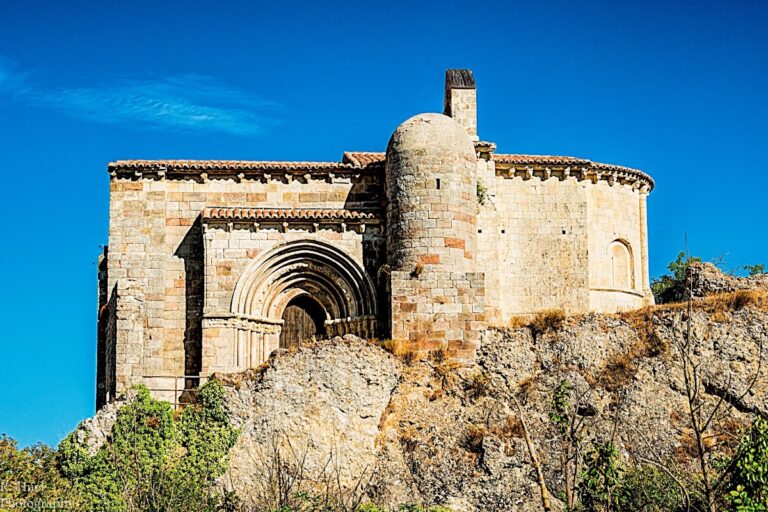
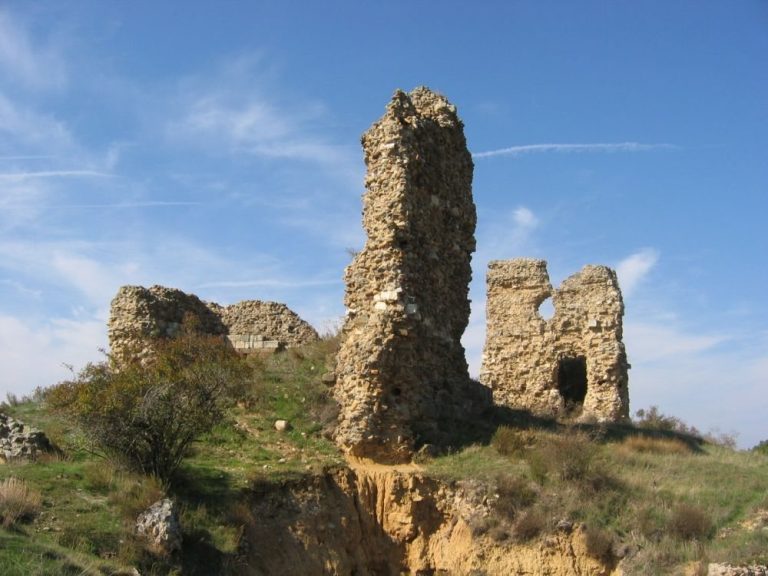
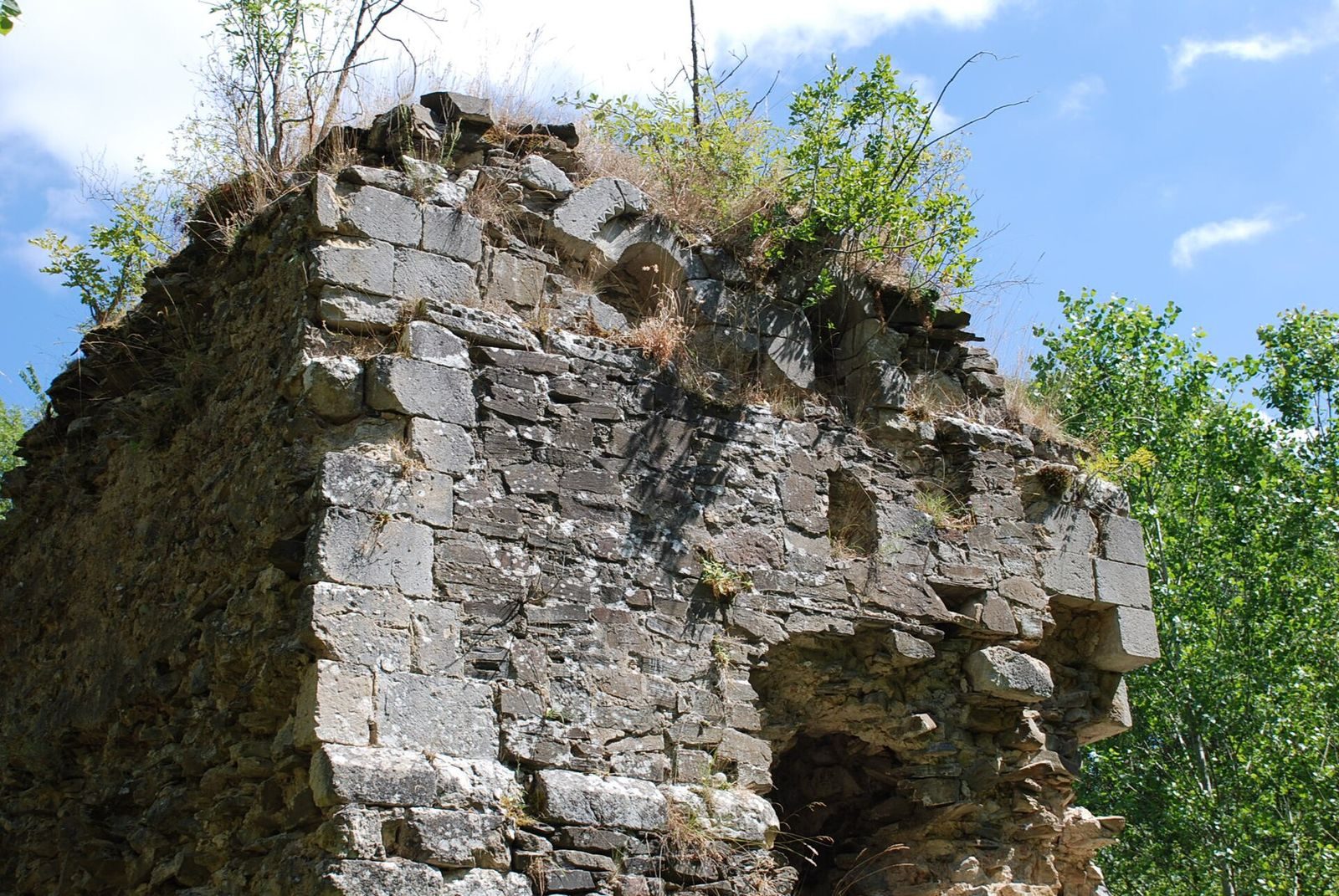
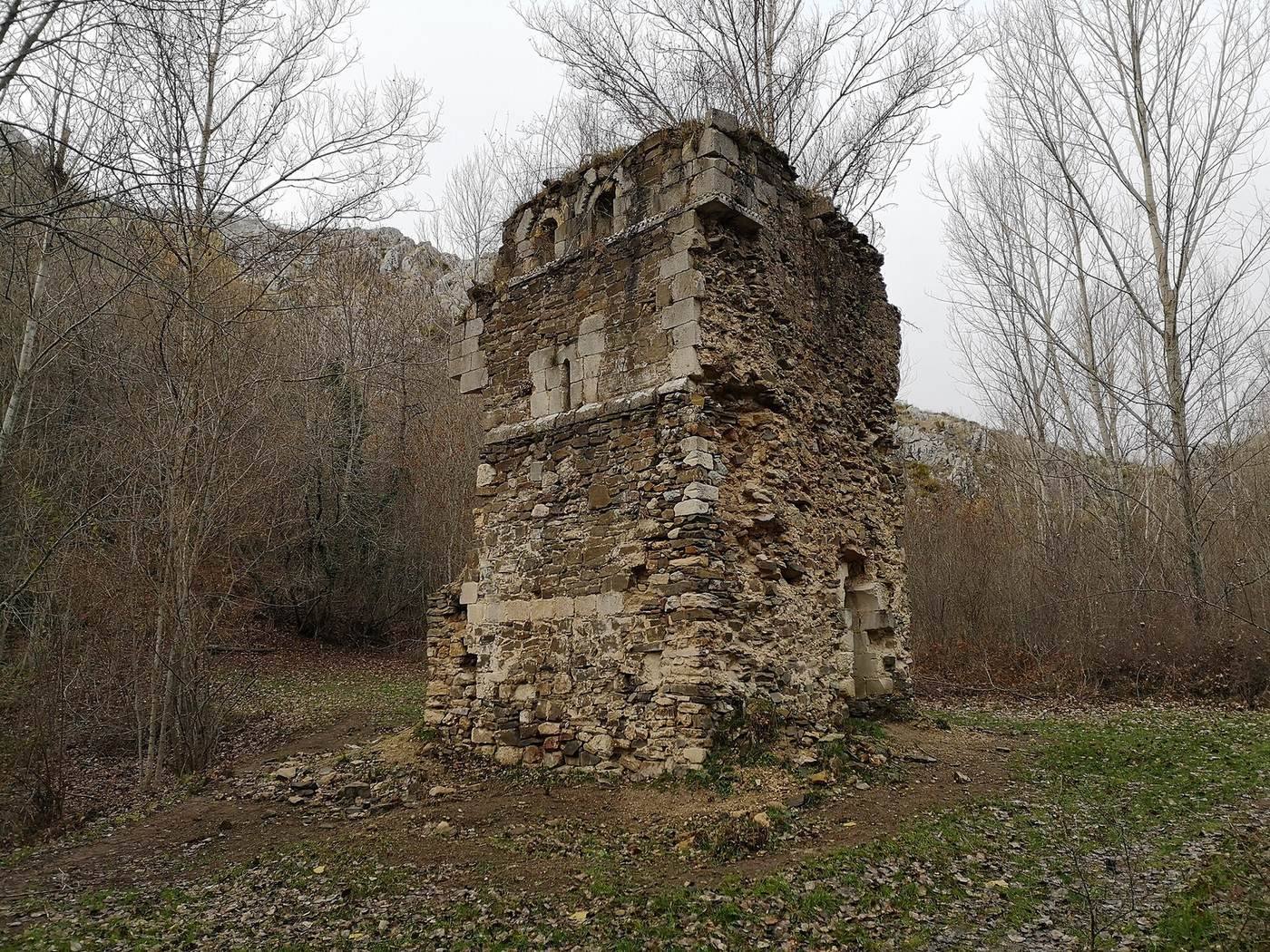
The surviving complex is represented chiefly by the ruined tower of the monastery church. The monastery was associated with Romanesque architecture, a medieval style characterized broadly by massive construction, thick walls, and rounded arches. Progressive collapse left the tower as the sole standing vestige of the monastic complex.
Church tower
The remaining tower stands approximately 6 metres high and is in an advanced state of deterioration. Its ruined masonry is the principal surviving architectural evidence of the monastery church and preserves a fragment of the tenth-century monastic foundation.
San Román Castle
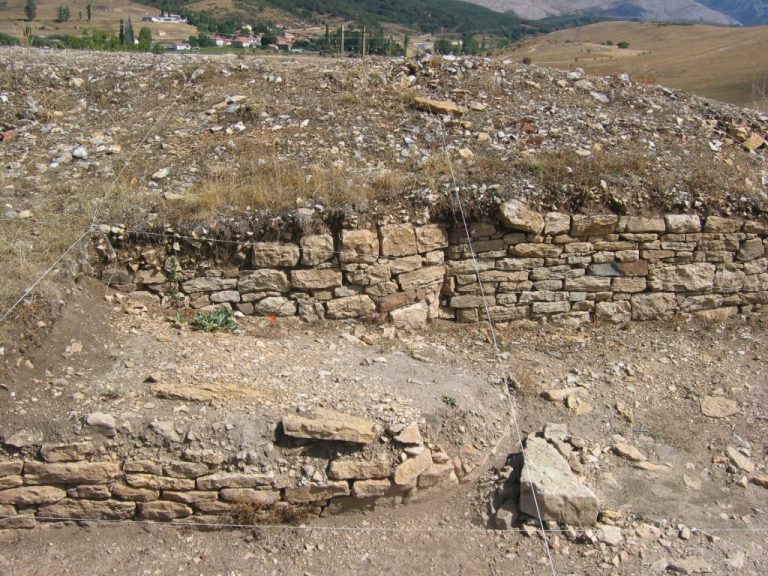
Near the monastery, on elevated ground, are a few remains of San Román Castle in the area now called Peñacastillo. The castle overlooked the monastery and formed part of the site’s medieval setting, linking the religious foundation with the local comital power represented by the Banu Gómez lineage.