Castro de La Loma: A Fortified Cantabrian Settlement and Roman Siege Site
Site at a Glance
- Rating
- 3.8
- Popularity
- Very Low
- Country
- Spain
- Primary era
- Iron Age
- Eras represented
- Iron Age, Classical
- Civilizations
- Roman
- Site type
- Military
- Remains
- Fortified Town
On this page12 sections
History
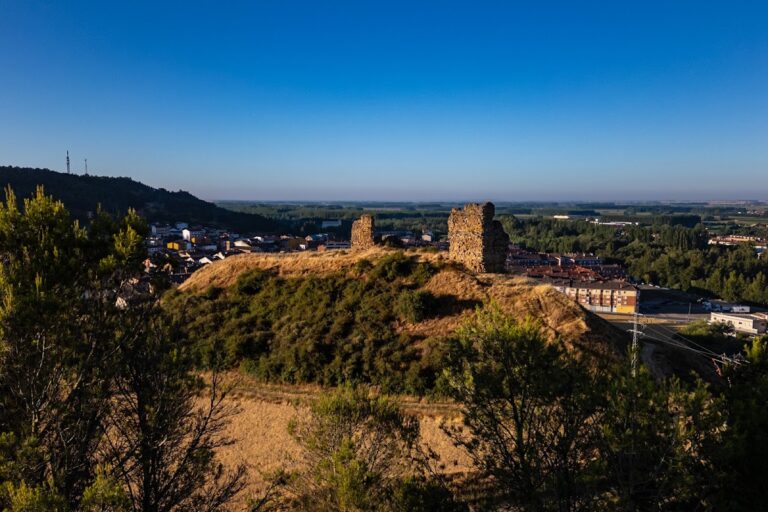
Castro de La Loma is an archaeological site in Spain, south of Santibáñez de la Peña in the Montaña Palentina, beside the Valdavia River. It preserves a fortified Cantabrian oppidum, or important indigenous fortified settlement, occupied from the Iron Age, together with Roman military camps built during its siege in the late first century BC.
The Iron Age settlement
The settlement was home to a substantial indigenous community before Roman domination. Its size and defensive system have led to the proposal that it may have been the capital of the Tamáricos, a Cantabrian group associated in tradition with Tamarica or Camarica. This identification remains unconfirmed, and the settlement has not been securely matched with any of the major Cantabrian cities named by classical authors.
Possible identifications include Tamarica, Vellica, Bergida, Julióbriga, and Aracillum, but the question remains unresolved. The site’s defensive scale and archaeological material nevertheless show that it was an important local centre before the Roman conquest.
The Roman siege
The attack formed part of the Cantabrian Wars, Rome’s final major campaigns against the Cantabrian and Asturian peoples of northern Hispania, which ended in Roman victory in 19 BC. Augustus, the first Roman emperor, took part in these campaigns. Roman forces surrounded Castro de La Loma with a principal legionary camp and smaller installations, creating a system intended to isolate the settlement.
The siege may have involved about 5,000 legionaries. Roman troops used arrows and catapults before entering the settlement, which was burned and destroyed. Fire, human remains, and collapsed defensive structures belong to this violent phase of the site’s history. The destruction is associated with the Roman conquest, and the settlement did not continue as a Roman occupation site after its capture.
Discovery and protection
Miguel A. Fraile identified the site in 2003 while investigating the Cantabrian Wars. Excavations were later directed by Eduardo Peralta Labrador, a specialist in Protohistory and Archaeology at the Institute of Pre-Roman Studies and Antiquity of Cantabria. The first four campaigns began in 2003 with support from the Junta of Castile and León and the Provincial Council of Palencia.
After those campaigns, the exposed remains were left vulnerable for more than a decade, with a serious risk of looting. Excavation resumed in 2020, followed by four additional campaigns through 2024. A protection procedure begun in 2006 gave the site the status of an integrated element of the Cultural Heritage of Castile and León. It has also been placed on the Heritage Red List because quarrying south of the oppidum has affected the principal Roman camp.
On 23 February 2025, a bulldozer illegally disturbed Castellum A. The action involved the local district mayor of Las Heras de la Peña and the owner of an earthmoving company, with possible fines of up to 600,000 euros. The incident forms part of the continuing history of threats to the surviving archaeological remains.
Remains
Castro de La Loma occupies about 10 hectares on a high location overlooking the area beside the Valdavia River. The indigenous enclosure was defended by two superimposed walls and a large ditch cut into the rock. Roman camps and siege works were positioned around it, creating a military landscape that reflects the stages of the assault.
The fortified oppidum
Walls, ditch, and entrance
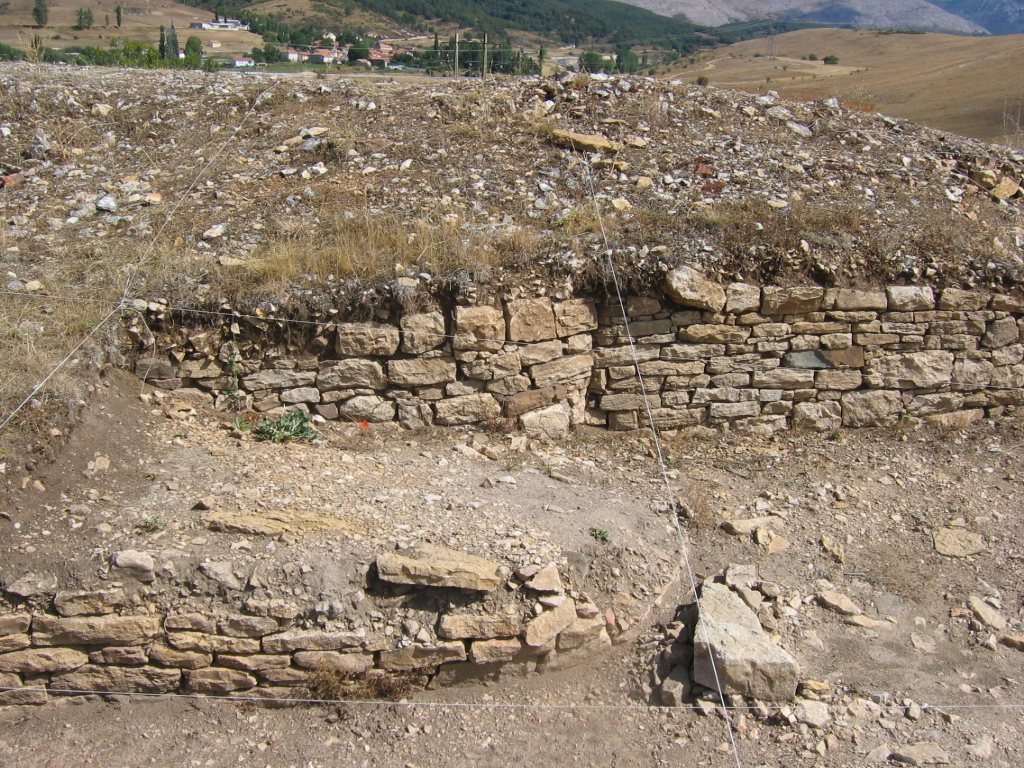
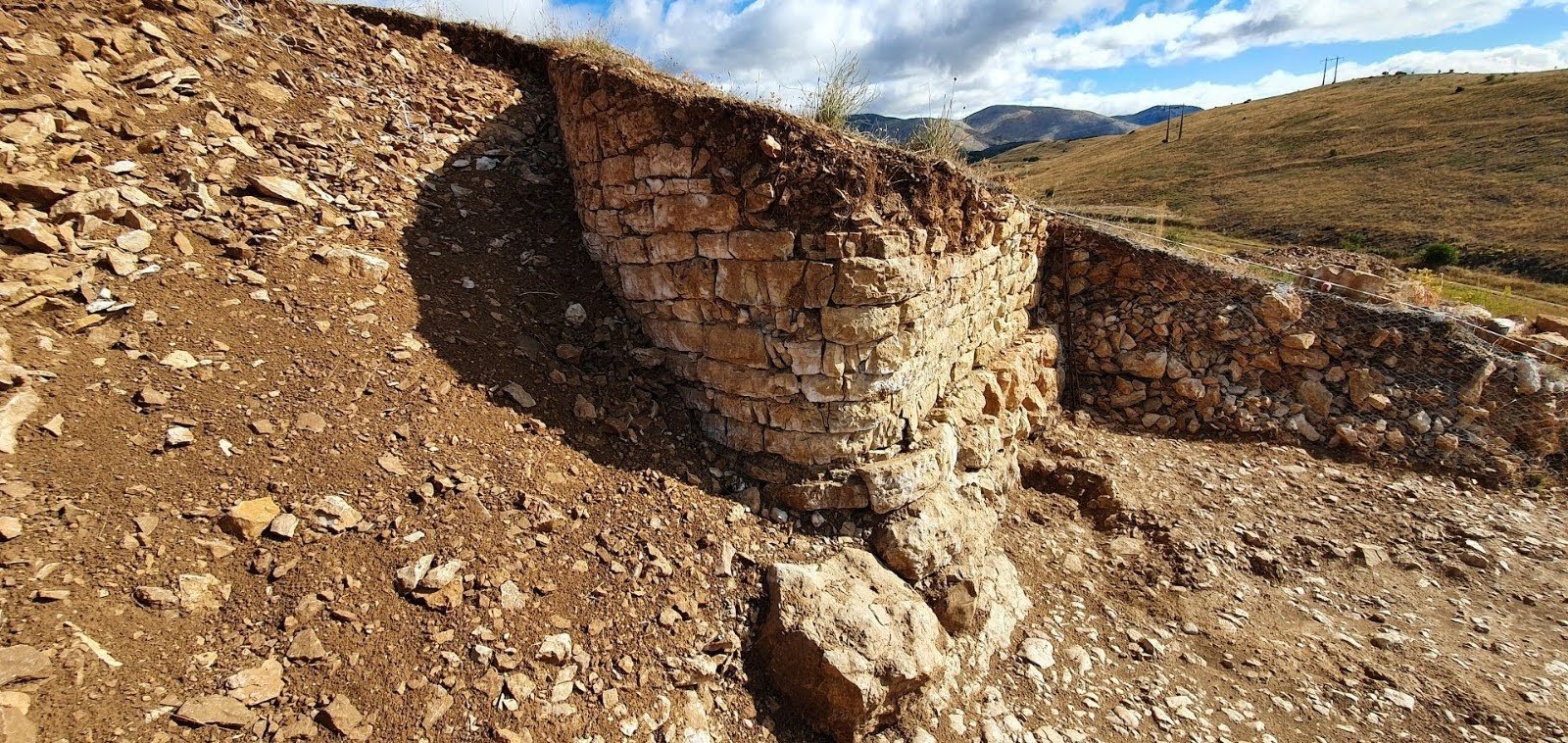
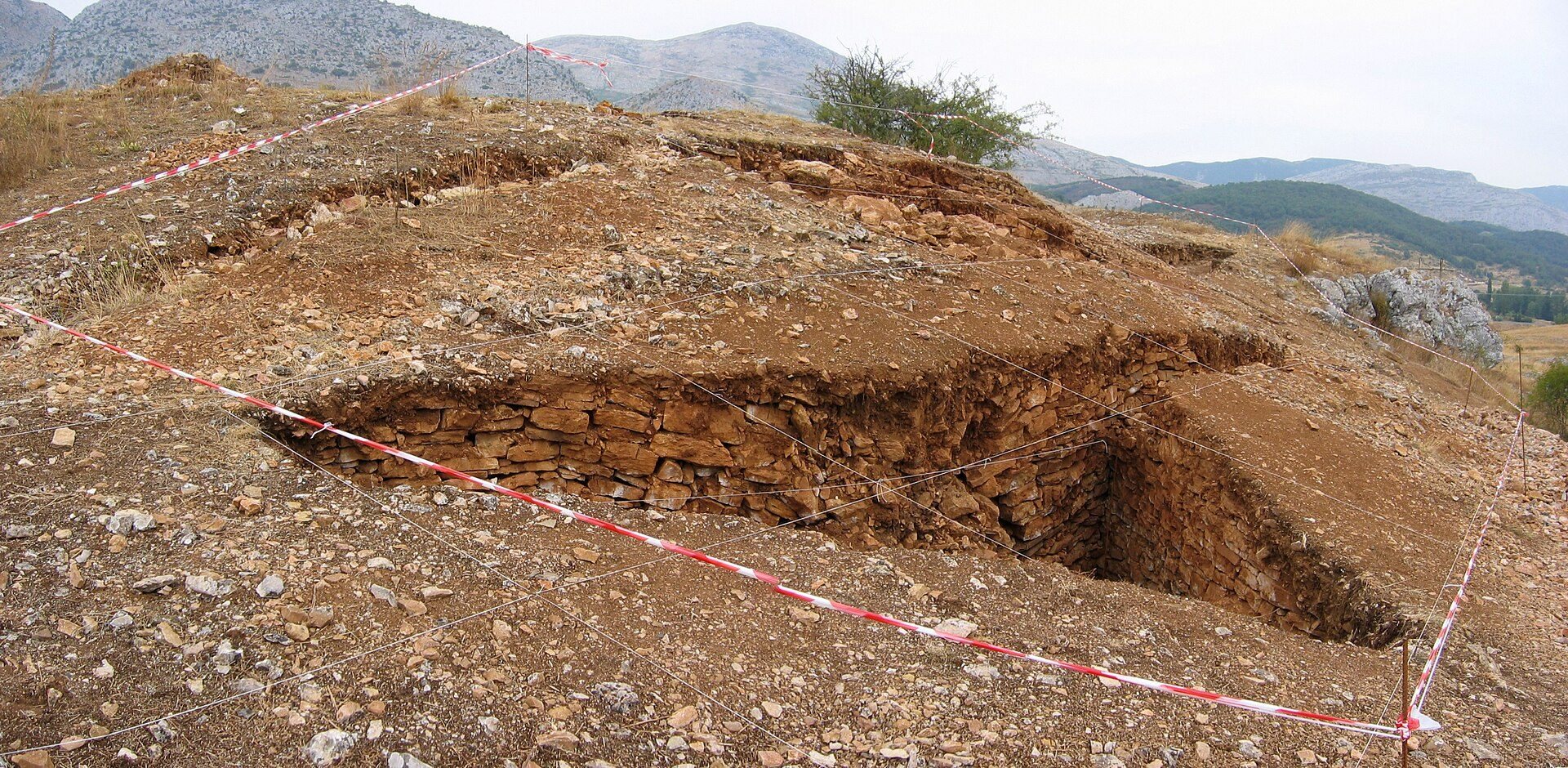
The principal defensive ditch is about 4 metres deep, while excavated views of the eastern section show a rock-cut channel reaching approximately 6 metres. In the sector that received the most intense Roman attack, the lower wall is about 5 metres wide. Ordered courses of masonry behind the collapse indicate the approximate thickness of this defensive structure.
An internal gate was blocked before or during the siege. A bastion excavated in 2007 possessed its own internal ditch, and further excavation in 2024 revealed a modular defensive system. The lower part of the wall contains large quantities of arrowheads and heavy metal projectiles, identifying it as the sector subjected to the most violent assault. Burned material and fallen defensive structures preserve the physical effects of the Roman capture.
Domestic and personal finds
An excavated refuse area contains fragments of knife handles, gaming pieces, and pottery used by the inhabitants. Other finds include Celtiberian pottery, ornaments and tools, knives with deer-antler handles, earrings, hairpins, rings, and sickles. Human remains and evidence of fire are associated with the destruction deposits. The recovered material was first taken to Santander for study and later transferred to the Archaeological Museum of Palencia.
Roman siege installations
Principal legionary camp
The main Roman military camp covered about 5 hectares on a hill south of the oppidum. It had an agger, an earthen embankment used to support or strengthen a palisade. This installation formed the central position in the Roman encirclement and was affected by quarrying south of the indigenous settlement.
Smaller camps and siege lines
Smaller camps were aligned around the oppidum to isolate it, and three Roman camps have been identified as part of the siege. A small oval castellum, or Roman fortified installation, stood west of the settlement. Trenches extended from the defensive enclosure down toward the river, forming part of the surrounding siege works.
One Roman camp had a clavicle-shaped entrance and a circumvallation, a fortified line or trench built around a besieged settlement to prevent escape or outside assistance. A further camp may have stood near the present Station district of Santibáñez de la Peña, although this remains an assumption.
Weapons and military equipment
Roman military remains include about 60 arrowheads and other projectiles, catapult bolts, pilum points, coins from the reign of Augustus, and tent pegs. More than 600 arrowheads have been recovered from La Loma, along with incendiary arrows and incendiary catapult projectiles. Their concentration, especially against the lower wall, reflects the intensity of the long-range attack that preceded the Roman entry into the settlement.