Corroios Tidal Mill: A Medieval Tide-Powered Mill in Portugal
Site at a Glance
- Popularity
- Very Low
- Country
- Portugal
- Primary era
- Medieval
- Eras represented
- Medieval, Early Modern, Modern
- Civilizations
- Portuguese
- Site type
- Economic
- Remains
- Watermill
On this page7 sections
History
Foundation and Carmo ownership
The Corroios Tidal Mill is a medieval mill in Portugal, built in 1403 to use the tides to power milling. Portuguese military commander Nuno Álvares Pereira, who held the senior military office of Constable of Portugal, ordered its construction. He later gave the mill to the Carmo Convent in Lisbon. It is also known as Moinho do Castelo.
Eighteenth-century rebuilding
The mill was remodeled in 1752. The Lisbon earthquake of 1 November 1755 damaged it, and restoration work began in 1767 under Portuguese architect Mateus Vicente de Oliveira.
State ownership and modern use
After religious orders were dissolved, the mill passed to the National Treasury, the state’s property administration. João Luís Lourenço acquired it in 1836. In the early twentieth century, it was also used to remove husks from rice. Seixal municipality acquired the mill in 1980 and restored, reconstructed, and remodeled it as part of its ecomuseum, which connects local heritage with the place and community. The mill was designated a Property of Public Interest in 1984.
Remains
Water system and operation
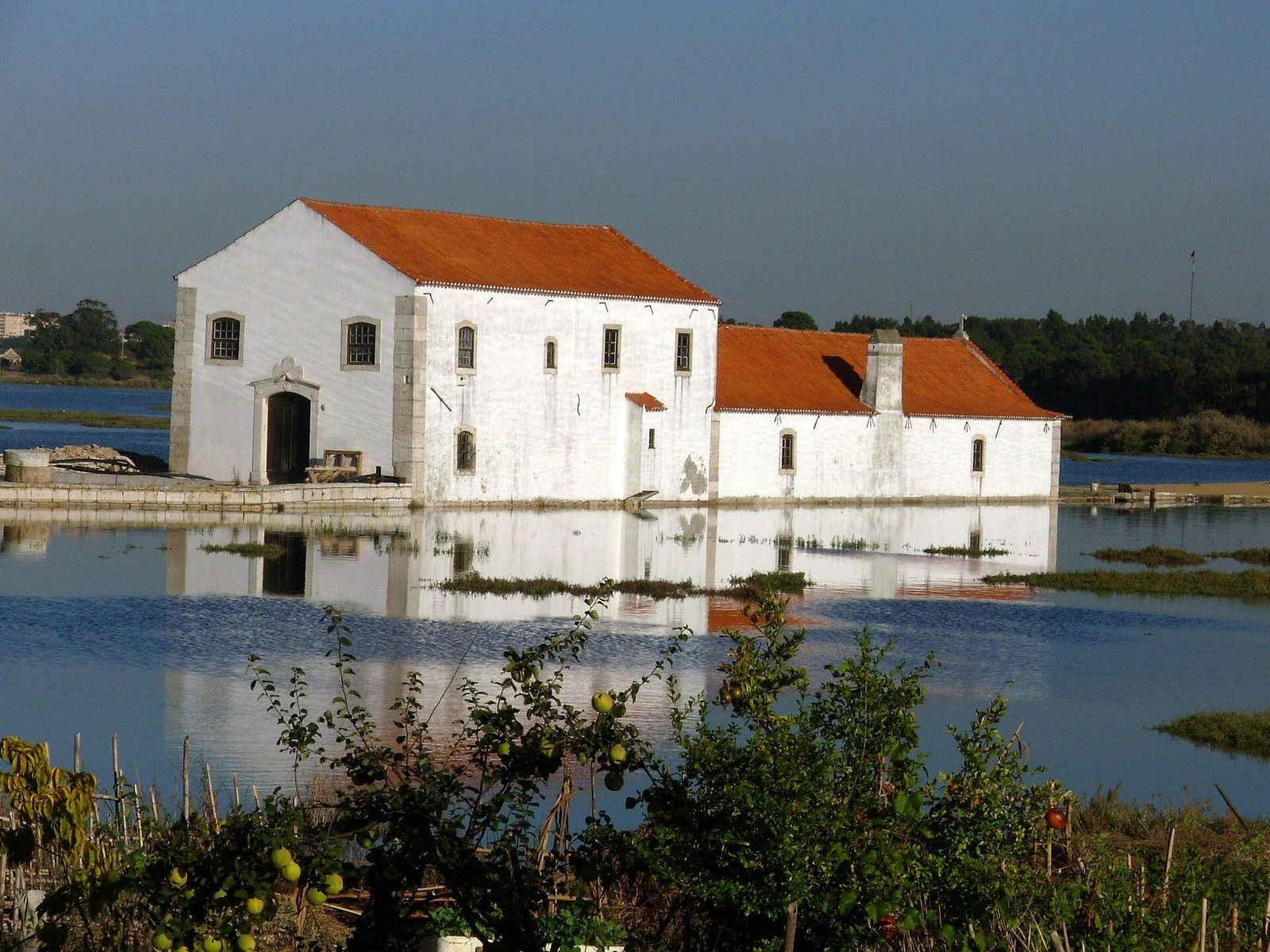
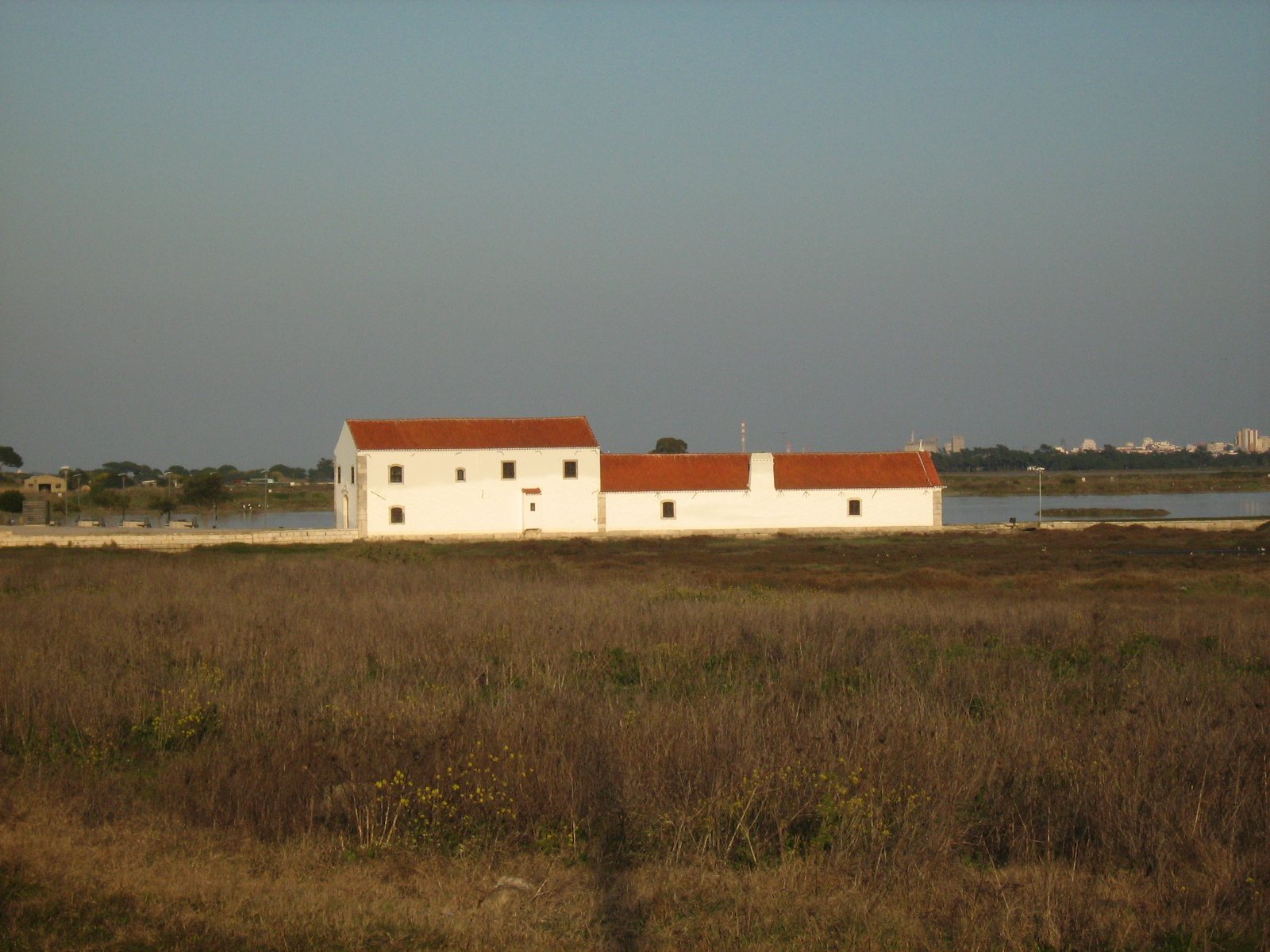
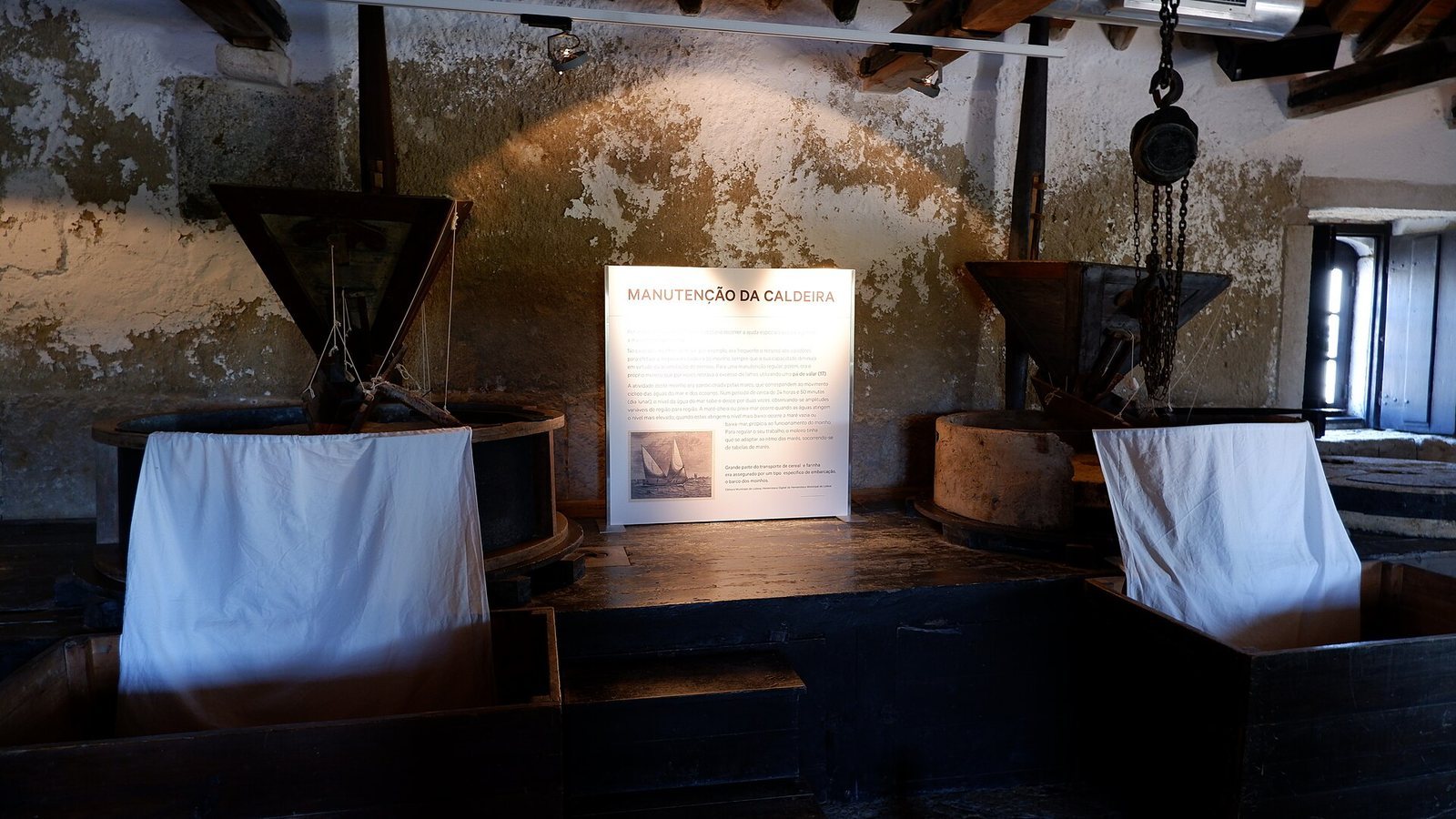
The mill stands in an isolated riverside position on the Tagus estuary. A small arm of the river acts as a barrier, directing water toward sluice gates that open and close automatically with the tides. This water system powers the mill, which remains one of the few tidal mills in the estuary still in operation.
Buildings and west façade
The complex consists of two rectangular sections laid out lengthwise, containing the mill, a warehouse, and the miller’s residence. It has also been converted into a temporary exhibition hall. The foundations are masonry, and basalt is among the building materials. The façades are plastered and painted white, with exposed masonry at the corners. An eighth milling unit was added during the twentieth century to assist the milling process.
The main façade faces west and has gables and an arched entrance portal. Cornices frame the portal and meet at an angle in the center. Three concentric circles decorate it, and a panel above bears the inscription DE ANNO 1752
, meaning “in the year 1752.” Two windows with sills, lintels, and sash frames sit above the portal.