Kazarma Fortress: A Venetian-Ottoman Fortification in Crete


Site at a Glance
- Rating
- 4.1
- Popularity
- Low
- Country
- Greece
- Primary era
- Medieval
- Eras represented
- Medieval, Early Modern
- Civilizations
- Ottoman, Venetian
- Site type
- Military
- Remains
- Fort
On this page7 sections
History
Kazarma Fortress is a fortress above the port of Sitia in Greece, with origins described as Byzantine and substantial development during the Venetian period in the thirteenth century. The Byzantine Empire was the medieval Roman Empire centered on Constantinople, and its eastern Mediterranean territories included Crete at different times. The fortress later formed part of the defensive system maintained under Venetian rule, when the Republic of Venice controlled the island.
Early Repairs and Venetian Rule
The Genoese commander Henry Pescator is credited with the first recorded repair of Kazarma in 1204. Further repairs took place in 1303, 1450, and 1538 while Venice ruled Crete. During these centuries, pirate raids, local rebellions, and earthquakes in 1303 and 1508 caused serious damage to the fortress.
In 1538, much of Kazarma was destroyed during the invasion of Sitia by Hayreddin Barbarossa, an Ottoman admiral and naval commander. Local residents gathered 1,500 ducats, gold coins used widely in European trade and government finance, for restoration work in 1586. The fortress did not recover its former strength or importance.
Transfer of the Garrison and Ottoman Reconstruction
In 1651, the Venetians under General Mocenigo moved their garrison from Kazarma to Heraklion because they judged the fortress unable to withstand a defense. Parts of Kazarma were destroyed to prevent its use by the Turks. The Ottoman Empire, the imperial state that occupied Crete after Venetian rule, soon established control on the island and reconstructed the fortress.
The Ottomans converted Kazarma into a fort based on a Venetian tower and altered its interior. These changes included the roof and the domes of the watchtowers, giving the building a later form shaped by Ottoman military use.
Protection and Later Changes
In 1966, Kazarma was declared a historic monument and classified in Greece as an archaeological monument or archaeological site. Before that designation, it belonged to the Greek Civil Aviation Authority. Hangars and other associated buildings were demolished in 1970.
Remains
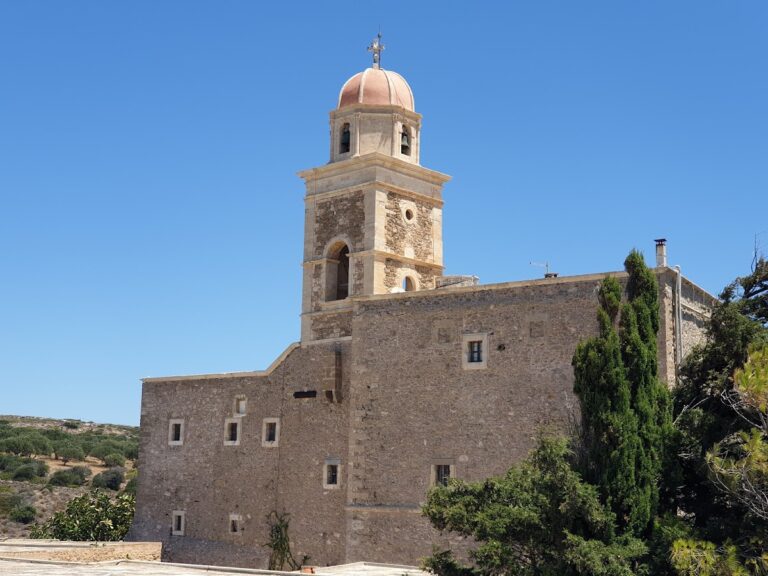
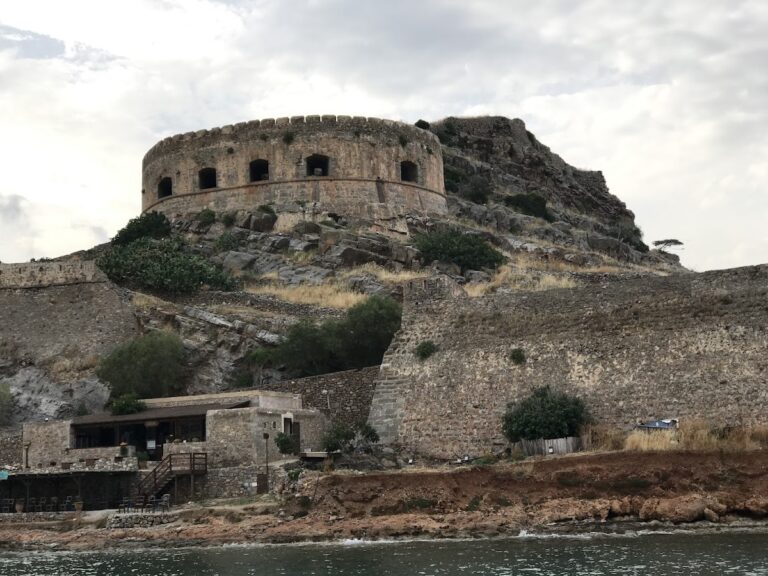
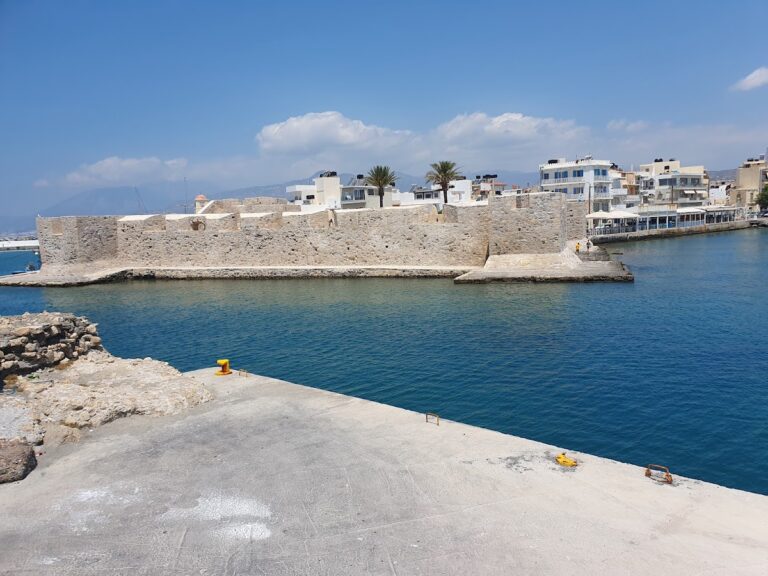
Kazarma occupies a hill above Sitia’s port and has a triangular plan. The later fort is based on a Venetian tower, while Ottoman reconstruction altered the interior arrangement and the upper elements of the watchtowers. The roof and watchtower domes belong to these Ottoman changes, which remain part of the fortress’s architectural history.
Fortress Layout
The triangular plan organizes the fortress on its elevated site above the port. Its physical form combines the Venetian tower that served as the basis for the later fort with the broader defensive enclosure associated with Kazarma.
Ottoman Alterations
Ottoman builders reshaped the interior and modified the roof after converting the Venetian-based structure into a fort. They also changed the domes of the watchtowers, leaving the building with architectural features from both the Venetian and Ottoman phases.