Mingary Castle: A Medieval Stronghold in Scotland


Visitor Information
Google Rating: 4.9
Popularity: Low
Official Website: www.mingarycastle.co.uk
Country: United Kingdom
Civilization: Early Modern, Medieval European
Site type: Military
Remains: Castle
History
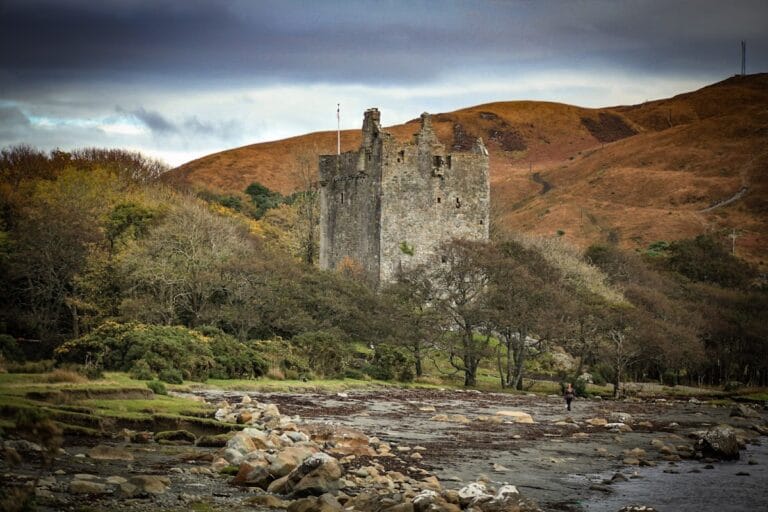
Mingary Castle is a medieval stronghold located near the village of Kilchoan in Scotland, constructed by local Gaelic clans during the Middle Ages. Its origins trace back to the 13th or 14th century, with early builders believed to be either the MacDougall clan or the MacDonalds of Ardnamurchan, known as the MacIains.
The castle enters the historical record in 1493, when King James IV used it as a strategic base during his campaign against John of Islay, the Lord of the Isles, demonstrating its significance in controlling access to important waterways. Throughout the 16th century, Mingary Castle remained under MacIain control but was repeatedly contested. In 1515, an attempt to seize it by the MacDonalds of Lochalsh failed, although the castle was successfully captured two years later. This conflict resulted in damage that was swiftly repaired, indicating the structure’s continued strategic importance.
In 1588, the castle endured a notable siege by the MacLeans of Duart. They were aided by soldiers from a Spanish Armada vessel, the San Juan de Sicilia, marking an unusual international involvement in Scottish clan warfare. Despite this support, the siege lasted only three days and ended without the castle falling.
By the early 17th century, ownership shifted to the Campbells, who displaced the MacIains by 1612. The 17th century saw further military activity in the context of the wider British conflicts. The castle was captured by the Royalist commander Alasdair MacColla in 1644 amid the turmoil of the English Civil War, only to be retaken three years later by Covenanter forces. These repeated military engagements underline Mingary’s ongoing value as a stronghold during Scotland’s turbulent early modern period.
In the 18th century, Alexander Campbell of Lochnell undertook significant alterations to the castle’s buildings, reflecting changing needs and styles. During the Jacobite rising of 1745, English troops occupied Mingary, using it as a base amid the conflict. After this period, the castle remained in private hands until the mid-1800s, when it was abandoned and gradually fell into decay.
Efforts to preserve and restore Mingary Castle began in 2013 with the establishment of a dedicated trust. Archaeological excavation and structural work have focused on stabilizing the fortress and enabling renewed habitation, with these restoration activities ongoing in later years.
Remains
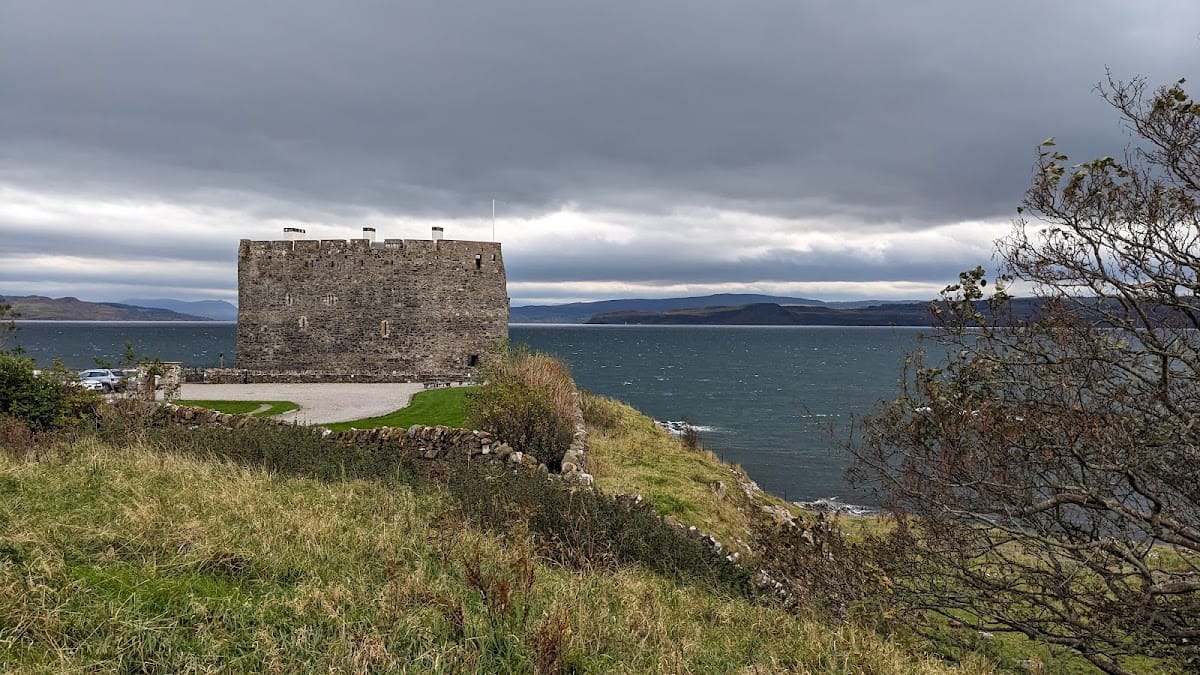
Mingary Castle is arranged on a rocky promontory projecting into the sea, its layout shaped to fit the uneven terrain. It takes the form of an irregular hexagon roughly 20 by 18 meters in size. The defensive walls are built from sandstone rubble sourced from a nearby quarry, carefully assembled with ashlar, or finely cut stone blocks, especially on visible surfaces.
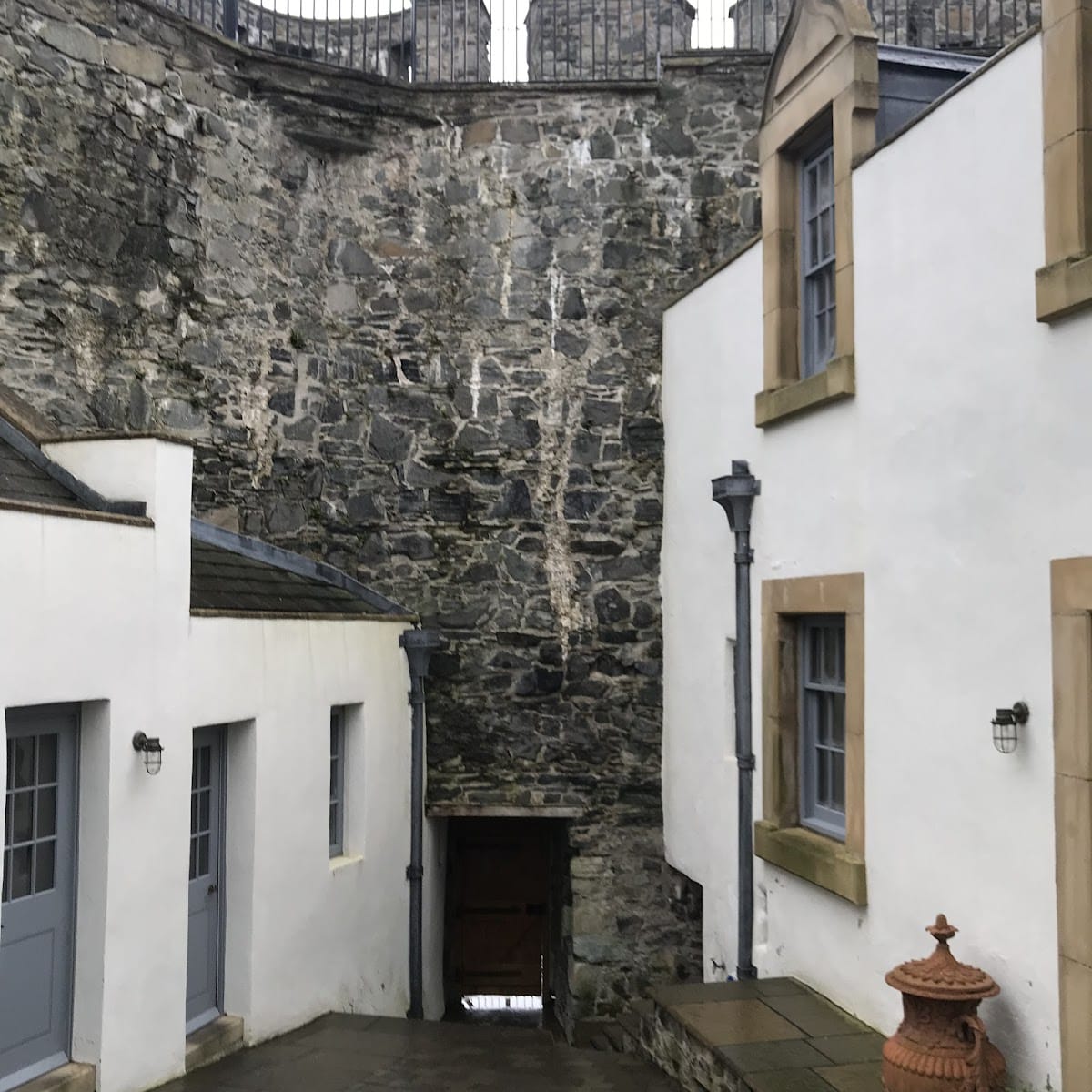
Surrounding the castle is a crenellated curtain wall, the outer defensive barrier, which rises approximately 8.5 meters tall and 1.8 meters thick along the seaward edges. On the landward side, where the approach was most vulnerable, this wall is reinforced to nearly double that height and thickness, reflecting the greater threat from this direction.
A deep, wide ditch cuts across the castle’s landward neck, around three meters deep and over seven meters wide. Originally crossed by a drawbridge offering controlled access, this was replaced in the 18th century by a fixed stone bridge, marking a shift toward more permanent, less easily defended entry.
The castle features a secondary entrance facing the sea, accessible via a stairway cut directly into the rock. This narrow gate is just under a meter wide and is flanked by two projecting watchtowers added in the late 1500s to strengthen the seaward defenses. These towers, located at the southwest and southeast corners, are part of the enhancements made to resist musket fire, which also included raising and adding battlements to the curtain walls.
Within the courtyard lie the remains of several structures. Against the northern curtain wall, the ruins of a three-storey building date to the early 18th century and replaced an earlier hall. Each floor once contained two rooms of different sizes, suggesting a layout designed for varied domestic or administrative functions.
A two-storey building along the western inner wall may have served as the kitchen. Constructed around the same time as the northern block, it forms part of the adaptations reflecting changes in living arrangements during that period. Opposite this, on the southeast side of the courtyard, lie fragments of a later, single-storey building also from the 18th century.
Access to the wall walk, the path along the top of the curtain walls used by defenders, was provided by a partially preserved stone staircase located in the northwest courtyard corner. This feature illustrates how mobility around the defenses was enabled.
Mingary Castle is now protected as both a scheduled monument and a category A listed building, highlighting its national importance. Ongoing preservation focuses on addressing structural vulnerabilities, especially with regard to the seaward walls exposed to harsh marine weather. These efforts aim to conserve the castle’s fabric while allowing for continued archaeological study and selective restoration.
Nearby sites