Milly-la-Forêt Collegiate Church: A Gothic Parish Church in France
Site at a Glance
- Country
- France
- Primary era
- Medieval
- Eras represented
- Medieval, Early Modern
- Civilizations
- French
- Site type
- Religious
- Remains
- Church
On this page13 sections
History
Milly-la-Forêt Collegiate Church is a Catholic parish church in Milly-la-Forêt, France, served by a body of canons. A chapel beside the castle was built here in the 12th century, and the church became collegiate in the 13th century. Reconstruction in the Gothic style, a medieval architectural tradition, began in 1480. The church is dedicated to the Assumption of the Virgin Mary, the Catholic belief that Mary was taken into heaven at the end of her earthly life, and belongs to the Diocese of Évry-Corbeil-Essonnes, a church district under a bishop.
Chapel, collegiate church, and wartime destruction
The castle chapel was elevated to collegiate status in the 13th century. During the Hundred Years’ War, a series of conflicts between the English and French crowns conventionally dated from 1337 to 1453, the church was ruined along with the rest of Milly in 1356 and again in 1371.
Rebuilding and later protection
Louis Malet de Graville, a French nobleman and admiral who became lord of Milly in 1480, began the church’s reconstruction that year. The choir and nave were inaugurated in 1495, while the broader building work continued until 1633. The Chapel of the Virgin was added in 1630, followed by the right aisle in 1633. That same year, the main portal was salvaged from the former Church of Saint-Pierre, built in 667 on the left bank of the École.
The church entered the French historic-monument register on 6 March 1926. Separate protections were later given to the Virgin and Child statue in 1911, the choir-seat supports in 1912, the lectern in 1972, and the chandeliers in 1975.
Remains
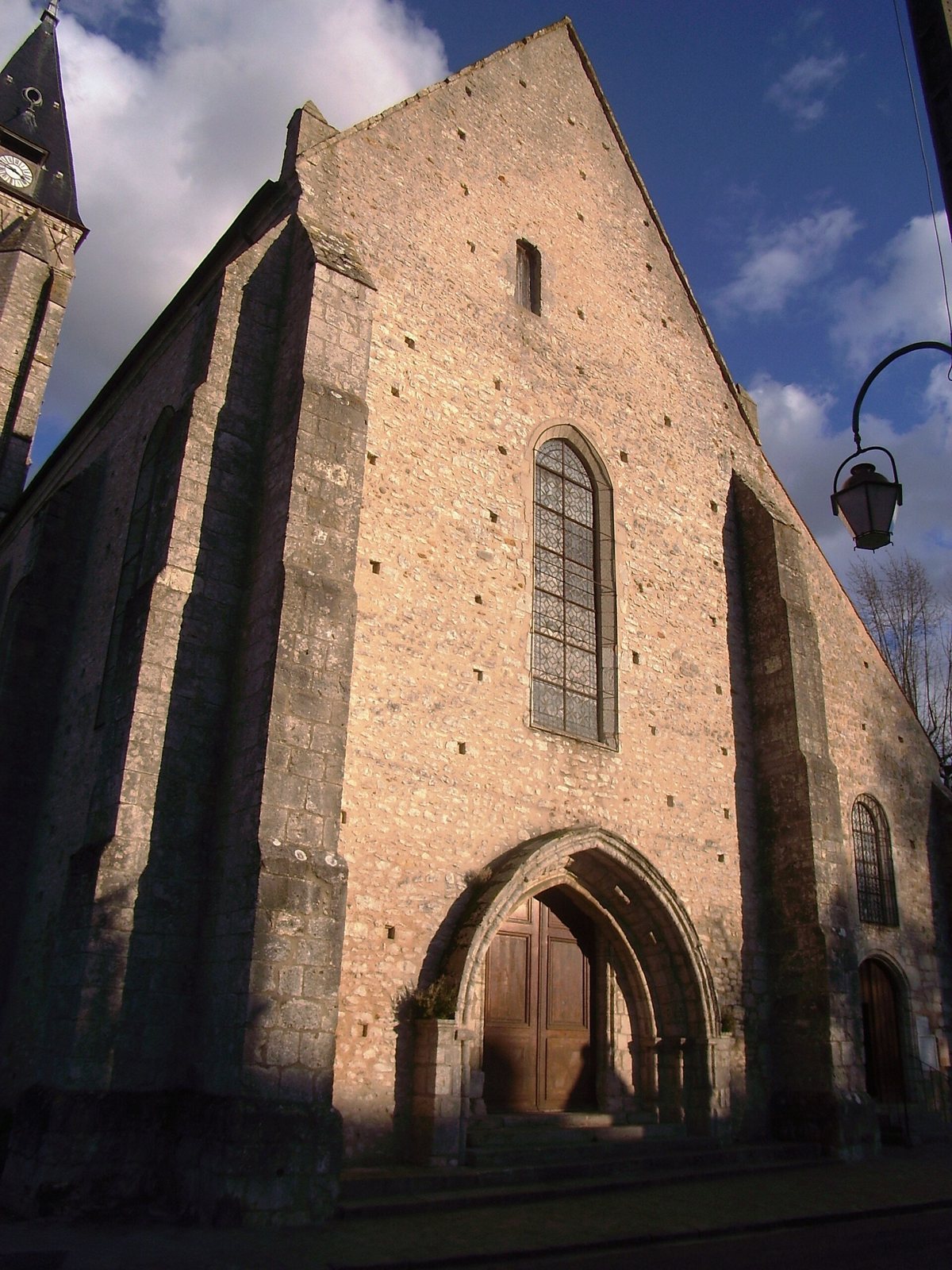
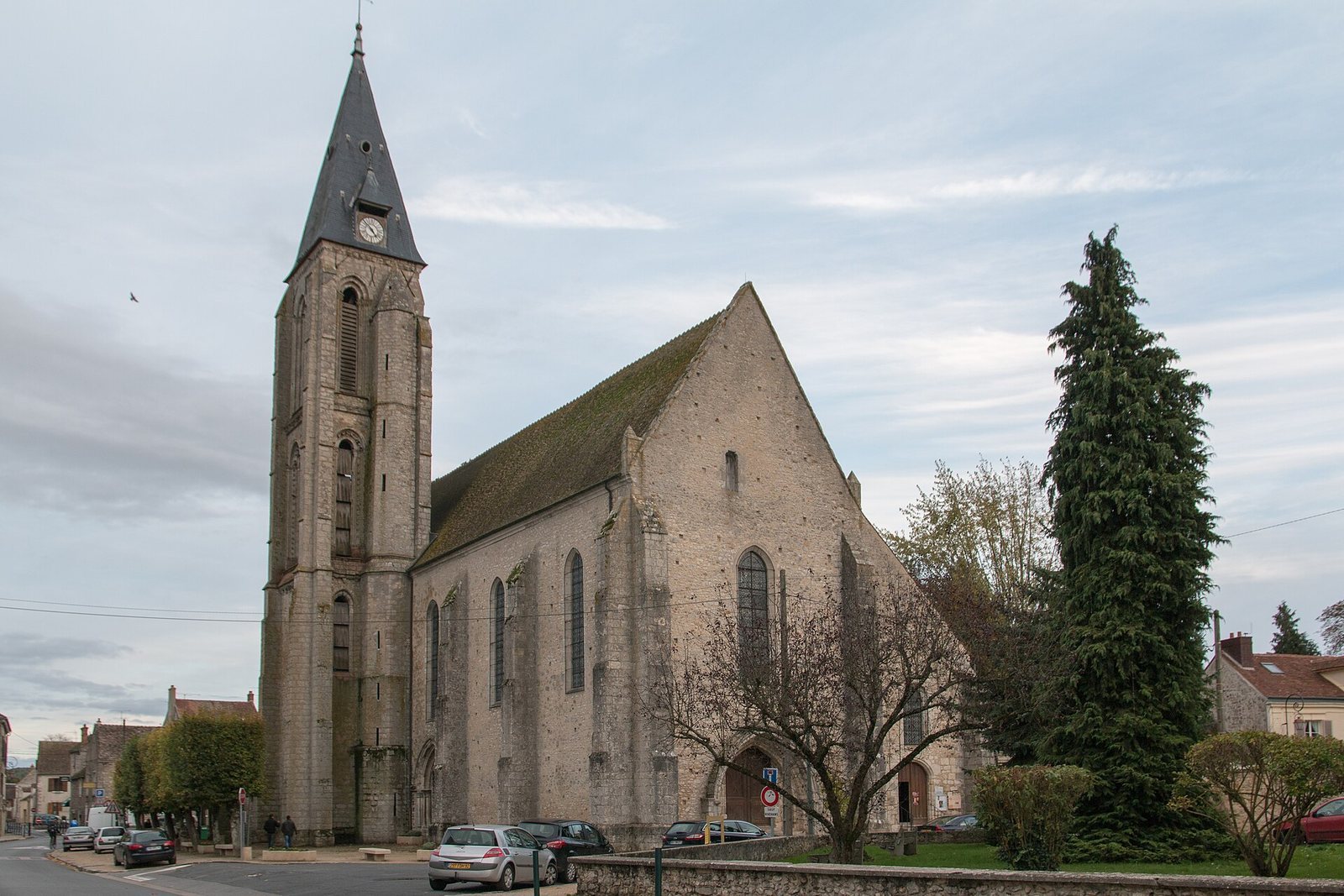
The church stands near the center of Milly-la-Forêt, close to Château de la Bonde and on the École River’s right bank. It follows the former alignment of departmental road 837, now Rue Langlois. Predominantly Gothic in character, the building includes the Chapel of the Virgin and a right aisle.
Medieval fabric and entrance
Bell tower
The tower reaches 57 metres. Its base is the surviving portion of the 12th-century castle chapel, while the upper levels belong to the 13th-century collegiate church, when the tower was raised.
Main portal
The limestone entrance has a pointed arch and several rounded moldings. Its design is described as Romanesque, a medieval architectural style distinct from Gothic.
Interior features and furnishings
Chapel and Virgin and Child
The church includes a Chapel of the Virgin. In the nave, a 160-centimetre statue carved from painted, multicolored wood depicts the Virgin and Child.
Reliquary of Saint Wulfram
The reliquary holds the remains of Wulfram of Sens, an early medieval Frankish bishop and missionary who served as archbishop of Sens and evangelized Frisia.
Lectern
An oak lectern measuring 150 centimetres dates to the reign of Louis XI, king of France from 1461 to 1483. It bears an eagle associated with Saint John the Evangelist, an apostle traditionally identified as the author of the fourth Gospel, as well as the arms of the Perrault, Saint-Aulaire, and Marle families.
Choir seats
Thirty-six carved oak misericords, small supports beneath folding choir seats, are arranged in the choir. Made in the 15th century, they served the secular canons, clergy attached to a church who were not monks, during lengthy services.
Chandeliers
Bronze chandeliers dating to the 19th century are among the church’s furnishings.