Mihakayama Kofun: A Fifth-Century Keyhole Burial Mound in Japan
Site at a Glance
- Rating
- 4
- Popularity
- Very Low
- Country
- Japan
- Primary era
- Classical
- External website
- Open
- Eras represented
- Classical
- Civilizations
- Unclassified
- Site type
- Burial
- Remains
- Burial Mound
On this page11 sections
History
Mihakayama Kofun is a large burial mound in Japan, built during the Middle Kofun period in the fifth century. The Kofun period, broadly dating from the third to the sixth centuries, saw the growth of powerful regional chiefly and political institutions. Mihakayama stands in the northeastern Ueno Basin of western Mie, near routes linking the basin with Ise and Omi. Its burial occupant is regarded as a leading chief of the Iga region, although the person’s identity remains unknown.
Growth of Chiefly Power
The mound followed Higashiyama Kofun, built at the beginning of the Kofun period, and Yamagami Yoriken Shrine Kofun, dating from its early phase, within the Tsuge River basin. Its much greater size reflects a major expansion in the scale of chiefly tombs. Other tombs said to have stood nearby during the same period included Danna-yama Kofun, Asama-yama Kofun, and Ninotani Kofun. Their occupants are considered to have held subordinate positions in relation to the chief buried at Mihakayama.
After Mihakayama was built, chiefly tombs shifted to the opposite bank of the Tsuge River and became considerably smaller. The distribution of these tombs has been interpreted as evidence that the area may have been the center of an ancient Iga polity. It has also been suggested that a system of regional control modeled on the Kinai existed when Mihakayama was constructed. The Kinai was the historical core of central Japan around the ancient imperial capitals, corresponding broadly to present-day Nara, Kyoto, Osaka, and parts of neighboring prefectures.
Traditions and Historical Interpretations
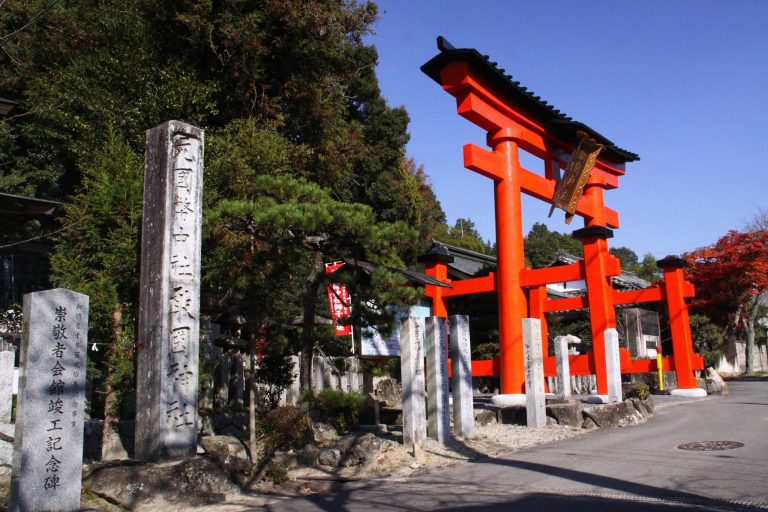
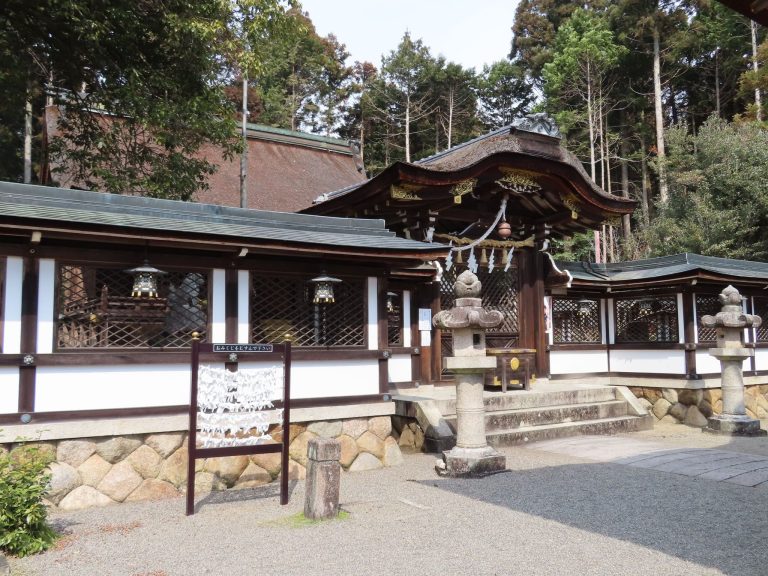
Local tradition identifies the occupant as Prince Ohiko, said to have been a son of the semi-legendary Emperor Kogen and the deity enshrined at Aekuni Shrine in Iga. Emperor Kogen belongs to the traditionally numbered early imperial line, whose historicity is uncertain. This identification of the burial occupant remains a tradition rather than an archaeologically established fact.
The Nihon Shoki also connects the site with Aomaka, where imperial forces under Mononobe no Utashiro no Sukune and Mononobe no Me no Muraji supposedly attacked and killed Ise Asahitaro during the reign of Emperor Yuryaku, traditionally dated to 474. This connection is a historical interpretation, not a confirmed identification. The site may additionally have been associated with ancient iron-weapon production, based on the account of Asahitaro’s powerful arrows and an interpretation of the place-name Sanagu as referring to an iron bell.
Protection as a Historic Site
Mihakayama Kofun became a National Historic Site on March 3, 1921. The protected area was enlarged on July 22, 1970, to include part of the cut hillside, a section of the moat, the projecting platform, and the subsidiary tombs.
Remains
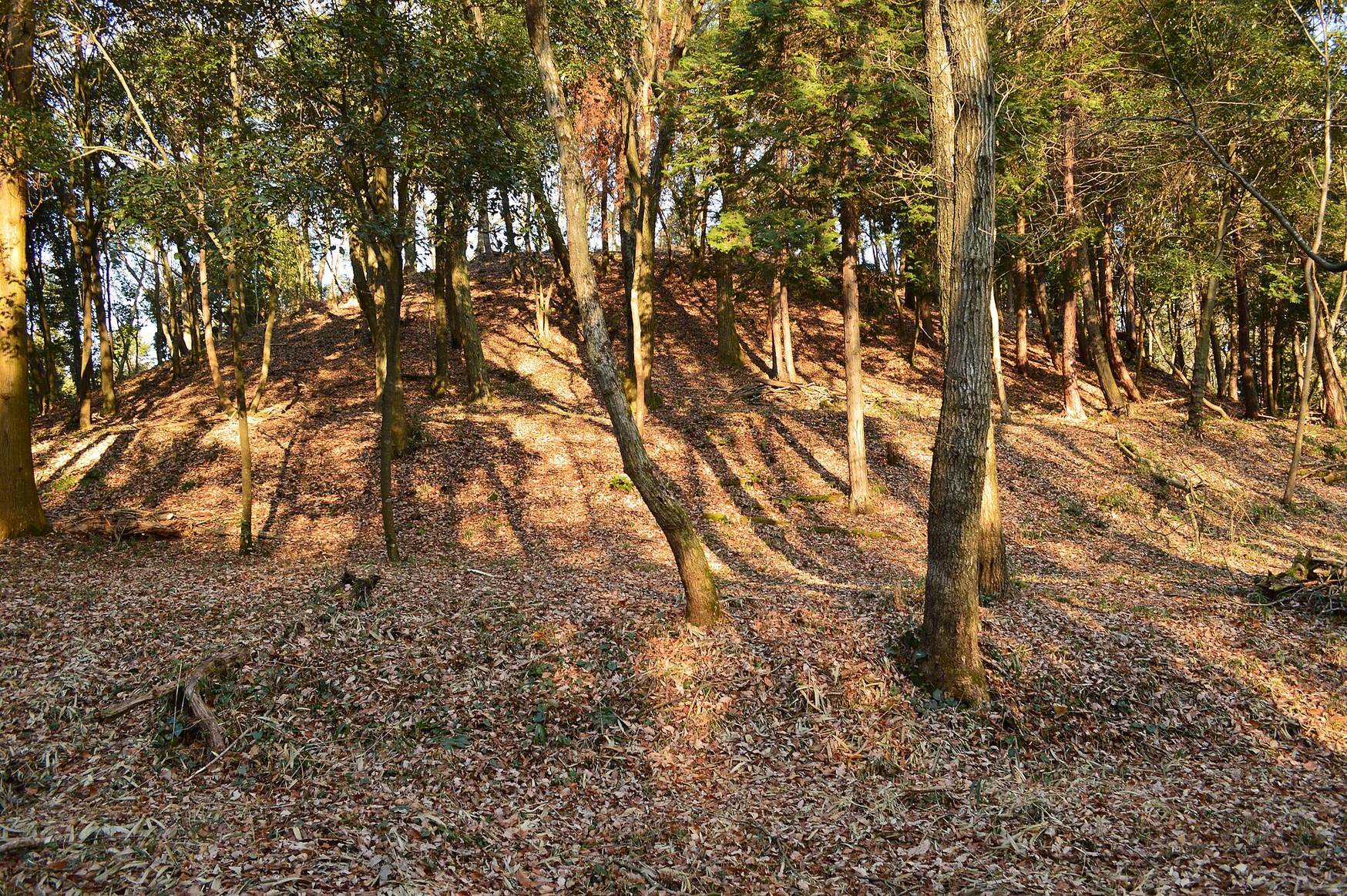
Mihakayama is a keyhole-shaped mound, or zenpo-koen-fun, formed by a square front section joined to a circular rear section. It was built by cutting across the end of a hill and is oriented toward the northeast. The mound measures approximately 188 meters in length, while the rear section rises about 14 meters. It was constructed in two tiers, with additional stepped work on the front section creating the appearance of three tiers. Its outer surface was originally covered with fukiishi, protective stone paving laid over the earthen mound.
Main Mound and Burial
Keyhole Mound
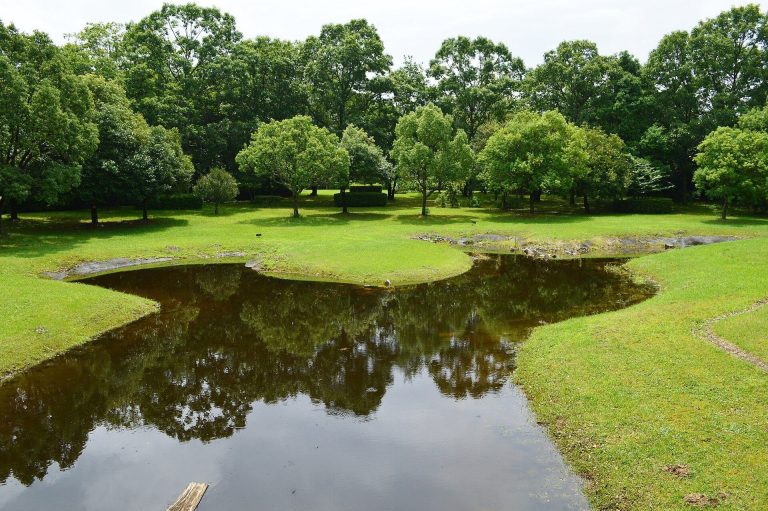
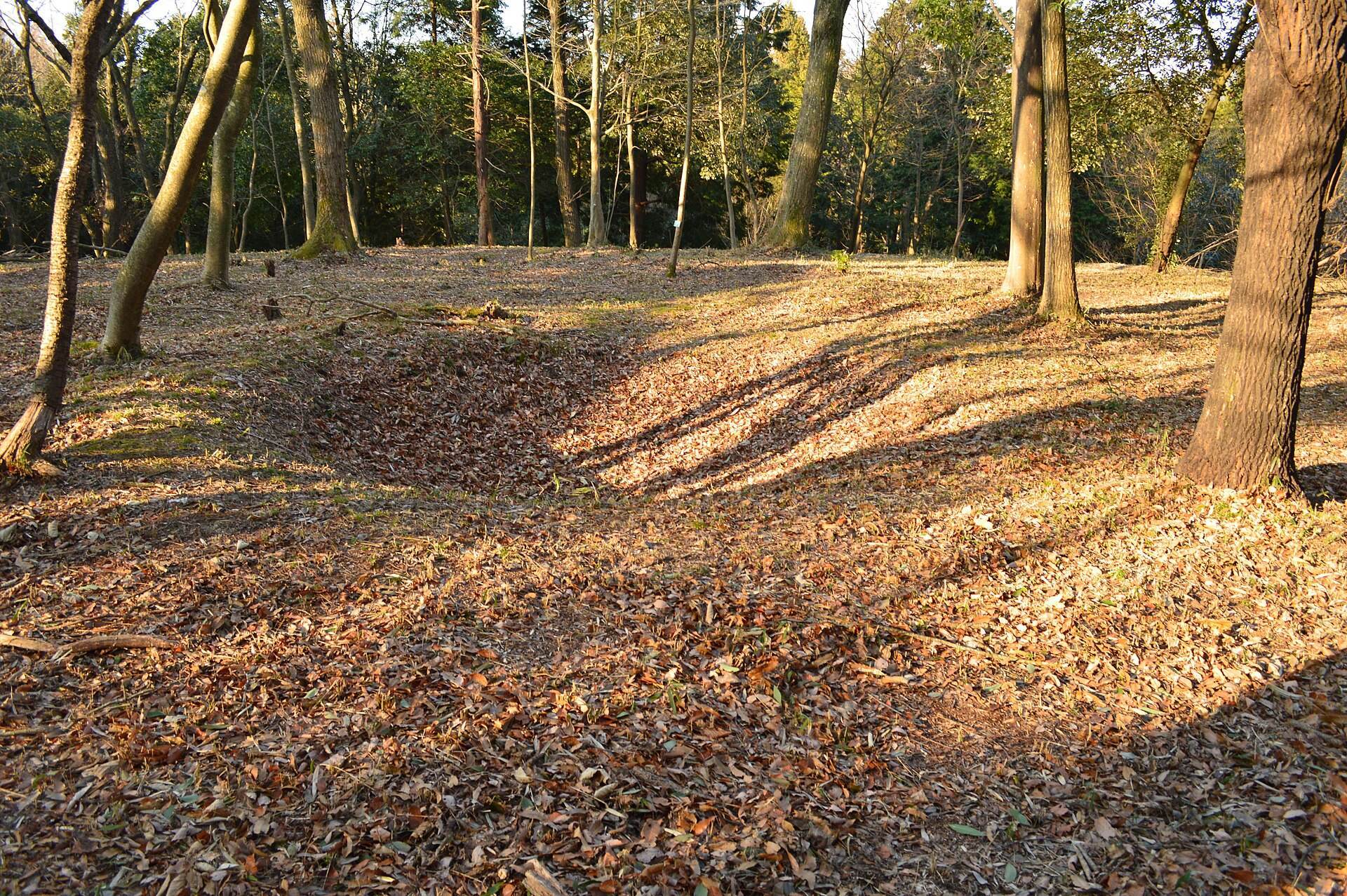
The circular rear section carries a projecting platform on its northwestern side. A moat has been confirmed along the southern side of the rear section, while the front section is associated with no identified moat. Cylindrical, figurative, and house-shaped haniwa were found around the mound. These clay objects were placed on or around burial mounds, with cylindrical examples marking the perimeter and figurative or house-shaped examples contributing to funerary display.
Burial Facility
The burial facility has never been excavated, so its form, position, and grave goods remain unknown. A depression in the flat summit of the rear section is regarded as a possible ancient robbers’ pit. The mound’s 188-meter length also places it among the exceptionally large powerful tombs outside the Kinai region, and its shape is similar to Saki-ryozan Kofun in Nara.
Associated Tombs and Structures
Projecting Platform
The projecting platform extends from the northwestern side of the circular rear section. It forms part of the mound’s surviving physical arrangement and is included within the area added to the site’s protection in 1970.
Subsidiary Tombs
Two square subsidiary tombs stand near the eastern side of the main mound. Each measures approximately 10 meters on a side. Their position and smaller scale distinguish them from the principal keyhole mound and relate them to the wider funerary arrangement around Mihakayama.