Michaeliskirche: The Evangelical Lutheran Parish Church of Kaltenkirchen
Site at a Glance
- Rating
- 4.6
- Popularity
- Very Low
- Country
- Germany
- Primary era
- Modern
- External website
- Open
- Eras represented
- Medieval, Early Modern, Modern
- Civilizations
- German, Holy Roman Empire
- Site type
- Religious
- Remains
- Church
On this page12 sections
History
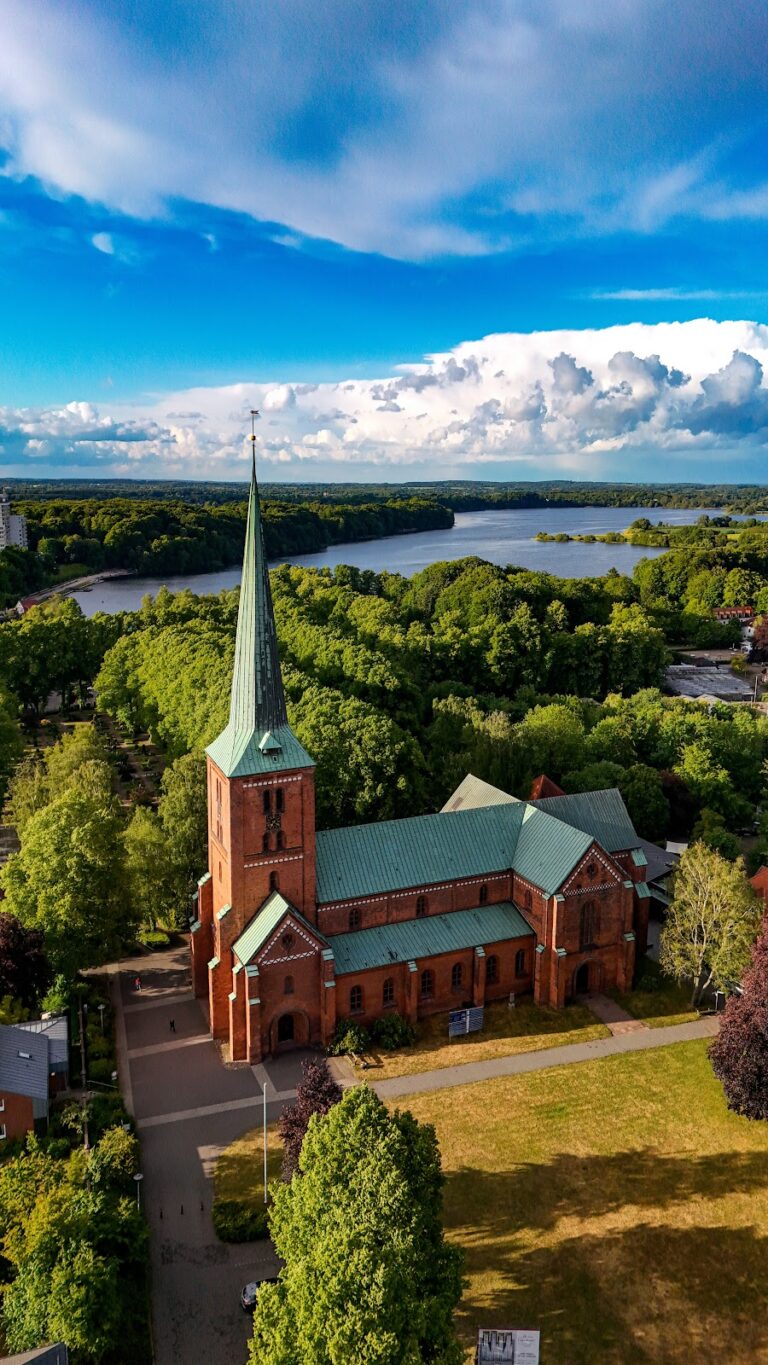
Michaeliskirche is an Evangelical Lutheran church in Kaltenkirchen, Germany, completed in 1879 in the Neo-Gothic style, a nineteenth-century revival of Gothic architectural forms. Dedicated to the Archangel Michael, it stands beside a medieval round tower that survived the replacement of the earlier church.
Medieval origins and the seventeenth-century church
The place was first mentioned in 1301 under the name Koldenkerken, when the priest Bertram referred to it. A church probably already existed there, although the church and parish appear by name only in later records. The oldest surviving part is a round fieldstone tower, probably built in the twelfth century. Comparable round towers stand at the neighboring churches of Barmstedt and Rellingen and at the churches associated with Vicelin.
In 1624, the medieval church was replaced by a hall church without a choir. Built from granite blocks and brick, this second church served the growing parish for more than two centuries. The tower was encased in brick in 1656, and an octagonal Baroque cap was probably added at about the same time.
Parish growth and nineteenth-century rebuilding
The parish was large enough to be divided into two equal pastoral districts in 1740. After 1866, several villages were transferred to the parish of Barmstedt. Henstedt received the Erlöserkirche in 1877 and became an independent parish in 1879, while Ulzburg was transferred to Henstedt in 1908.
By the nineteenth century, the church had become too small for its congregation. Part of the east wall collapsed in 1873, leading to the demolition of the church in 1874. The tower, renovated in 1835, was retained. A new church was completed in 1879 and dedicated to Michael, giving the surviving medieval tower a place beside the present building.
The rebuilding also caused the loss of much of the older interior. Movable furnishings were removed and stored during the work, but the inventory, including a Gothic altar, burned in 1878. The bowl of the 1634 baptismal font and chandeliers dated 1608 and 1708 survived. Most of the remaining furnishings therefore date from around 1880 or from later alterations.
Pastors and the parish in the modern era
Several pastors connect Michaeliskirche with wider religious and political history. Around 1565, Franz Alard, who had been expelled from the Netherlands because of his Lutheran faith, briefly served as pastor of Kaltenkirchen. Johann Bernhard Chemnitz led the western parish district from 1849 to 1859 and represented the clergy as a delegate in the Holstein Estates Assembly in 1853 and 1854. This was the representative political body of the historical duchy of Holstein.
Ernst Szymanowski served as pastor of Michaeliskirche from 1927 to 1933. He was an early member of the Nazi Party and the German Christians, a Nazi-aligned movement within German Protestantism. During the Second World War, he actively participated in the deportation and murder of Jews. A death sentence imposed on him in 1948 was commuted to life imprisonment in 1951. He was released in 1958 after intervention by the Evangelical regional church of Schleswig-Holstein.
A memorial plaque installed in Michaeliskirche in April 2015 commemorates the victims of the former pastor without naming Szymanowski. In 2009, the congregation also helped finance the publication of a critical biography of Ernst Biberstein. These actions place the church’s twentieth-century history within an ongoing confrontation with the involvement of Protestant figures in Nazi persecution.
Between 1965 and 1970, three further churches were built in the surrounding area: Friedenskirche in Kisdorf, Christuskirche in Alveslohe, and Gnadenkirche in Schmalfeld. In 1996, the large Kaltenkirchen parish was divided into the three parishes of Kaltenkirchen, Kisdorf, and Schmalfeld. The Kaltenkirchen parish now includes Michaeliskirche and Christuskirche in Alveslohe. The church belongs to the Altholstein church district of the Evangelical Lutheran Church in Northern Germany, a regional Lutheran church body serving northern Germany.
Remains
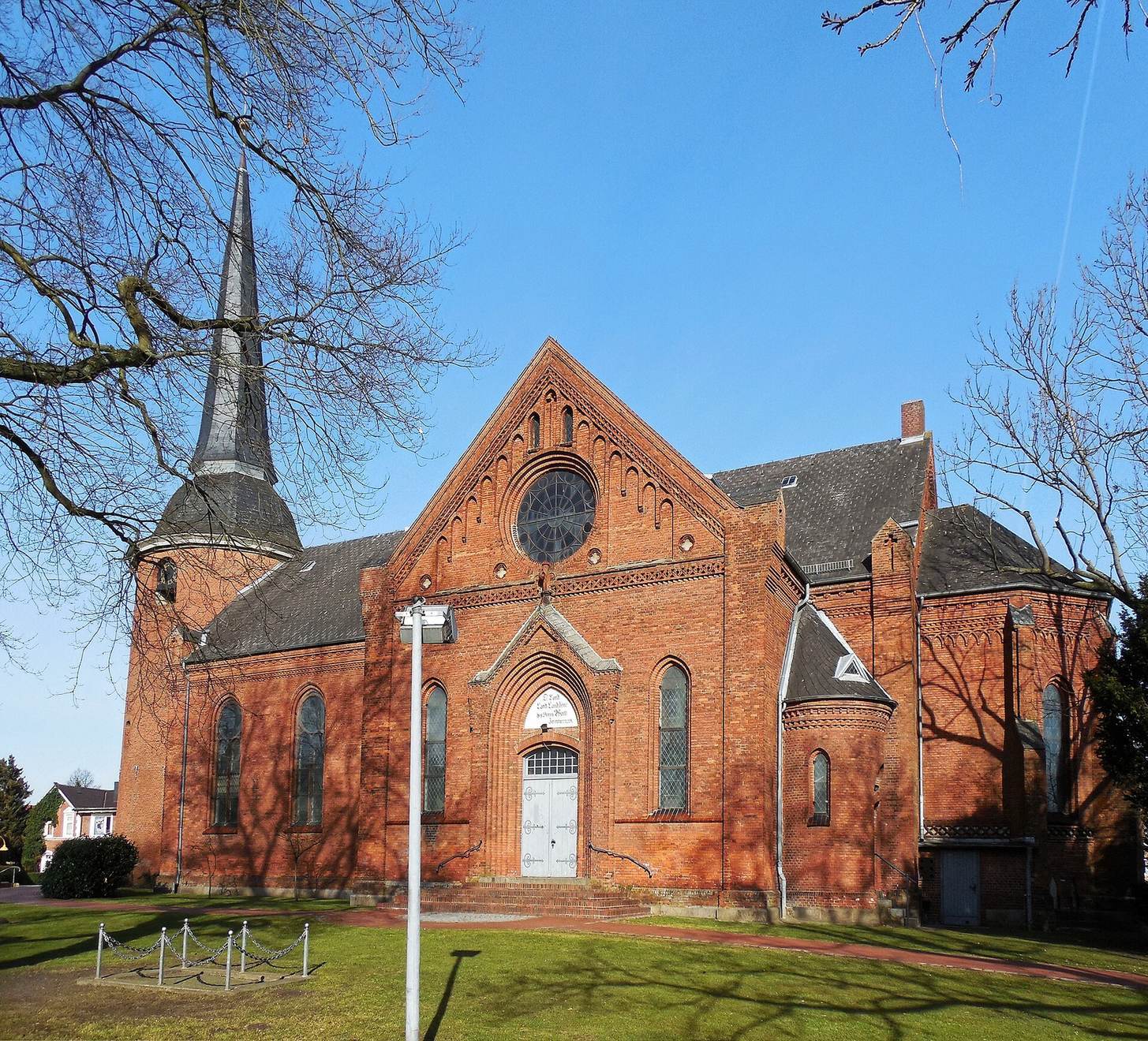
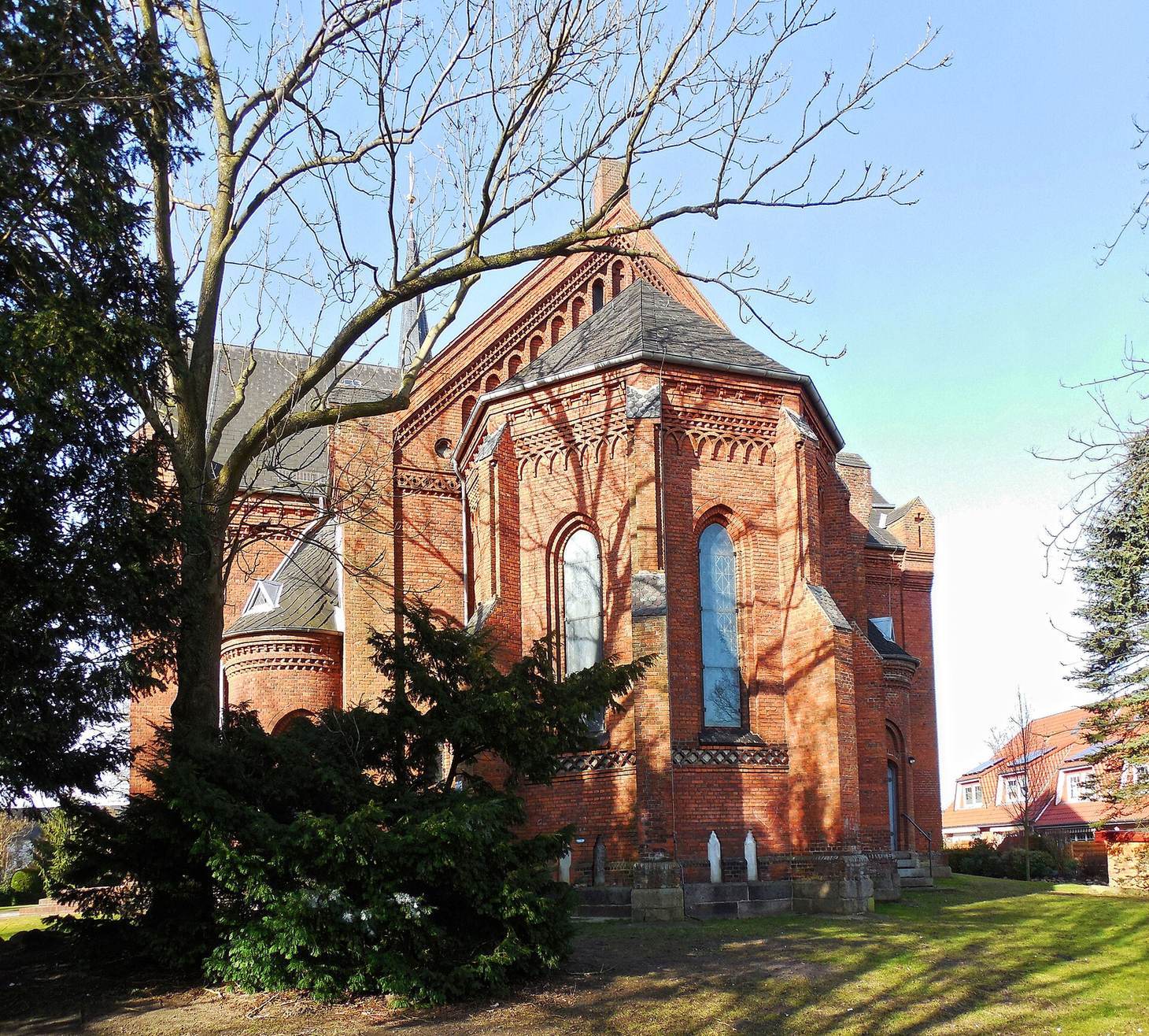
Michaeliskirche consists of a Neo-Gothic church with a cruciform ground plan and an apse, a semicircular or polygonal termination commonly found at the east end of a church. The medieval round tower stands beside the later building. Together, the tower, the nineteenth-century church, and surviving furnishings represent successive phases from the Romanesque period through the Baroque era and into the modern church.
Medieval tower and present church
Round tower
The round tower is built of fieldstone and is probably a twelfth-century structure. It belongs to the early Romanesque phase of the site, a medieval architectural period that preceded Gothic architecture. Its original association with the medieval church is reflected in the survival of a chandelier dated 1608, which came from that earlier building. The tower was renovated in 1835 and encased in brick in 1656. Its octagonal Baroque cap probably dates from the same seventeenth-century alteration.
Neo-Gothic church
The present church was completed in 1879 after the earlier hall church was demolished. Its cruciform plan and apse give the building its Neo-Gothic form. The new structure was designed to accommodate a congregation that had outgrown the 1624 church, while the retained medieval tower preserves a separate and much earlier phase of the site.
Font, galleries, organ, and furnishings
Baptismal font
The surviving baptismal-font bowl is made of sandstone and dates from 1634. Four angel heads decorate it, and an inscription around its rim states that Eler Brummer and Marke Spoleman donated it. In 1724, the bowl was replaced by a baptismal angel, an angel-shaped support associated with a baptismal basin. After the angel was allegedly destroyed by the sexton while heavily intoxicated, the older bowl returned to use on a brick foundation shaped like a cross. This foundation replaced the lost foot of the font.
Galleries and organ
Galleries were added as the congregation grew. In 1755, the organ was moved to the west gallery from an earlier location that is not known. A new instrument made by Marcussen & Sohn of Apenrade, then in Germany, was installed in 1880.
Alterations in the 1940s and 1970s reflected the Organ Reform Movement, a twentieth-century effort that often favored earlier construction and performance styles over the Romantic tradition. In 1996, G. Christian Lobback brought the organ closer to its original Romantic condition while retaining some of the earlier alterations.
Surviving chandeliers
Two chandeliers dated 1608 and 1708 remain among the church’s historic furnishings. The earlier chandelier came from the preceding Romanesque church. Along with the 1634 baptismal bowl, they are the principal surviving furnishings from before the rebuilding of the nineteenth century; the other furnishings date from around 1880 or from later modifications.