Menhir de Champ-Dolent: A Prehistoric Standing Stone in France
Site at a Glance
- Popularity
- High
- Country
- France
- Primary era
- Stone Age
- Eras represented
- Stone Age
- Civilizations
- Unclassified
- Site type
- Civic
- Remains
- Megalithic Monument
On this page4 sections
History
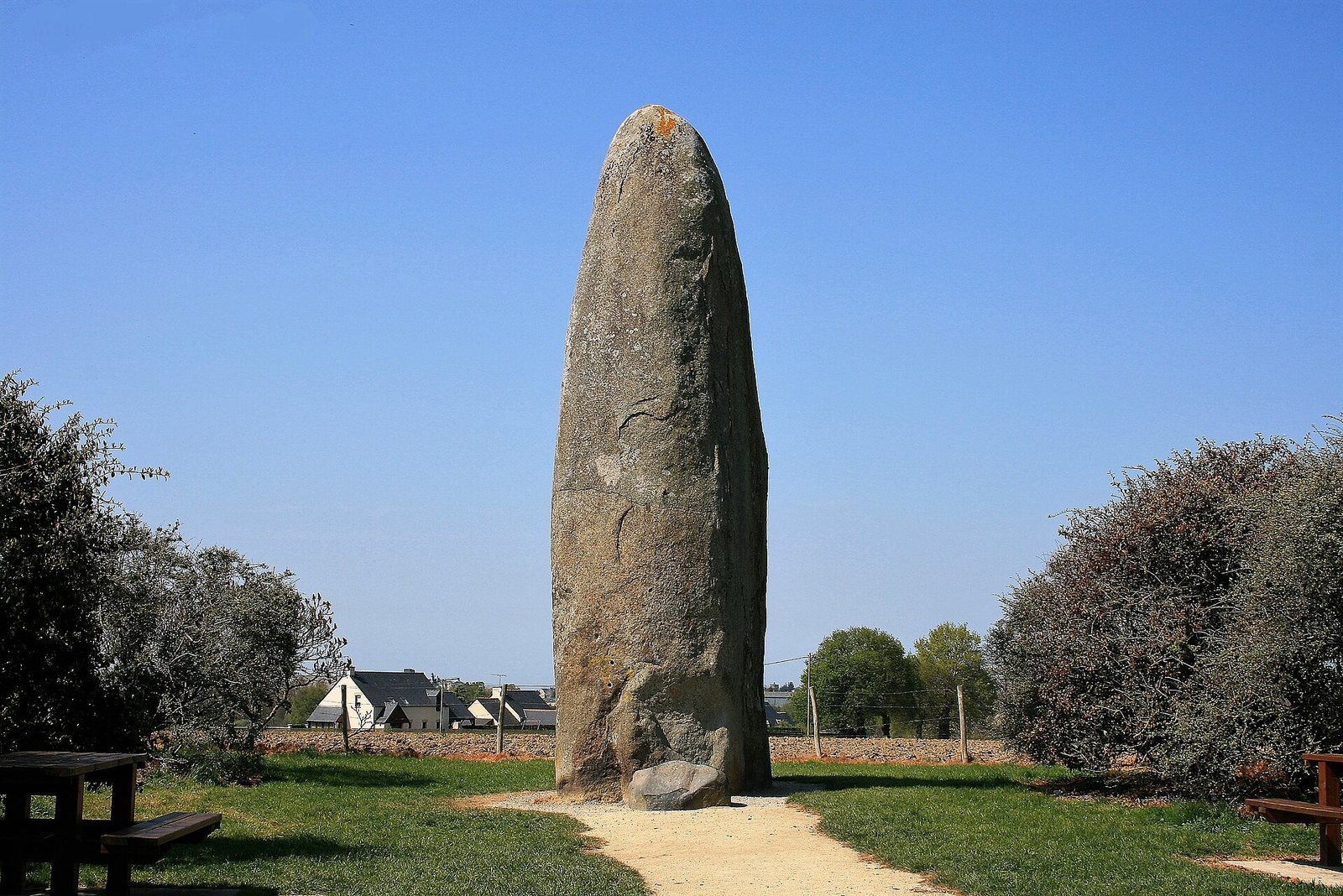
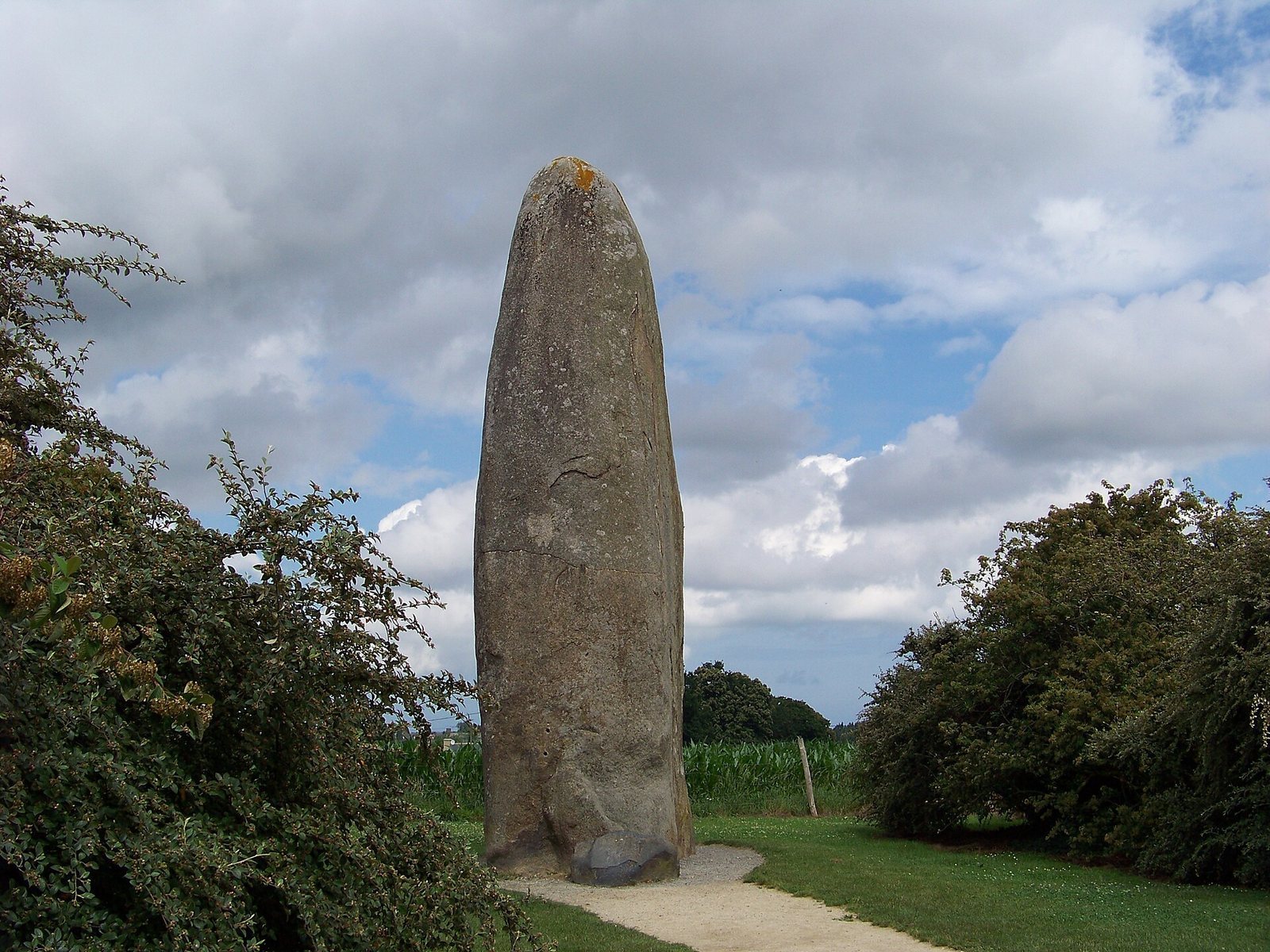
The Menhir de Champ-Dolent is a large prehistoric upright stone about 2 km south of Dol-de-Bretagne, France. It is broadly attributed to the Neolithic, the later Stone Age associated with farming and settled communities. Its exact date is uncertain: about 4500 BC is sometimes proposed for this stone, while dates around 5000–4000 BC have been suggested more generally for Brittany’s menhirs.
Early tradition and local legends
The earliest mention associated with the menhir is dated to 560. Tradition says that the Frankish king Chlothar I met his rebellious son Chram there. The story may be connected with a battle at Dol-de-Bretagne in that year, but the meeting itself is a tradition rather than an established event.
Local stories explain the stone’s presence in several ways. One says it fell from the sky, while another says it rose from the ground to stop two brothers from fighting. The name Champ-Dolent is traditionally understood as “Field of Sorrow”; other explanations connect it with the “stone of the road of Dol” or with the Breton word dolenn, meaning “meadow.”
Another legend says the devil hurled the stone from Mont-Dol at Dol’s cathedral while Saint Samson was building it. In one version, it destroyed the cathedral’s left tower before landing at its present site; in another, it is a fragment of the bell tower. Folklore also says the menhir sinks into the earth, either by an inch every hundred years or whenever someone dies. Its disappearance is associated with the end of the world or Judgment Day. A further belief holds that the Moon eats away a piece of the stone each night.
Nineteenth-century interpretations and protection
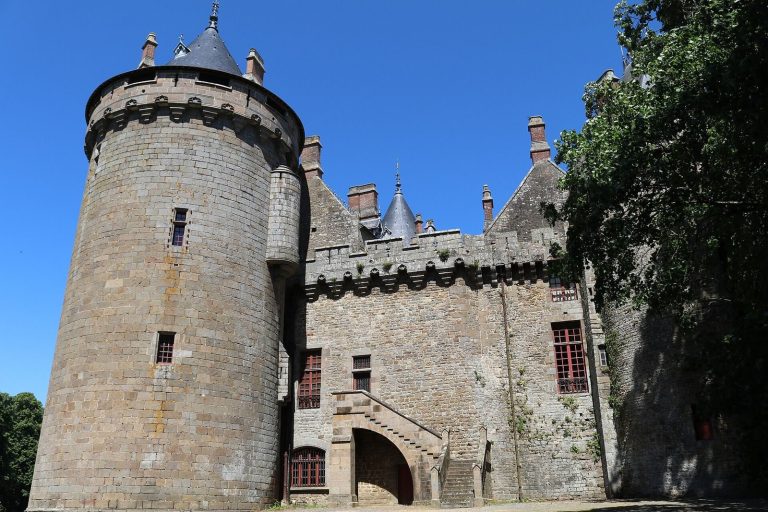
A cross was placed on top of the menhir in the nineteenth century in an effort to Christianize it; the cross was later removed. The stone has been classified as a French historic monument since 1889.
The menhir also drew attention in nineteenth-century writing. Stendhal recounted a local guide’s claim that Julius Caesar had erected it. The archaeologist Joseph Déchelette praised it as one of France’s most beautiful menhirs.
Remains
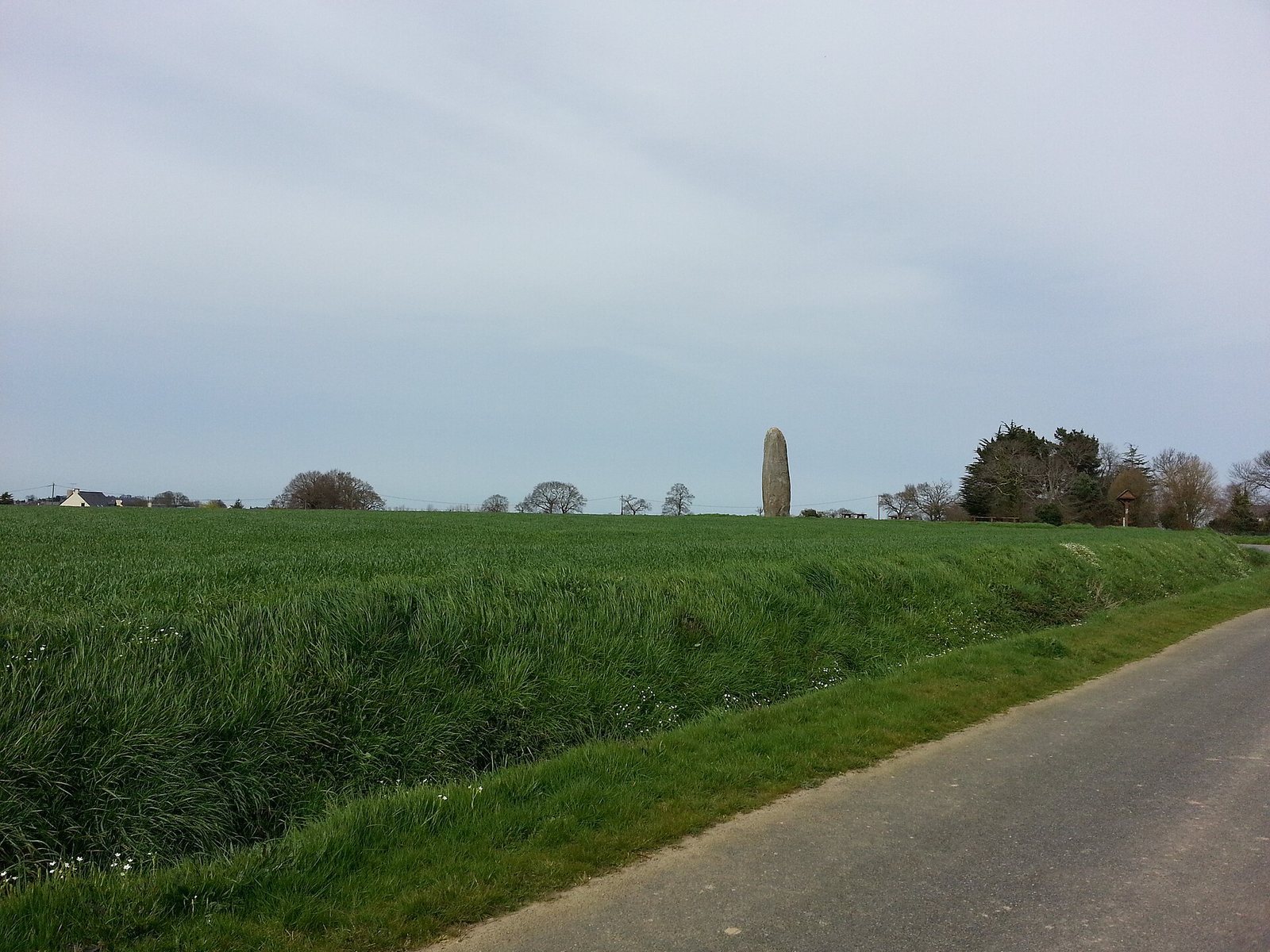
The menhir stands on a raised point about 30 m above sea level, overlooking the Dol marsh between the Tertre Bintin stream to the west and an unnamed stream to the east. Its roughly conical shaft is slightly flattened and made of fine-grained pink or reddish granite quarried about 4 km away. The stone’s surface appears almost smooth, with a texture left by repeated hammering.
The exposed height is between 9.3 and 9.5 m, commonly rounded to about 9.4 m. It averages about 1.8 m in width and is roughly 1 m thick. Its circumference is about 7 m at ground level and 8.7 m at a height of 1.5 m. Estimates of its weight range from about 50 to 150 tonnes. It is among the largest standing stones in Brittany. By comparison, the Great Menhir of Locmariaquer once reached about 20 m in height and is now broken into four pieces.
A large block of dolerite anchors the menhir, extending to a depth described as about one-tenth of the visible height. Stendhal instead described the stone as resting on quartz rock and penetrating it by several feet.