Château de Coëtquen: A Fortified Castle and Residence in Brittany
Site at a Glance
- Rating
- 5
- Popularity
- Very Low
- Country
- France
- Primary era
- Early Modern
- External website
- Open
- Eras represented
- Medieval, Early Modern
- Civilizations
- Duchy of Brittany, French
- Site type
- Domestic
- Remains
- Castle
On this page11 sections
History
Château de Coëtquen is a historic castle site in Saint-Hélen, France, shaped by medieval fortification, later residential construction, and partial demolition in the twentieth century. The earlier castle stood farther south, beside a forest and near the boundary with Saint-Pierre-de-Plesguen. The present château developed through successive phases from the fifteenth to the seventeenth century.
Early castle and medieval origins
The first castle at Coëtquen was a wooden fortification built to control Roman roads linking Corseul with Condate, now Rennes, and Aleth, now Saint-Malo, with Condate. Its defensive ditches were supplied by a stream. The site is now marked by a feudal castle mound, a raised earthwork that formed the defensive base of a medieval castle.
Vikings burned the early castle in the ninth century. Jean-Christophe Cassard associated the later settlement beside a nearby pond with these raiders, but archaeological evidence does not confirm that interpretation.
Fortification, residence, and partial demolition
A fortified castle was built in the fifteenth century. It was later dismantled during the Wars of the League, a series of late-sixteenth-century conflicts between the Catholic League and forces supporting the French monarchy and Protestant succession. A residential building was then erected on the earlier foundations during the seventeenth century, while the fifteenth-century keep, the principal fortified tower, remained beside it.
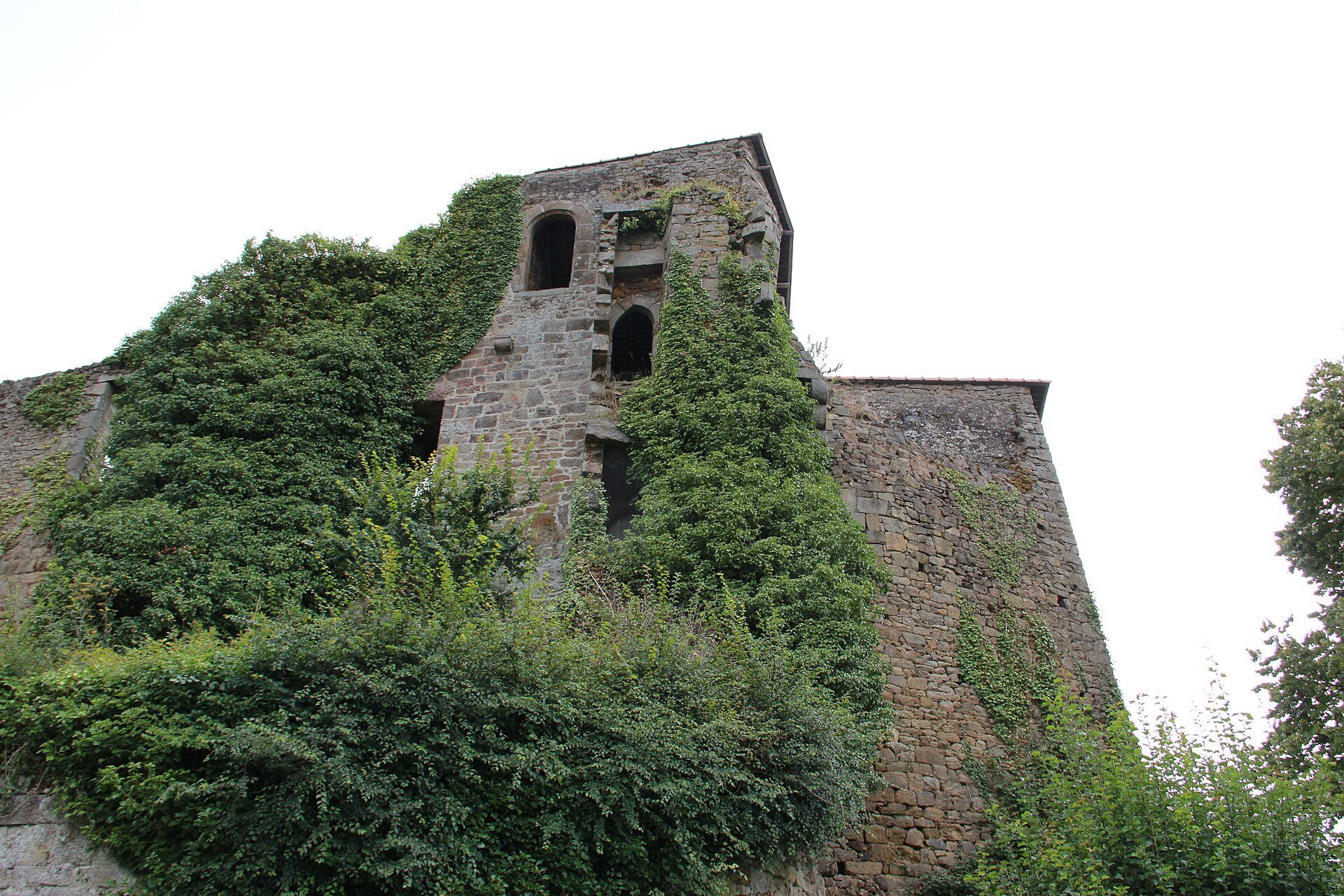
At the end of 1950, the collapse of one of the keep’s chimneys led to the partial demolition of the château. Château de Coëtquen was listed as a historic monument by an order dated 9 March 1927.
Literary and cinematic associations
The château provided the setting for Raoul de Navery’s 1875 novel Patira. The novel later inspired Aldo Lado’s 1973 Italian film The Tower of Despair. Although the film’s story is presented as taking place at Coëtquen, filming took place entirely in Italy, in the Aosta Valley.
Remains
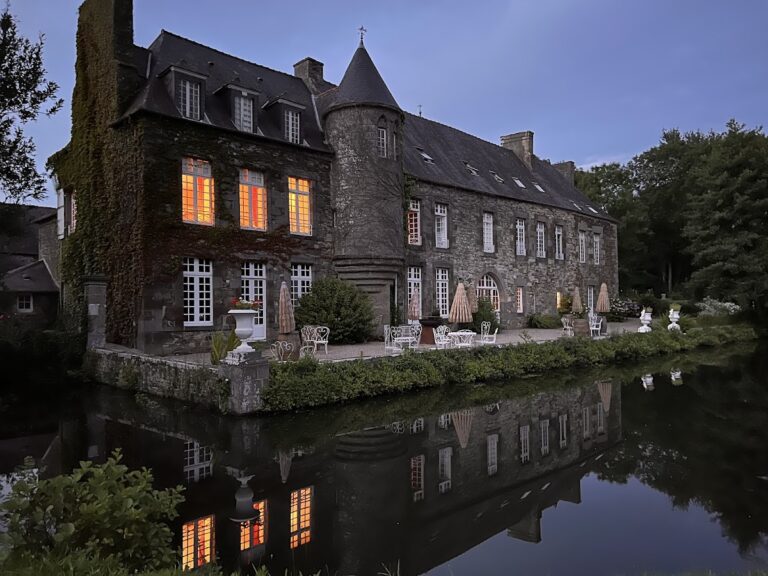
The surviving site combines the earlier castle mound with remains of the fifteenth-century fortification and the seventeenth-century residence. Its buildings used both carefully cut stone and irregular rubble masonry, while the later residence incorporated several floors and an attic beneath a roof with stone dormer windows.
Earlier castle site
Feudal castle mound
The earlier castle is represented by a feudal mound and its surrounding ditches. The ditches were approximately 5 to 7 metres wide and 4 to 5 metres deep, with water supplied by a stream. This earthwork preserves the defensive setting of the first wooden castle.
Castle buildings
Fifteenth-century wing
The fifteenth-century wing had a ground floor and one upper floor, both built in dressed stone, meaning blocks cut and finished for construction. A cornice crowned the building, with small defensive turrets and machicolations, projecting openings through which defenders could attack assailants below.
Seventeenth-century residence
The seventeenth-century building contained a basement, a ground floor, two upper floors, and an attic lit by stone dormer windows. Granite formed the window jambs and lintels, while the remaining walls used rendered rubble stone, made from irregular stones set within mortar. The residence formerly contained wood panelling, marble fireplaces, wrought-iron work, and paved floors.
Keep and surviving tower bases
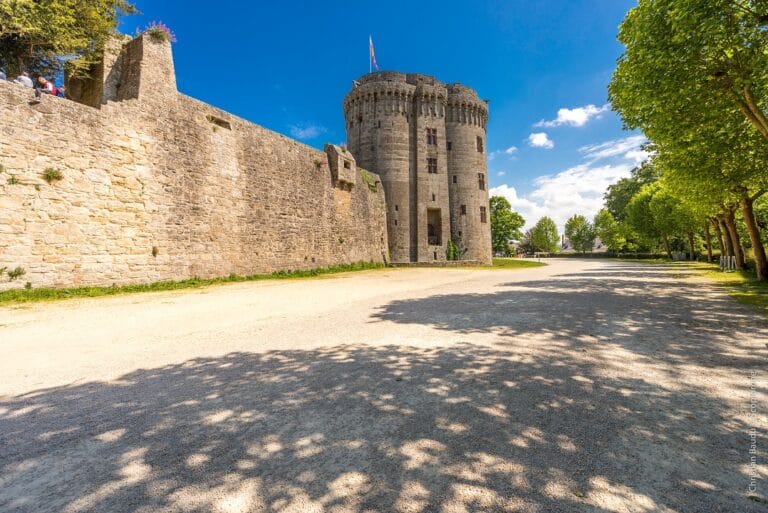
The keep adjoined the seventeenth-century residence. Following the chimney collapse and partial demolition in 1950, two bases of fifteenth-century towers remained in the château’s surroundings, preserving part of the earlier fortified complex.