Menez Korriged: A Neolithic Covered Passage Tomb in France
Site at a Glance
- Popularity
- Low
- Country
- France
- Primary era
- Stone Age
- Eras represented
- Stone Age
- Civilizations
- Unclassified
- Site type
- Burial
- Remains
- Tomb
On this page14 sections
History
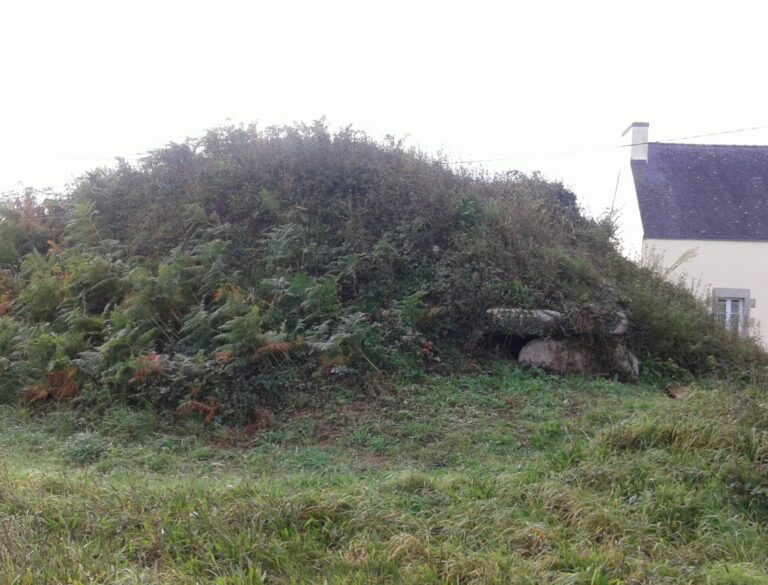
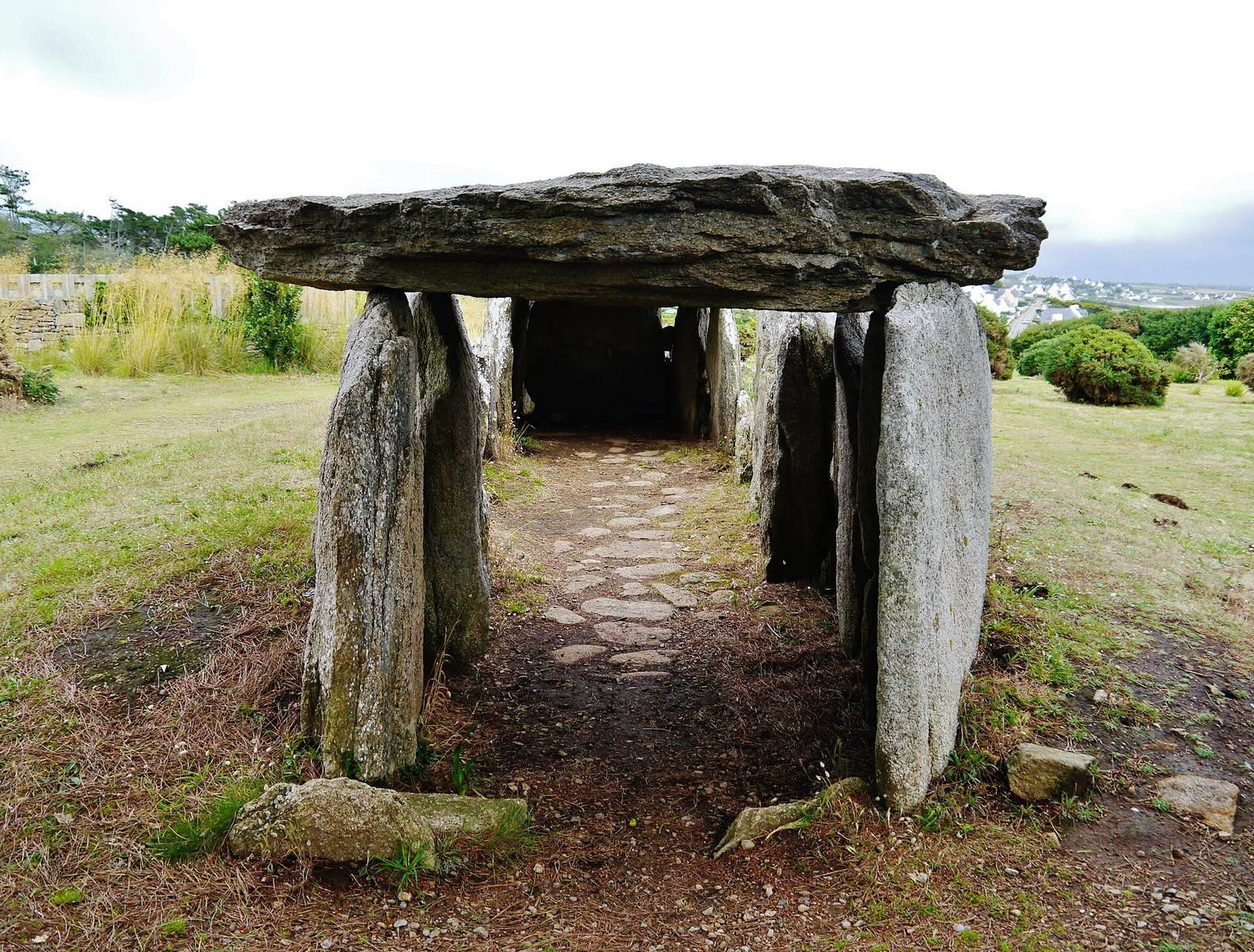
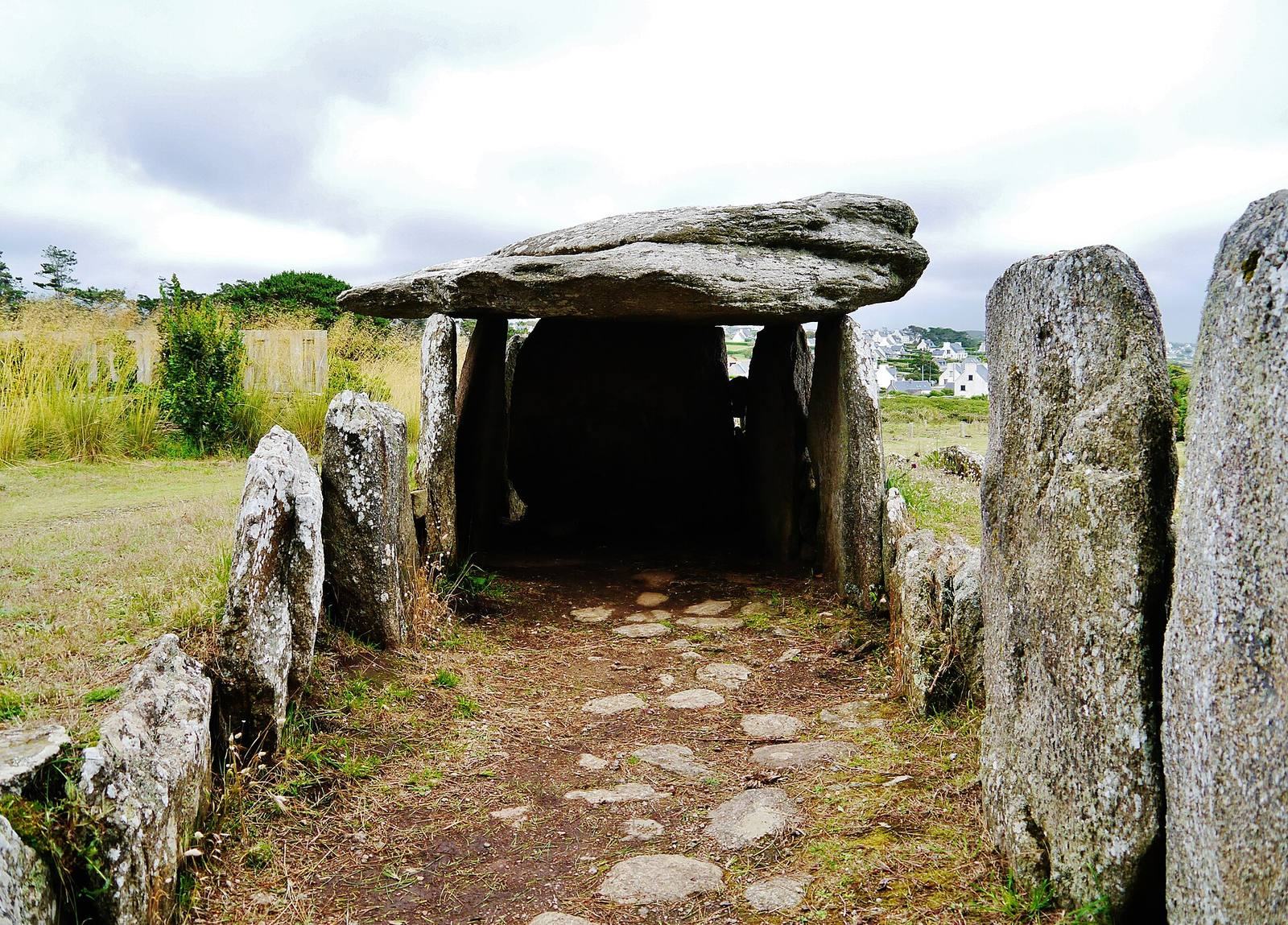
Menez Korriged, also known as the covered passage tomb of Porz Poul’han, is a prehistoric stone burial monument at Plouhinec, France. This roofed chamber dates to the Final Neolithic, the later phase of the Neolithic, between 3300 and 2800 BC. It belongs to a prehistoric archaeological complex that also includes the megalithic cemetery at Pointe du Souc’h and the cave of Menez Dregan. The name Menez Korriged means “Mount of the Korrigans,” supernatural beings in Breton folklore.
Later use and early descriptions
The tomb was reused during the Bronze Age, the period that followed the Neolithic, and served funerary purposes again in the Gallo-Roman period, when Roman rule and cultural influence shaped Gaul.
The earliest known written description was by the Chevalier de Fréminville, a French naval officer and antiquarian who studied Brittany’s ancient remains. He described the monument’s arrangement and dimensions.
Damage, excavation and restoration
In 1942, the German army partly demolished the monument, apparently because it obstructed the view from a coastal battery a few dozen metres to the south. Some upright stones were cut or toppled, and the two capstones still in place collapsed. The site became a rubbish dump after the Second World War. In the early 1970s, the municipality considered relocating it.
Archaeologist Michel Le Goffic led two excavation campaigns in 1986–1987. In 1988–1989, the General Council and the municipality of Plouhinec acquired and restored the tomb, following a plan informed by research from the departmental archaeology service.
Remains
The tomb stands on a coastal promontory at the edge of a plateau overlooking Audierne Bay, above the western side of the Porz Poul’han inlet. The burial chamber runs west to east and sits within a boat-shaped stone cairn, or mound. The promontory was also a place where flint was worked into tools. A deep cave lies to the south and was probably accessible during the Neolithic.
Chamber and associated spaces
Main chamber
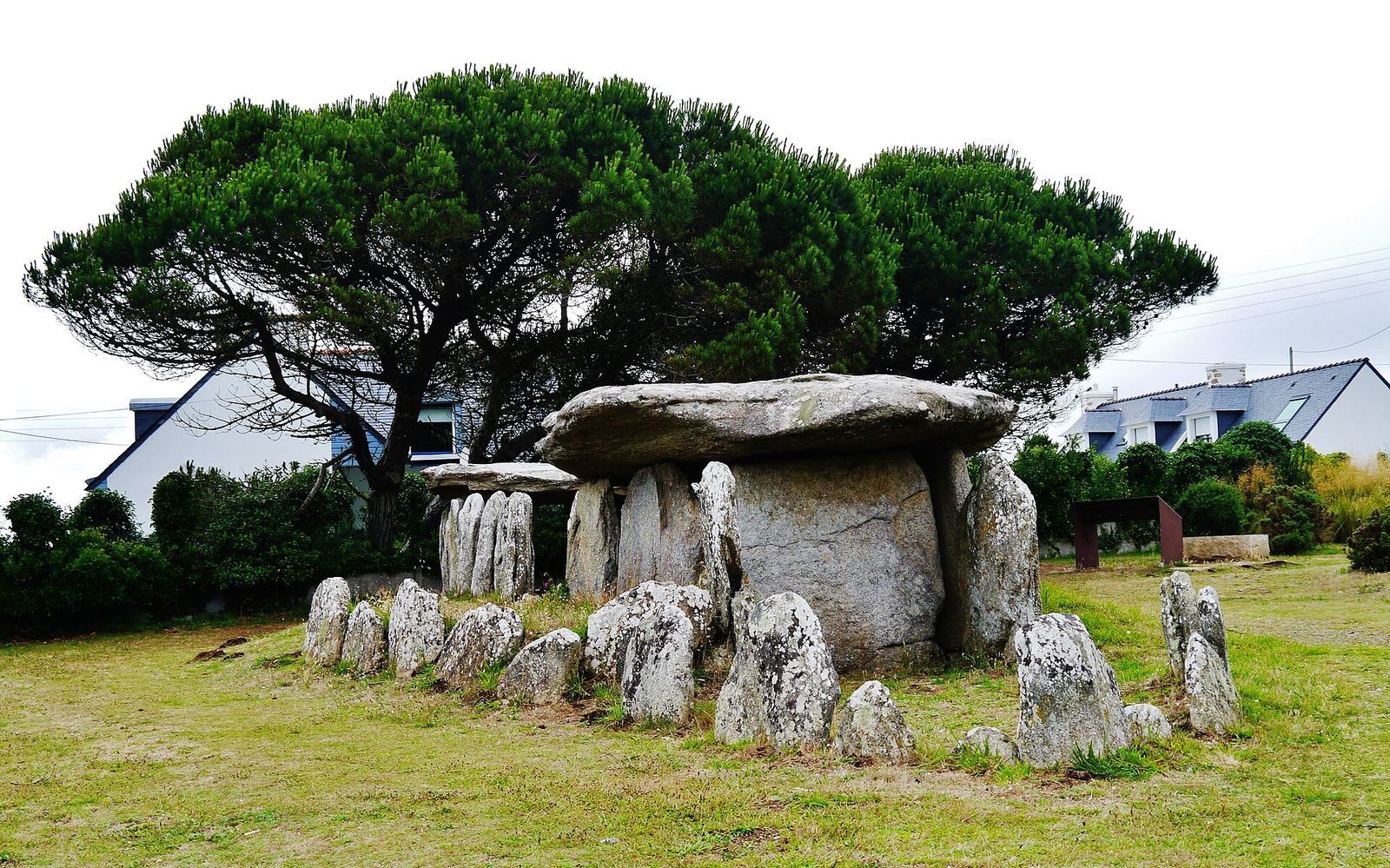
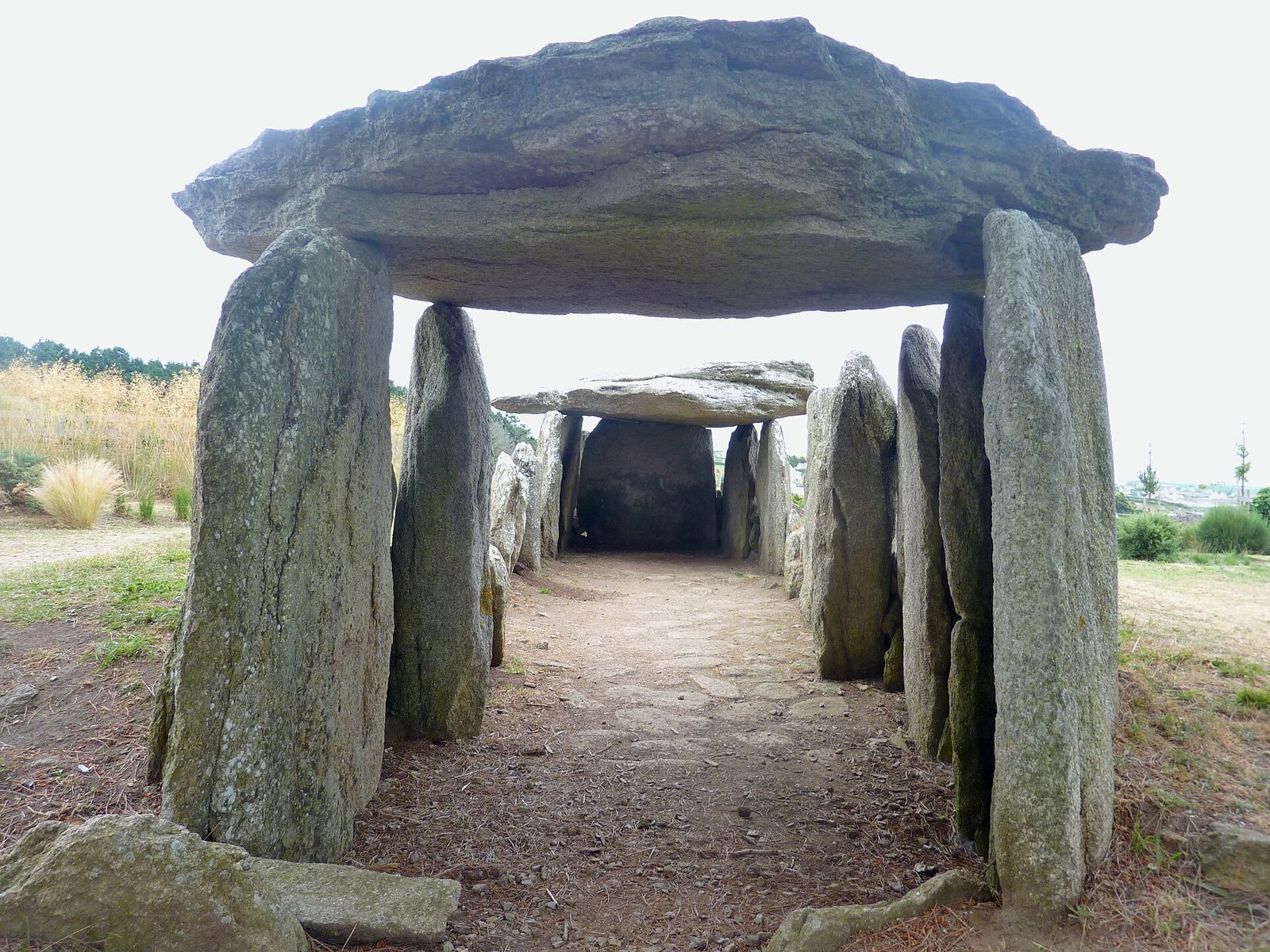
The chamber measures 10.80 metres long and between 1.50 and 2 metres wide, widening toward its rear. Two parallel rows of eight upright gneiss slabs, a banded rock, form its sides. The slabs average 2.20 metres in height and overlap in sequence, a construction arrangement that strengthened the walls and made the chamber more water-tight. They were set into parallel trenches cut into the underlying bedrock, each 0.60–0.80 metres wide and 0.25–0.33 metres deep. The uprights originally supported three capstones, or roof slabs; the largest weighed about 15 tonnes. Traces of paving were found on the chamber floor.
Fréminville counted 16 uprights and three capstones, although the middle capstone was already broken and only two remained. He described the monument as east–west in direction, 43 feet long and 6.5 feet high. He gave the eastern capstone’s length as 24 feet and its thickness as 4.5 feet. During the 1988–1989 restoration, missing uprights were replaced and two capstones were raised again.
Offset chamber
A small chamber lies beyond the terminal slab, slightly off the main axis. Its position may be connected with stone extraction at the site during the Middle Ages.
Cairn and forecourts
Stone mound and surrounding ring
The boat-shaped cairn measures about 25 metres long. A road cuts through its western end, while the southern part survives to a height of 0.50–0.60 metres. A ring of stones stood about 2 metres from the chamber walls; excavation revealed the holes in which those stones had been set.
Paved forecourts
Paved forecourts lay at both ends of the cairn, in front of the entrance and the small chamber. Each had a pointed plan and was paved with large, flat pebbles gathered from the nearby coast.
Excavated finds
Flint and stone tools
The excavations recovered 3,908 flints from inside and outside the monument, in deposits extending from the surface to the bedrock. Among these were 1,670 unworked flakes, 663 pieces of debris and 149 cores, the blocks from which flakes were struck. Other finds included six small blades, 18 transverse arrowhead points, 24 retouched flakes, 13 pebbles and eight scrapers. The stone objects also include part of a polished dolerite axe classified as Plussulien Type A, and several quartzite pebbles used as tools.
Pottery and personal ornaments
A total of 786 pottery fragments represent three vessel types: straight-rimmed bowls with rounded bases in the Crec’h-Quillé style, carinated vessels with sharply angled profiles, and flowerpot-shaped vessels attributed to the Seine-Oise-Marne culture, a Neolithic archaeological culture. Personal ornaments comprise ten steatite, or soapstone, beads and two beads made of bone or ivory. Taken together, the finds are characteristic of the Middle to Final Neolithic.
Human remains and later burials
A small number of human bone fragments were found, including pieces of long bones and the skull. A blue glass-paste bead came from the centre of the chamber. Cremation urns dating to the second and third centuries CE were buried in the southern part of the mound.