Meehambee Dolmen: A Neolithic Portal Tomb in Ireland
Site at a Glance
- Popularity
- Medium
- Country
- Ireland
- Primary era
- Stone Age
- Eras represented
- Stone Age
- Civilizations
- Unclassified
- Site type
- Burial
- Remains
- Tomb
On this page5 sections
History
Meehambee Dolmen is a portal tomb in Mihanboy, near Athlone in County Roscommon, Ireland, dating to about 3500 BC. A portal tomb is a stone burial structure in which a large capstone rests on upright stones, including a pair forming an entrance. It belongs to the Neolithic, the later part of the Stone Age, associated with the spread of farming and settled communities.
Neolithic origins
The purpose of Meehambee Dolmen has not been established. Comparable tombs have been interpreted either as burial places for one important king or chief, or as graves used by several members of a local tribe during the Neolithic.
Later name and finds
In the 1930s, local people knew the tomb as Leabaidh Éirn. In the 1960s, local schoolchildren found two stone axes near it, indicating Neolithic activity in the surrounding landscape.
Remains
Tomb structure and setting
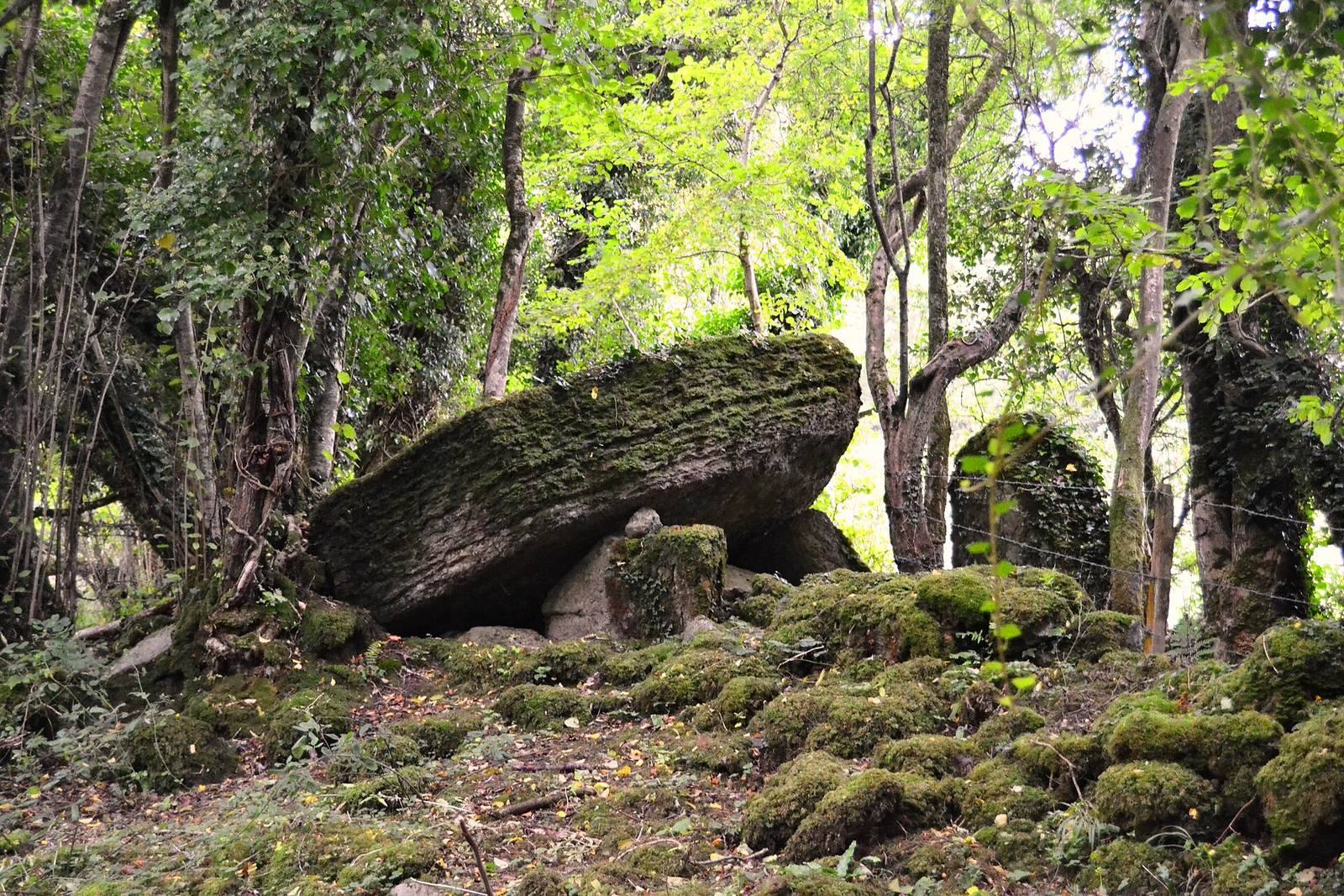
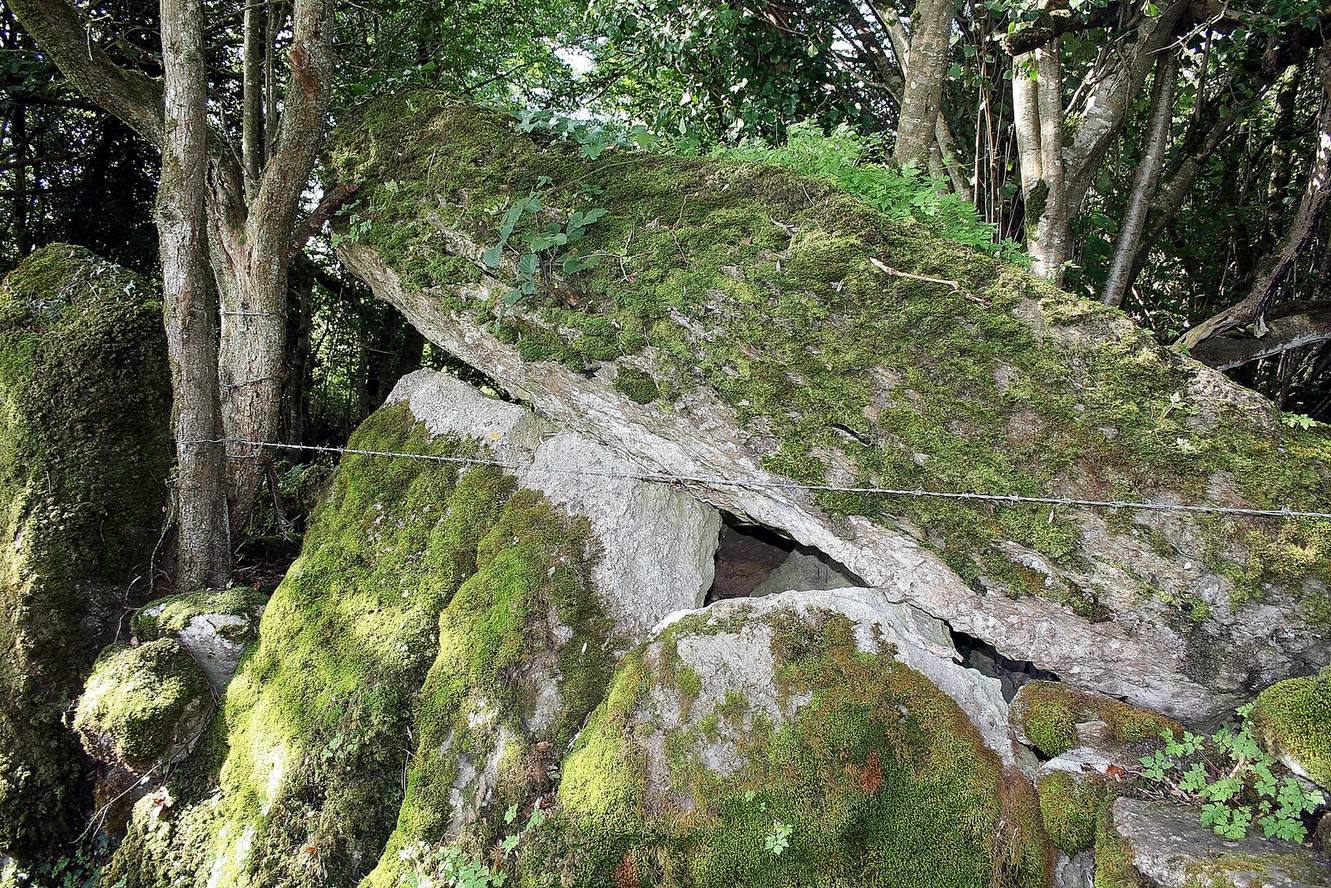
The tomb stands in light woodland near a historic bridle path and is partly covered by moss and leaf litter. Its original structure had six upright stones supporting a sandstone capstone, including a pair of entrance stones, side supports, and a doorstone. One surviving entrance stone is 2.3 metres high. The capstone measures about 4 by 2.5 metres and is estimated to weigh around 24 tonnes. After the rear support stone collapsed sometime after the medieval period, the capstone slid backwards and came to rest at an angle of about 45 degrees; the collapse also displaced the doorstone. The tomb remains unexcavated.