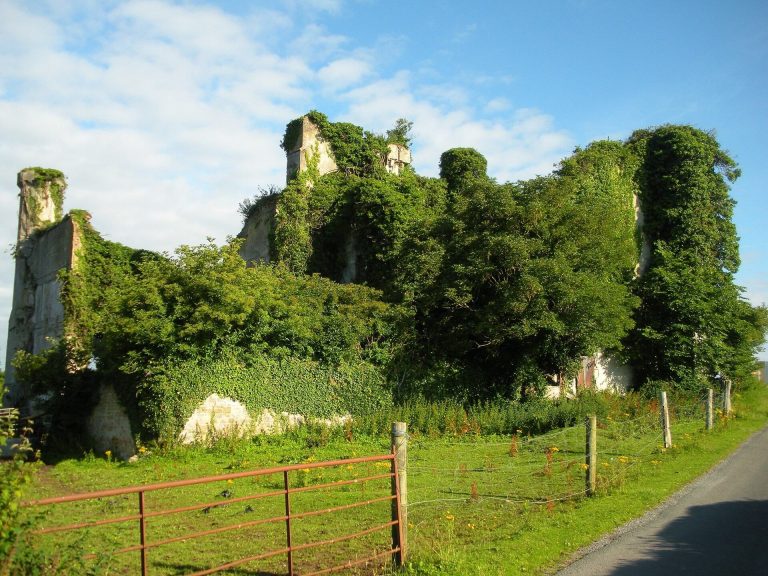
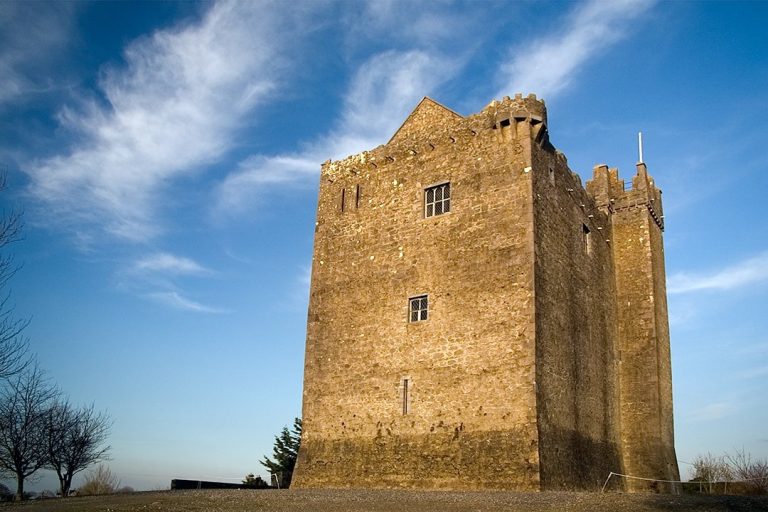
Clonmacnoise Castle: A Castle Beside an Early Irish Monastery
Site at a Glance
- Rating
- 4
- Popularity
- Very Low
- Country
- Ireland
- Primary era
- Medieval
- Eras represented
- Medieval
- Civilizations
- Irish
- Site type
- Military
- Remains
- Castle
On this page5 sections
History
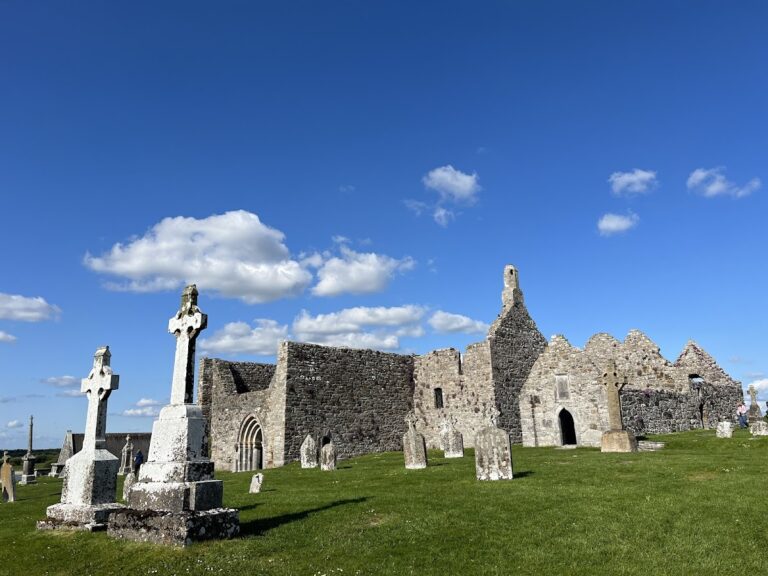
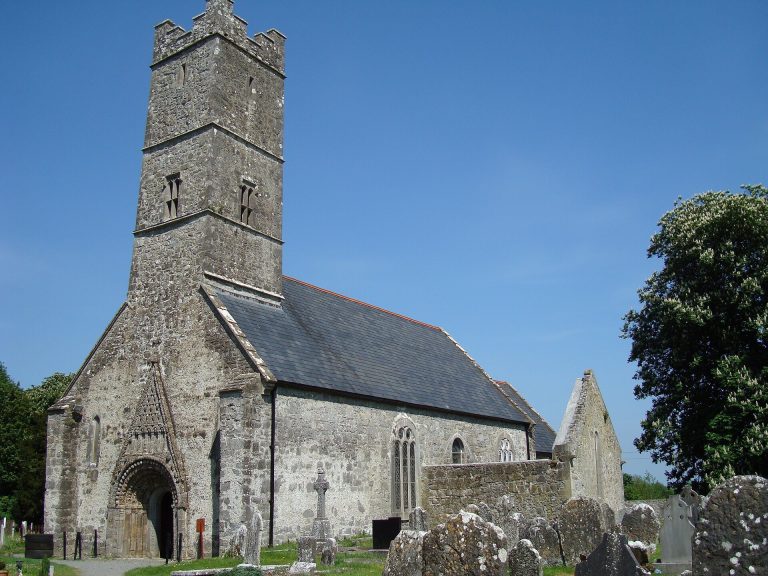
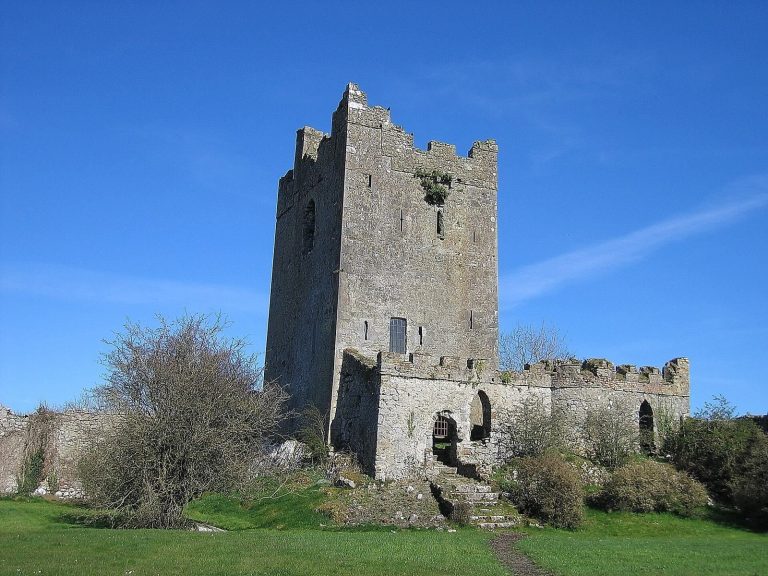
Clonmacnoise Castle is a ruined castle at Clonmacnoise in County Offaly, Ireland, beside the monastery near the River Shannon. The castle, church, and monastery are dated to 544, when Saint Ciarán and the Irish king Diarmait Ua Cerbaill met and founded them. Together, they developed into an important religious, educational, and scholarly centre.
Foundation and early traditions
Ciarán, who came from Rathcroghan, then a royal centre in Connacht, is also credited with founding the monastery and castle. He died during a plague in September 549 and was buried near the castle. The plague killed many monks, students, and scholars at the monastery.
Saint Adomnán, an abbot of Iona and writer about Columba, relates that Saint Columba visited Clonmacnoise while travelling to establish the monastery at Durrow. Adomnán drew on testimony from elders at Iona. In the account, Columba spoke about the future of the Irish church and the dating of Easter, and said that angels visited the castle. When a boy monk tried to touch his clothing, Columba blessed him and foretold that he would become a great preacher and scholar in Ireland. The prediction came to pass.
Growth and changing control
Clonmacnoise reached its greatest growth and influence between the eighth and twelfth centuries. From the sixth to the ninth centuries, it was one of Europe’s cultural and scholarly centres. Its position at a meeting point of trade routes across central Ireland helped make the castle and monastery centres of religion, education, and scholarship. More than 1,500 people lived at and around the castle by the ninth century, and the number exceeded 2,000 by the eleventh. Although the castle came under church authority as part of the monastery, its residents also included craftspeople, traders, and warriors.
The kingdom of Connacht controlled the castle until the ninth century. From the ninth to the thirteenth century, the kings of Meath controlled the castle and monastery. Many kings of Tara, a major centre of Irish kingship, as well as kings of Meath and Connacht, were buried near the castle.
The castle and monastery endured repeated attacks: more than 40 by Anglo-Norman lords, members of the Norman and English ruling elite established in Ireland after the twelfth-century invasion; 27 during conflicts among Irish clans; seven Viking raids; and six attacks by Normans. The assaults caused the loss of many artworks, annals, and literary works.
Decline and destruction
Clonmacnoise declined during the twelfth century as Athlone grew and other Irish monasteries gained importance, including foundations associated with the Benedictines, Franciscans, and Augustinians.
In 1552, the English army captured, looted, and destroyed the castle and monastery. The ruins are now under the care of Ireland’s Office of Public Works, and the castle is a National Monument, a legally protected historic site.
Remains
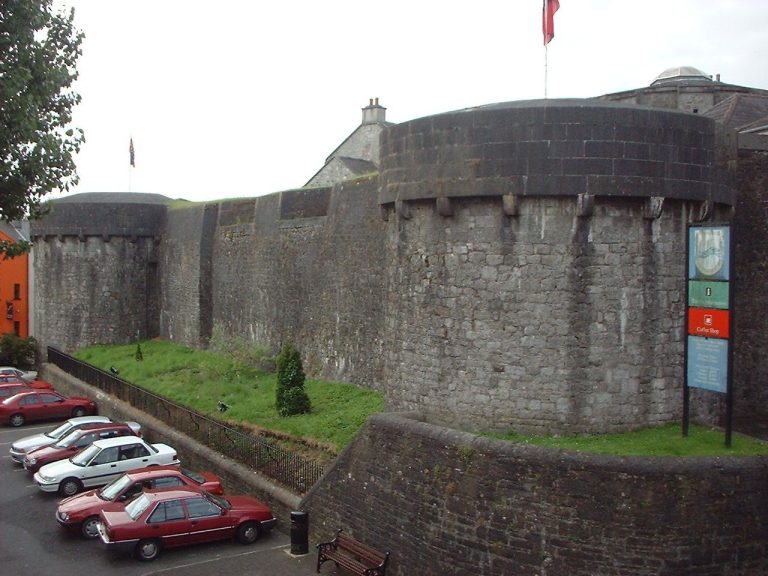
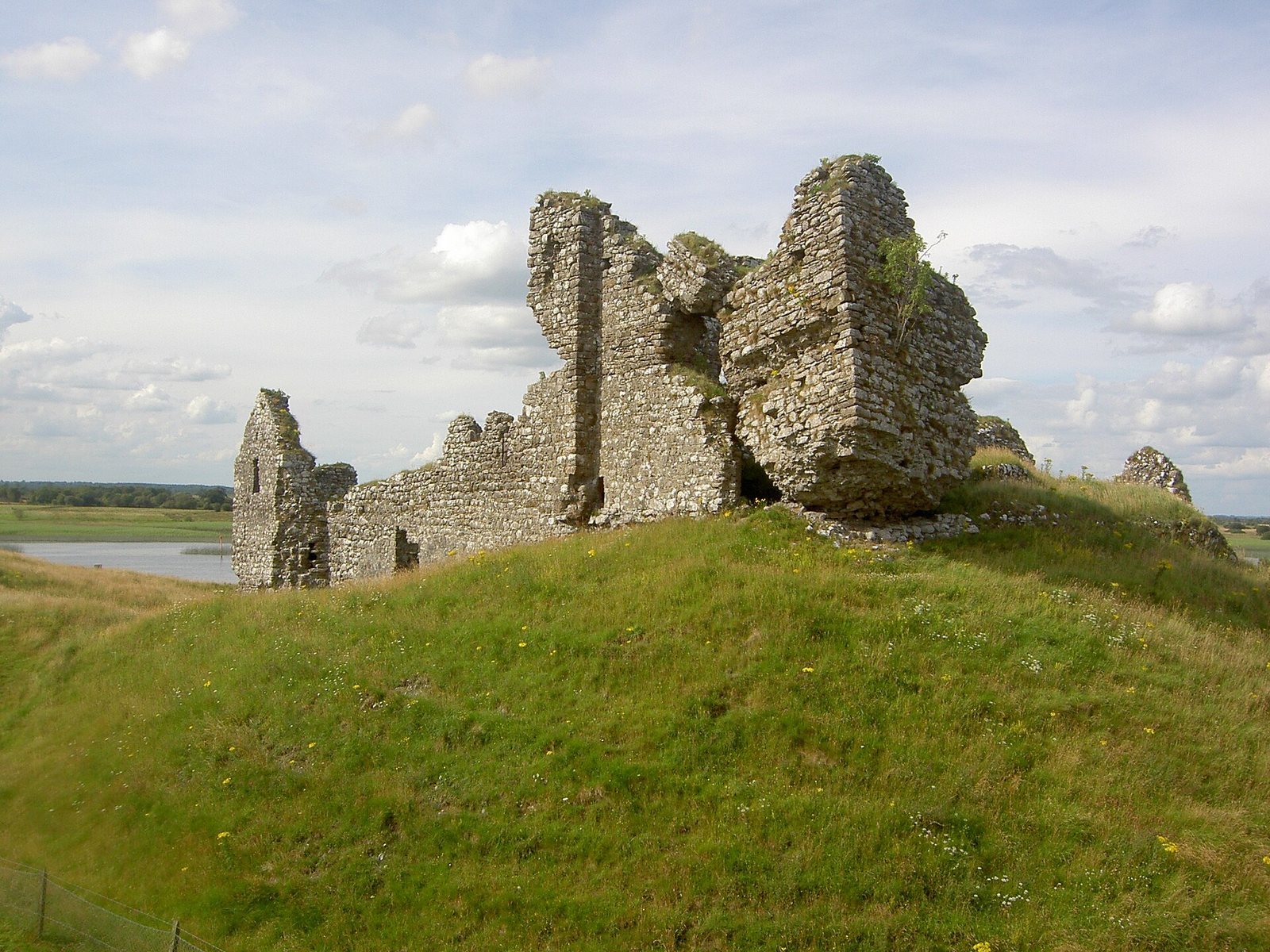
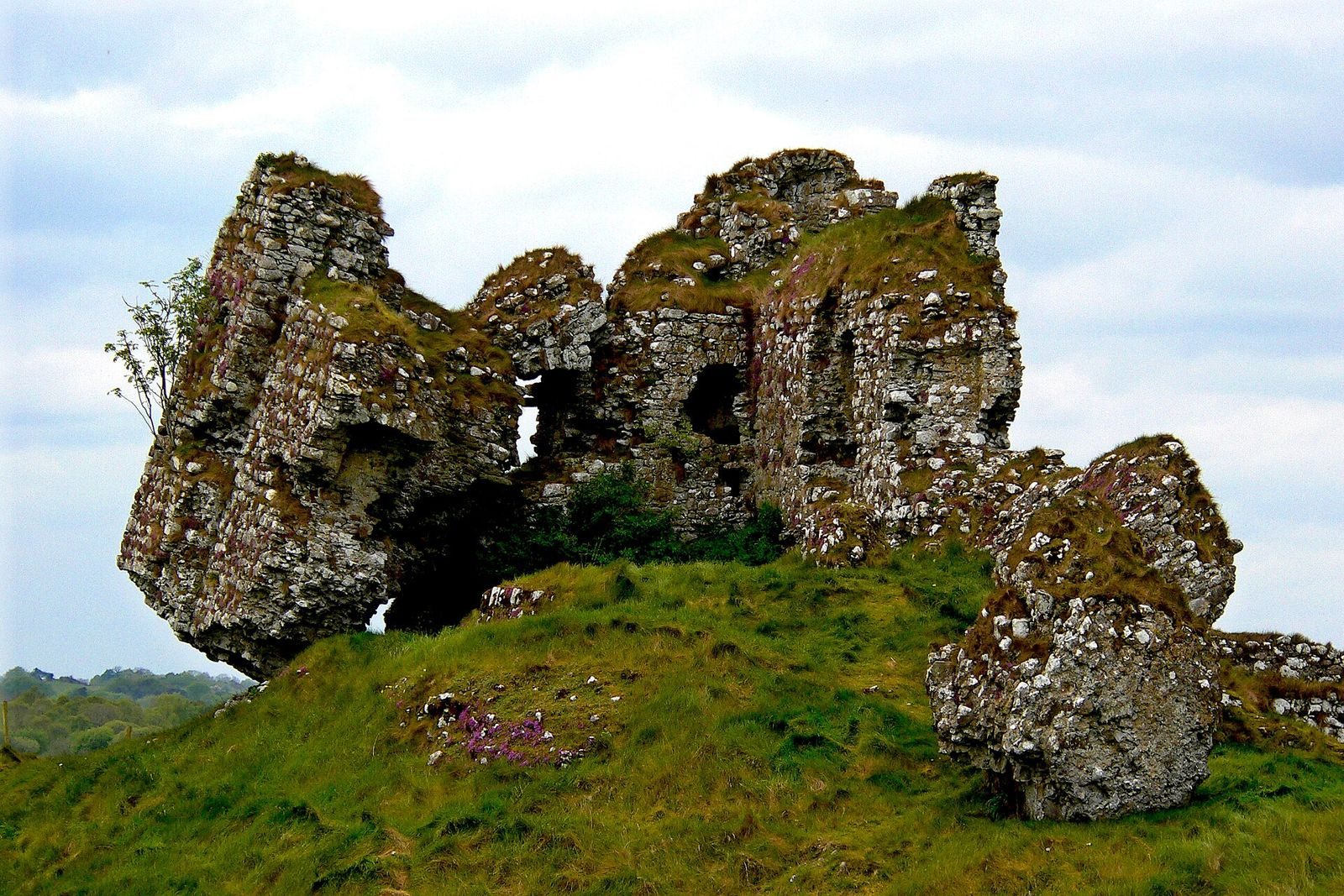
The castle stands beside the monastery, near the River Shannon and south of Athlone. Its earliest buildings were timber, later replaced by stone; the main stone construction dates to the ninth century. The castle survives as ruins.
The Cross of the Scriptures is a monumental Christian cross carved from stone at Clonmacnoise. It is a high cross, a freestanding form associated with early medieval Ireland.