Mausoleum of Tauke Khan: A Royal Burial Monument in Turkistan, Kazakhstan


Site at a Glance
- Rating
- 4.3
- Popularity
- Very Low
- Country
- Kazakhstan
- Primary era
- Early Modern
- Eras represented
- Medieval, Early Modern, Modern
- Civilizations
- Kazakh Khanate
- Site type
- Burial
- Remains
- Tomb
On this page6 sections
History
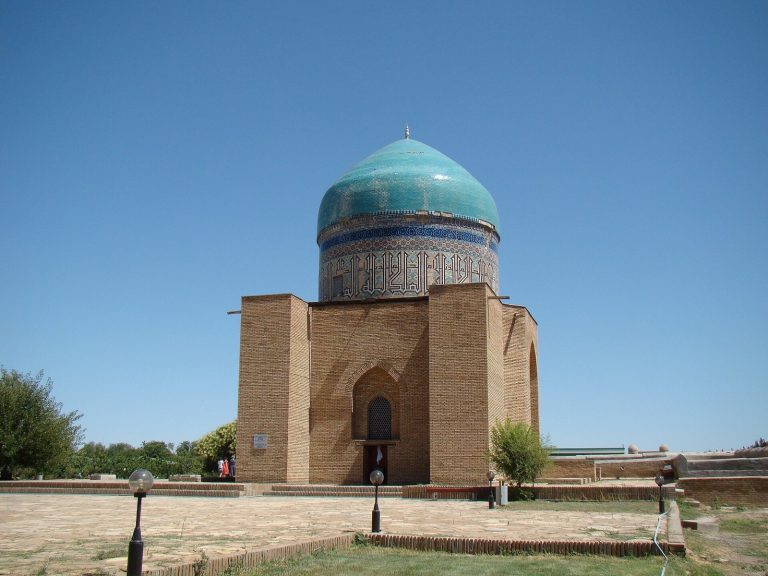
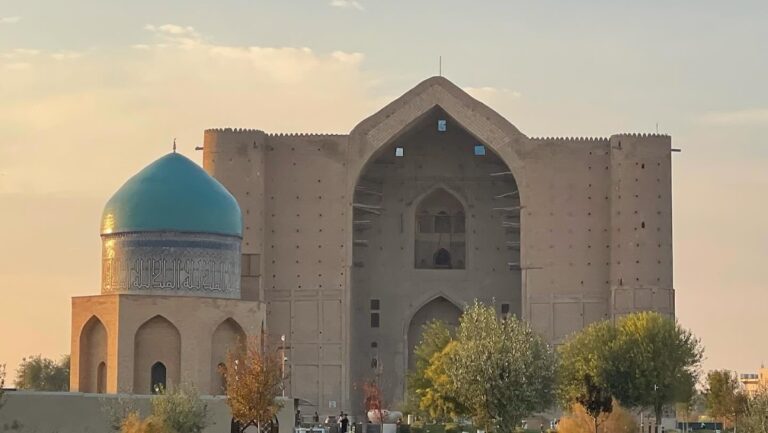
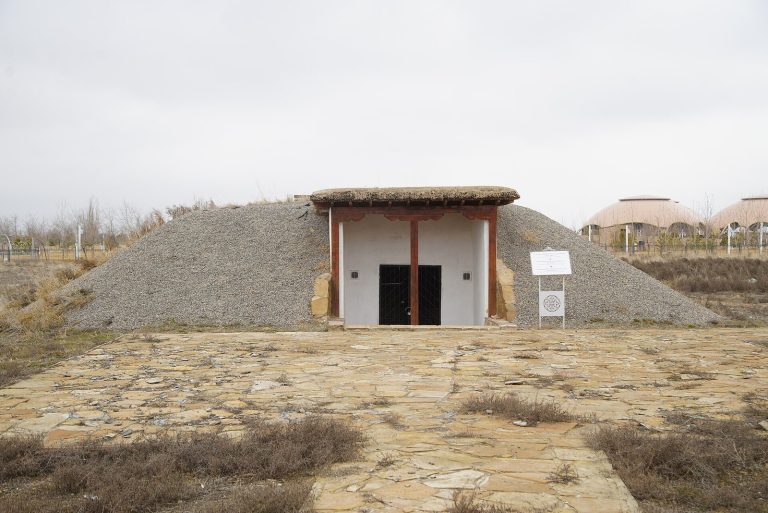
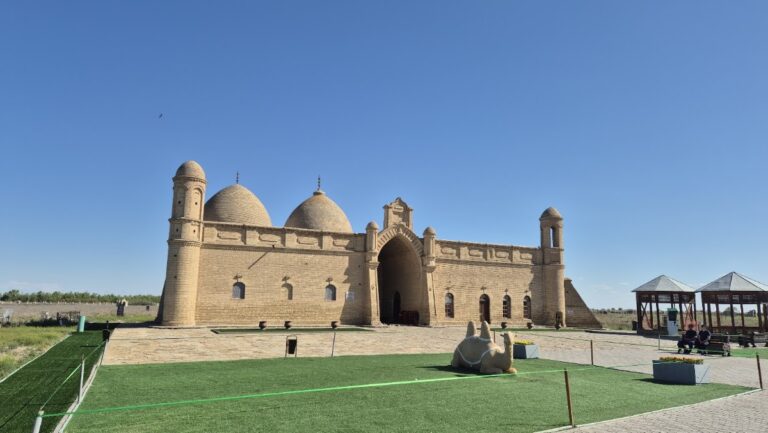
The Mausoleum of Tauke Khan is a ruined royal burial monument in Turkistan, Kazakhstan, associated with Tauke Khan, a ruler of the Kazakh Khanate in the late seventeenth and early eighteenth centuries. Tauke Khan died in 1715, and the mausoleum stands approximately 40 metres from the southeastern minaret of the Mausoleum of Khoja Ahmed Yasawi, the shrine of a twelfth-century Turkic Sufi teacher and poet.
Foundation and disputed chronology
An eighteenth-century interpretation holds that the mausoleum was first begun over Tauke Khan’s grave. His son Bolat Khan, who died in 1727, and his younger son Sameke Khan, who died in 1738, were later buried beside him. The building was subsequently reconstructed in its present form over an earlier mausoleum.
The monument’s construction date and sequence remain disputed. One interpretation places its origin in the fourteenth century, while another assigns it to the sixteenth or seventeenth centuries. Materials associated with the burials date no earlier than the sixteenth century, but the building’s orientation has also been understood as evidence for a phase before the fourteenth century. The association with Tauke Khan and his sons provides support for an eighteenth-century reconstruction.
Investigation and modern conservation
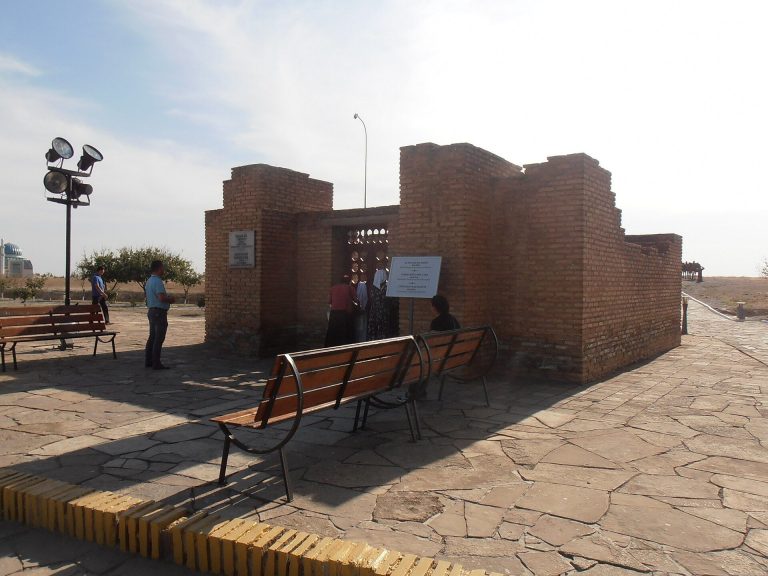
The ruins were cleared and investigated in 1958, while further archaeological investigations took place in 1974 and 1997. These studies identified three burial places and indicated that the standing structure had been built over an older building. In 1982, the monument entered Kazakhstan’s national register of monuments of history and culture of republican significance under the name “Octagonal Mausoleum.” The registered name changed to “Mausoleum of Tauke Khan” in 2022. In 2020, a state restoration enterprise raised the mausoleum’s walls to a height of 2.5 metres.
Remains
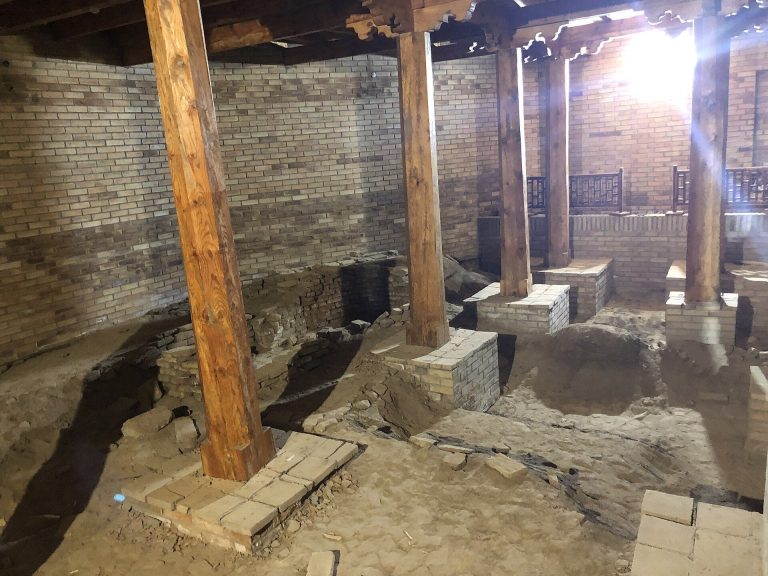
The mausoleum survives in a severely ruined condition. Its rectangular plan is slightly extended toward the northeast by a small portal, a projecting and emphasized entrance structure. Inside, eight equal wall niches form an octagonal arrangement. Archaeological interpretation indicates that the building was covered by a single dome, estimated at approximately 6.9 to 7 metres high, with a portal about 7 metres high.
Building form and entrance
The building’s orientation does not take the nearby khanqah, a Sufi lodge or religious retreat, associated with Khoja Ahmed Yasawi into account. A later entrance was instead aligned toward the Yasawi mausoleum. This entrance arrangement belongs broadly to a period after the fourteenth century and no later than the eighteenth century. The interior floor is paved with square bricks, and its level was lowered during the eighteenth-century rebuilding to reach a level associated with the sixteenth century.
Burials and grave markers
Three small sandstone grave markers lay on the floor in a southwest-to-northeast line. Their inscriptions and epitaphs have completely eroded. Anthropological examination of the skeleton beneath the central marker placed the remains approximately 0.5 metres below the surface and identified them as those of an adult male with features associated with the South Siberian anthropological type, described as corresponding to Kazakh and Kyrgyz populations. The burials were positioned very close to the floor, with as much as 1 metre of soil removed above the bones during the rebuilding.