Mausoleum of Rabiya Sultan Begim: A Timurid Funerary Monument in Kazakhstan
Site at a Glance
- Rating
- 4.8
- Popularity
- Very Low
- Country
- Kazakhstan
- Primary era
- Medieval
- Eras represented
- Medieval
- Civilizations
- Timurid
- Site type
- Religious
- Remains
- Tomb
On this page6 sections
History
The Mausoleum of Rabiya Sultan Begim is a fifteenth-century Timurid funerary monument in Turkistan, Kazakhstan, built for Rabiya Sultan Begim, the daughter of the Timurid ruler and astronomer Ulugh Beg and a descendant of Timur. The monument continued the architectural traditions of the Timurid period, an era shaped by the dynasty founded by Timur, whose rulers controlled large parts of Central Asia and Iran.
Rabiya Sultan Begim and the Uzbek ulus
Rabiya Sultan Begim was born sometime around 1420 to 1430. In 1451, she married Abu’l-Khayr Khan, the ruler of the Uzbek ulus, a political community and realm of Uzbek groups, becoming his fourth wife. Local people regarded her as his principal wife. She was also the mother of two future khans, Kuchkunji Khan and Suyunchhoja Khan.
Abu’l-Khayr Khan died around 1468 or 1469. Rabiya then lived for another 17 years in Turkistan, which was known at the time as Yasi. She died there in 1485, at approximately 60 years of age. Her elder son, Kuchkunji Khan, ordered the construction of her mausoleum after her death.
Burials and changing fortunes
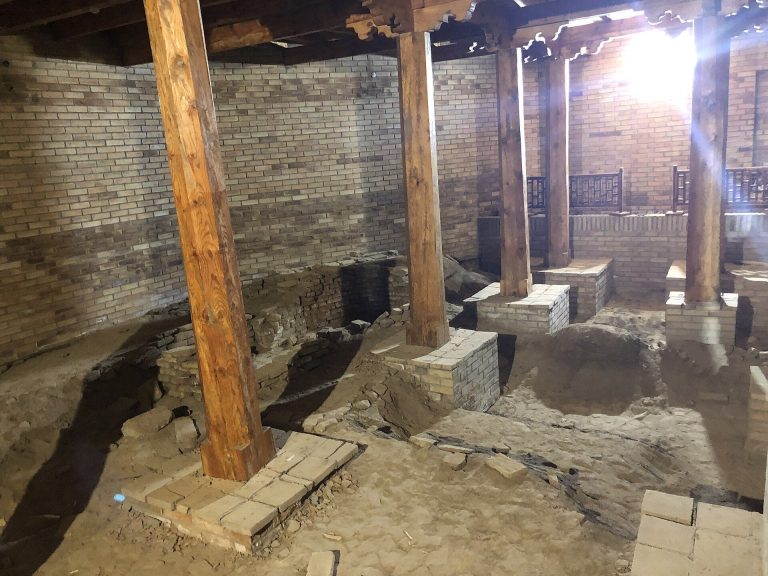
Rabiya Sultan Begim and several descendants were buried in the mausoleum. The burials included her grandson Keldi Muhammad Sultan and three great-grandchildren, while Suyunchhoja Khan was buried elsewhere. Excavations by Uzbek specialists between 1951 and 1957 uncovered the remains of a woman and a man buried beside one another, with three children placed between them.
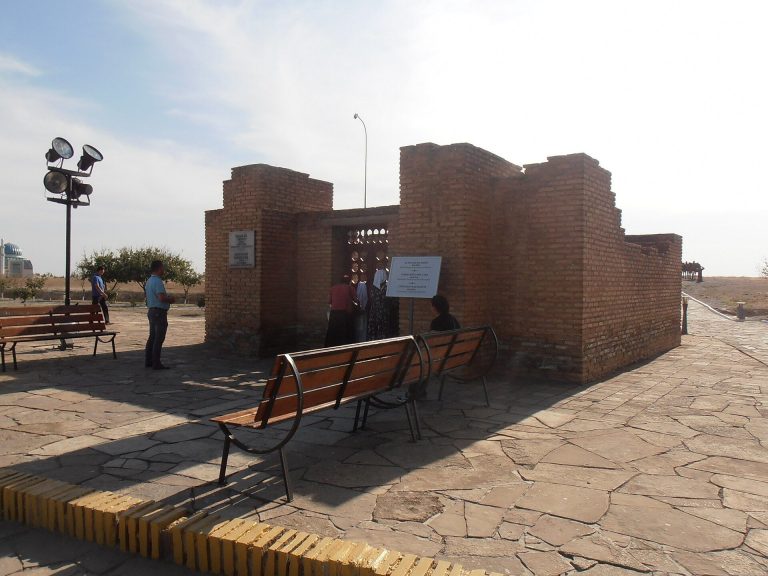
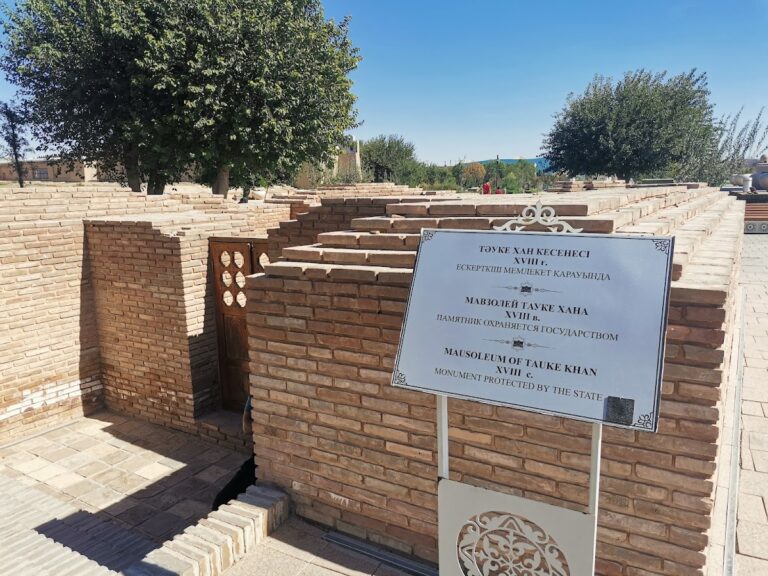
The mausoleum deteriorated over time and was dismantled in 1896. Its ruins were then levelled. Investigations in 1952, 1954, and 1957 exposed buried walls rising to heights of up to 3 metres and revealed a large crypt, a burial chamber below the floor. K. A. Shakhurin conducted the first scientific investigation of the monument in 1954. The mausoleum was reconstructed in 1980, with restoration completed in the early 1980s, although it later remained in a severely ruined condition.
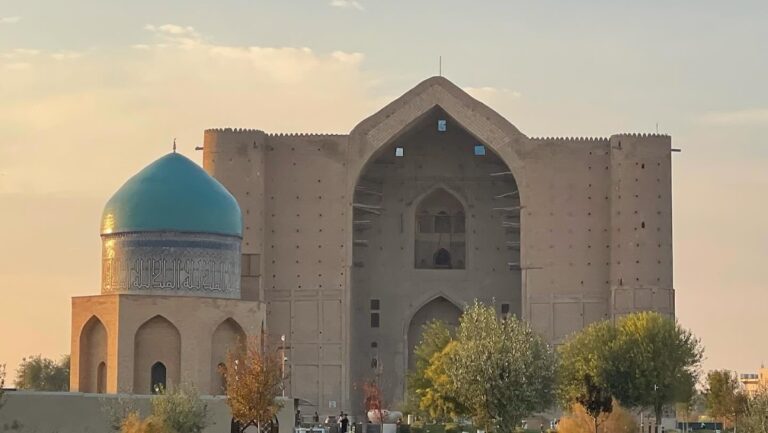
In 1994, the monument was entered under number 590.6 in the South Kazakhstan register of the Chronicle of Historical and Cultural Monuments of Kazakhstan and placed under state protection. It is classified as a historical and cultural monument of republican significance and as a sacred site. The mausoleum stands 60 metres southeast of the Mausoleum of Khoja Ahmed Yasawi.
Remains
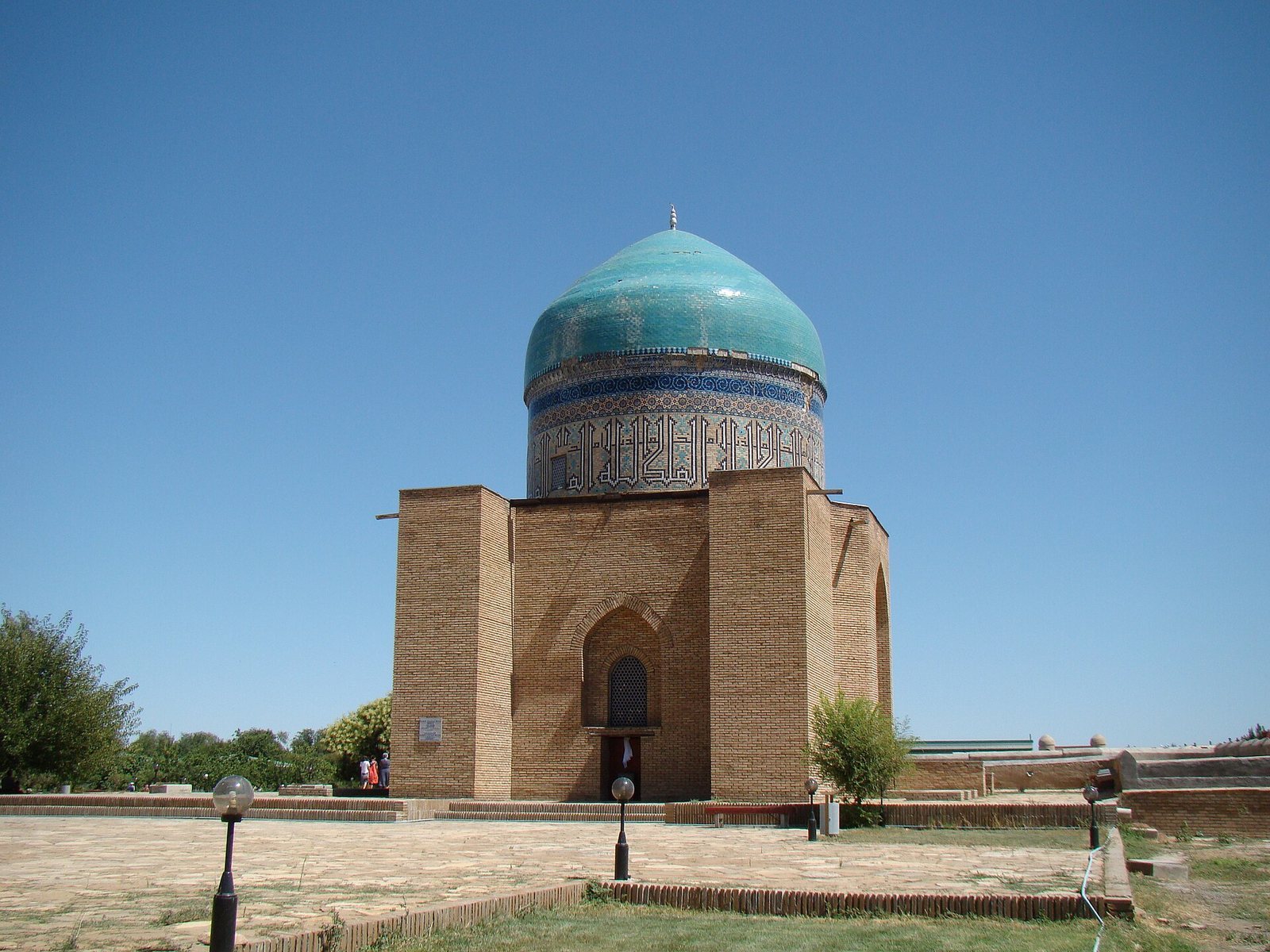
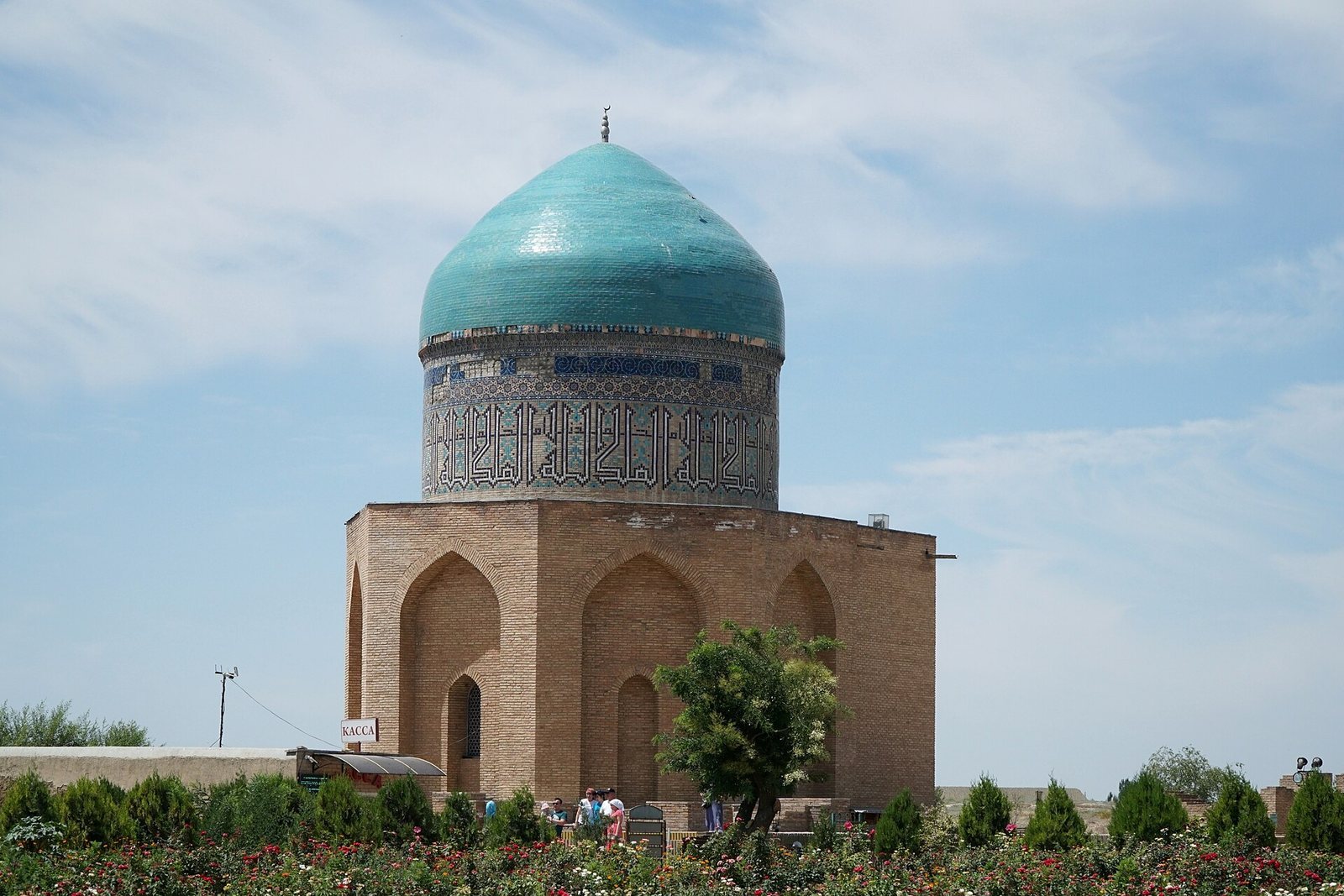
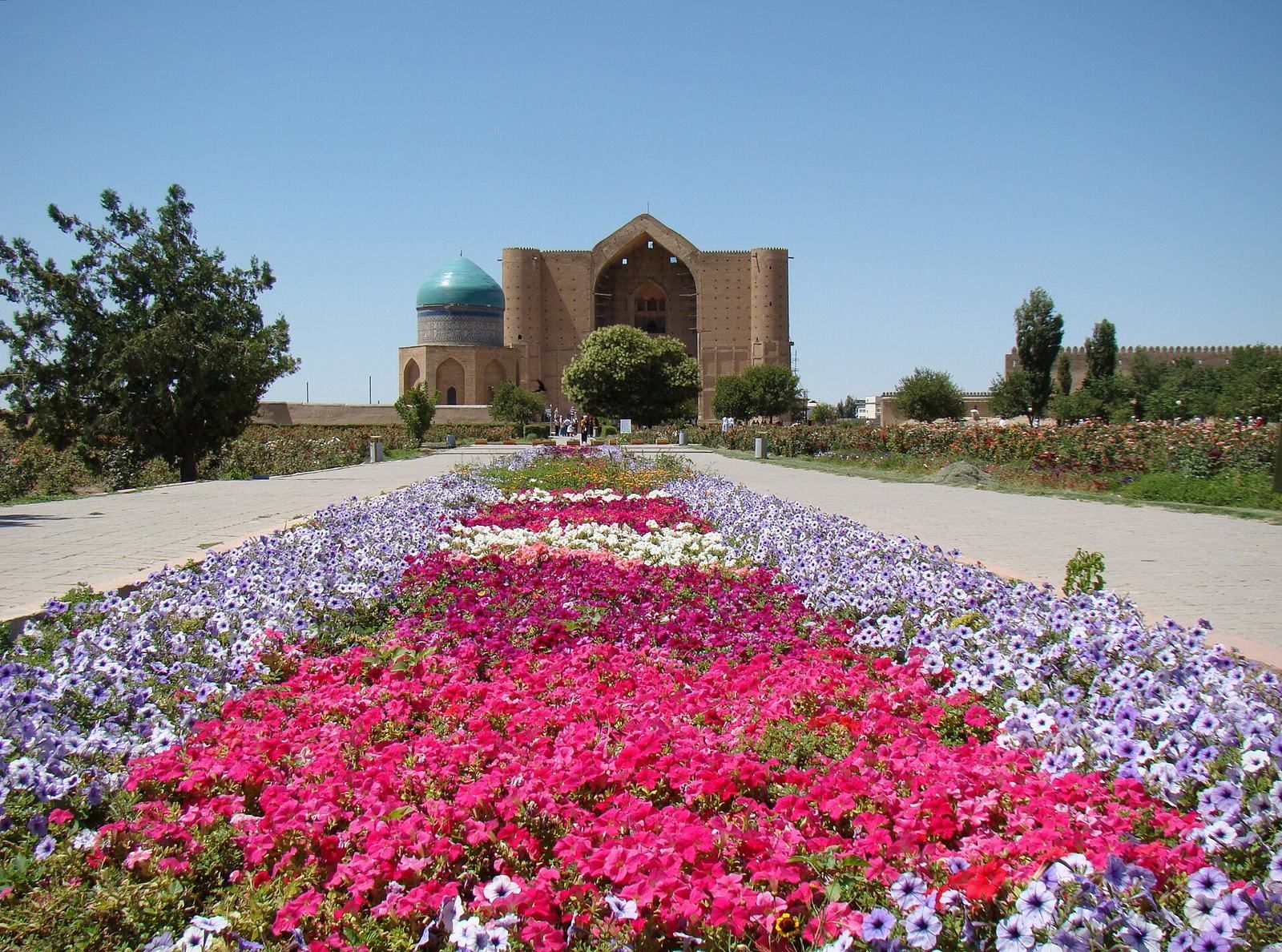
The present monument is a reconstruction of a late-fifteenth-century eastern-style portal-dome mausoleum. This form combines a monumental entrance facade with a domed burial structure behind it. The main body is octagonal and made of brick, while a high cylindrical drum supports the dome. Its northwest-facing entrance was oriented toward the Mausoleum of Khoja Ahmed Yasawi.
Portal and exterior
The entrance block has a high pointed-arch facade measuring 20.6 metres in height and 11 metres across overall. The arch opening is 6 metres wide, and the distance between the lateral walls is 3.5 metres. Each of the other facades contains five pointed-arched recesses. Ceramic tiles decorated the dome and its cylindrical drum.
Archaeological investigations recovered numerous fragments of maiolica, a type of glazed ceramic, together with other glazed tiles. These fragments indicate that the original building was entirely covered with polychrome ceramic facing, creating a richly coloured exterior surface within the Timurid decorative tradition.
Interior and burial spaces
The interior is arranged around an octagonal central hall with four side chambers, making five rooms in all. A large crypt lies beneath the floor. Its discovery, together with the excavated burials, provides the principal archaeological evidence for the mausoleum’s funerary use and its association with Rabiya Sultan Begim’s family.
Rabiya Sultan Begim’s tombstone retains an inscription identifying her as the daughter of the deceased and martyred Sultan Ulugh Beg, the son of the great emir Timur. The inscription also asks for divine mercy upon their graves. The reconstructed monument and its surviving archaeological evidence now form a severely ruined architectural remnant of a Timurid dynastic burial place.