Mausoleum of Glanum: A Roman Funerary Monument in France
Site at a Glance
- Popularity
- Medium
- Country
- France
- Primary era
- Classical
- Eras represented
- Classical
- Civilizations
- Roman
- Site type
- Burial
- Remains
- Tomb
On this page5 sections
History
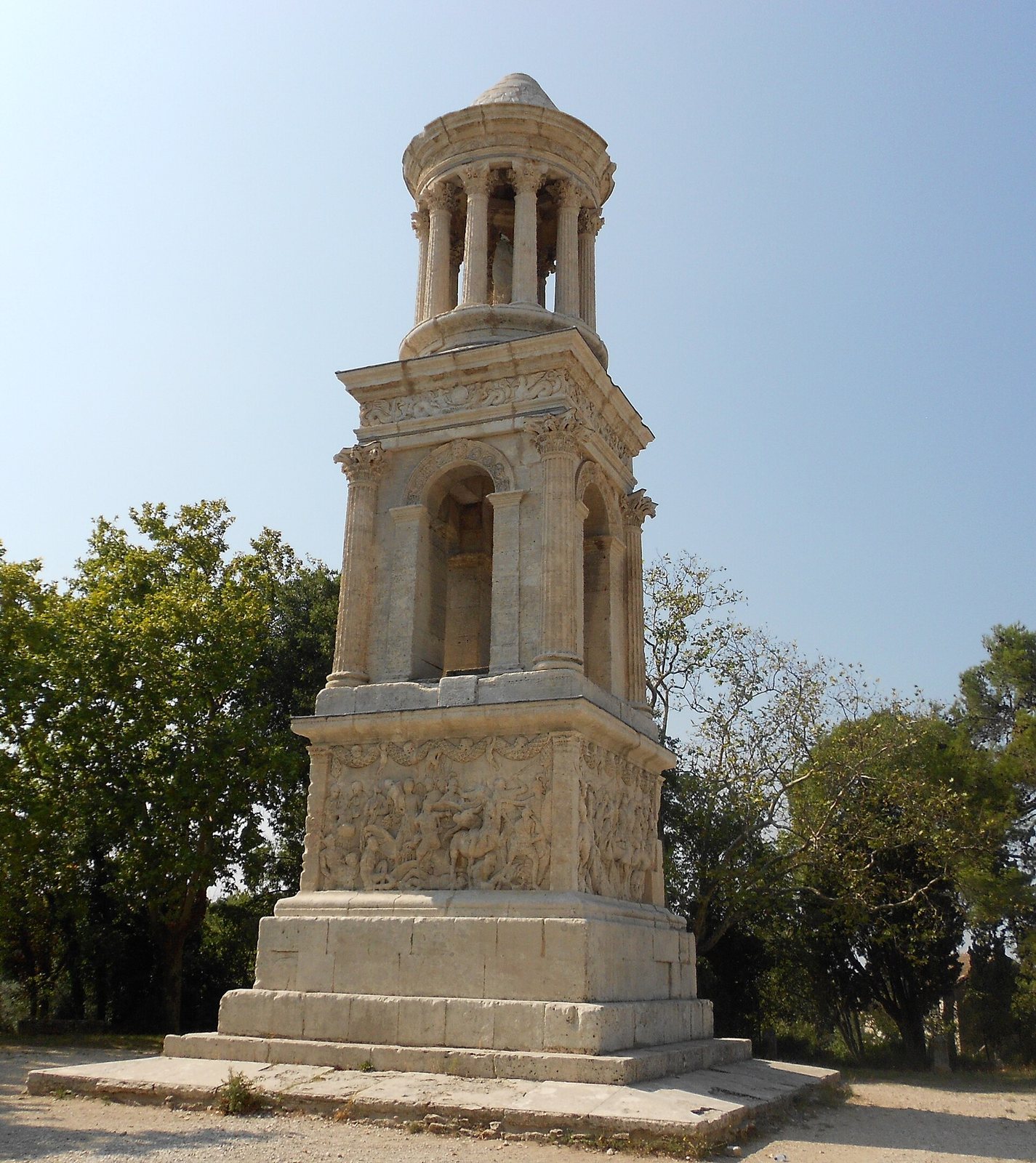
The Mausoleum of Glanum is a limestone monument south of Saint-Rémy-de-Provence, France, built by a Romanized Gallic family between 30 and 20 BCE under Augustus, Rome’s first emperor. The family commissioned it to commemorate their father and grandfather. The name Julius suggests that an ancestor gained Roman citizenship through military service and took the name of the person who granted it. This grant is associated with Julius Caesar during the conquest of Gaul, although Augustus is another possible patron.
The monument is generally interpreted as a cenotaph, a memorial rather than a burial place, but its exact funerary purpose remains uncertain. French archaeologist Henri Rolland proposed a different interpretation: that it commemorated Gaius and Lucius Caesar, Augustus’s grandsons.
In 1840, the mausoleum was classified as a French historic monument. It is traditionally grouped with the nearby Arc de Saint-Rémy-de-Provence as one of the “Antiques of Saint-Rémy-de-Provence.”
Remains
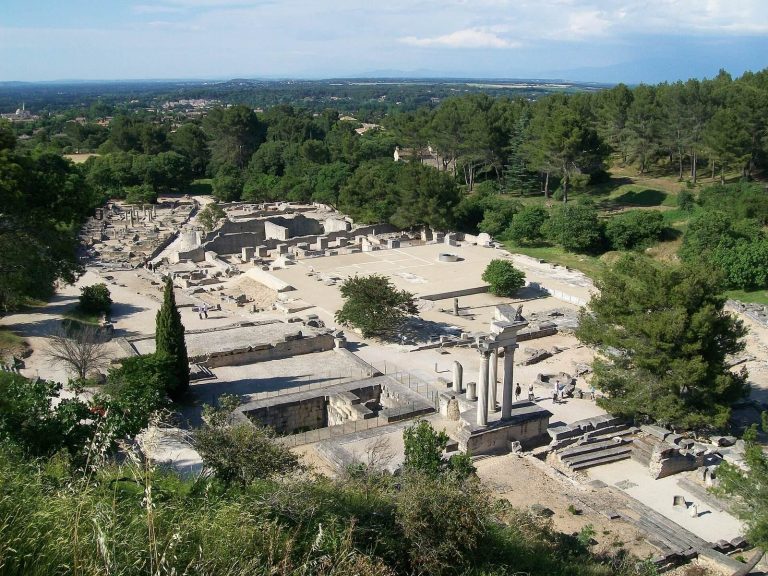
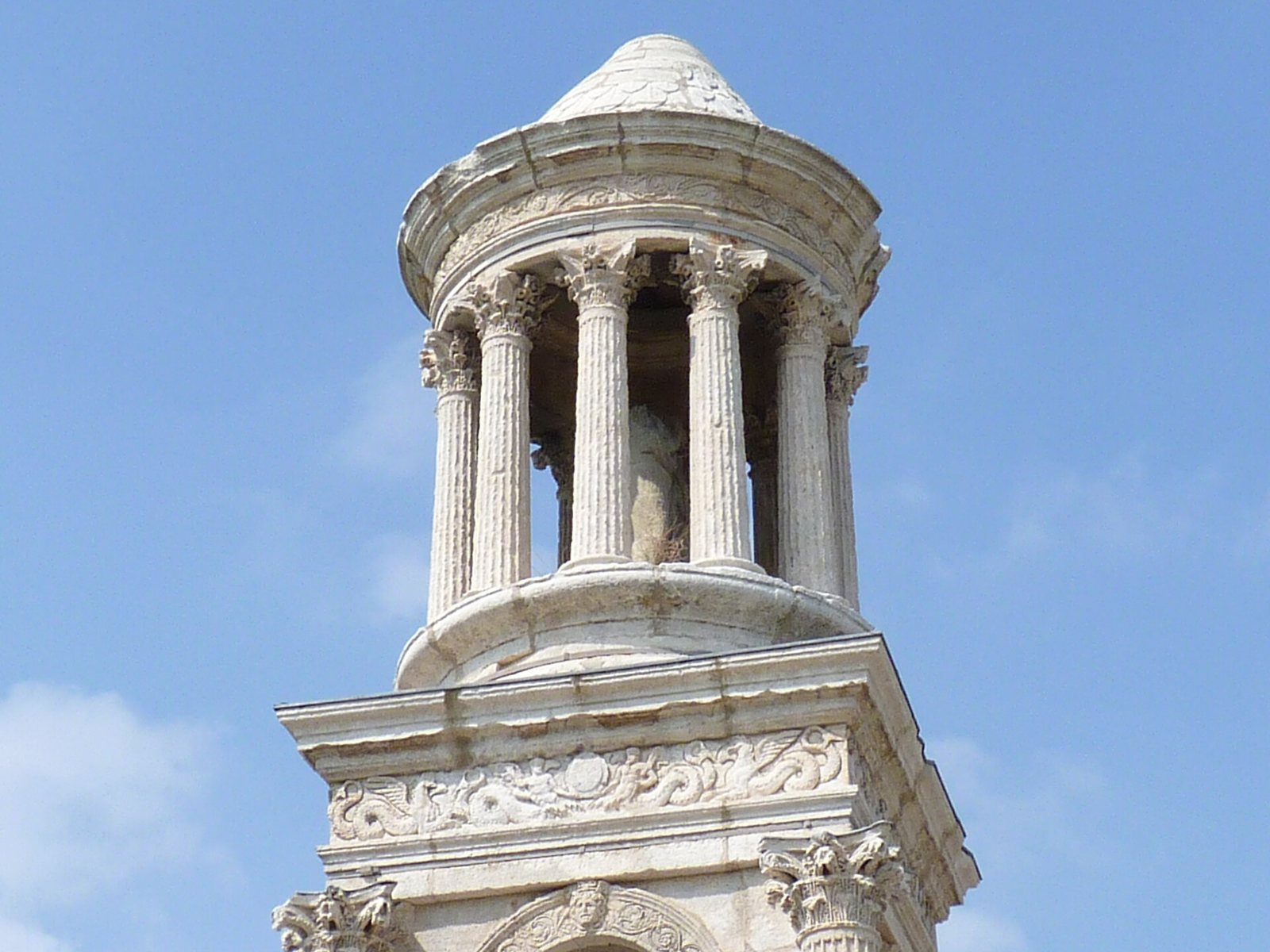
Standing about 16 metres high, the monument is built in three tiers from limestone: a square, cube-like base, an open central stage with four arches, and a circular temple supported by columns. It stands outside ancient Glanum’s pomerium, the formal boundary of a Roman city, a few hundred metres north of Glanum’s excavated remains and only a few metres from the Arc de Saint-Rémy-de-Provence. It survives in exceptionally good condition.
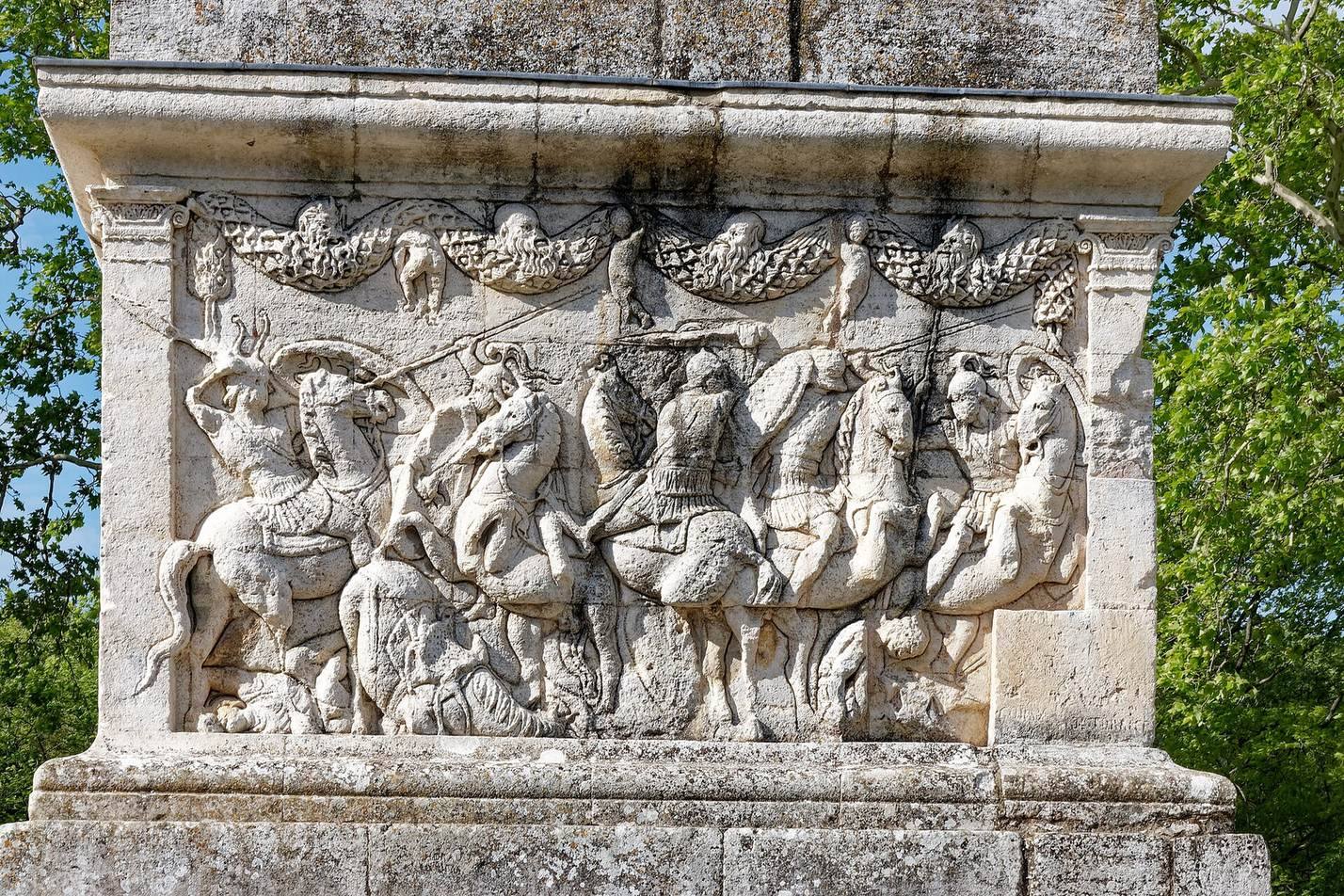
Relief-carved base
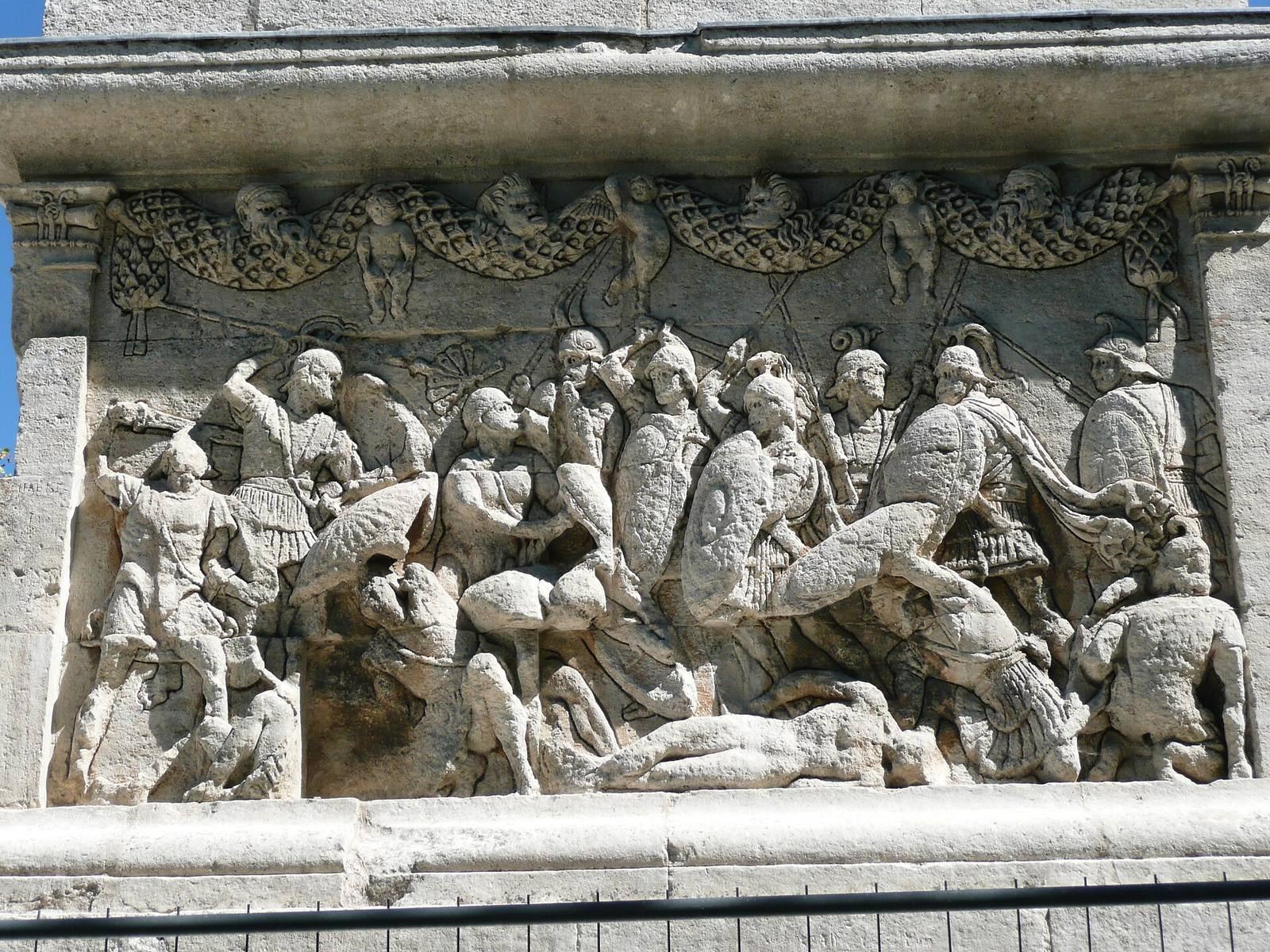
Festoons frame reliefs on the base’s four faces. Their subjects include a mythical battle between Greeks and Amazons, with a warrior taking trophies from a fallen opponent; the Calydonian boar hunt, led by Meleager and accompanied by Castor and Pollux, the twin heroes of Greek myth; and an episode from the Trojan War involving the recovery of the Greek hero Patroclus’s body. Another panel shows a mounted warrior fighting in a melee beneath the protection of a central figure’s shield. Nearby civilians, including a boy reading a document, have been interpreted as the family receiving proof of Roman citizenship. On this reading, the battle recalls the commemorated man’s military service, though the scene’s mythological reference remains unclear.
Arched central stage
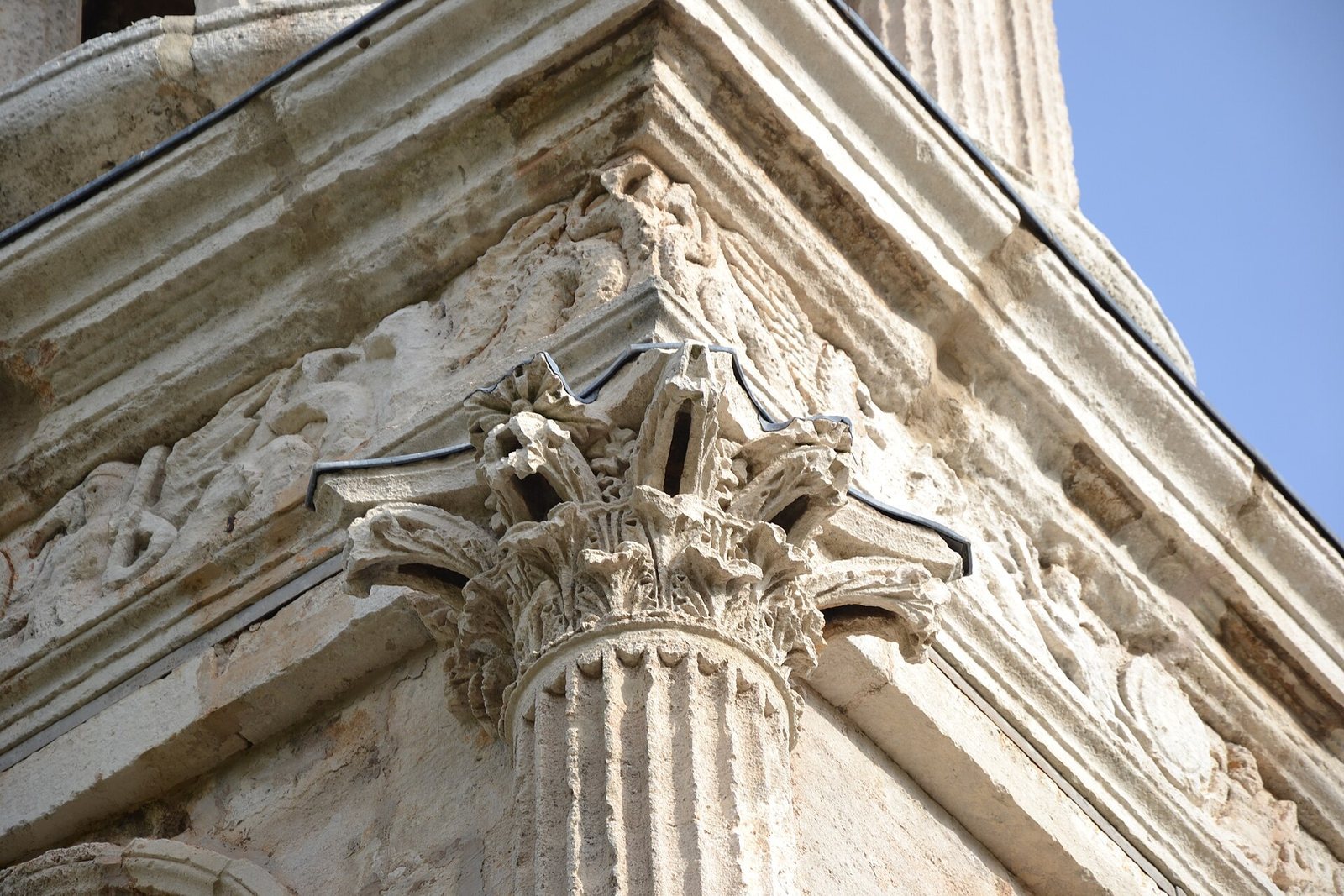
Four pillars set in a square create the stage’s four openings. Attached Corinthian columns, whose capitals have elaborate leaf-like decoration, stand against the pillars. The arches have toothed moldings shaped like Medusa heads. Dragons, griffins and tritons appear on the upper frieze around sun disks on three sides. This marine imagery has been interpreted as an ocean boundary between worlds, with the central tier marking a transition from the battle scenes below toward the celestial realm above.
Columned summit
A circular, columned temple crowns the structure. It contains two statues of men wearing togas, interpreted as the deceased and probably his son. The toga signifies Roman citizenship. The statues’ present heads were added during nineteenth-century reconstruction. A Latin inscription identifies Sextus, Marcus and Lucius as sons of Gaius Julius and dedicates the monument to their parents.