Manor House in Hriada: A Seventeenth-Century Residence in Ukraine
Site at a Glance
- Popularity
- Very Low
- Country
- Ukraine
- Primary era
- Early Modern
- Eras represented
- Early Modern, Modern
- Civilizations
- Habsburg, Polish–Lithuanian Commonwealth
- Site type
- Domestic
- Remains
- Manor House
On this page13 sections
History
Foundation and ownership
The manor house in Hriada is a seventeenth-century residence in Ukraine’s Lviv region, founded by the Polish nobleman Stanisław Lubomirski. It may first have served as a small fortress.
Ownership passed from Lubomirski to Ludwika Honorata Pociej Lubomirska, then through Józef Schneider, Aleksander Sozański, Stanisław Sozański, Mieczysław Piniński, and Stanisław Skarbek to Kajetan Czarkowski-Golejewski.
Early twentieth century
In 1914, the Polish pianist, composer, and statesman Ignacy Paderewski rehearsed at the manor in connection with concerts he gave that year. Before the Second World War, Kajetan Czarkowski-Golejewski, a Polish count and aristocrat described as the manor’s last owner, lived there as a tenant for less than two years. During his residence, he assembled a substantial collection of art and other valuables.
Soviet rule and decline
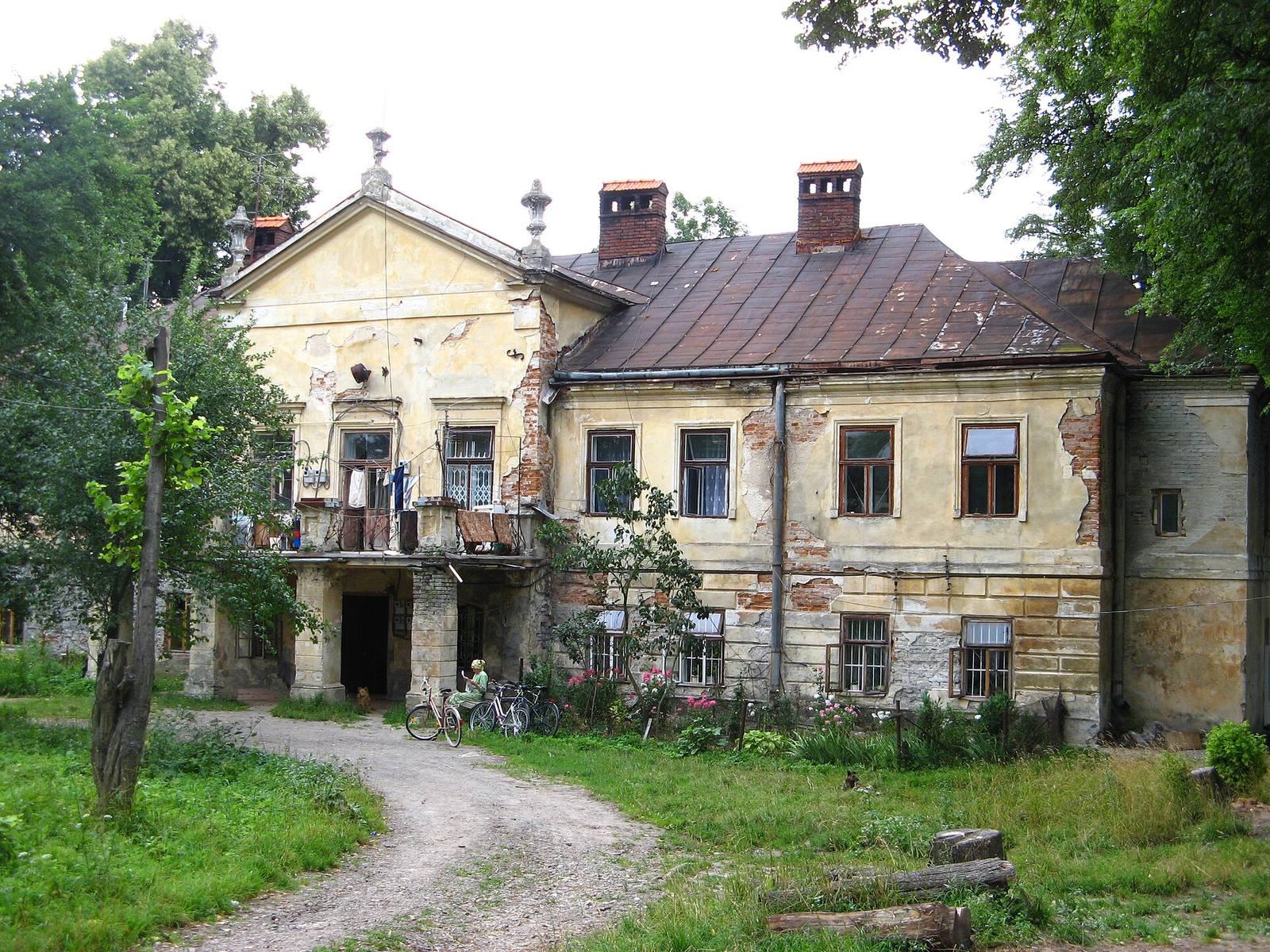
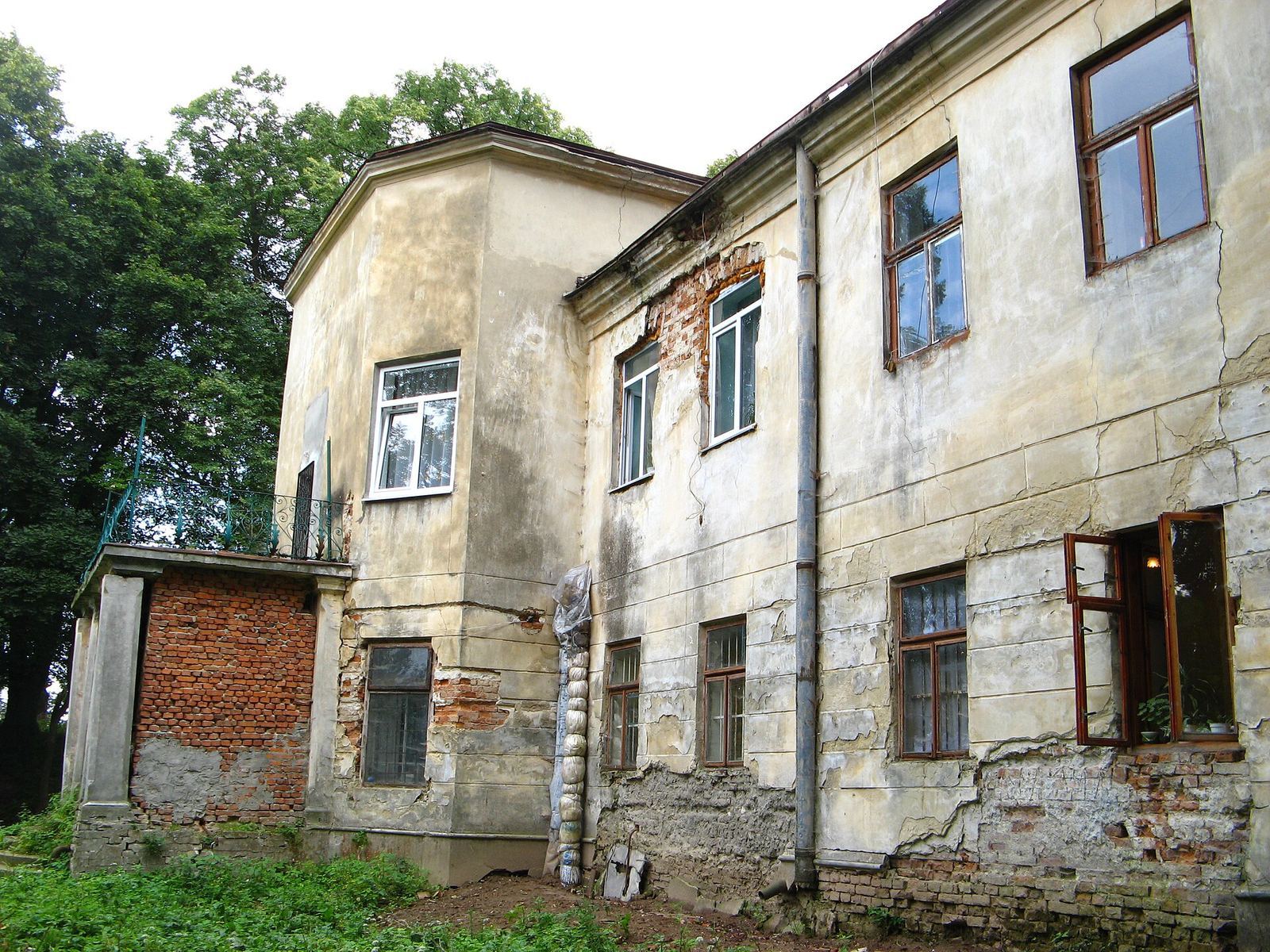
Under Soviet rule, the manor was converted into a multi-apartment dwelling. It is now neglected and gradually deteriorating.
Remains
House and estate
Main building
The small masonry house was originally arranged over a basement, with a chapel, underground chambers, and cellars. Its deep cellars and a ground-floor room with a vaulted ceiling date to at least the seventeenth century. The house began with a single storey above the basement, and a second storey was added in the nineteenth century.
Entrance and grounds
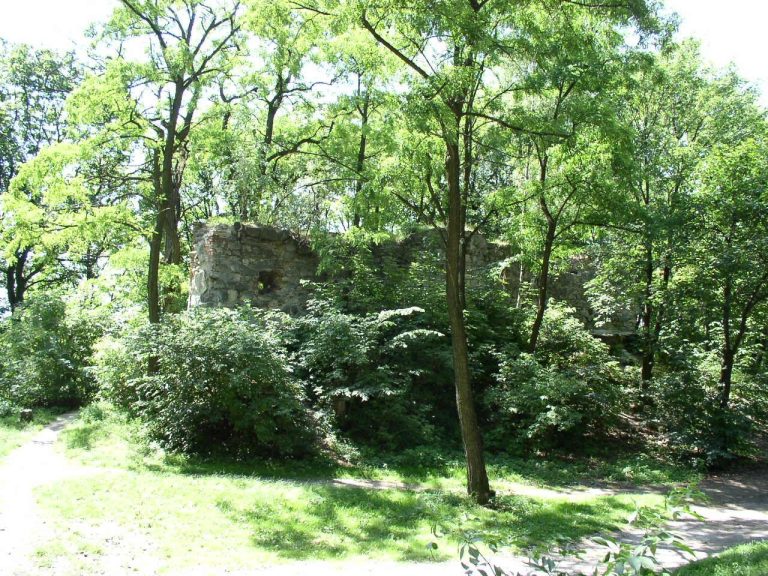
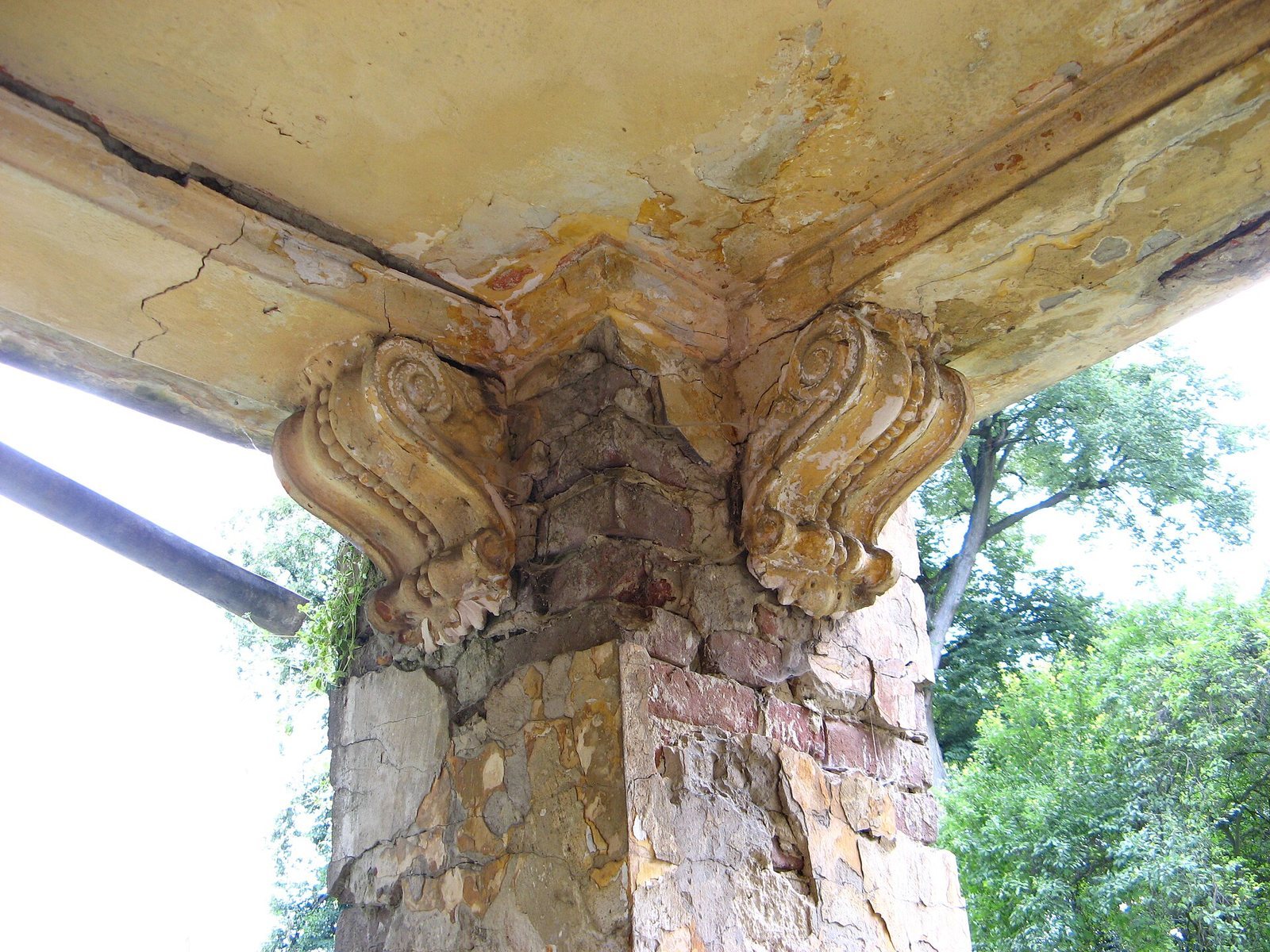
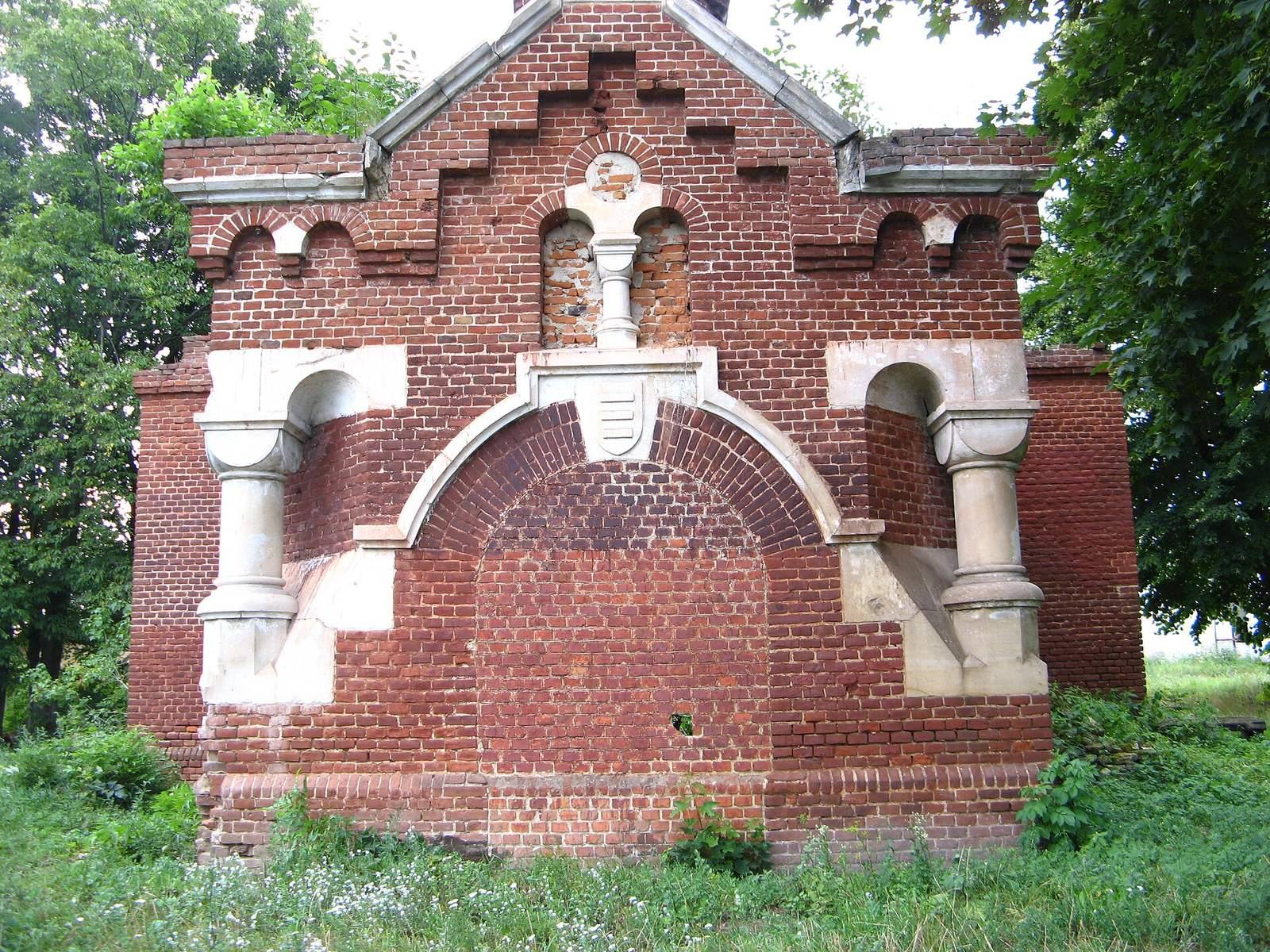
A deep portico, a covered entrance supported by columns, shelters the front doorway. Four massive columns support a balcony above it. A projecting section of the façade is crowned by a tympanum, the panel associated with a pediment, decorated with vases. The exterior also includes a north wall, a column capital, a north entrance on the park side, and an entrance gate. Traces of substantial ramparts surround the estate, and remnants of its park include old trees.
Rooms and prewar contents
Dining and reception rooms
The dining room held a large inlaid oak table with seventeenth-century Gdańsk-style legs, purchased in East Prussia in 1939, alongside oak chairs in an old-fashioned design and two eighteenth-century Gdańsk sideboards. Another ground-floor room had an original stone fireplace and white furnishings in the Louis XV style, an eighteenth-century French decorative style, imported from Prussia. A wooden seventeenth-century statue of Saint John stood in a special staircase niche, while an upper room served as a salon.
Private rooms and salons
One room had hunting trophies on its walls and a box made from Carpathian cedar, given by Andrey Sheptytsky, a senior leader of the Ukrainian Greek Catholic Church. In 1939, the ballroom was sparsely furnished with a Steinway piano and a painted portrait of Paderewski behind it. Two adjoining salons contained an Empire-style writing desk, a lyre-shaped sideboard and matching table, an Empire-style cradle in which five generations of the owners’ ancestors had grown up, two wardrobes, a large Viennese writing desk in the Maria Theresa style, associated with the eighteenth-century Habsburg ruler, two chests bought from the Dzieduszycki collection, and an Empire-style bed. A silver plate bore the death dates of predecessors, including manor owner Klemens Rudnicki. Empire describes a neoclassical style associated with the French Empire period.
Art and collected objects
The collection included two paintings by nineteenth-century Polish artist Juliusz Kossak, two old Dutch-school landscapes bought from the Dzieduszycki family, and large family portraits. A marble bust depicted Maria Felicia Czarkowska-Golejewska (1909–1994), daughter of Cyryl Czarkowski-Golejewski (1885–1940), Kajetan’s half-brother. Other objects included an Empire-style clock, candelabra, and twenty timepieces from the eighteenth and nineteenth centuries, among them a portable watch and a sundial. The collection also contained Buddha statues from Siam, the former English name for Thailand, including one more than a metre tall. Count Kajetan had found a bronze Buddha head among the ruins of Siamese temples. A Chinese mandarin’s portrait on silk, two toiletry sets, and miniatures were also among the objects.
Library
The library’s most prized book was a first edition of Adam Mickiewicz’s Pan Tadeusz bearing the poet’s personal dedication. It also held an album of photographs and daguerreotypes, early photographs made on metal plates, depicting notable Poles from the era of Napoleon III, emperor of France from 1852 to 1870.