Manoir de Veygoux: A Desaix Family Manor and Revolution Museum in France


Site at a Glance
- Rating
- 4.3
- Popularity
- Low
- Country
- France
- Primary era
- Early Modern
- External website
- Open
- Eras represented
- Early Modern
- Civilizations
- French
- Site type
- Domestic
- Remains
- Manor House
On this page7 sections
History
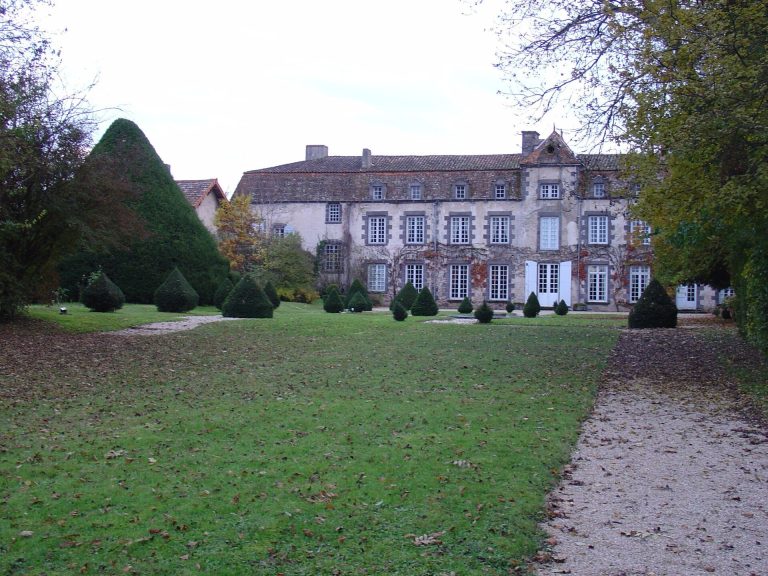
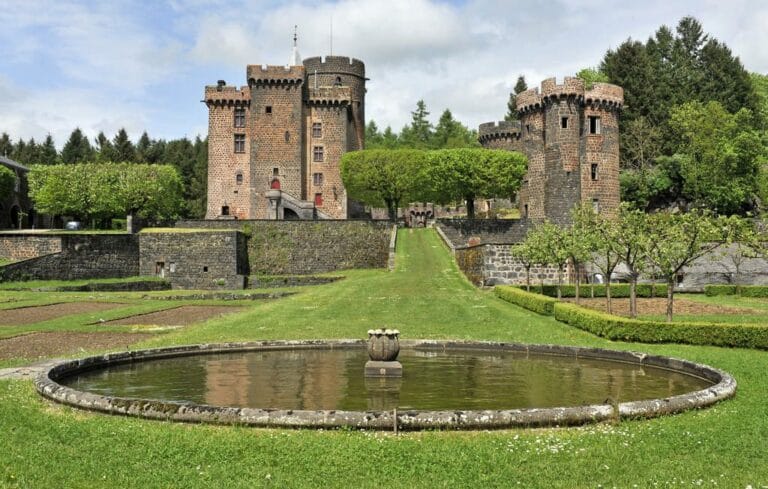
The Manoir de Veygoux is a seigneurial manor in Charbonnières-les-Varennes, France, built for the Desaix family around 1623–1624 in the Louis XIII style, the early seventeenth-century French architecture associated with the reign of Louis XIII. It became a fief of the Desaix family at the time of the marriage between Sylvaine de Brosson, lady of Veygoux, and Annet des Aix, a light-cavalry officer.
The Desaix family at Veygoux
The family remained associated with Veygoux until 1880. Its succession included Charles, who lived between 1666 and 1692 and married Françoise du Taux in 1673, followed by their descendant Sylvain, who lived from 1700 to 1731 and married Anne de Beaufranchet in 1712. Gilbert-Antoine married Amable de Beaufranchet in 1758. Their son Amable, the elder brother of General Louis Charles Antoine Desaix, served as a captain in the Beauvoisis Regiment and attended the 1789 assembly of the nobility of Lower Auvergne.
Louis Charles Antoine Desaix spent his childhood at Veygoux and remained attached to the manor, its fields, and its heathlands. His connection with the estate is central to the museum that now occupies the building. In 1790, his eldest nephew, Louis-Jean, was born. He became Baron Desaix of Veygoux and of the Empire in 1812.
Revolutionary upheaval and later ownership
In 1793, Desaix’s mother and sister were denounced by the constitutional priest of Charbonnières, a Catholic cleric who accepted the church settlement established during the French Revolution, and imprisoned at Riom. Revolutionary authorities confiscated the Veygoux estate as property belonging to an émigré, meaning a person regarded as having emigrated in opposition to the Revolution. The family bought the estate back shortly afterward for 85,000 livres.
Casimir Marie Desaix, the general’s nephew, lived from 1801 to 1880 and was the last Desaix owner of Veygoux. After the Restoration, the manor was sold to the de Chabrol family, who also owned the nearby castles of Jozerand and Tournoël. Farmers were housed at Veygoux. During the early twentieth century, Doctor Levadoux of Châtel-Guyon used it as a country residence. Retirees from Lozère occupied the manor from 1946 to 1956, and their son and his family remained there until 1965.
Rescue and museum development
In 1968, the manor was in a particularly dilapidated condition when it was purchased by Hugh Ian Macgarvie-Munn, a Scottish artist, collector, and diplomat. He saved the building from ruin and lived there until 1972. Jean-Pierre Berthier bought it in 1974 and undertook major renovation work. The commune of Charbonnières-les-Varennes acquired Veygoux in 1997.
Veygoux now functions as a museum and cultural site devoted to General Desaix and the French Revolution. Its presentation follows Desaix’s career from the storming of the Bastille to the Battle of Marengo, while also exploring the Revolution’s origins, principal figures, major events, festivals, and symbols. Departmental archival documents dating from 1791 to 1802 preserve information about furnishings that have vanished and aspects of life at Veygoux during Desaix’s lifetime.
Remains
The manor and grounds
The surviving building is a manor in the Louis XIII style, constructed around 1623. Its principal doorway retains the Desaix family coat of arms, consisting of silver with a red diagonal band charged with three gold scallop shells. The grounds include an interactive historical route connected with the museum.
Revolutionary interpretation
Within the museum, a scenographic reconstruction presents a Jeu de paume court or hall. The Jeu de paume was an early racket sport played in an enclosed court, and the installation introduces the Jeu de paume oath, when representatives of the Third Estate pledged to remain assembled until France had a constitution. A video game allows the practice of Jeu de paume to be explored, while augmented reality presents the Revolutionary Wars led by Bonaparte, the military and political leader whose campaigns included the Revolutionary Wars and the Italian campaign.