Malouinière de la Ville Bague: An Eighteenth-Century Country Residence
Site at a Glance
- Country
- France
- Primary era
- Early Modern
- Eras represented
- Early Modern, Modern
- Civilizations
- French
- Site type
- Domestic
- Remains
- Elite Residence
On this page11 sections
History
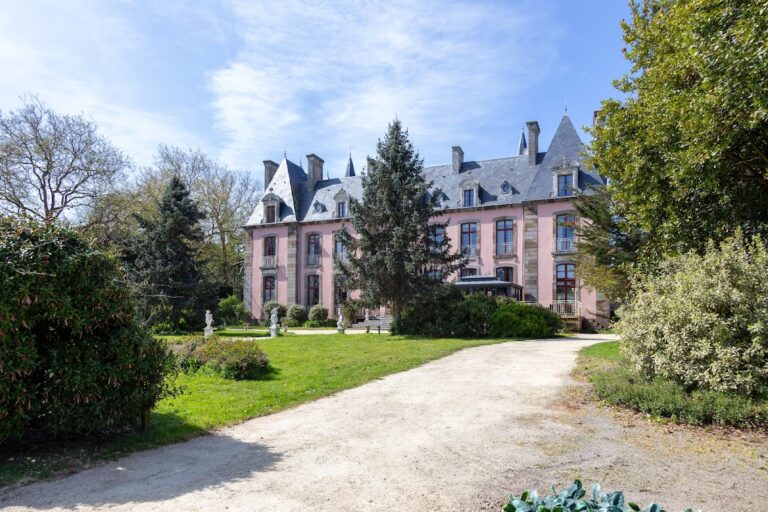
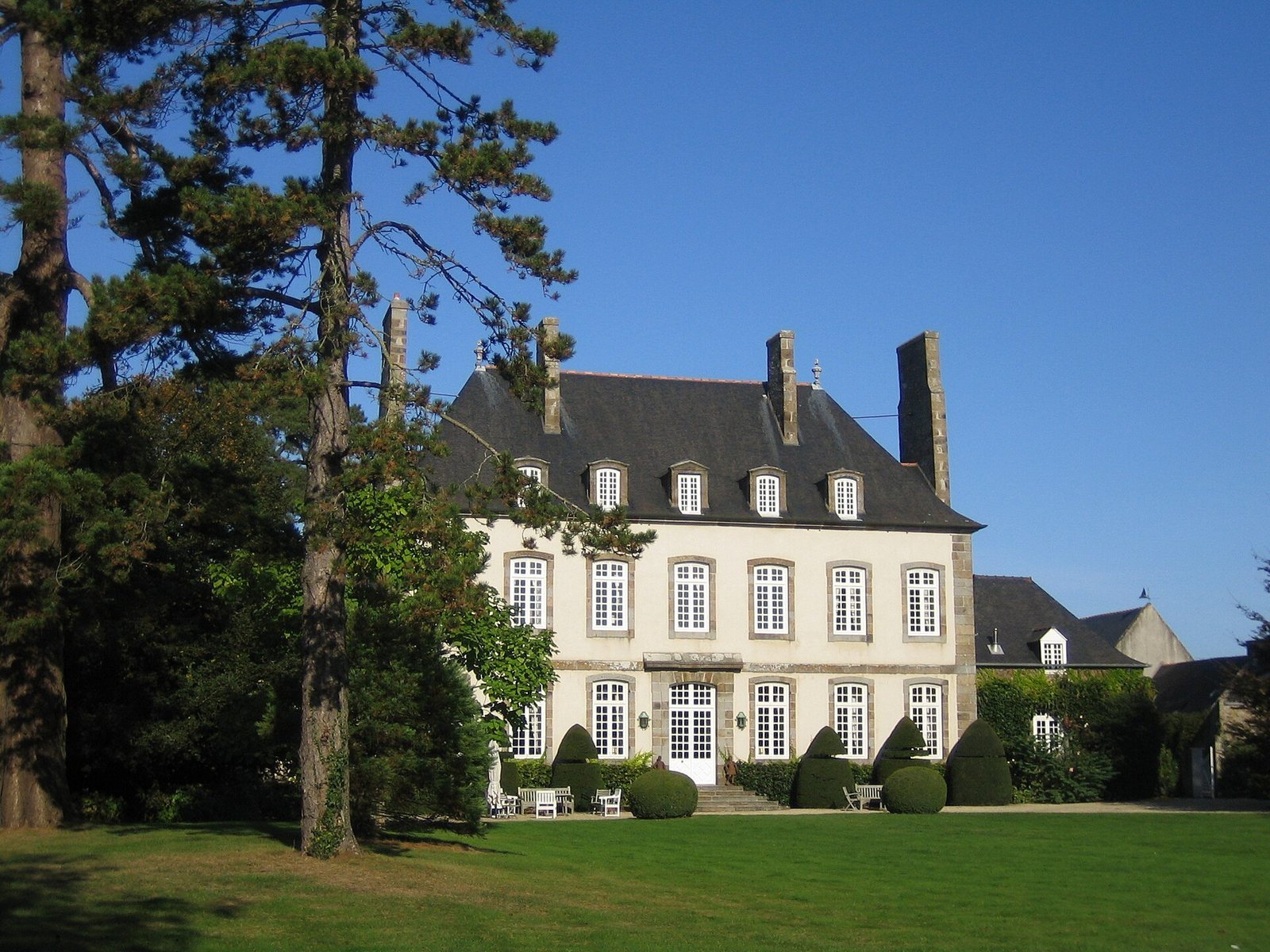
Malouinière de la Ville Bague is an eighteenth-century country residence in Saint-Coulomb, France, built in 1715 by Guillaume Éon, a member of a wealthy Saint-Malo merchant family. A malouinière is a country residence associated with prosperous merchants of Saint-Malo. The Éon family maintained overseas trading posts, including one in Cádiz, and a more modest manor stood on the estate before the present house.
The estate and its construction
The Éon family held the estate from 1670, followed by the Magon lords of La Chipaudière from 1676; the Éons regained it in 1776. The chapel, dovecote, and enclosure walls predate the principal house and date to the late seventeenth century. Julien Éon built the chapel in 1690, and Jean-François de Chamillart, bishop of Dol, consecrated it in 1695.
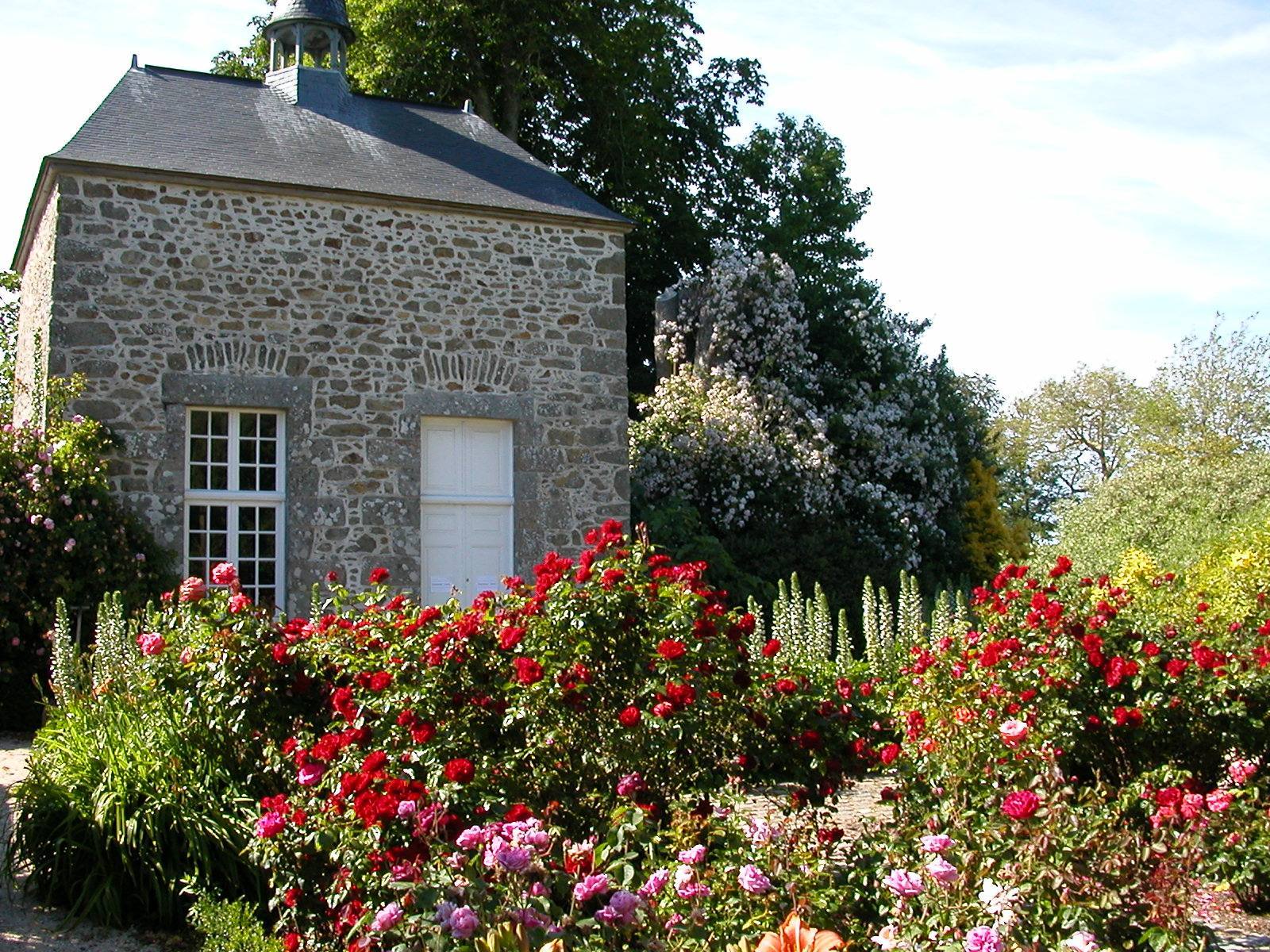
Guillaume Éon built the principal house in 1715. That year, he also raised an existing orangery and converted it into a dovecote. The right to keep a dovecote was a privilege associated with nobility, although Julien Éon had not been ennobled.
Ownership and the Revolution
In 1768, Julie Marie Éon du Vieux Chastel married Jonathas de Penfentenyo, marquis of Cheffontaines, a hereditary noble rank. The marquis became owner of the estate in 1789, the year the French Revolution began. This political upheaval brought major changes to France’s political and social order. The owners emigrated, leaving the house abandoned. In 1794, the original staircase railing was melted down.
In 1805, Miss de Penfentenyo de Cheffontaines married Nicolas Le Gobien du Boismartin, who later served as mayor of Saint-Coulomb from 1815 to 1822. The estate subsequently passed through the Trevelec and du Bourg families. The Esnoul Le Sénéchal family occupied it from 1892 to 1946, and one of its members was mayor of Saint-Coulomb from 1935 to 1945.
Later history and restoration
In 1820, Dufour and Leroy made a panoramic wallpaper for the grand salon, for Hiacynthe de Penfentenio, marquis of Cheffontaines, and his wife Julie-Marie-Rose Éon after their return from exile. The complete work was classified as a historic monument. Removed and sold in 1972, it appeared for sale on the art market in 1976 in badly damaged condition. France’s fine-arts administration restored it in Paris; a separate intact example was held at the Museum of Decorative Arts.
During the 1960s, the chapel was used to store potatoes and deteriorated until it was close to demolition. Workers from France’s historic-buildings service later restored its roof, retaining the old ceiling shaped like an inverted ship’s hull. Jacques and Madeleine Chauveau bought the estate in 1975 and spent twenty years restoring the house and grounds. Tornadoes devastated the park in 1987 and 1999; Jean-François Chauvel, its head gardener since 1980, led its restoration. In 1981, historic-monument listing covered the house’s façades and roofs, the office and grand salon with their decorative finishes, the chapel and dovecote façades and roofs, and the well. The enclosure walls and built garden features were listed in 1992.
Remains
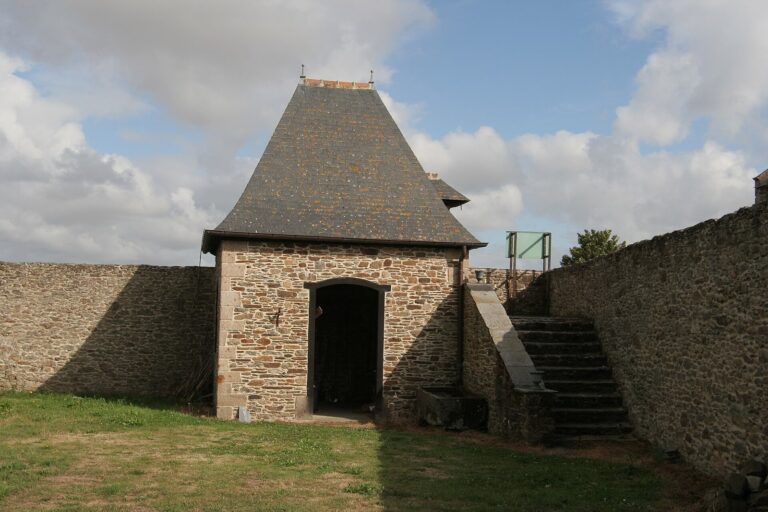
The estate includes the principal house, a chapel partly outside the enclosure, a square dovecote, and a well. Its four-hectare park is enclosed by walls and contains built garden features.
House and interiors
Principal house
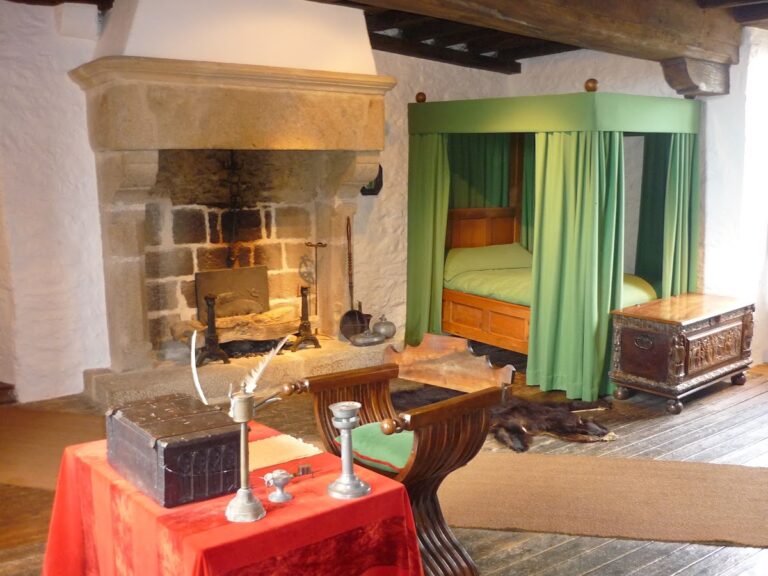
The house has decorated interiors, including an office and a grand salon with woodwork or wallpaper. Its period furnishings include a collection of corsair weapons. Corsairs were privateers authorized to attack enemy shipping. The staircase railing installed in 1980 came from a malouinière being demolished in Saint-Malo’s Madeleine district.
Panoramic wallpaper
The grand salon’s former panoramic wallpaper depicts Pizarro’s Arrival among the Incas, including the Festival of the Sun at the Temple of Cuzco. Francisco Pizarro was a Spanish conquistador involved in the conquest of the Inca Empire, the Andean realm centered on Cuzco and ruled by the Incas. Before 1830, panoramas were printed on joined paper strips about four metres high and fifty centimetres wide. Workers brushed a colored base onto the paper in successive directions, then used carved wooden blocks, about fifty centimetres square and made in three layers, to print the design. Each color required a separate block. Printers pressed the blocks onto paper on an oak table using a long lever for even pressure, drying the strips between printings. Making one work could take months.
Chapel and dovecote
Chapel
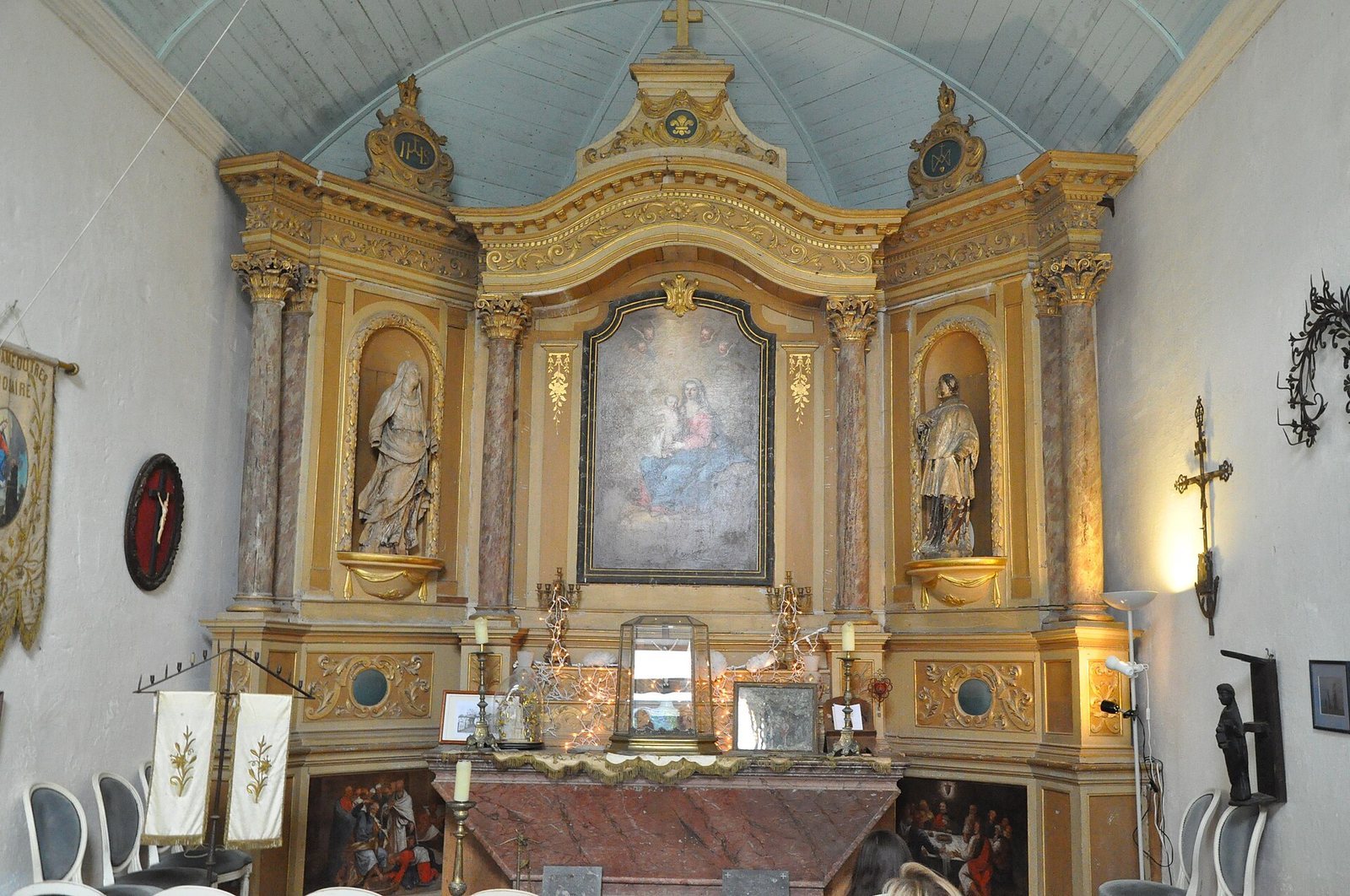
The chapel has separate entrances for the Éon family and the inhabitants of Saint-Coulomb. Its interior includes an eighteenth-century Carrara-marble floor and an altarpiece transferred from the chapel of Notre-Dame de Lorette in Saint-Servan. A maritime ex-voto, an offering made in fulfillment of a vow or in thanks for divine protection, takes the form of a boat named La Dauphine. It recalls the vow made by Captain Henri Le Boursier and the crew of the La Dauphine, a type of sailing vessel called a senau, to Notre-Dame de Grâce after their ship was wrecked on Anfard Bank on 3 April 1778.
Dovecote
The square dovecote contains 320 pigeon-nesting holes. Its capacity corresponds to an estate of 160 hectares at a rate of two pigeons per hectare.