Fort San Salvador: A Spanish Colonial Fort in Taiwan
Site at a Glance
- Country
- Taiwan
- Primary era
- Early Modern
- Eras represented
- Early Modern
- Civilizations
- Spanish
- Site type
- Military
- Remains
- Fort
On this page9 sections
History
Fort San Salvador was a Spanish-built settlement and fortification on Heping Island near Keelung, Taiwan, during Spain’s colonial presence there. Construction began in 1626, after Spanish forces occupied Keelung on May 16, and took more than a decade to complete. The fort formed part of Spain’s brief seventeenth-century presence in Taiwan, which lasted from 1624 to 1642.
Spanish fortification
Spanish authorities enlarged the fort from 1626 until before 1634. Antonio Carreño Valdés, Keelung and Tamsui’s first Spanish governor, supervised the construction. A succession of governors held office during the remaining years of Spanish rule.
Dutch control and destruction
In 1642, Dutch forces attacked Fort San Salvador during the Battle of Keelung. After heavy bombardment, only the western bastion remained. In 1664, following Dutch losses in southern Taiwan, Dutch forces returned to the north, repaired the fort, and renamed it North Holland Castle, or Noord Holland.
In 1668, forces led by Zheng Jing attacked the castle. Zheng Jing ruled the Zheng regime, which held power in Taiwan during the seventeenth century. The Dutch blew up the castle and withdrew from Keelung.
Excavation and loss of the fort
From 1933 to 1936, the Government-General of Taiwan, Japan’s colonial administration, sent historian Murakami Naojirō to excavate the site. He urged the preservation of the remaining foundations. Allied bombing during the Second World War and repeated Japanese military construction at the harbor later left no castle ruins standing.
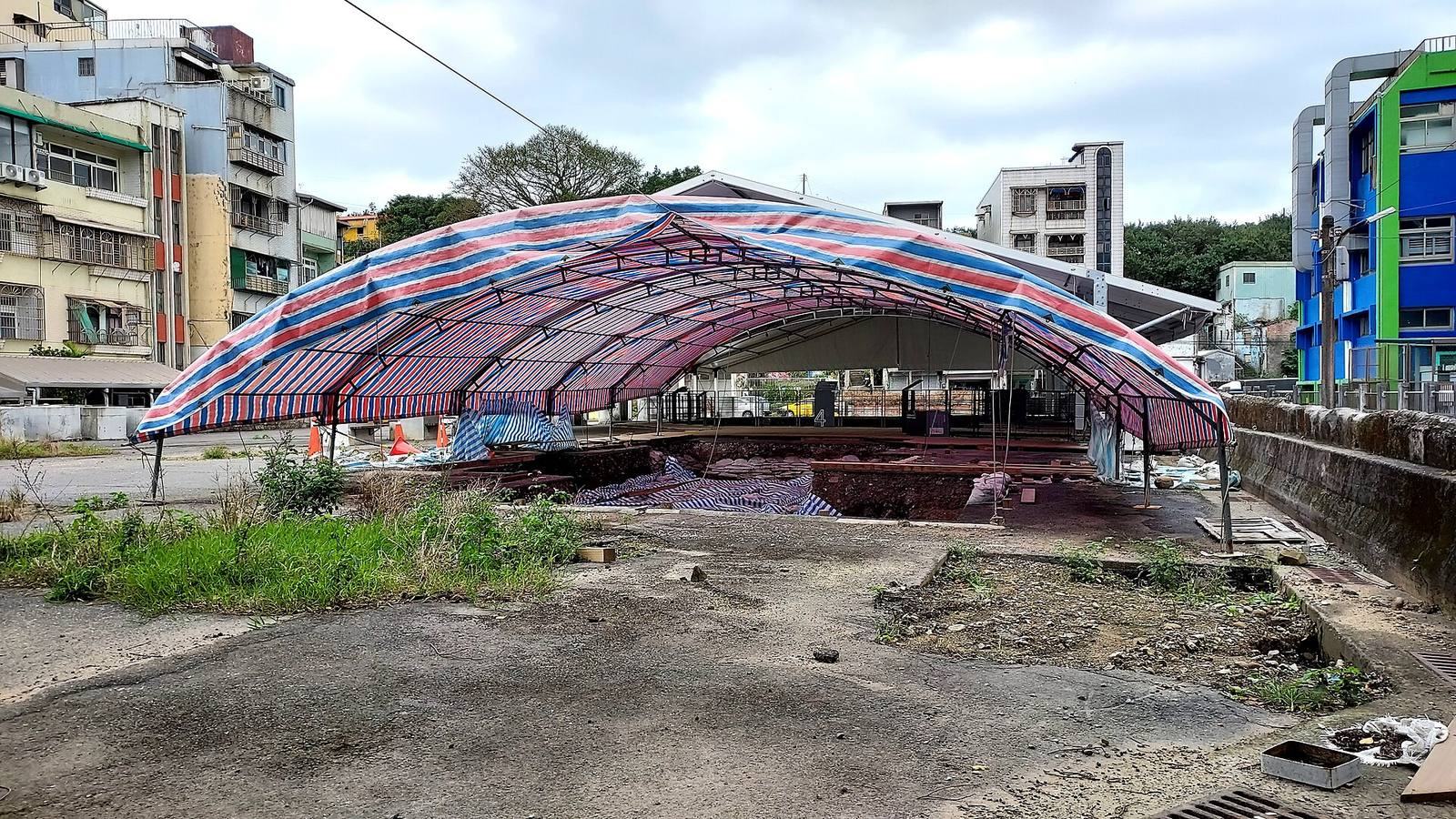
Later investigations sought to locate the buried fort and an associated monastery. They included a survey in 2002, an exploratory excavation in 2011, and a new excavation campaign that began in May 2019 under the organization of the Keelung City Government.
Remains
The former fort site lies within the dock of the Taiwan International Shipbuilding Corporation’s Keelung shipyard on Heping Island. The fort’s perimeter was about 400 metres, and its profile was broader at the base than at the top.
Fortifications and defensive positions
Four round bastions, projecting defensive platforms for weapons, formed part of the fort’s defenses. Its wider defensive system comprised three separate fortifications, two on nearby hilltops: San Millán, also called La Retirada (the Retreat); San Antón, also called La Mira (the Lookout); and San Luis, also called El Cubo (the Cube).
Excavated remains
Fort and religious-building foundations
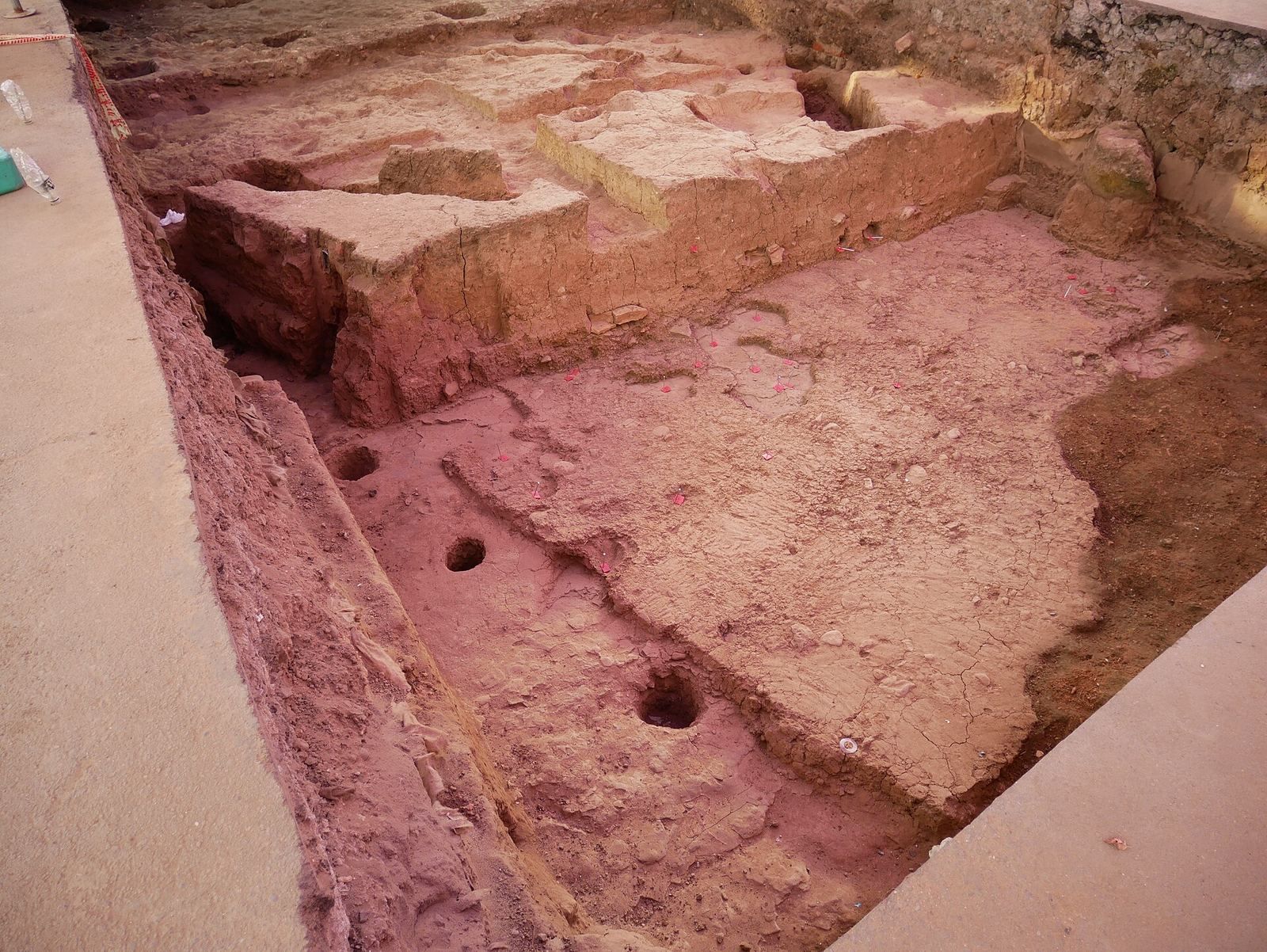
No standing fort remains survive, but excavations have uncovered its foundations. A 2002 ground-penetrating radar survey, which uses radar pulses to detect buried features, suggested that parts of the walls might remain beneath the shipyard. Some scholars have also proposed that deeper remains could survive, reasoning that European castles typically had foundations and basements, while the later dock did not require a foundation. Excavations have also identified foundations of a church or convent associated with the site.
Burial features and crosses
The 2019 excavations uncovered tombs, human remains, cavities, and crosses.