Madonna dell’Itria dei Cocchieri: A Confraternity Church in Palermo
Site at a Glance
- Popularity
- Low
- Country
- Italy
- Primary era
- Early Modern
- Eras represented
- Early Modern
- Civilizations
- Habsburg, Kingdom of Sicily, Spanish
- Site type
- Religious
- Remains
- Church
On this page13 sections
History
Madonna dell’Itria dei Cocchieri is a small Renaissance church in Palermo’s Kalsa district, Italy, built by the coachmen’s confraternity between 1596 and 1611. It began as a prayer chapel over a crypt used by carters. Dedicated to the Madonna Odigitria, a Byzantine title for Mary commonly understood as “She who shows the way,” the church honors the Virgin regarded as Sicily’s patroness. The name Itria derives from a corruption of Odigitria.
The confraternity and its church
The coachmen’s religious association dates to 1590 and was formally established by 1596. Its members included not only coachmen but also footmen, stable hands, horse attendants, and chamberlains. Limited funds led the confraternity to keep the church relatively plain, though alterations over the centuries changed its appearance.
An oral tradition tells that the Marian statue was recovered from the sea off eastern Sicily by Basilian monks, members of an Eastern Christian monastic tradition, at the monastery of San Calogero. The monks were said to have come from Sardinia, and the image was credited with many miracles.
The Good Friday procession
The confraternity commissioned statues of the Sorrowful Virgin, Mary mourning Christ’s death, and the dead Christ in 1598. Members and other faithful carried them on shoulder-borne platforms through the Kalsa on Good Friday. The observance continues today, although it did not take place in 1941 because of the war.
Historically, the cortege included a large wooden cross and participants in formal coats, alongside groups wearing the liveries, or distinctive colors and dress, of aristocratic households. Branciforte of Trabia and Butera used blue and gold; Settimo of Fitalia and Giarratana, brown and silver; Valdina, yellow and green; and Baucina, yellow and blue. Galati, Mazzarino, and Scalea households also took part, while the municipality’s colors were red and yellow. Nobles sought favor with religious authorities and plenary indulgences, a Catholic remission of temporal punishment for sins whose guilt had been forgiven. Coachmen could display their employers’ colors, and a Good Friday ban on carriage travel left them free to join the procession.
Later use and change
In 1729 the Confraternity of Jesus and Mary took over the chapel. Its members used the crypt for burials and added paintings and other decoration. The underground space also hosted religious services, first for the carters’ association and later for the coachmen.
Around 1750, the coachmen’s confraternity was accused of Freemasonry, declared heretical, and suppressed. Burials in the crypt continued at least into the late eighteenth century. Regulations issued by Domenico Caracciolo, viceroy of Sicily, and confirmed by his successor, Francesco d’Aquino, Prince of Caramanico, banned burials within the city walls and established public cemeteries outside them. The crypt then fell into disrepair. In 1896, a fire destroyed the original Marian processional statue. Members of the confraternity rediscovered and cleaned the crypt in 1980.
Remains
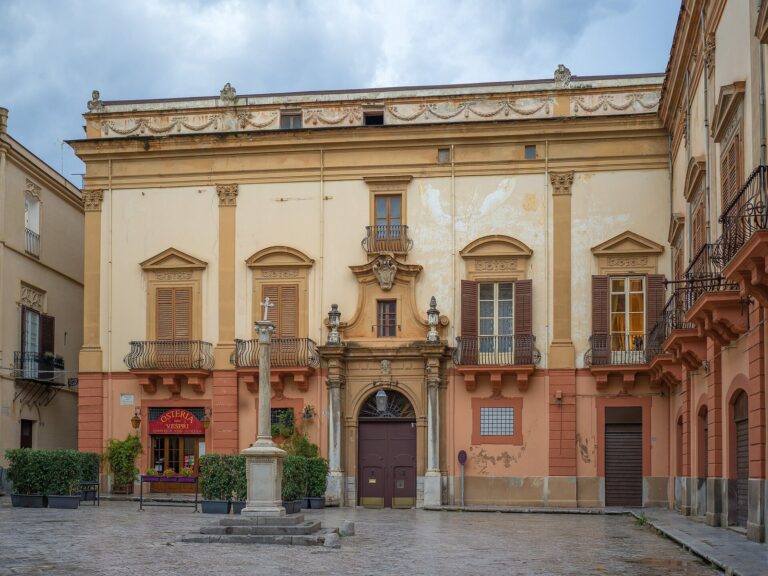
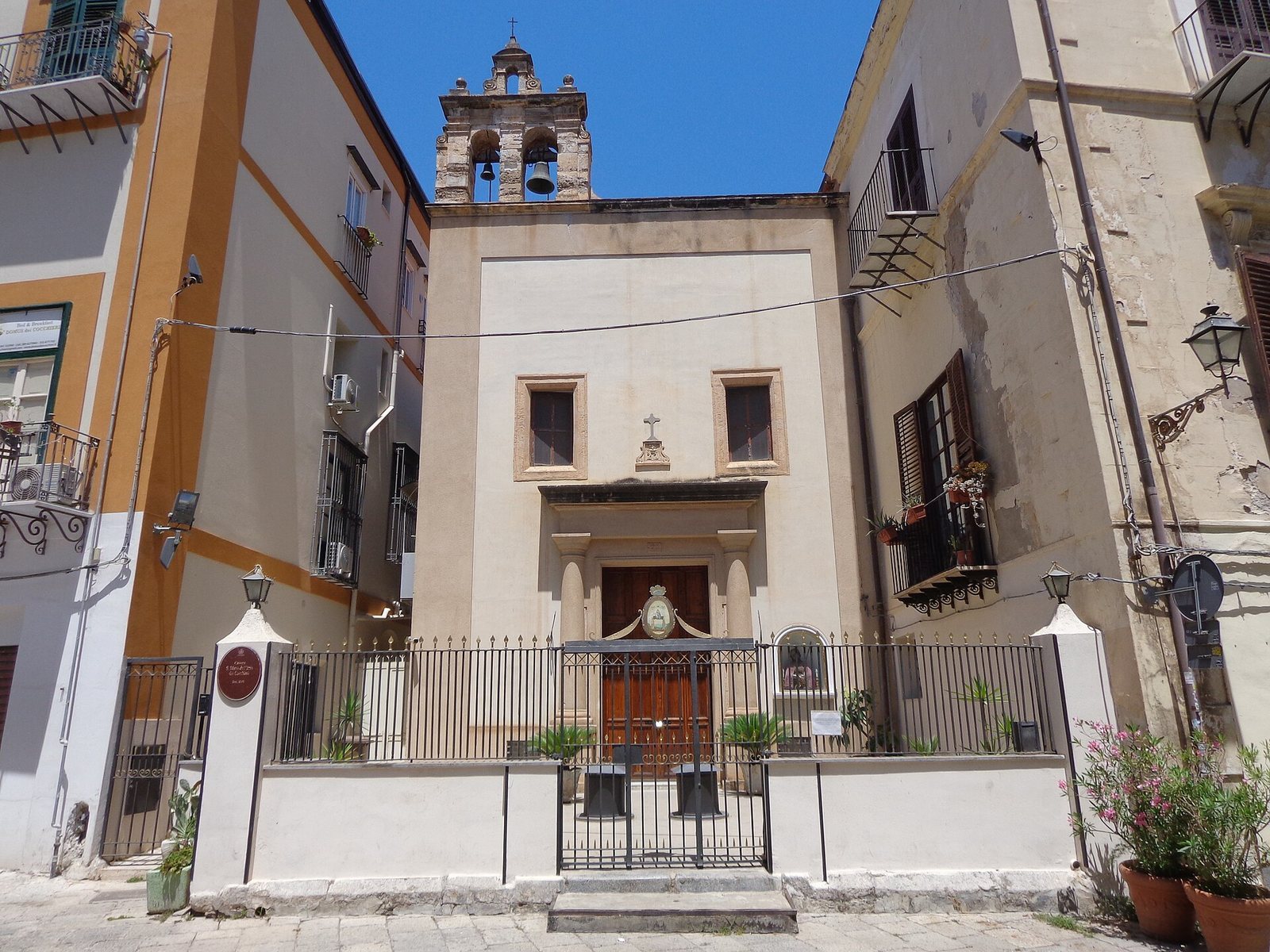
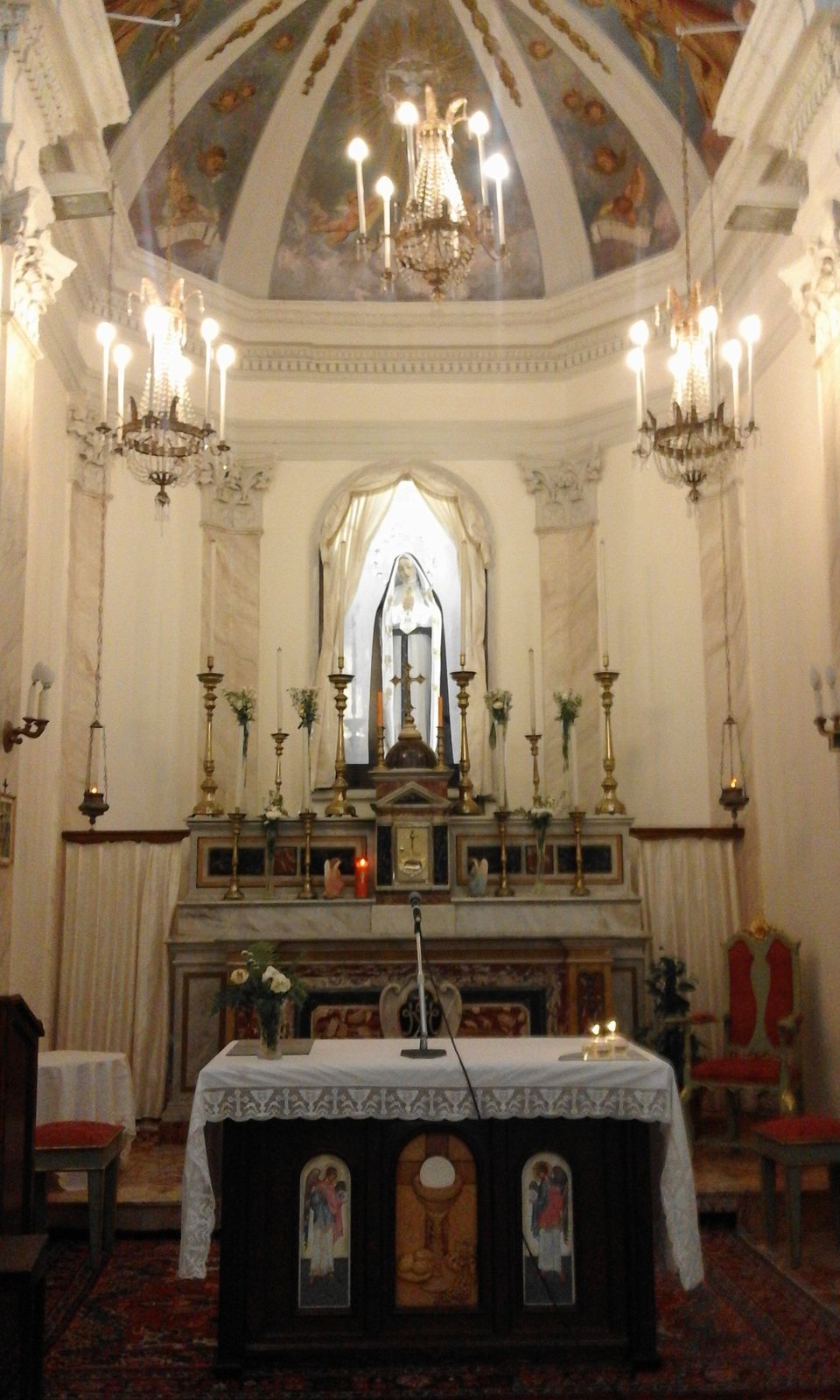
The church stands on Piazzetta dei Cocchieri, just off Via Alloro. Its single nave measures 14.45 by 7.35 metres and ends in a north-facing apse, a projecting space at the end of the church. The interior combines neoclassical wall details with gilded-stucco ceiling panels and painted decoration.
Exterior and plan
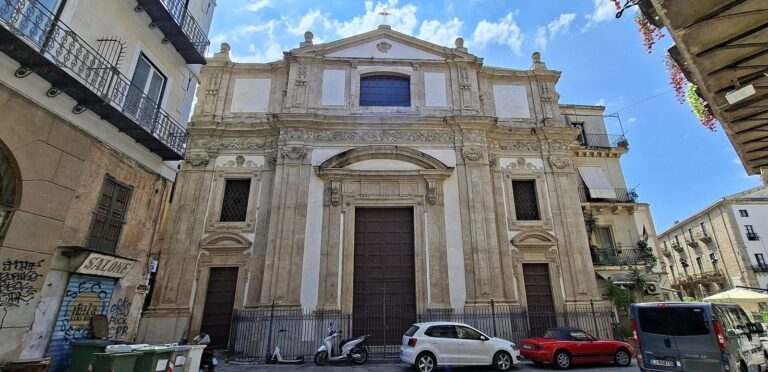
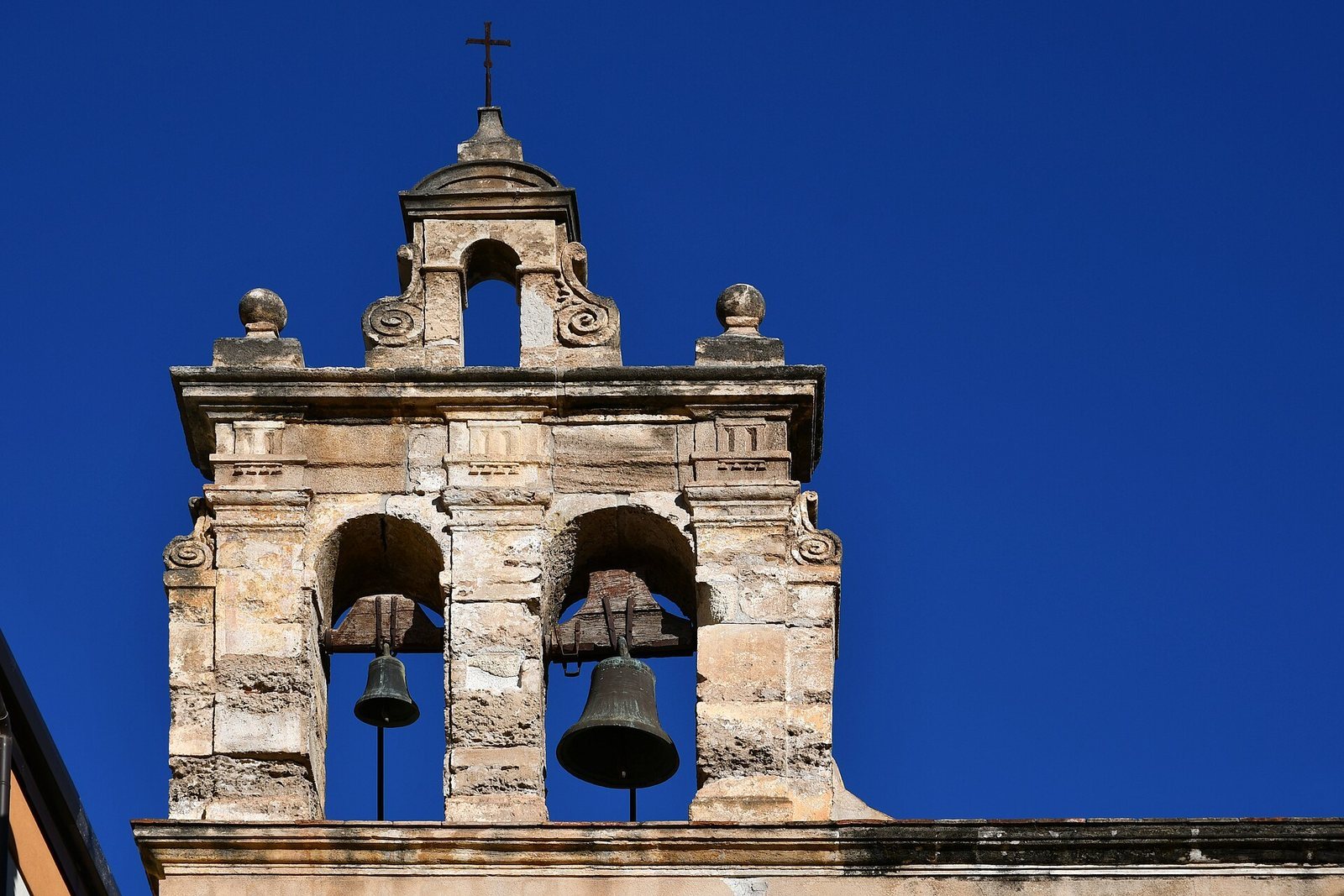
The simple façade has a doorway framed by two half-columns supporting an architrave, the horizontal beam above them. A bas-relief of the Madonna dell’Itria sits above the entrance, with two large windows higher on the front. A marble cartouche, an ornamental framed panel, above the doorway bears the date February 1611. The small, two-tier bell tower contains two bells and is built of exposed tufa, a porous volcanic rock. It is identified as an original feature of the church.
Nave and furnishings
Main altar
The seventeenth-century main altar is made of polychrome marble. Its niche holds a wooden statue of the Sorrowful Virgin made by Vincenzo Piscitello in 1898. Devotees donated three mantles for the statue, which is depicted wearing a black one. Above the altar, the vault over a pentagonal area shows the Blessed Sacrament and the Symbols of the Passion, flanked by two large angels.
Side altars and paintings
The altar on the right has a figure of the dead Christ and a niche containing a recently discovered and restored fresco of the Adoration of the Crucifix. Opposite it, the altar with a figure of the Assumption of the Virgin has a niche holding an eighteenth-century painting from the Sicilian school. It depicts the risen Christ appearing to Mary Magdalene. Two oil paintings on the side walls show the Madonna Odigitria and the Resurrection.
Other furnishings and artworks
A choir loft occupies the counter-façade. Beside the entrance are a small funerary monument to the Airoldi family and a red-marble holy-water stoup. An oval painting above the entrance is by Angelo Di Vita. The sacristy holds a large anonymous canvas of the Madonna Odigitria, probably once displayed behind the main altar, which requires restoration. Two wooden works commissioned for the confraternity, probably in its early years, are also undergoing restoration: a statue of Saint Richard, patron of coachmen, and a crucifix by an unknown sculptor.
The burial crypt
Burial spaces
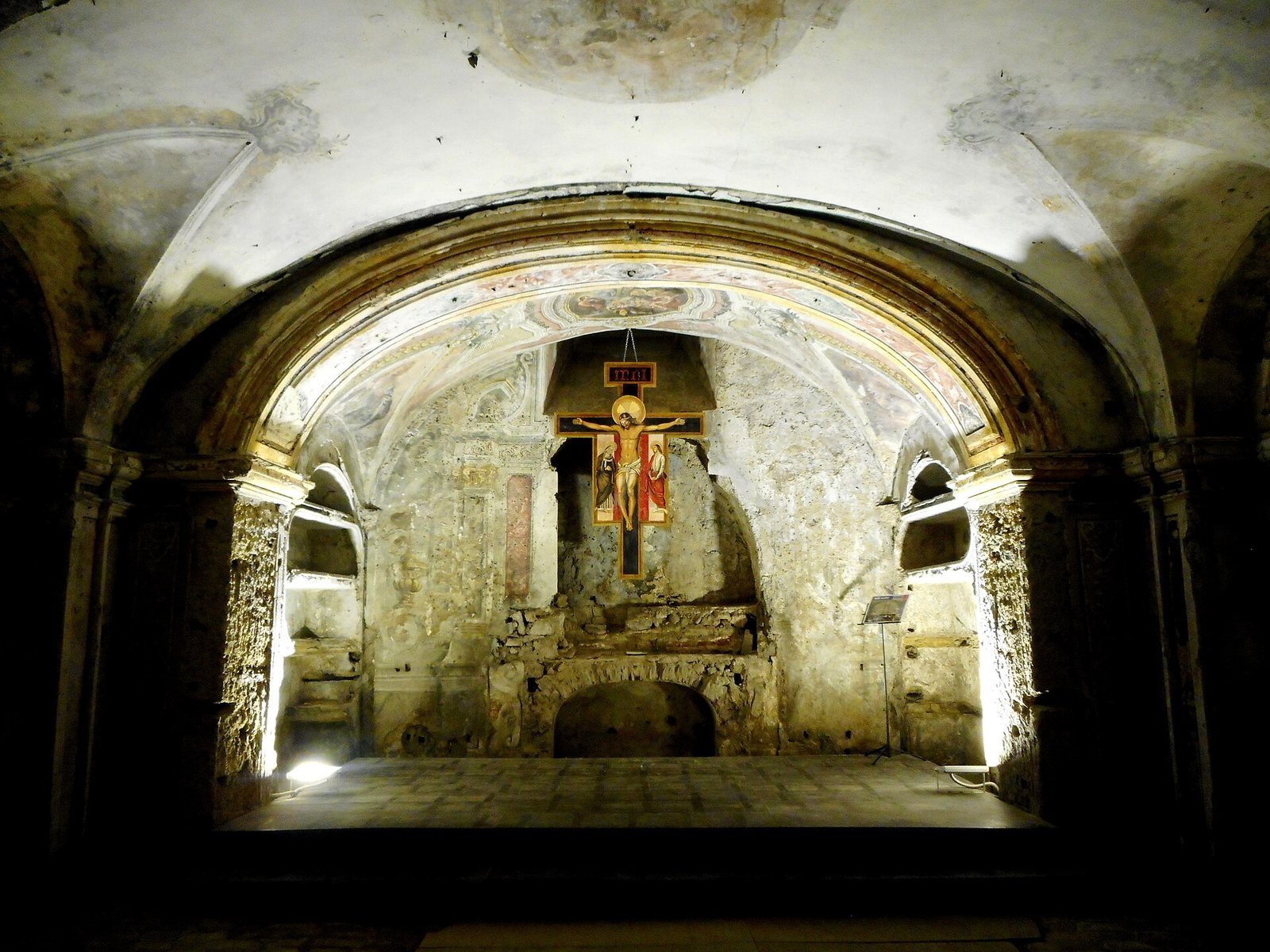
The crypt extends beneath the church and its forecourt, covering about 150 square metres. A large stair structure divides its rectangular main space into two parts. The walls retain the remains of ninety burial niches intended for the confraternity’s mummified members. A smaller room below, reached by a short staircase, is known as the draining room, associated with the draining of bodies during traditional funerary preparation.
Altar and decoration
A low triumphal arch, an ornamental arch leading to the altar, rests on two square supports. The altar was used for masses for the souls of the dead. Pilasters, flattened supports attached to the walls, decorate the supports; above the arch, a stucco composition of two angels surrounds a panel reading “Glory to God in the highest.” The ceilings include barrel vaults, long curved ceilings, and cross vaults formed by intersecting sections. Worn fragments of the original two-colour terracotta floor survive. Wall and ceiling frescoes include scenes of the Last Judgment and Redemption. Many are deteriorated, and the crypt is in poor condition.
A local tradition speaks of underground passages connecting the crypt with nearby churches and palaces, but this remains unconfirmed.