Lympne Castle: A Historic Fortified Manor in England
Visitor Information
Google Rating: 4.7
Popularity: Low
Official Website: lympnecastle.com
Country: United Kingdom
Civilization: Medieval European, Modern
Site type: Military
Remains: Castle
History
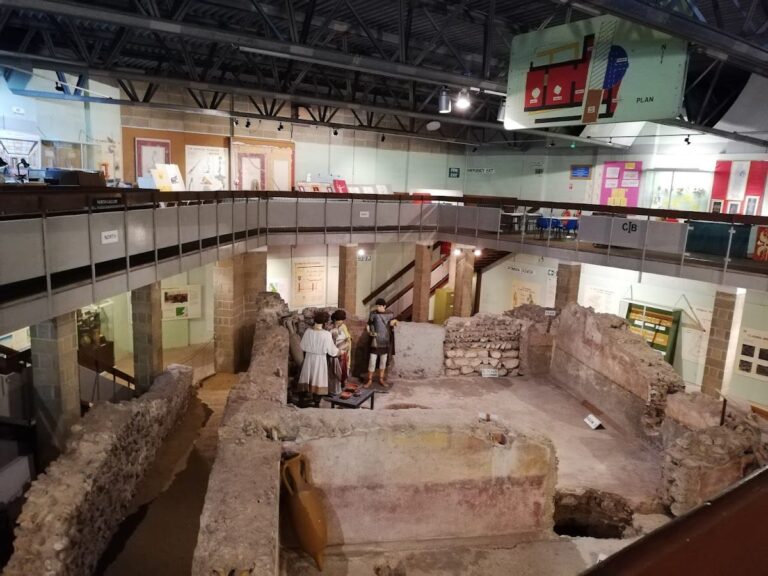
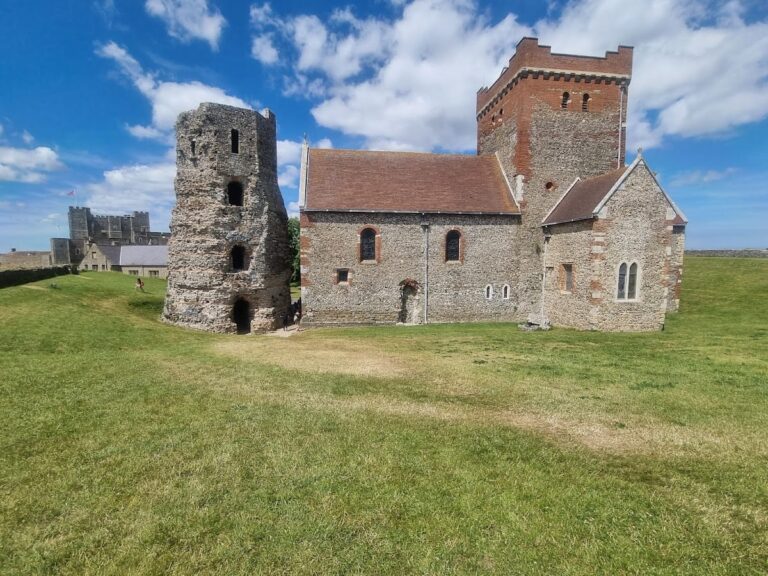
Lympne Castle is located in the village of Lympne, within the municipality of Hythe, in England. The site initially hosted a Roman fort known as Portus Lemanis or Stutfall Castle, constructed by the Romans as part of their defensive coastal network.
In the Roman period, the fort was established to guard the southeastern coast of Britain. Built with robust stonework typical of Roman military architecture, it formed part of the Saxon Shore forts designed to protect against seaborne invasions. Following the end of Roman rule, this fort fell out of use as a military outpost.
The first medieval castle on this location was erected during the 1080s. It was built for the Archdeacons of Canterbury, a senior clergyman in the Church of England, marking the site’s transition from Roman military purpose to religious and administrative functions. This early manor house was fortified, reflecting the needs of the period for secured residences.
Significant rebuilding took place in the 1360s, when the castle was expanded and fortified further. This period saw the addition of towers at both ends of the building, enhancing its defensibility and residential capacity. The castle continued to serve as the Archdeacon’s residence until 1860, maintaining its ecclesiastical association for nearly eight centuries.
During the 15th century and again in the 19th century, the castle experienced further construction projects, adding wings and making restorations that reflected changing architectural styles and domestic needs. Notably, between 1907 and 1912, architect Robert Lorimer directed restoration work, reviving parts of the castle’s medieval character. In 1918, an East Wing was added by the owner Henry Beecham, extending the building’s footprint.
By the early 20th century, after the Archdeacon ceased to inhabit the castle, it had fallen into some disrepair and was used as a farmhouse. During World War II, the castle returned to military use, serving as an observation post. Its structural condition suffered from this wartime occupation, but post-war restoration efforts began promptly in 1945 to preserve the building.
In a different phase of its history, the castle was used in 1978 as a recording venue by the band Wings for their album sessions. As of 2023, Lympne Castle is owned by a Canadian couple who are refurbishing the property and using it as a location for weddings and events, continuing its long tradition of adaptation.
Remains
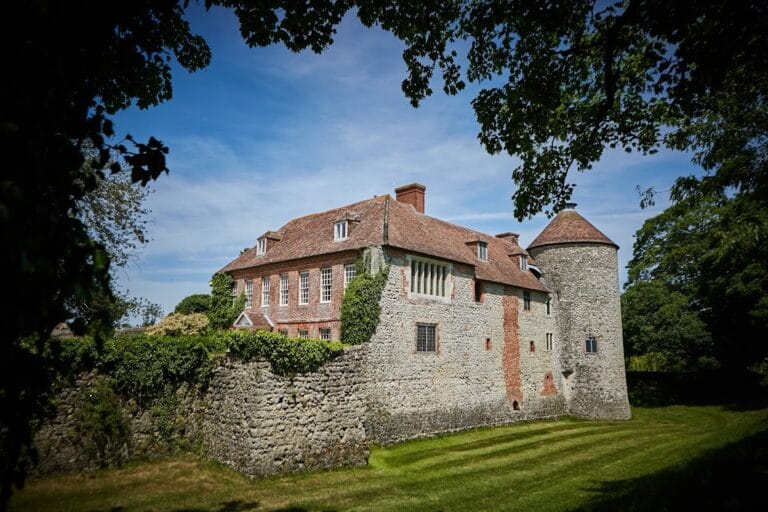
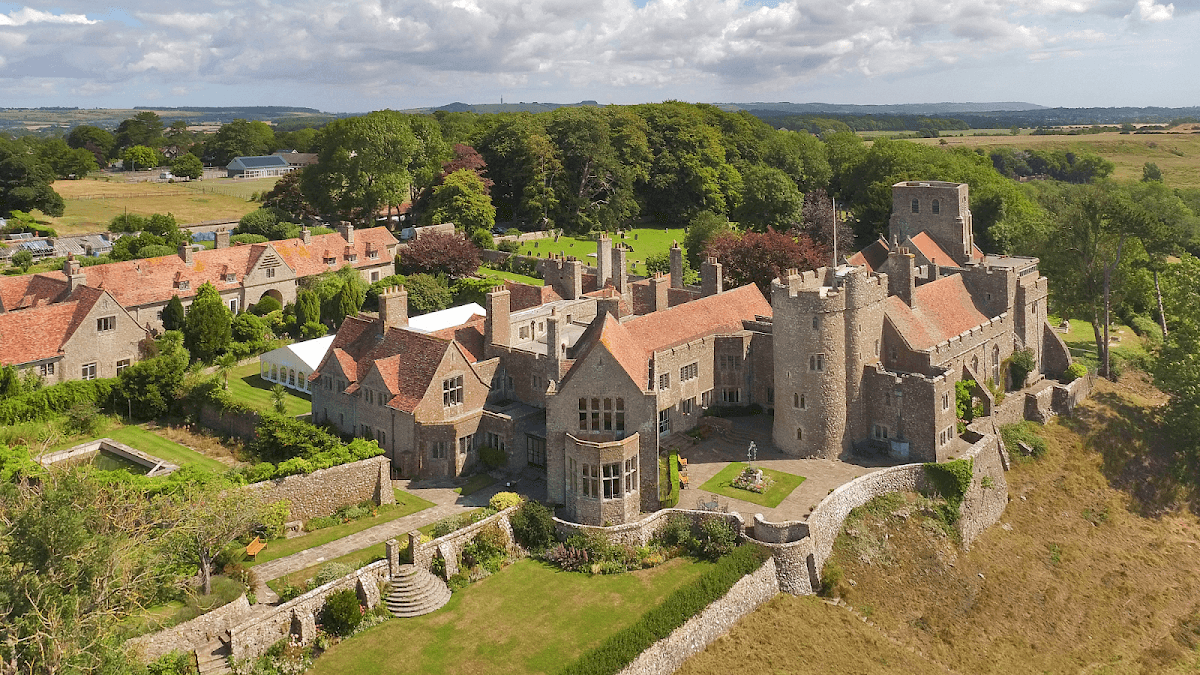
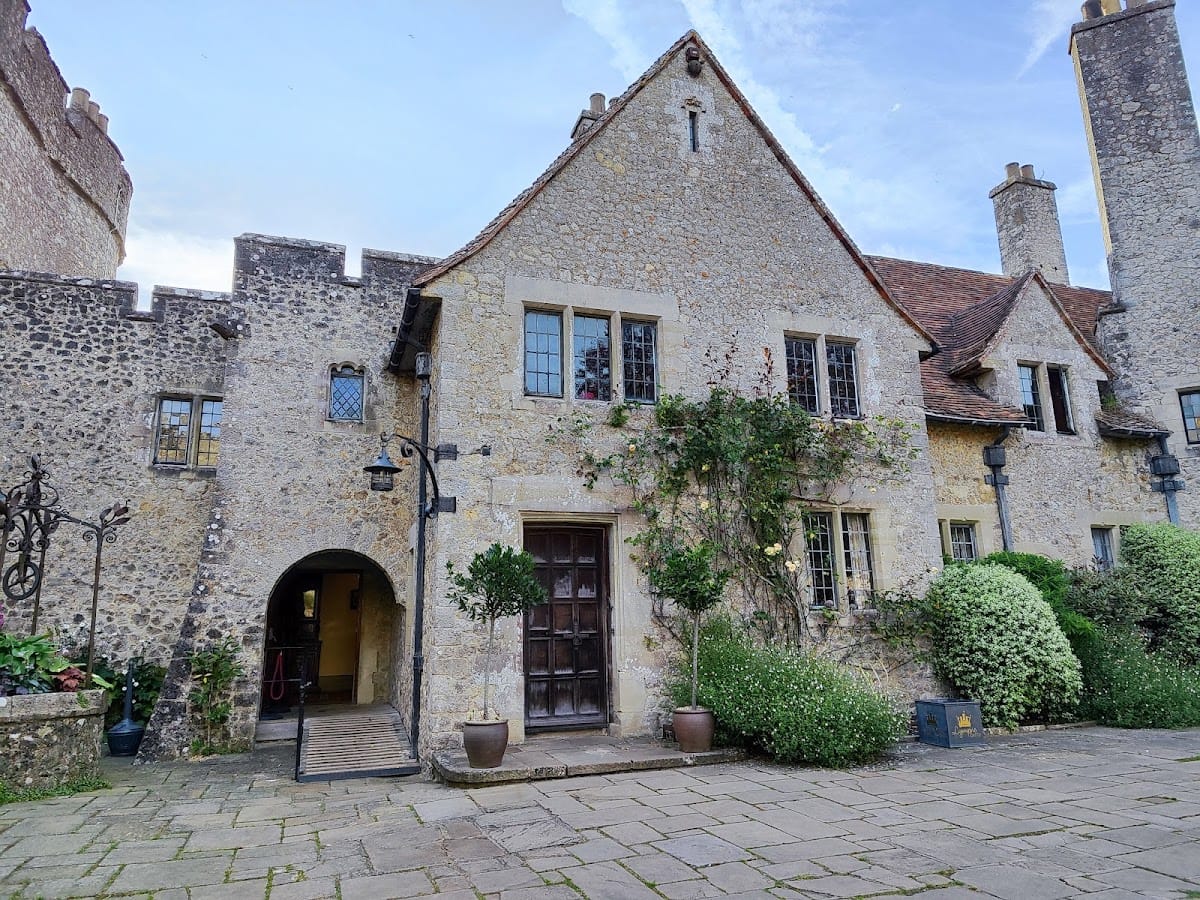
Lympne Castle is a fortified manor house set upon a rocky outcrop overlooking Romney Marsh. The building covers approximately 18,862 square feet and is constructed primarily from stone. Some of this stonework incorporates masonry reused from the Roman fort once occupying the site, linking the medieval structure to its ancient origins.
The castle is a two-story building distinguished by a tower at each end. At one end, a square tower contains a vaulted chamber, a design feature significant for its vaulted ceiling construction used for strengthened support. The opposite end houses what is known as the Crown Post Chamber, probably serving as the Archdeacon’s bedroom, highlighting its residential purpose.
Between these towers lies the great hall, or Rittersaal, which is notable for its partial wood paneling and visible wooden roof beams. This hall features Gothic pointed arch windows and doors, architectural elements characteristic of the medieval period and designed to allow light and air into this communal space. To protect the hall’s windows from attack, a section of the castle wall in front of the great hall includes an unusually high parapet, an elevated protective barrier along the edge of the wall.
During the Tudor era, modifications were made to the interior of the great hall, including the replacement of the central hearth with an open fireplace, reflecting evolving heating practices. Additional wings were constructed during the 15th and 19th centuries, with an important West Wing added during the early 20th-century restorations.
The castle stands approximately 103 meters above sea level on somewhat hilly terrain near England’s southeast coast, offering views extending to the French coast on clear days. Its designation as a Grade I listed building by English Heritage acknowledges the exceptional historical and architectural interest preserved in its structure.
Today, the castle has undergone careful refurbishment to maintain its condition and continue its use as a venue for gatherings. Some public access is permitted seasonally, enabling appreciation of its architectural features and the layered history visible in its walls and chambers.
Nearby sites