Luegsteinhöhle: A High-Medieval Cave Castle in Germany

Site at a Glance
- Rating
- 4.7
- Popularity
- Low
- Country
- Germany
- Primary era
- Medieval
- Eras represented
- Medieval
- Civilizations
- Holy Roman Empire
- Site type
- Military
- Remains
- Castle
On this page6 sections
History
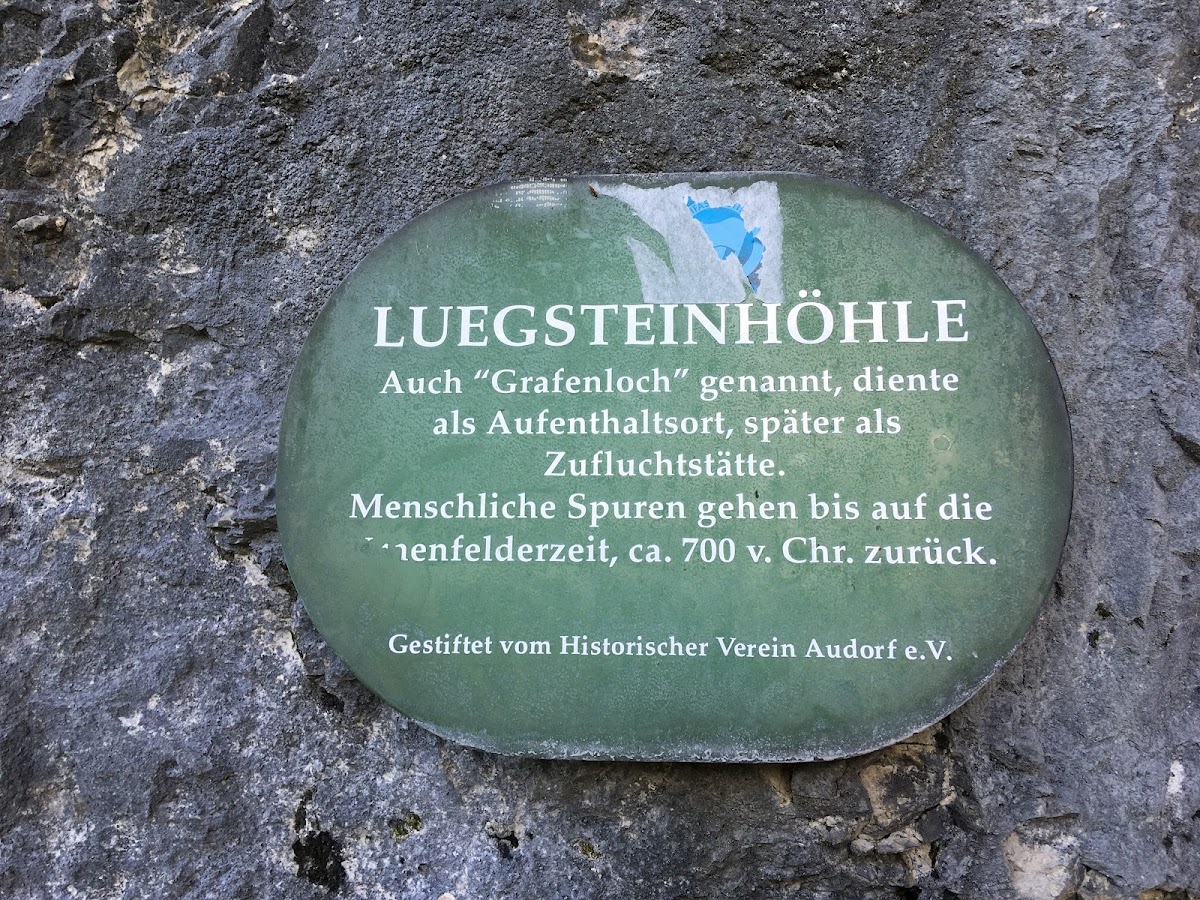
Luegsteinhöhle, also called Grafenloch, is a high-medieval cave castle in Germany, located above Luegsteinsee in Bavaria. Probably built during the eleventh century by knights who were likely ministeriales, or medieval service nobles, of the Counts of Falkenstein, it may have been a predecessor of the Auerburg, a medieval castle in the region.
Medieval occupation
The cave castle was occupied from the eleventh to the thirteenth century, as shown by ceramic finds. It was probably abandoned or vacated around 1250. Its elevated position within the Luegsteinwand, above the lake and near Oberaudorf and Mühlbach, placed it at approximately 640 metres above sea level.
Legend and archaeological reinterpretation
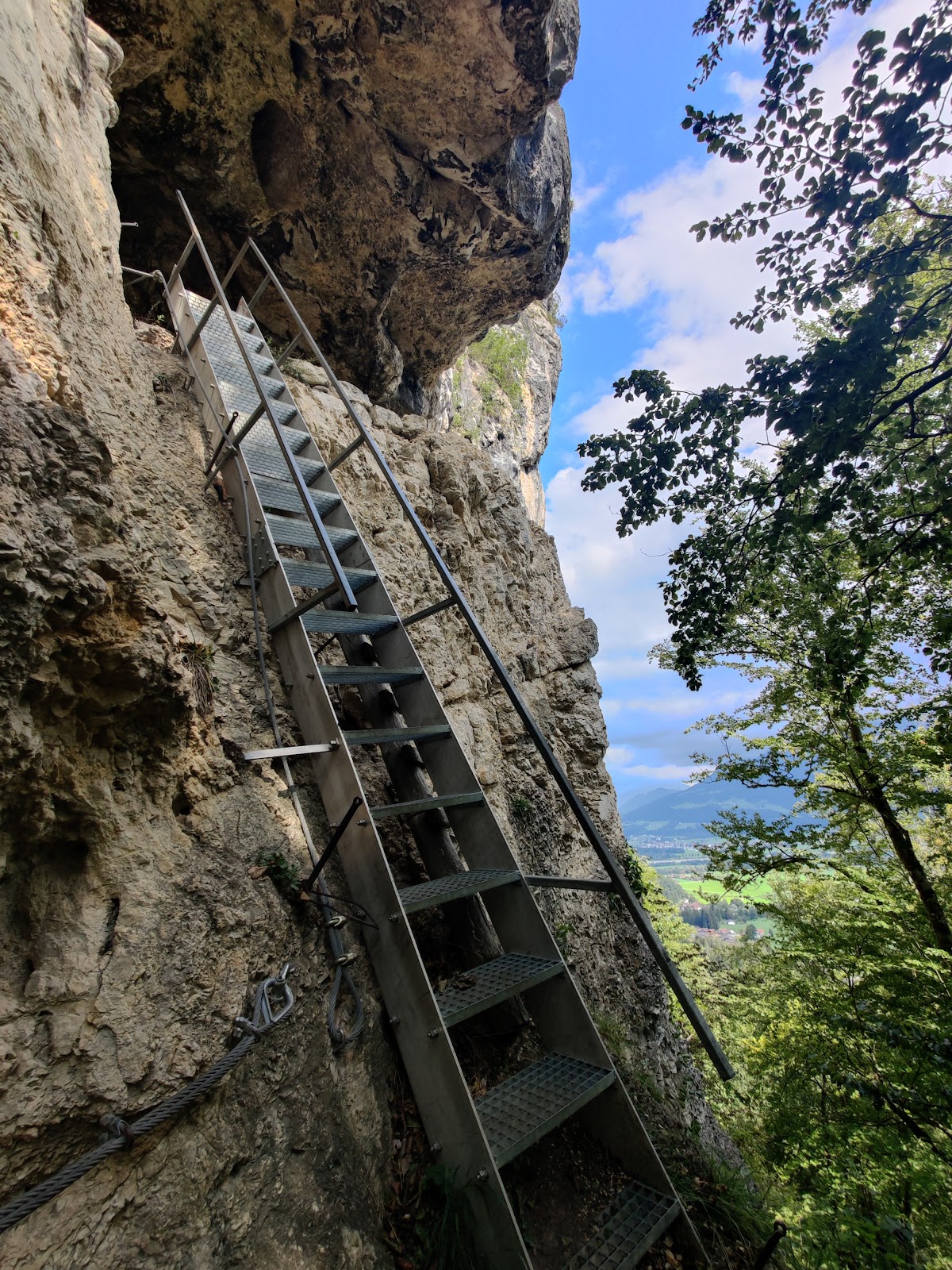
A local legend connects the cave with an Auer count who gained great power after his parents were murdered. A Romani woman supposedly foretold that lightning would kill him. After lightning struck the tower of his castle, the count is said to have fled toward the cave, where a sudden storm killed him before he could climb the steep ladder to its entrance.
For a time, Luegsteinhöhle was interpreted as a refuge castle from the Thirty Years’ War, the European conflict of 1618–1648. Excavations in 2008 rejected that interpretation and instead supported the site’s high-medieval chronology.
Remains
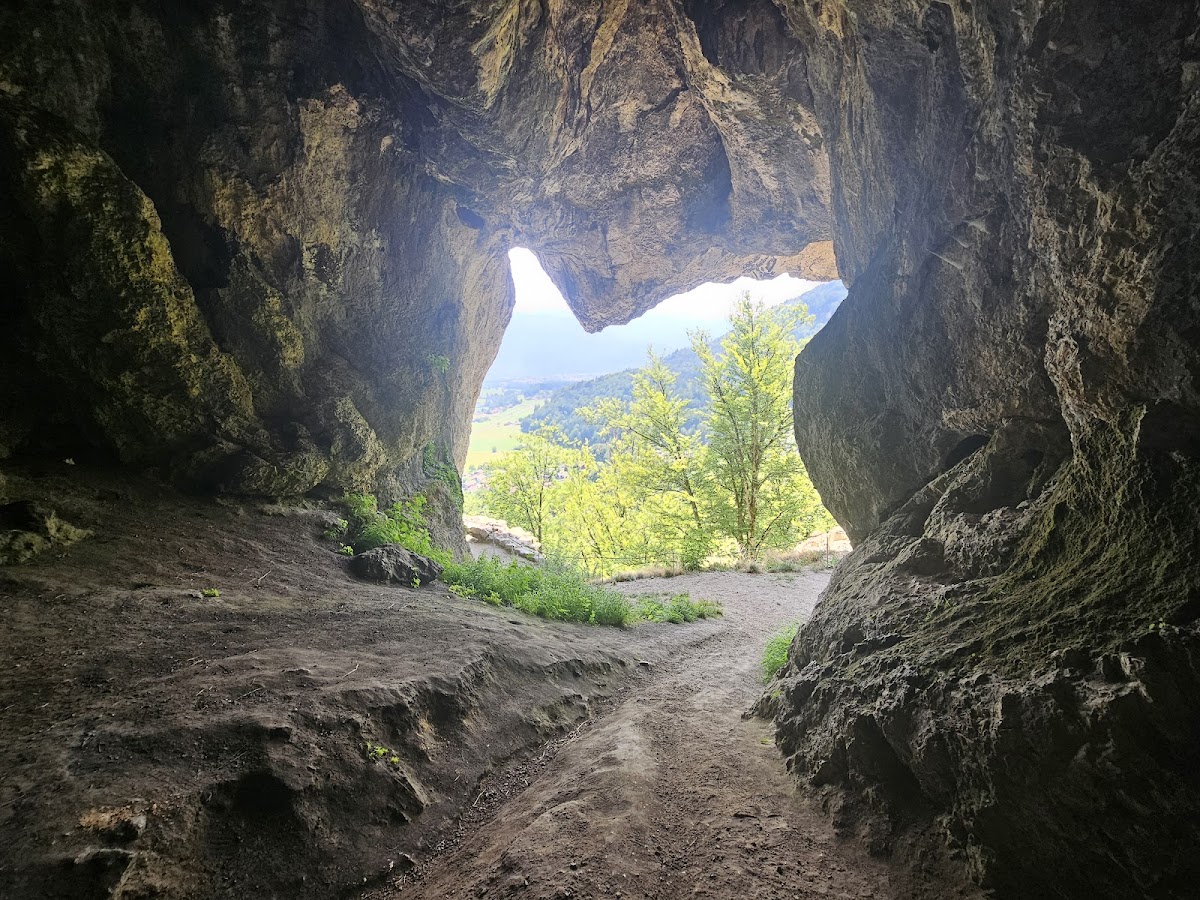
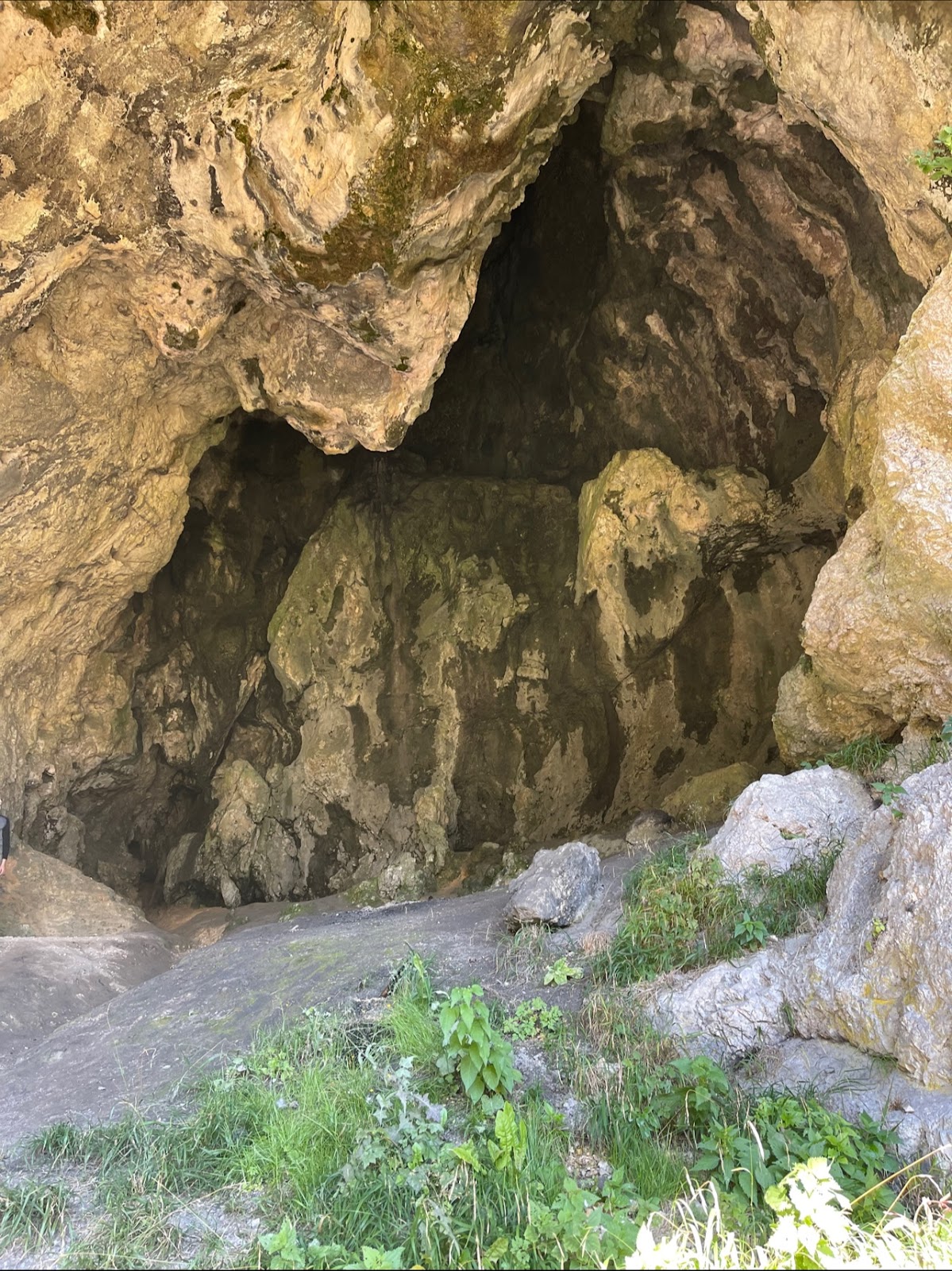
Luegsteinhöhle combines a natural cave with defensive masonry in an elevated position. The cave extends approximately 19.5 metres into the rock, while its entrance is about four metres above ground level and can be reached only by ladder. The difficult approach and the fortified entrance formed part of the site’s defensive arrangement.
Entrance defenses
Parts of the entrance arch and additional walling survive at the cave mouth. A mantle wall, approximately one metre thick, separated the cave interior from the outside. It rested on a massive supporting wall, creating a substantial barrier at the entrance.
Interior arrangement
Traces inside the cave indicate that it was arranged over two storeys. Evidence also points to wooden lining and a heated plank room, showing that the space served as more than a simple natural shelter. The route passing over the cave castle now forms part of the Audorfer Cave Trail.