Lucedio Abbey: A Cistercian Monastery and Agricultural Estate in Italy


Site at a Glance
- Rating
- 4.3
- Popularity
- Very Low
- Country
- Italy
- Primary era
- Medieval
- External website
- Open
- Eras represented
- Medieval, Early Modern
- Civilizations
- Duchy of Savoy, Holy Roman Empire
- Site type
- Religious
- Remains
- Monastery
On this page17 sections
History
Lucedio Abbey, also known as Santa Maria di Lucedio, is a former Cistercian monastery in Italy near Trino, founded on 21 March 1124. Cistercian monks from La Ferté established it on land donated by Ranier I of Montferrat and his relatives Ardizzone and Bernardo. The foundation was made in a largely uncultivated landscape of marshes, woodland, heath, and scrub called Locez. The possibility of an earlier Benedictine monastery remains highly uncertain.
Foundation and medieval expansion
Lucedio was a daughter house of La Ferté and became one of the early Cistercian foundations in Italy. The Cistercians were a reform branch of Western Christian monasticism whose communities combined disciplined religious life with the productive management of agricultural land. Lucedio later established or affiliated daughter houses at Castagnola in 1147, Rivalta Scrivia around 1180 or 1181, Acqualunga in 1204, and Chortaiton and Saint George of Jubin in the early thirteenth century.
Between the twelfth and fourteenth centuries, the abbey enlarged its landholding and regional influence. Its monks drained, cleared, and irrigated the surrounding wetlands through agricultural granges, which were Cistercian estates operated to support a monastery. The granges at Montarolo, Darola, Castel Merlino, Leri, Montarucco, and Ramezzana formed part of this system. Lay brothers managed individual estates and organized the work of paid free laborers, while a cellarer administered the wider holdings on behalf of the abbot.
Lucedio became closely connected with the Aleramici, the dynasty of the marquises of Montferrat. Several members of the ruling family selected the abbey as a burial place. Abbot Peter II accompanied Boniface I of Montferrat during the Fourth Crusade, the campaign that led to the capture of Constantinople in 1204 and the creation of the Latin Empire of Constantinople. Peter II took part in choosing its first Latin emperor, later became a bishop, and eventually served as Latin patriarch of Antioch. His associate Oglerio succeeded him as abbot of Lucedio in 1205. Oglerio was later beatified, and Pope Pius IX formally approved his cult.
In 1210, Holy Roman Emperor Otto IV granted Lucedio extensive privileges. The monks used part of their resources to assist poor people in the surrounding region, and three popes visited the abbey during the medieval period.
Rice cultivation and commendatory control
The abbey’s drainage and irrigation works transformed reclaimed marshland into productive farmland. Rice cultivation was introduced at Lucedio by about 1400 or during the fifteenth century, making the estate an early centre of rice growing in Italy. This development later became economically and socially important for the Vercelli region.
In 1457, Pope Callixtus III placed Lucedio under commendatory control. A commendatory abbacy, or commendam, assigned an abbey’s revenues and often the appointment of its abbot to an external patron rather than to the resident community. Lucedio consequently lost much of its autonomy and entered a decline that continued until its suppression. Under Cardinal Francesco Gonzaga, it joined the Lombard Cistercian congregation.
Suppression and later ownership
In 1784, the abbey and its granges became a commendam of the Order of Saints Maurice and Lazarus. The remaining Cistercian community, reduced to about ten monks, moved to Castelnuovo Scrivia in 1786, and the abbey church became a parish church. In 1792, the order assigned the commendam to the Duke of Aosta, later King Victor Emmanuel I of Savoy.
After the French occupation of Piedmont and the suppression of religious orders, Napoleon acquired Lucedio. In 1807 he transferred it to his brother-in-law Camillo Borghese, partly as compensation for artworks confiscated in Rome. After Napoleon’s fall, ownership was disputed between Borghese and the House of Savoy. The estate was divided into lots and sold to several individuals, including members of the family of Camillo Benso, Count of Cavour.
By 1822, Giovanni Gozani di San Giorgio controlled the abbey complex. In 1861, he transferred the estate to Raffaele de Ferrari, Duke of Galliera. The House of Savoy granted de Ferrari the title Prince of Lucedio, producing the designation Principato di Lucedio, which remains displayed at the estate entrance. Count Paolo Cavalli d’Olivola acquired the complex in 1937, and Lucedio is now associated with the Cavalli d’Olivola family.
The former abbey forms part of a modern agricultural estate that continues to produce rice. During the 2010s, archaeological and architectural information from the complex, including underground remains, was incorporated into a three-dimensional building information model. Traditions surrounding Lucedio speak of secret crypts, mummified abbots seated in a circle, underground rivers, and a column said to weep because it witnessed past horrors. Proposed explanations of the name include “Light of God,” “God of Light,” and a possible reference to Lucifer, but these interpretations belong to tradition and speculation.
Remains
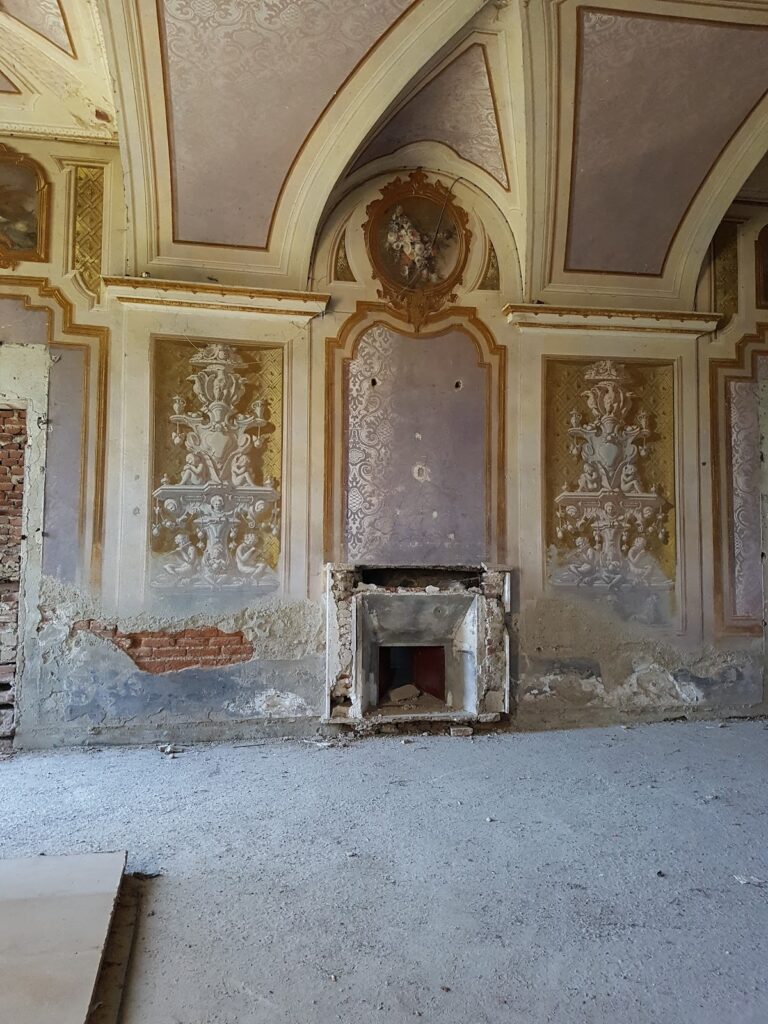
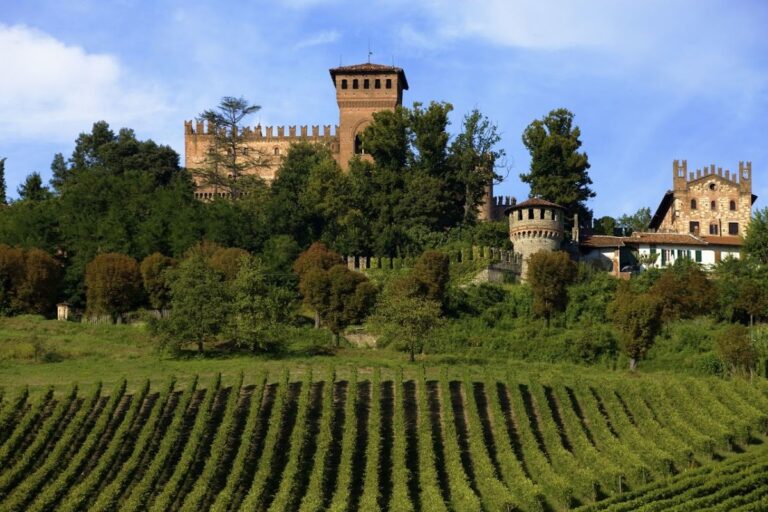
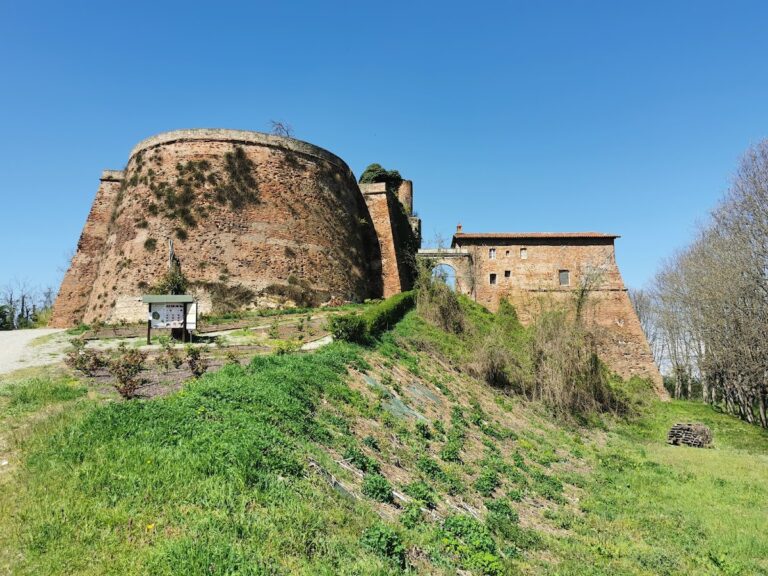
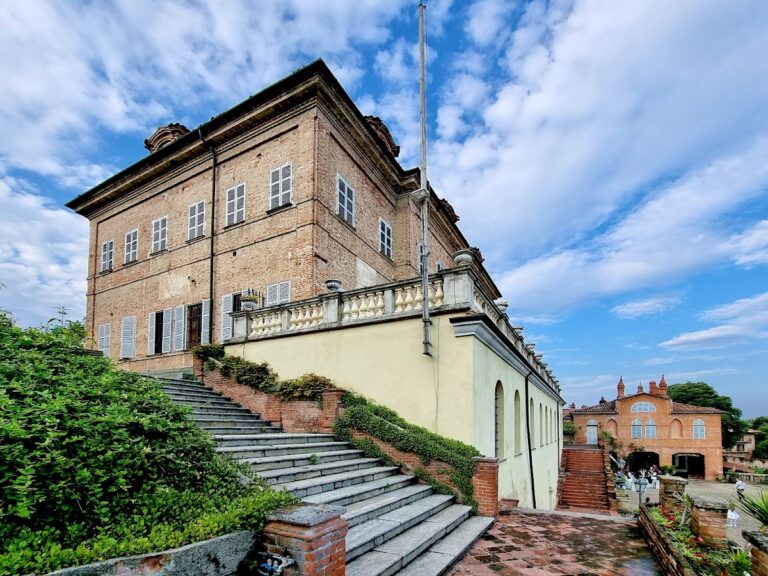
Lucedio’s surviving complex lies within an enclosing wall and combines medieval monastic remains with eighteenth-century buildings and an agricultural landscape. Courtyards, religious spaces, domestic rooms, agricultural structures, former granges, drainage works, irrigation channels, and rice fields together reflect the abbey’s development from a Cistercian monastery into a large farming estate.
Church and cloister
Medieval abbey church
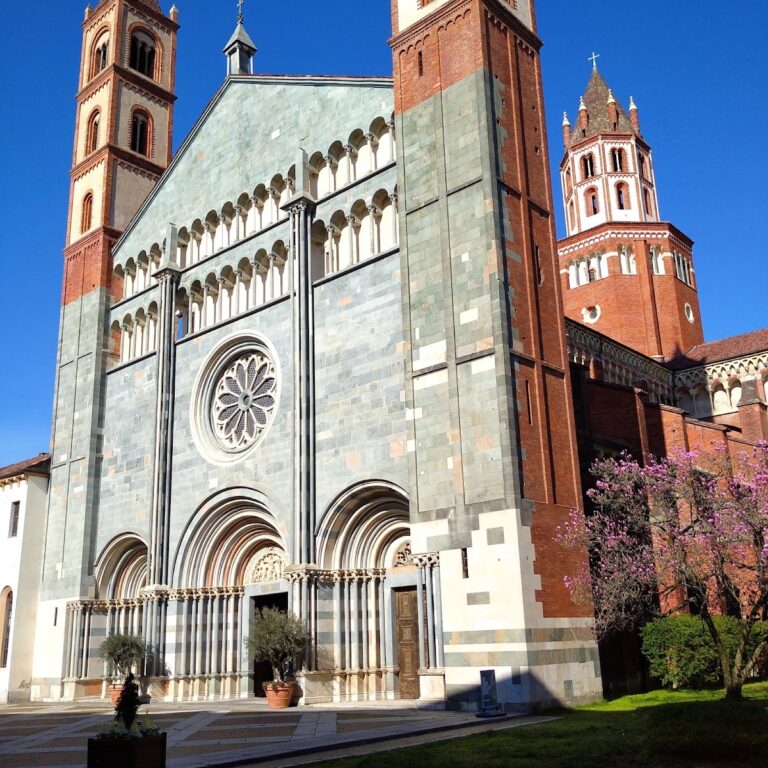
The medieval abbey church was probably built between 1150 and 1175. It had three aisles and a choir ending in an apse, a semicircular termination at the eastern end. This apsidal arrangement differed from the flat-ended form traditionally associated with Cistercian churches. Instability led to the replacement of the medieval church by a Baroque building between 1767 and 1770. The new church, designed by the monk-architect Valente de Giovanni, incorporated additional chapels and now serves as the parish church.
Medieval bell tower
The medieval bell tower rises above the southern arm of the transept, the crosswise part of the church plan. Its lower section has a square plan and Romanesque construction, probably dating from about 1150 to 1175 or around 1170. A later upper section has an octagonal plan and dates from the thirteenth century.
Cloister
The monastic cloister survives in fragments from the medieval period. Much of its remaining structure was remodeled in the Baroque style during the eighteenth century, when the wider complex was reshaped around the new church and its associated buildings.
Medieval monastic buildings
Chapter house
The chapter house retains its medieval form as a square room divided into nine bays by four stone columns. Its capitals have forms described as early medieval. The room belonged to the principal communal spaces of the monastery and remains one of the best-preserved parts of the medieval complex.
Sala dei Conversi
The Sala dei Conversi, or lay-brothers’ hall, survives with slender sail vaults carried on low columns. Its design reflects the architectural provision made for the lay brothers who supervised work at the abbey’s agricultural granges.
Guesthouse
A guesthouse dating from the end of the thirteenth century also remains within the complex. It forms part of the surviving medieval domestic fabric alongside the chapter house and lay-brothers’ hall.
Later religious and agricultural structures
People’s church
A second church within the enclosing walls was built in 1741 for religious services attended by agricultural families and other residents of Lucedio. Known as the people’s church, it was designed by Giovanni Tommaso Prunotto, a collaborator of Juvarra, and has late-Baroque lines. The building was later converted into an agricultural storage facility.
Baroque abbey church
The Baroque abbey church is in a deteriorated condition and has been described as unusable or inaccessible. Safety work and earlier restoration have taken place, while further intervention remains necessary to address its condition.
Agricultural estate
The surrounding estate preserves the physical framework of Lucedio’s agricultural economy. Reclaimed wetlands, drainage and irrigation works, rice fields, and the former granges at Montarolo, Darola, Castel Merlino, Leri, Montarucco, and Ramezzana express the system through which the abbey managed land and supported rice cultivation from the medieval and later periods.
Nearby sites