Leri Cavour: A Historic Agricultural Estate in Italy


Site at a Glance
- Rating
- 4.2
- Popularity
- Low
- Country
- Italy
- Primary era
- Modern
- External website
- Open
- Eras represented
- Modern
- Civilizations
- Kingdom of Sardinia
- Site type
- Domestic
- Remains
- Manor House
On this page15 sections
History
Leri Cavour is a former agricultural estate in Italy, now a frazione, or locality within the municipality of Trino, in the province of Vercelli. The site developed from a medieval Cistercian grange into the extensive estate of the Benso family, whose nineteenth-century improvements made it an advanced agricultural enterprise for its time. It is also closely associated with Camillo Benso, Count of Cavour, the Piedmontese statesman who used Leri as both a retreat and a place for agricultural experimentation.
Medieval Grange and Reclaimed Land
From the eleventh century, Cistercian monks carried out land-reclamation work at Leri. The Cistercians were a Catholic monastic order whose communities often managed large agricultural estates and developed systems for controlling water and improving cultivation. Their work turned reclaimed ground into fertile land suitable for rice growing.
Leri formed part of a grange acquired by the monastery of San Genuario in 1179. A grange was a monastic farming estate or agricultural center within a monastery’s wider economic organization. The acquisition document refers to both the castrum and the villa of Leri. In this medieval context, castrum meant a fortified settlement or stronghold, while villa referred to an inhabited rural settlement. The fortified center associated with Leri has since disappeared.
Leri became one of the area’s most important granges. In 1457 it became a Cistercian center of worship, and toward the end of the sixteenth century it was made a parish. These changes show how the agricultural settlement also developed a continuing religious and communal role.
Changes in Agriculture and Ownership
During the eighteenth century, crop rotation reportedly replaced monoculture at Leri. At the beginning of the nineteenth century, the rationalization of the regional water network radically altered the agricultural landscape, building on the earlier history of land reclamation and water management.
In 1807 Napoleon Bonaparte sold the estate to his brother-in-law, Prince Camillo II Borghese. The transfer formed part of the compensation for the Borghese Gallery’s transfer to the French state. Napoleon was the French emperor and military ruler whose government controlled extensive European territories during the early nineteenth century, while the Borghese Gallery was an important Roman art collection.
Ownership passed in 1822 to Michele Benso, Marquis of Cavour and father of Camillo Benso, Count of Cavour. The Benso family altered older buildings and reshaped the estate as a large, modern agricultural enterprise. Its principal complex covered more than 380 hectares. The wider holding also included 365 hectares at Montarucco, 318 hectares at Torrone, approximately 30 hectares in the San Basilio area, and 80 hectares in woodland near Trino.
Cavour’s Management
In 1835 Michele Benso gave responsibility for managing the estate to his younger son, Camillo Benso. Leri and Montarucco were administered by a specially formed company with a nine-year term. Its members were the Marquis of Cavour, Camillo Benso, and the Duchess of Clermont-Tonnerre. After the duchess’s husband died in 1837, she left the company in exchange for rent shares and interest payments for the following eleven years.
In November 1849 the estate was formally leased for nine years to a company formed by Gustavo Benso, Camillo Benso, and Giacinto Corio. The rent was 103,000 lire. The lease was renewed on 22 April 1857, after which only Camillo Benso and Giacinto Corio remained in the company.
Under Cavour and Corio, Leri underwent extensive modernization. New water systems improved agricultural practice, while the buildings and infrastructure were reorganized for a workforce consisting mainly of seasonal laborers and workers from outside the locality. Dining halls and dormitories formed part of this provision. Cavour continued to follow the estate’s productive activities even as his political responsibilities grew. He used Leri during periods of rest and tested agricultural methods that he hoped to introduce across Piedmont. Eighty-three documented letters were written at Leri.
Decline and Modern Transformation
Leri was inhabited until at least the 1960s. A plaque installed in 1961 commemorated the centenary of Italian unification. Later, more intensive cultivation methods reduced the demand for agricultural labor. The surrounding architecture deteriorated, while environmental pollution affected the area.
Enel personnel continued to live at Leri at least until the early 1980s, using offices and houses that were later dismantled after the power station was decommissioned. The Galileo Ferraris thermoelectric power station was completed on the territory of the locality in the 1990s. Its original project envisaged a second nuclear power station at Trino. After the 1987 referendum, the facility was instead built as a combined-cycle power station.
The village was later transferred by Dalmazia Trieste S.r.l., an Enel company subsequently merged into Enel Servizi, to the Municipality of Trino for the symbolic price of 1,000 euros, with the expectation of future recovery. The surrounding land was sold for 1.47 million euros to Società Agricola Trino, which initially planned to produce high-quality rice. The 166 hectares concerned were later sold to Agatos Energia for a photovoltaic installation, and in 2011 they returned to Enel ownership through the joint venture Enel Green Power and Sharp Solar Energy S.r.l.
Plans for a national museum of agriculture at Leri were never realized. The proposed museum would have presented the successive transformations of the estate and the agricultural culture of its period. A later recovery plan brought together the Municipality of Trino, the archaeological heritage authority of Turin, Ovest Sesia, the Province of Vercelli, and the Prefecture of Vercelli. It sought to restore the Cavour estate and make the area publicly accessible.
A recovery project supported by the Municipality of Trino and the Piedmont Region began in 2011 after efforts and petitions by citizens and mayors. By 2016, however, it had produced no tangible result, and the area remained isolated, uninhabited, and in decline. In March of that year, vandalism severely damaged the interior of the church. The estate and other buildings had already been entered and stripped, while attempts to seal the entrances had proved ineffective. A 2010 provincial resolution also recorded that the wider area had become permanently unsuitable for agriculture because of earlier deposits consisting mainly of gravelly material and several decades of abandonment.
Remains
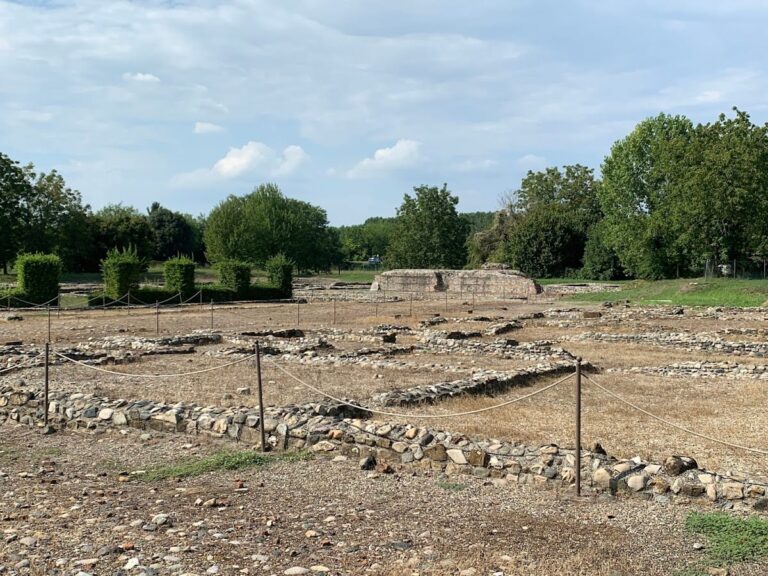
The remains of Leri are distributed across an abandoned village and the former agricultural estate. They include the Cavour estate, a church, a central square, water-management features, commemorative plaques, additional estate buildings, and the remains of a statue. The buildings combine older structures modified by the Benso family with infrastructure reorganized under Cavour for agricultural production and seasonal workers. By the period described, the estate stood open and abandoned, while the Galileo Ferraris power station occupied part of the wider territory.
Estate Complex
Cavour Estate
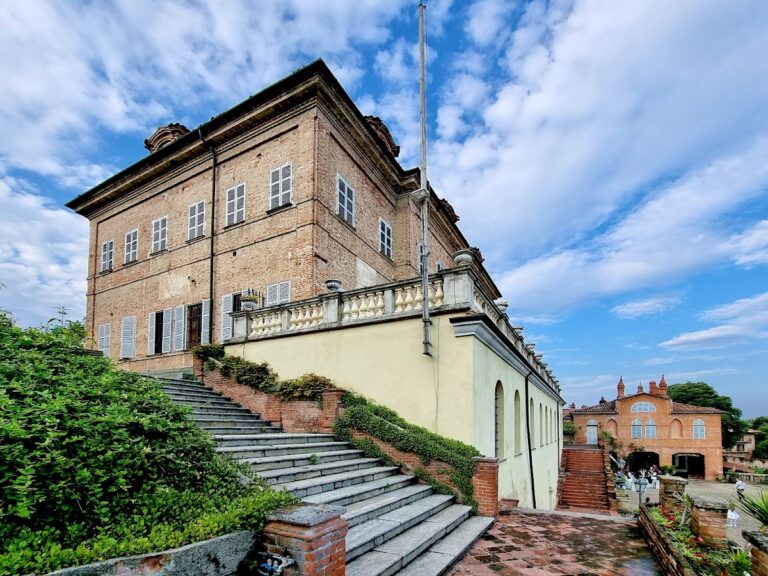
The Cavour estate is a richly decorated complex with a documented facade, courtyard, interiors, and decorated ceilings. Its older buildings were architecturally altered by the Benso family, and the complex was later reorganized under Cavour’s management. Dining halls and dormitories formed part of the infrastructure intended for seasonal and nonlocal workers. The principal complex belonged to an estate extending over more than 380 hectares, with associated agricultural territories at Montarucco and Torrone, the San Basilio area, and woodland near Trino.
Medieval Grange
The Leri grange formed the medieval agricultural core of the settlement. The 1179 acquisition document also referred to a fortified center, or castrum, connected with the grange, but the fortified center has since disappeared. The surviving estate landscape therefore contains the history of the monastic farming center while also reflecting later rebuilding and agricultural reorganization.
Village and Religious Features
Church
A church stands within the abandoned village. Its interior was heavily damaged by vandalism in March 2016, and the building was among the structures entered and stripped. The church reflects Leri’s religious history, which included its establishment as a Cistercian center of worship in 1457 and its later status as a parish toward the end of the sixteenth century.
Central Square and Estate Buildings
Other features of the village include a central square and additional estate buildings. A modern building was recorded beside the small church. The wider complex also includes a sundial and a central weir, linking the built remains with the water systems that supported the estate’s agricultural organization.
Commemorative Features and Industrial Landscape
Plaques and Statue
The site includes a commemorative plaque or tablet relating to Camillo Cavour and a plaque installed in 1961 for the centenary of Italian unification. Another plaque was recorded as removed or lost. Inside the estate, the remains of a statue of Cavour were also recorded.
Power Station
The Galileo Ferraris thermoelectric power station occupies part of Leri’s territory. Its tall cooling towers distinguish the modern industrial component of the landscape from the older agricultural complex and village buildings. The station replaced the original plan for a second nuclear facility at Trino after the 1987 referendum led to the construction of a combined-cycle power station instead.
Nearby sites