Blairquhan Castle: A Regency Country House in Scotland


Site at a Glance
- Rating
- 4.6
- Popularity
- Very Low
- Country
- United Kingdom
- Primary era
- Modern
- External website
- Open
- Eras represented
- Modern
- Civilizations
- British
- Site type
- Domestic
- Remains
- Castle
On this page9 sections
History
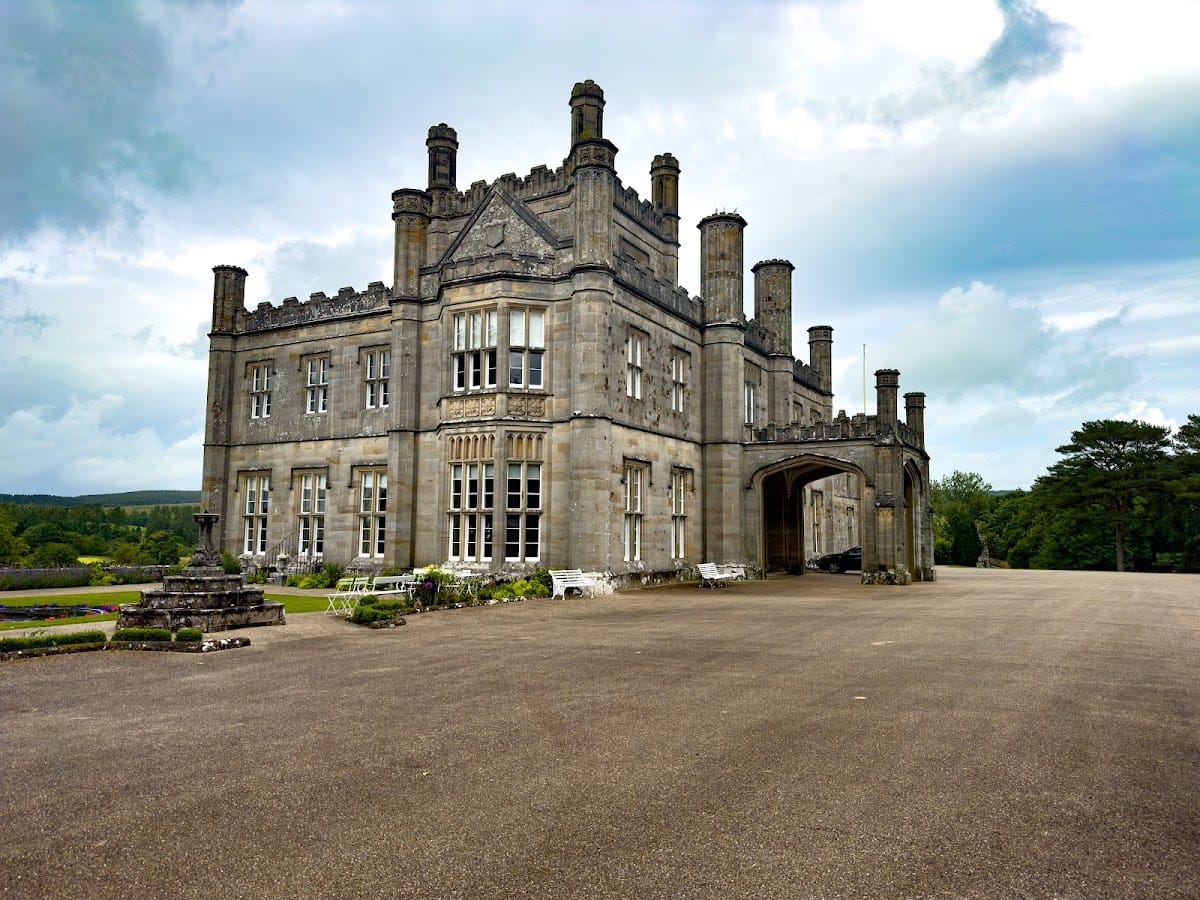
Blairquhan Castle is a Regency-era country castle in Scotland, near Maybole in South Ayrshire, whose present mansion was designed in a Tudor Revival style by the Scottish architect William Burn and completed in 1824. It replaced an earlier castle associated with several successive families and became the historic home of the Hunter-Blair Baronets.
Medieval and early modern castle
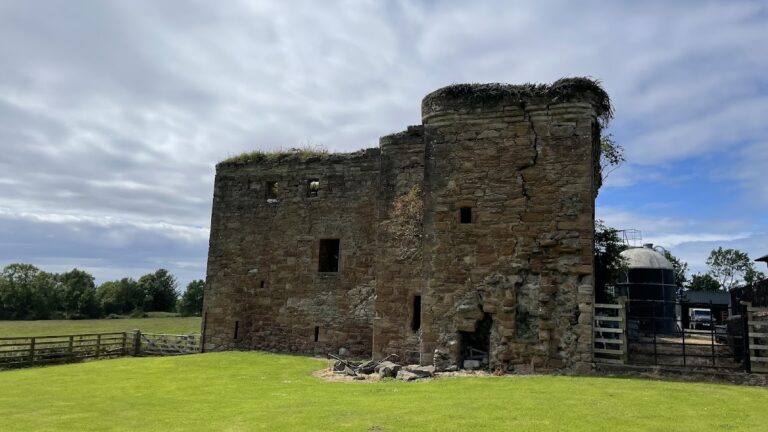
The McWhirters built the first tower house at Blairquhan around 1346. The Kennedys later inherited the estate through marriage and constructed the remainder of the old castle around 1573. The Whitefords took possession in the early seventeenth century, continuing the estate’s occupation through another phase of family ownership.
The Hunter-Blair family
In 1798, after the effects of a banking crash, the Whitefords sold Blairquhan to Sir David Hunter Blair, 3rd Baronet. A baronet held a hereditary British title below the rank of baron and outside the peerage. Sir David was the second son of Sir James Hunter Blair, 1st Baronet, who had married Jean Blair, daughter and heiress of John Blair of Dunskey in Wigtownshire, in 1770. When Jean inherited her father’s estate in 1777, the family adopted the additional surname Blair.
Sir David Hunter Blair had made part of his fortune in Jamaica and jointly owned Roselle Estate in St Thomas-in-the-East. In 1820, he commissioned William Burn to design a new house at Blairquhan. The old castle had become ruinous through earlier fires and neglect, so it was demolished, and the new mansion was completed four years later.
Preservation and later ownership
Blairquhan remained the home of the Hunter-Blair Baronets until late 2012, when Sir Patrick David Hunter-Blair, 9th Baronet, sold it to Ganten Scotland, a subsidiary of a Chinese mineral-water-bottling company. James Hunter Blair (1926–2004), the younger brother and heir presumptive of Sir Edward Hunter-Blair, 8th Baronet, devoted much of his life to restoring the castle and preserving its estate. An heir presumptive is expected to inherit if succession occurs, although that position can be displaced by a closer heir. James also opened the 2,000-acre estate for private functions, including weddings, corporate events, and filming.
Blairquhan is protected as a Category A listed building, Scotland’s highest level of listed-building protection for buildings of special architectural or historic interest. The listed-building designation dates from 1971. The grounds were added to Scotland’s Inventory of Gardens and Designed Landscapes in 1987, a register of nationally important historic gardens and designed landscapes.
Remains
The present Blairquhan mansion is a Regency-era building designed in a Tudor Revival idiom, a style that reinterprets features associated with Tudor-period architecture. The estate extends across approximately 2,000 acres and includes the house, a kitchen courtyard, a walled garden, veteran or ancient trees, and a long approach beside the River Girvan.
The mansion and former castle fabric
William Burn’s mansion
Completed in 1824, the mansion is the principal surviving building at Blairquhan. William Burn was known for country houses and for adapting historic architectural forms to nineteenth-century buildings. The house contains many antiques and an important collection of paintings by Scottish artists, while decorative mouldings and sculpted stones from the demolished castle were incorporated into the kitchen courtyard.
Estate approach and designed grounds
A drive of approximately three miles, or about five kilometres, approaches the estate from the north along the River Girvan. The grounds include veteran or ancient trees and a walled garden, forming part of the designed landscape associated with the castle.
The Dule tree
An ancient sycamore stands in the castle’s shadow and is thought to be a Dule tree, or gallows tree. Such trees were traditionally associated with the administration of justice and public executions. The sycamore is believed to have been planted in the early sixteenth century during the reign of King James V of Scotland, who ruled from 1513 to 1542. Its formerly spreading crown was heavily pruned in 1997 to prevent the weakened trunk from collapsing completely.