Lnáře Castle: An Early Baroque Palace in Czechia
Site at a Glance
- Popularity
- Medium
- Country
- Czechia
- Primary era
- Early Modern
- Eras represented
- Medieval, Early Modern
- Civilizations
- Habsburg, Habsburg Austria, Holy Roman Empire, Kingdom of Bohemia
- Site type
- Domestic
- Remains
- Castle
On this page9 sections
History
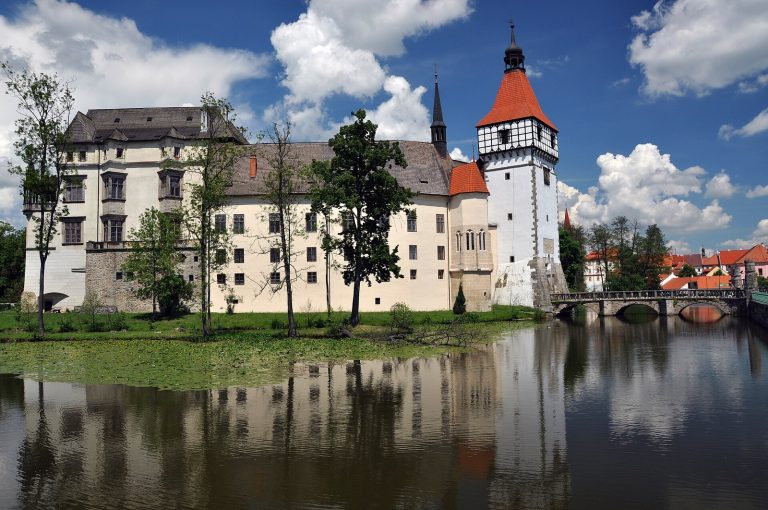
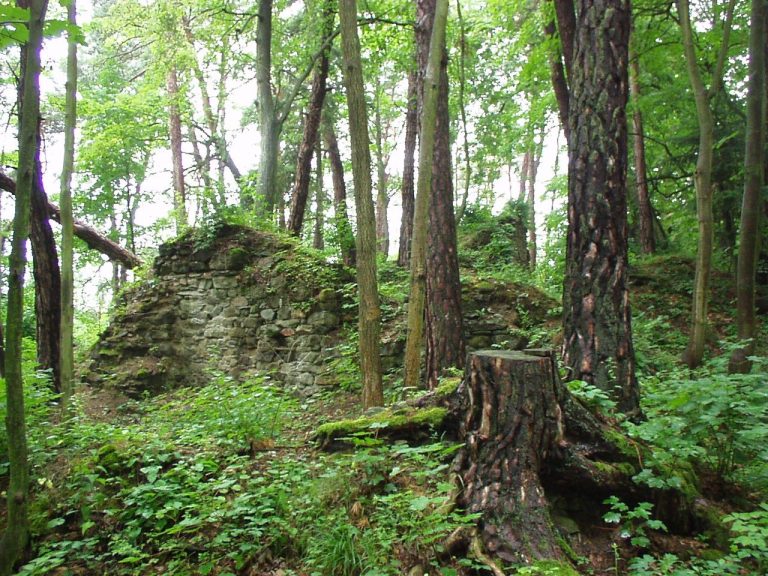
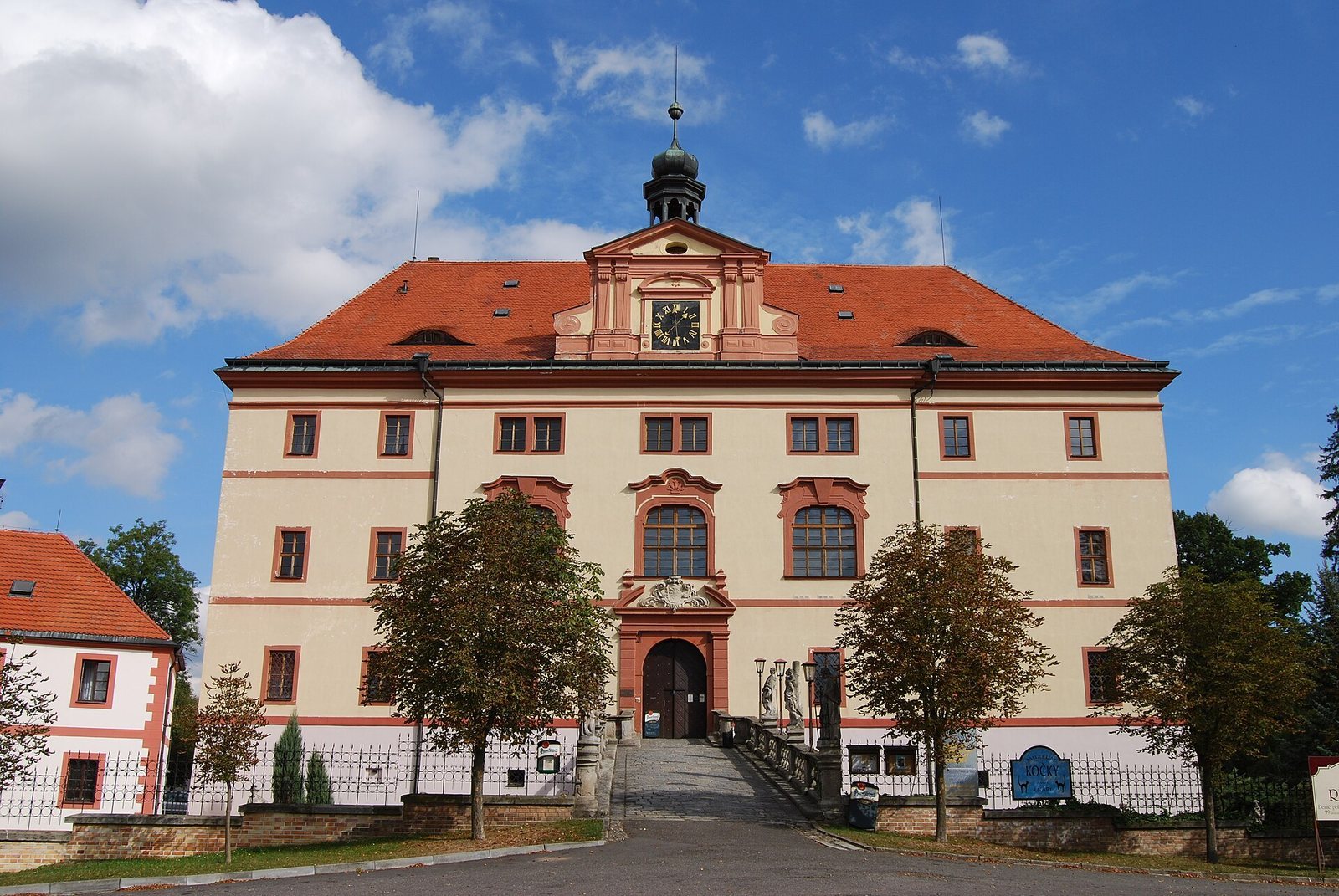
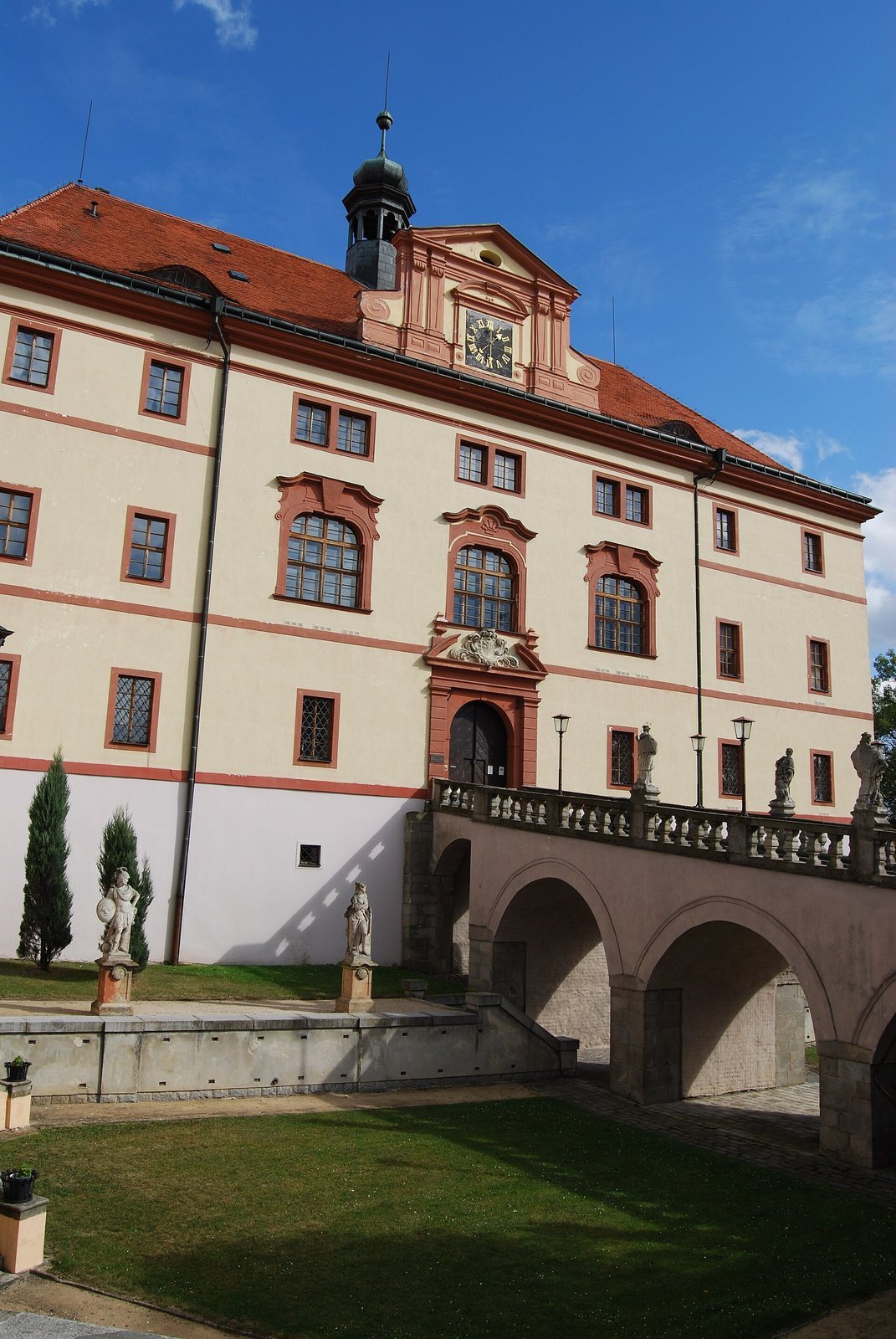
Lnáře Castle, in Lnáře, Czechia, is an early Baroque palace built between 1666 and 1685 on the site of an earlier Gothic fortress. Its history is tied to the noble families who held the estate and to the fishponds that helped build their wealth.
The fortress and its early owners
The Knights of Lnáře were the first owners of the original fortress. Their coat of arms featured a gold key on a blue field. The first owner named in the historical record was Ulrich von Schlüsselburg, a companion of John of Luxembourg, King of Bohemia in the early fourteenth century. Following advice from Charles IV, a later King of Bohemia and Holy Roman Emperor, Ulrich’s descendants established the first fishponds. The family’s wealth grew with the fishpond economy, but the line died out in the early fifteenth century. Wilhelm von Schlüsselburg was its last member.
Hussite conflicts and changes of ownership
The estate later passed to the Zmrzlík von Schweißing family. Peter Zmrzlík von Schweißing supported the Hussites, followers of the religious reform movement associated with Jan Hus, and fought alongside his brother Johann at the Battle of Nekmíř, an early conflict in the Hussite Wars. The brothers later broke with the Taborites, a radical Hussite faction. At the Battle of Lipany, a conflict between Hussite groups and their opponents, they fought on the Catholic side.
On 25 April 1564, the Protestant Wenzel von Zmrzlík sold the castle to Zdeniek VI von Sternberg of Blatná before the Crown could confiscate the estate. Wenzel fled to Germany with his money and died there as the last of his family. In 1577, Zdeniek’s sons transferred the heavily indebted estate to their brother-in-law, Wolf Neuburger von Kolowrat, who further developed its fishpond economy. Wolf’s son sold it to Adam von Sternberg on 15 September 1617. Adam, a Catholic, became a burgrave, an official with administrative or governing duties, after the Battle of White Mountain, a major 1620 battle in the Bohemian Revolt.
The palace and later estate
In 1660, Eva Johanna, daughter of Adam’s son Jaroslav Wolf, sold the lands to Alexei, Baron von Vratislav. Jaroslav was later murdered by his chamberlain. Alexei began building an early Baroque palace on the site of the original fortress in 1666, and construction was completed in 1685.
The estate subsequently passed through the Czernin, Künigl, and Sporck families, then to Leopold Leonhard Raymund von Thun, the last Prince-Bishop of Passau. A Prince-Bishop held both religious office and secular princely authority. He sold the property to the barons Linker von Lützenwick, who later transferred it to the lords of Lilgenau.
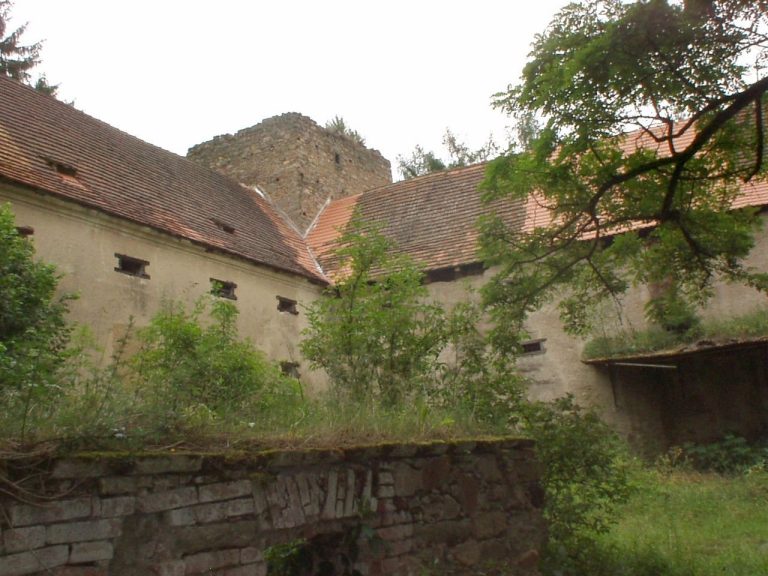
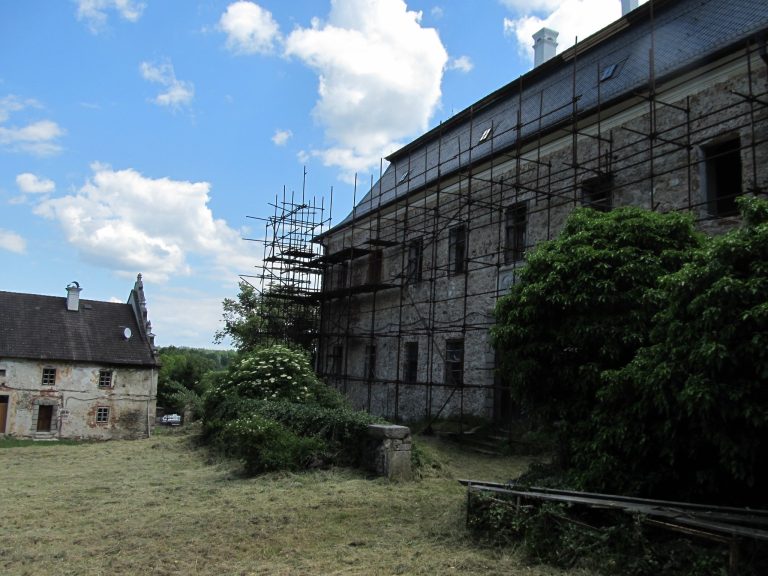
Karel Bonda bought the estate in 1923 and sold it in 1936 to Prague lawyer Jindřich Vaníček. The castle was nationalized in 1948 and fell into disrepair. Restoration work took place from 1972 to 1985, and the property returned to the previously dispossessed Vaníček family in 1993.
Remains
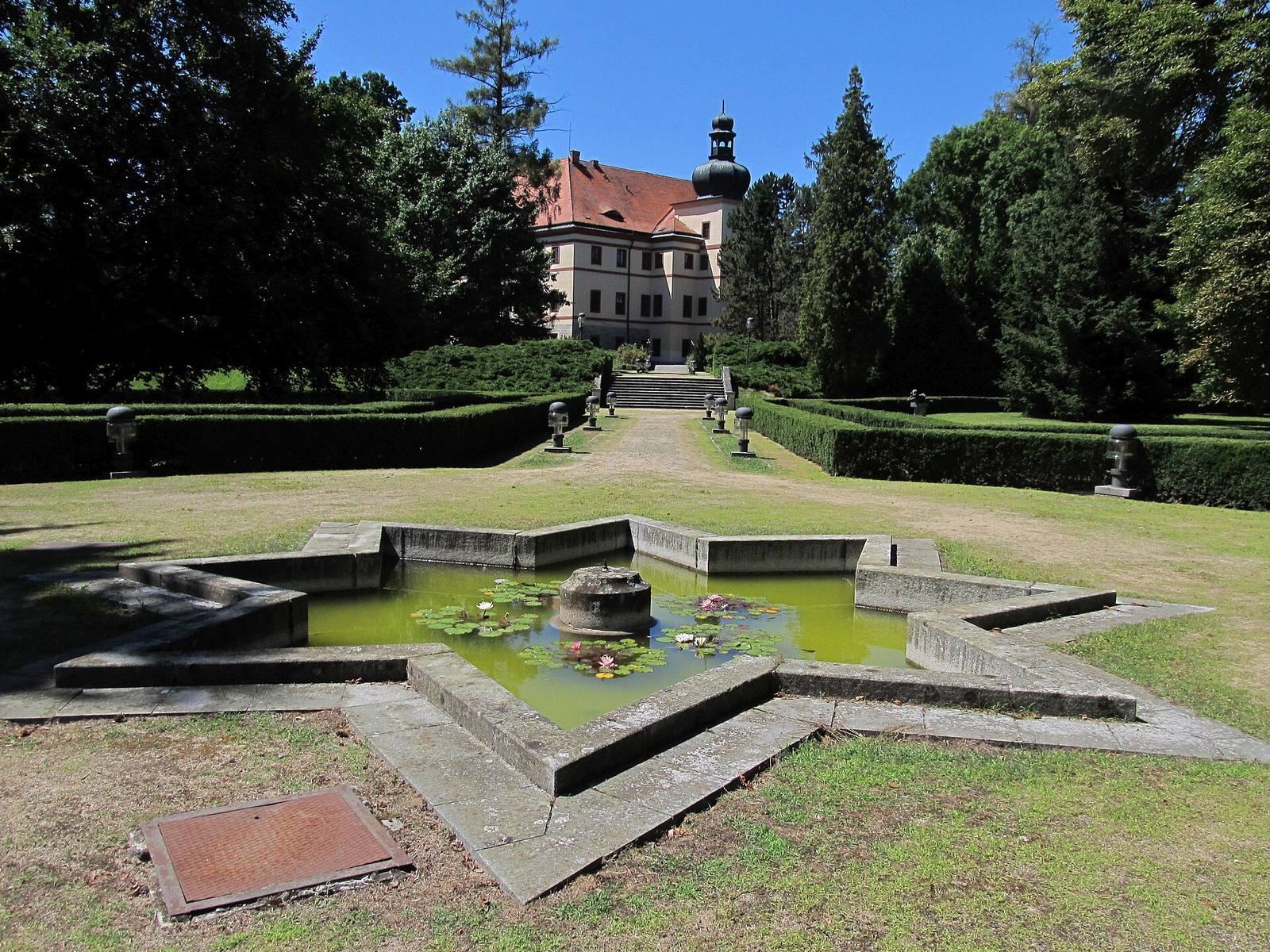
The early Baroque palace stands on the site of the earlier Gothic fortress. Gothic and Baroque are distinct historical architectural styles, and early Baroque describes an early phase of the latter. The castle complex also includes decorated rooms, a gallery, the Chapel of St. Joseph, a hall beneath a tower, and a garden.
Interiors and grounds
Grand hall
The grand hall has ceiling frescoes by Giacomo Tencalla, an Italian Baroque painter. Their subjects come from mythology.
Other interiors
Frescoes also decorate smaller rooms. The castle’s gallery presents the legacy of the noble families who lived there, and a hall beneath the tower has a coffered ceiling.
Chapel and garden
The complex includes the Chapel of St. Joseph and a castle garden.