Ljungby Church: A Medieval Parish Church in Sweden
Site at a Glance
- Country
- Sweden
- Primary era
- Medieval
- Eras represented
- Medieval, Early Modern, Modern
- Civilizations
- Swedish
- Site type
- Religious
- Remains
- Church
On this page11 sections
History
Origins and medieval role
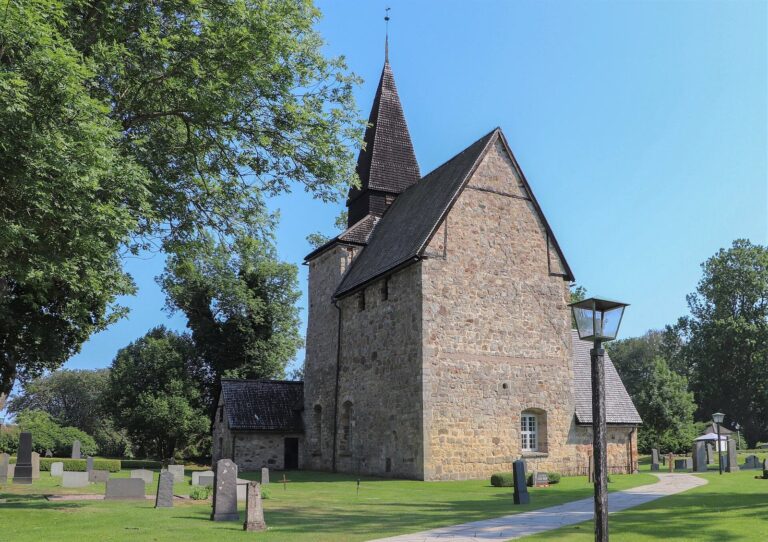
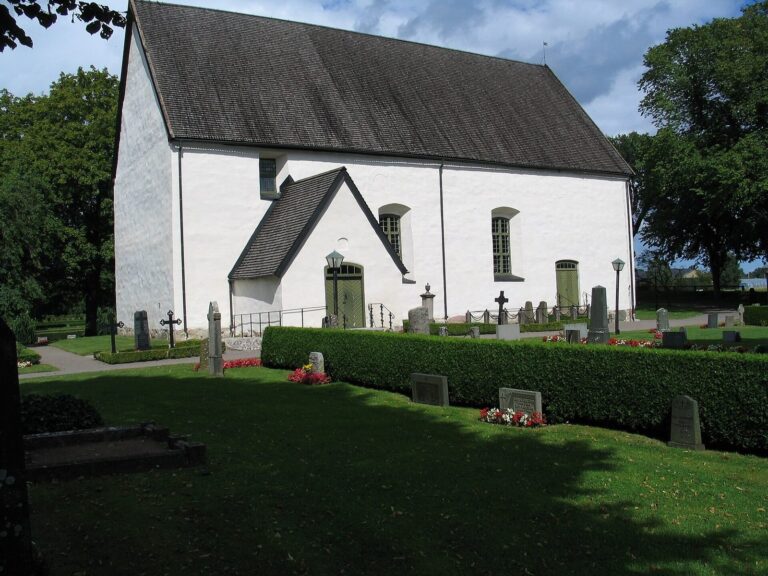
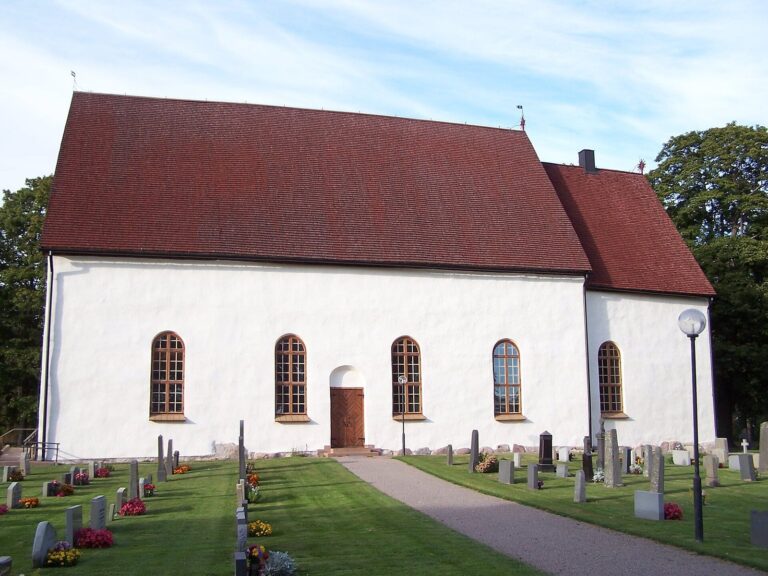
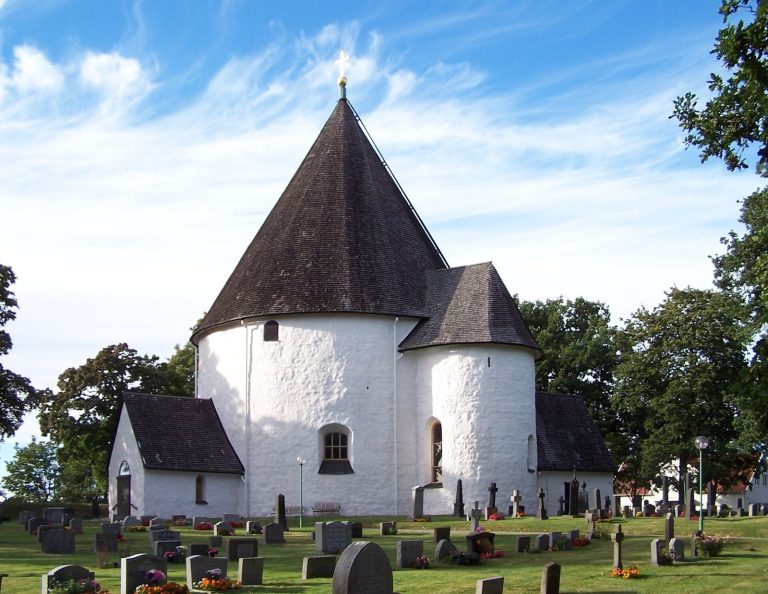
Ljungby Church is a medieval church in Ljungbyholm, Sweden. Its original stone building was constructed in the early 12th century, and the church was consecrated during that century. It may have served a local estate believed to have existed in the early medieval period. A runestone now set into the tower has also been cited in support of this interpretation.
The church was greatly enlarged late in the 13th century. In the Middle Ages it served as the dean’s church in Möre. A dean was a senior cleric with oversight of a group of parishes. The church was also closely connected with the bishop’s estate at Linköping. Masonry analysis from later exterior renovation supports interpreting it as a sister church to nearby Hossmo. It was among the largest churches in the Kalmar area.
Fire, rebuilding, and renovation
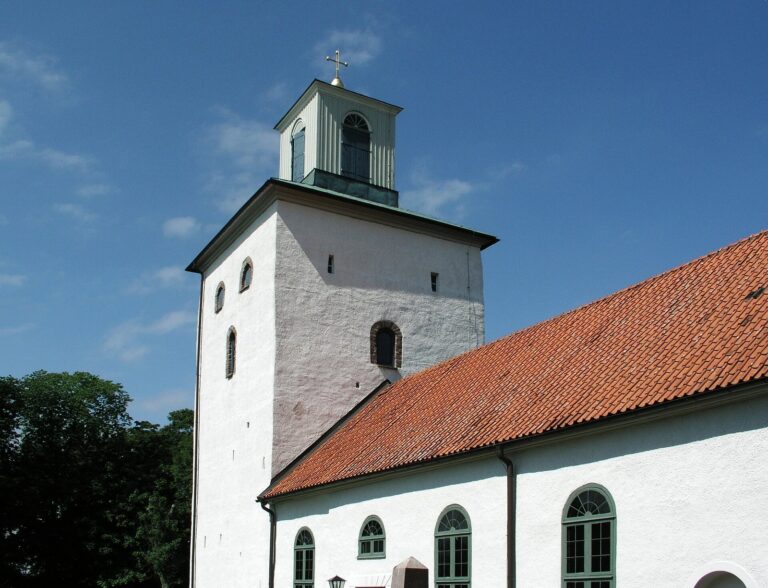
A fire damaged the church in 1654. Lightning struck it in 1757, prompting a radical rebuilding. Bishop Karl Gustav Schröder reconsecrated the church on the First Sunday of Advent in 1767. In 1857, extensive renovation added a tower, replacing a separate bell tower that had stood since the late 16th century. Further renovation in 1988 changed the interior.
Parish and church administration
From the 17th century, Ljungby was a prebendal pastorate for theology lecturers at Kalmar gymnasium. A prebendal pastorate assigned income or an appointment to support a clerical officeholder. From 1830, the arrangement applied to the bishops of Kalmar diocese, a territorial church jurisdiction. These officeholders also served as parish priests and received income from the pastorate alongside their other duties. Some bishops lived in Ljungby parsonage. Bishop Henry William Tottie, who died in 1913, was the last to hold the parish priest’s office under this arrangement.
When Kalmar diocese became part of Växjö diocese in 1915, the prebendal status ended and the parish received its own parish priest. Ljungby Church is now the parish church of Ljungby parish in the Church of Sweden and Växjö diocese. It formerly served the historical parish of Ljungby.
Remains
Setting and main structure
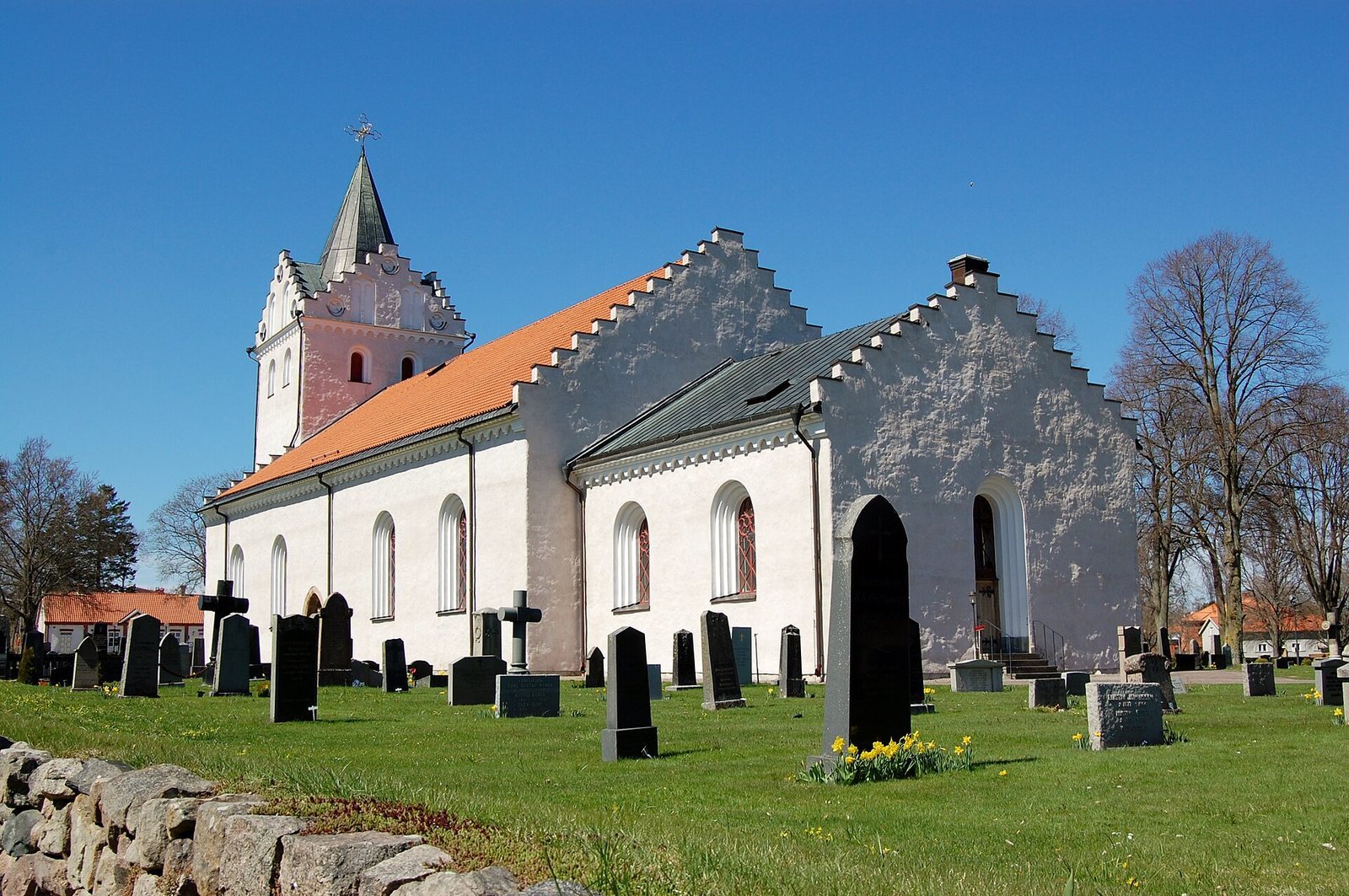
The present church has a rectangular nave, a choir at the east end, and a tower at the west. Its medieval predecessor was a three-aisled building constructed of natural stone. The church stands just north of the Ljungby River, southwest of Kalmar. The tower, nave, and choir have stepped gables. Wooden vaults replaced the earlier vaults and pillars after the 1757 rebuilding.
Tower and inscription
Runestone Sm 169 is built into the tower. Its inscription says that Fet and Ragna had stones inscribed in memory of Vinterlide.
Interior and furnishings
Chapel and seating
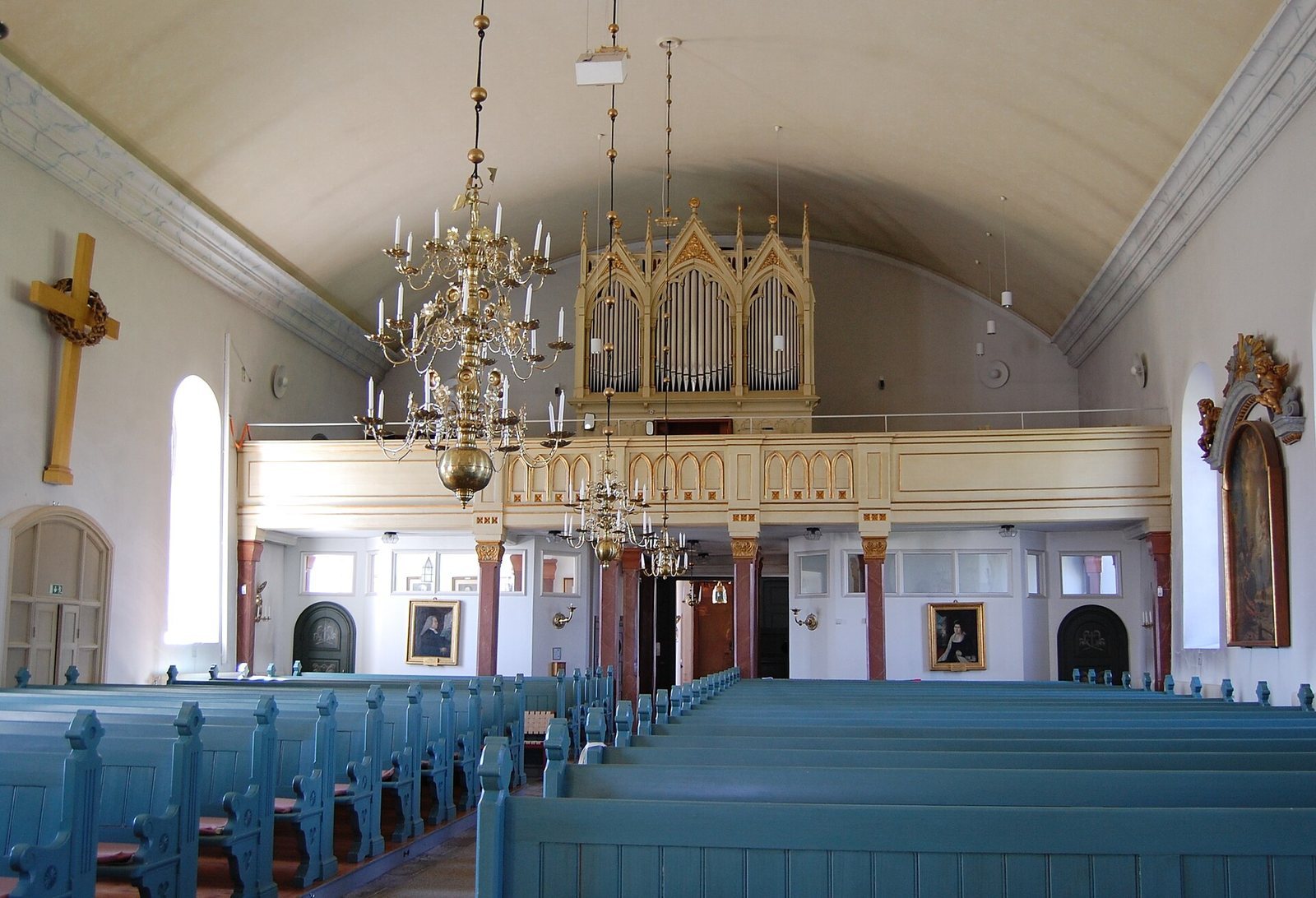
The choir also functions as a chapel. Its furnishings include a free-standing altar added in 1988, a baptismal font acquired that year, and open pews.
Altarpieces, pulpit, and crucifix
Jonas Berggren made an altarpiece in 1767, and another, by Nils Asplund, dates to 1924. A Neo-Gothic pulpit with a sounding board was added during the 1857 renovation. The sounding board above the pulpit directs the preacher’s voice into the church. A crucifix carved by Arvid Källström hangs above the chancel arch.
Organs
Lars Wahlberg of Vimmerby built an organ in 1756, which was destroyed in a church fire in 1758. Pehr Schiörlin of Linköping made a 25-stop organ in 1802, with stops that control the sounds produced by its pipes. Åkerman & Lund of Stockholm built an 18-stop organ in 1891. The current mechanical organ, built by Olof Hammarberg of Gothenburg in 1964, uses physical linkages to operate its pipes and incorporates the facade from the 1891 instrument.