Hossmo Church: A Medieval Parish Church in Sweden
Site at a Glance
- Country
- Sweden
- Primary era
- Medieval
- Eras represented
- Medieval, Early Modern, Modern
- Civilizations
- Swedish
- Site type
- Religious
- Remains
- Fortified Church
On this page12 sections
History
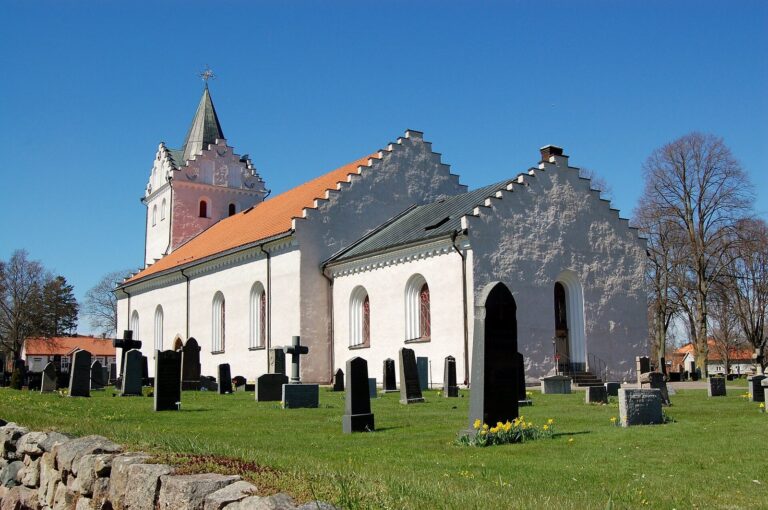
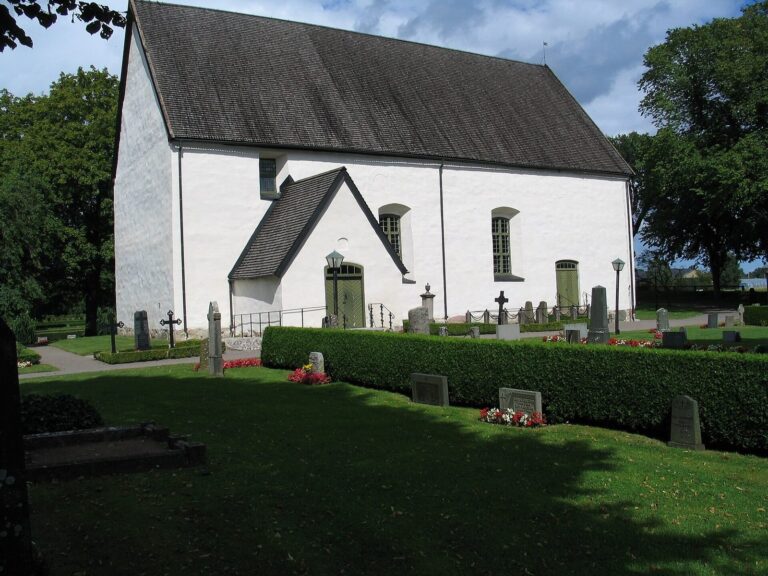
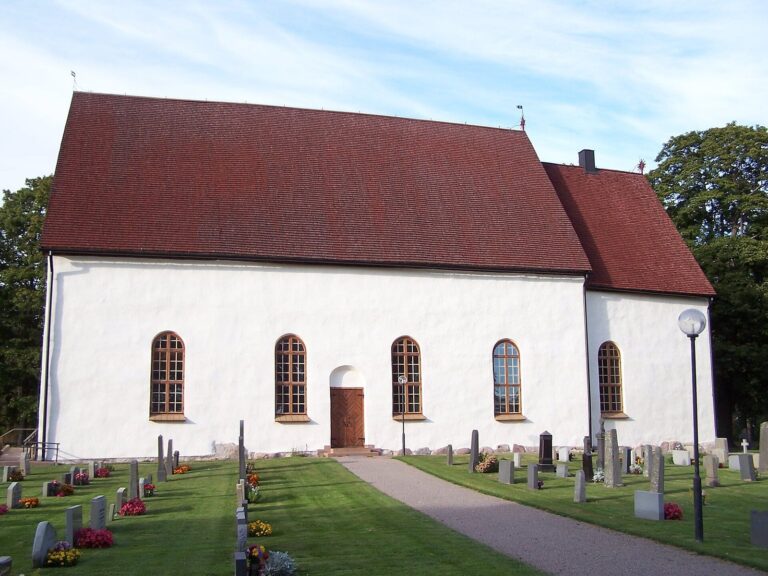
Hossmo Church is a medieval parish church in Hossmo, south of Kalmar, Sweden. A small stone church followed a probable timber church around 1120 and was consecrated in the twelfth century. It has served as Hossmo’s parish church since the Middle Ages, and its construction has been associated either with royal authority or with a local magnate family.
Early settlement and medieval church
In the later Iron Age and early medieval period, Hossmo is regarded as the core of a central-place complex, a settlement area focused on political, economic, or religious activity. The stone church was built around 1120, following the probable timber predecessor.
The church may have served a defensive purpose sometime between 1200 and 1400, though this interpretation remains unproven.
Military role and present use
During conflicts surrounding the Kalmar Union, a political union of Denmark, Norway, and Sweden, in the early sixteenth century, Hossmo Church served as a garrison and a flanking strongpoint for Kalmar.
The church belongs to the Church of Sweden, a Lutheran church, and the Diocese of Växjö, a regional church jurisdiction. It serves Hossmo parish, a local church community.
Remains
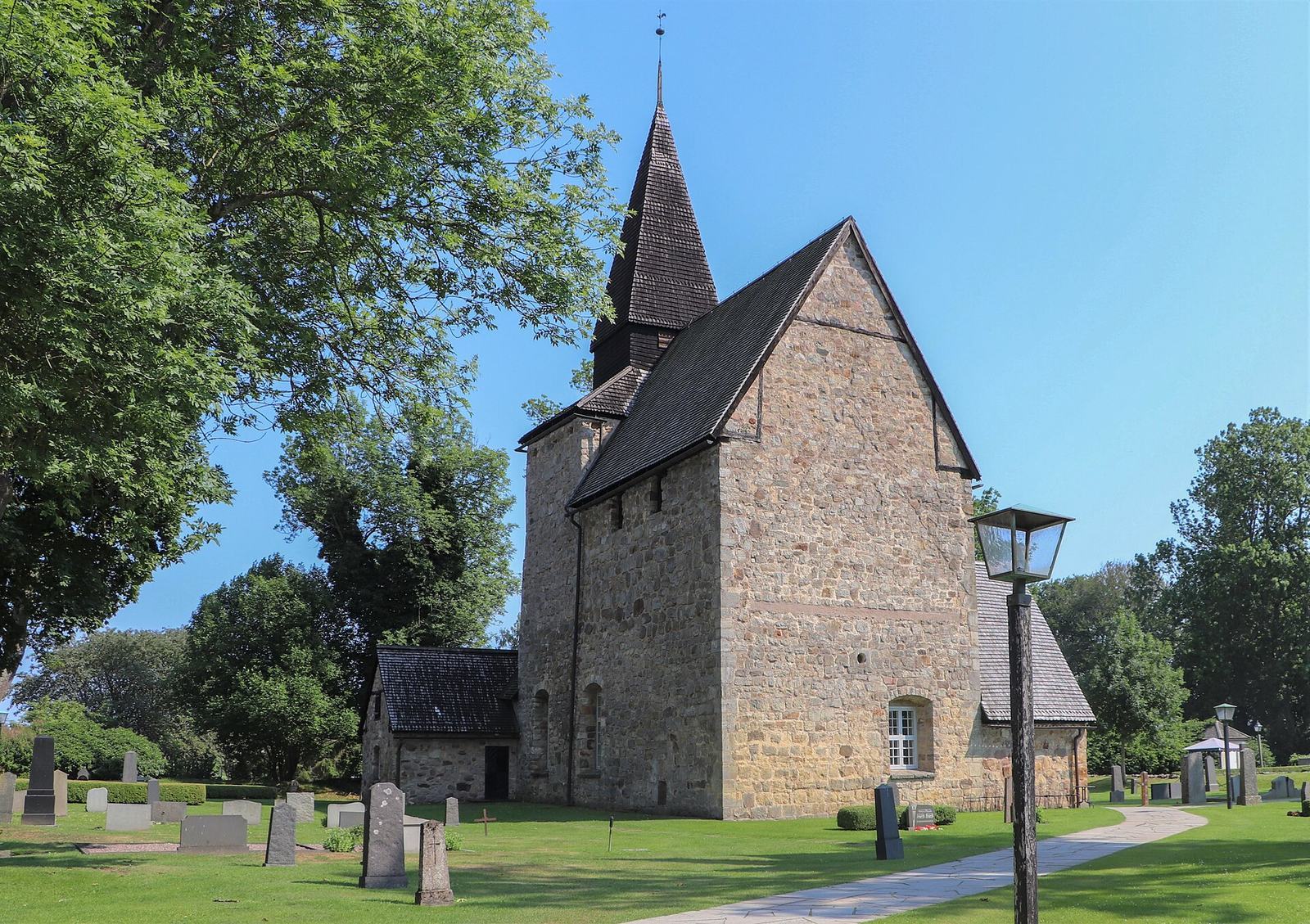
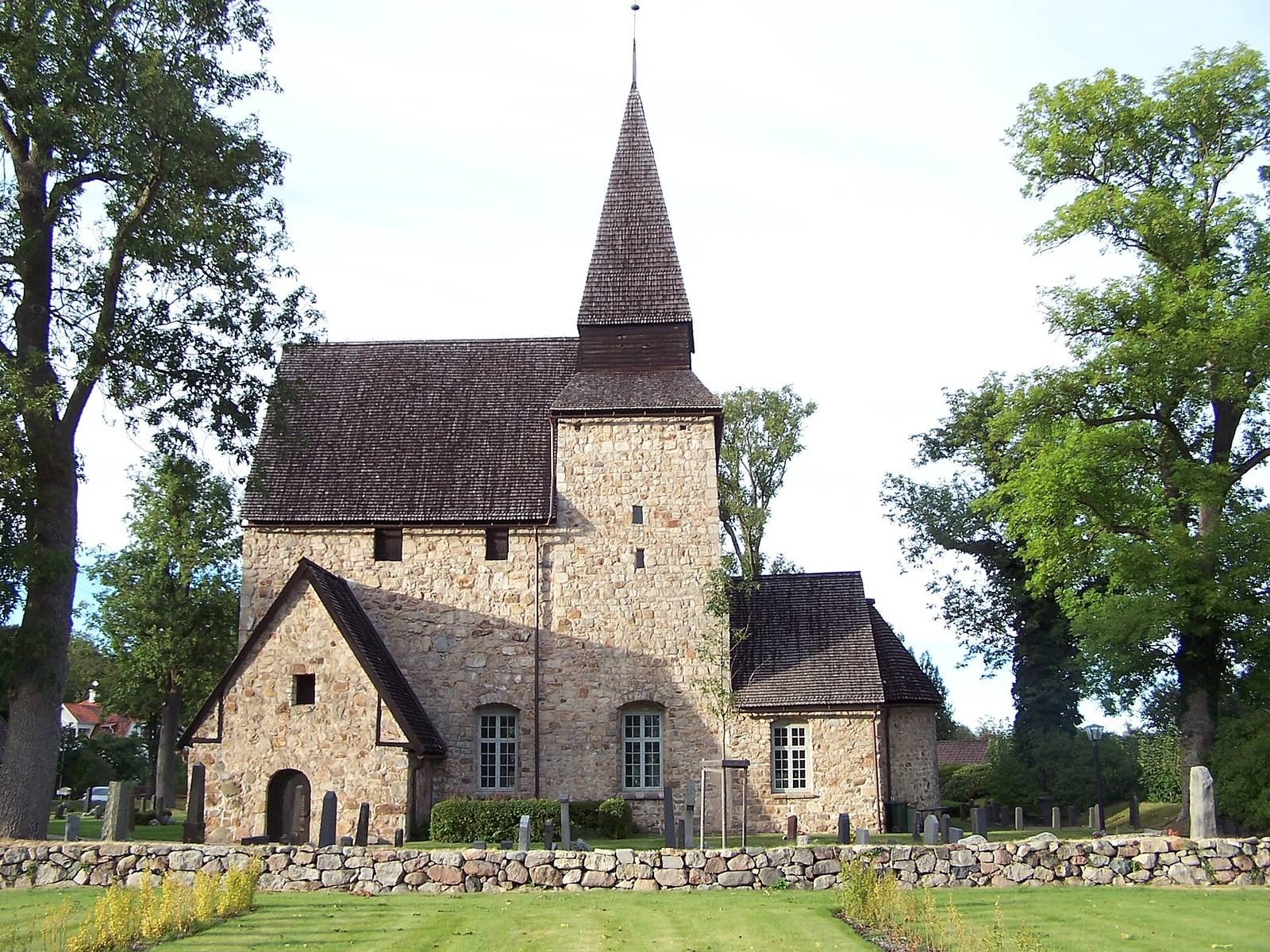
Hossmo Church is a small masonry building arranged as a nave, chancel, and apse, with a tower added after the original church. Its interior retains furnishings and fittings from several periods.
Church fabric and archaeological evidence
Tower and possible defenses
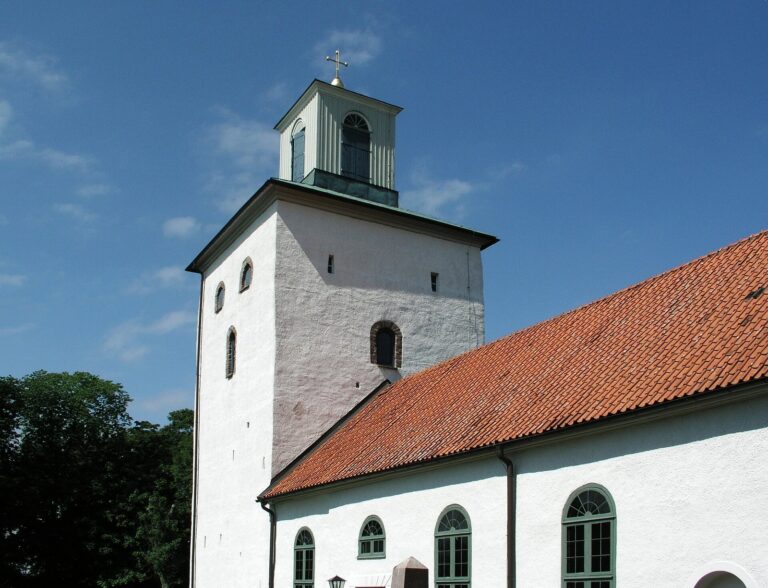
The tower’s upper storey dates to around 1240. Openings in its walls have been interpreted as possible loopholes, a feature that has contributed to the suggestion that the church may have been fortified.
Burials and settlement evidence
Several Eskilstuna cists, coffin-like stone grave monuments, surrounded the church. They date to the second half of the eleventh century. An archaeological investigation during the churchyard expansion in 2003 identified a probable moat that appears to have enclosed the church. It also found settlement traces of uncertain date and a furnace for making iron from ore without fully melting it.
Interior furnishings
Altar and baptismal font
The church has a free-standing altar with a sunburst. Its original altar slab, which contains a cavity for relics, is now set into the apse floor. A sandstone baptismal font dates to the early thirteenth century.
Carved furnishings and crucifixes
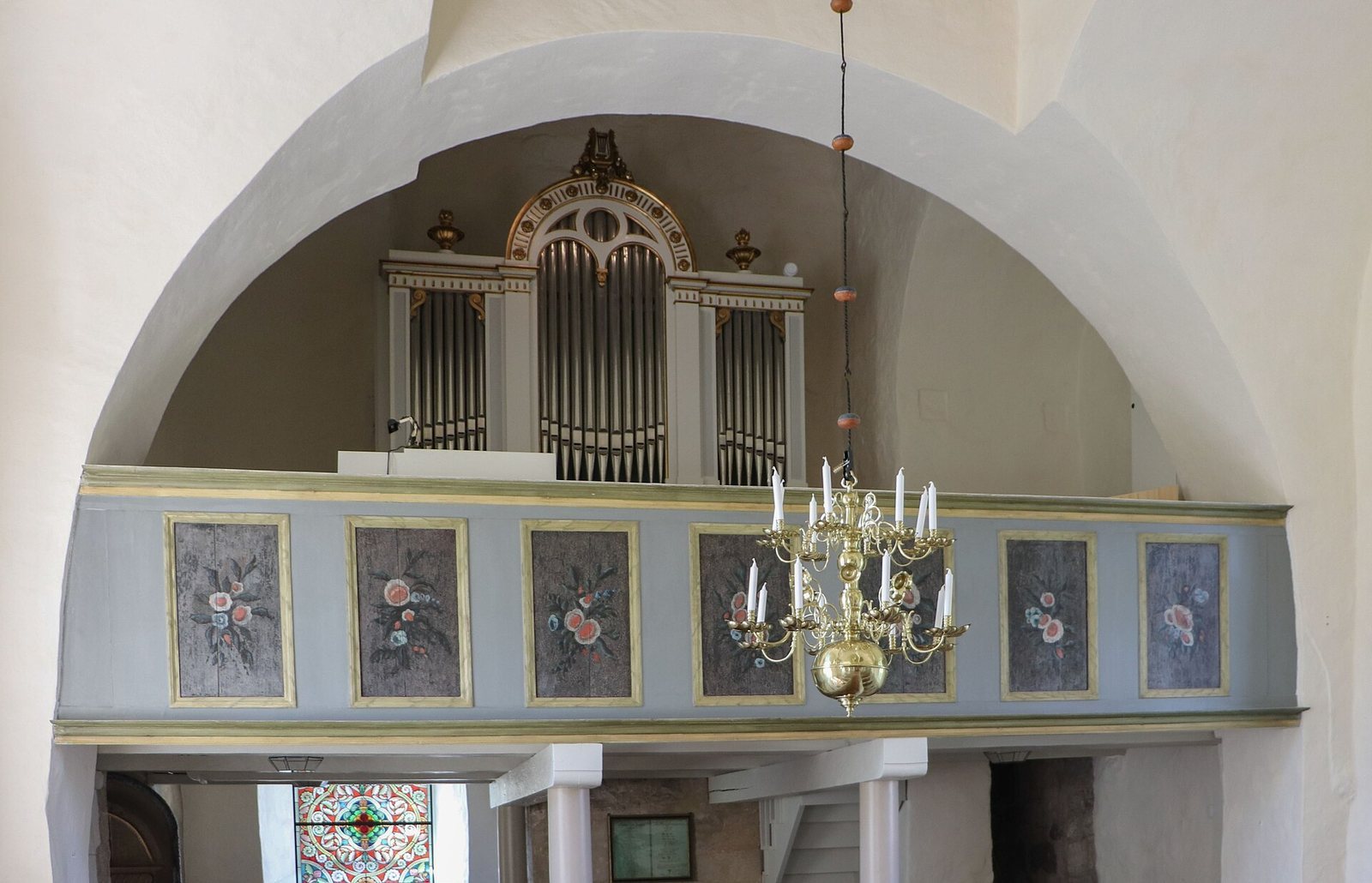
The former altarpiece, which depicts the Baptism of Jesus, and a simple Rococo pulpit, in an ornate eighteenth-century style, were made in 1768 by woodcarver Jonas Berggren. A crucifix stands in the chancel arch, the opening between the chancel and nave, and the church also has a processional crucifix. Floral designs decorate the panels of the organ gallery, and the church has enclosed pews.
Apse windows
During an interior renovation in 2020, the apse was exposed and its original window was reconstructed. Nineteenth-century glass from windows formerly in the apse is now set in a recess in the west wall.
Organs
An organ built by Åkerman & Lund in 1880 had six stops, or selectable sound sets, one keyboard, and an attached pedal. A replacement made in 1953 by A. Magnusson’s organ workshop had eleven stops, two keyboards, and a pedal. In 1981, Olof Hammarberg of Gothenburg built a twelve-stop organ behind the earlier façade. That instrument was taken out of use in 2020, and its façade became part of a cabinet for textile storage. The current instrument is a digital Allen Bravura.