Les Bignes Dolmen: A Neolithic Burial Complex in Normandy
Site at a Glance
- Popularity
- Very Low
- Country
- France
- Primary era
- Stone Age
- Eras represented
- Stone Age
- Civilizations
- Unclassified
- Site type
- Burial
- Remains
- Tomb
On this page9 sections
History
Neolithic burial complex
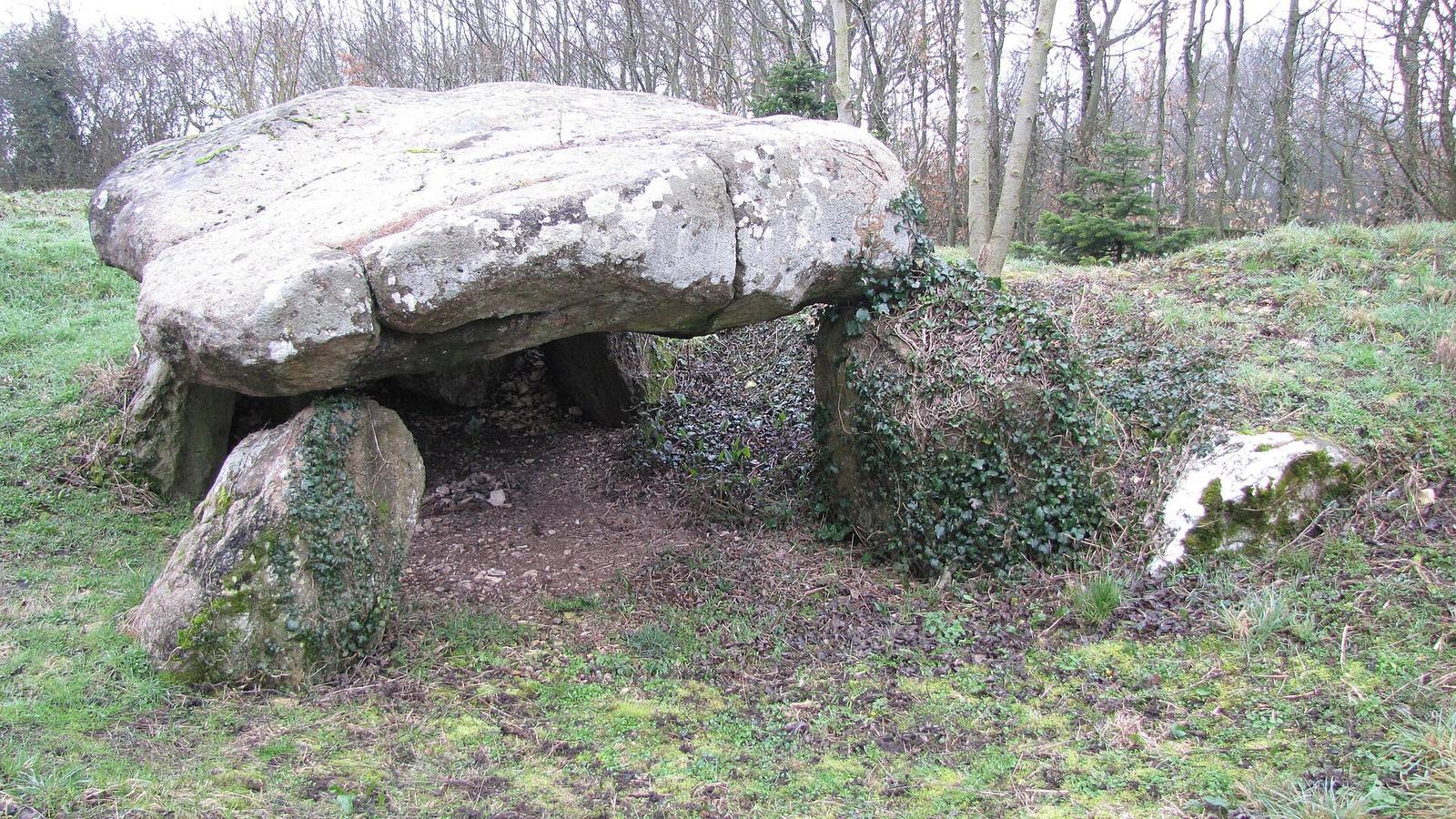
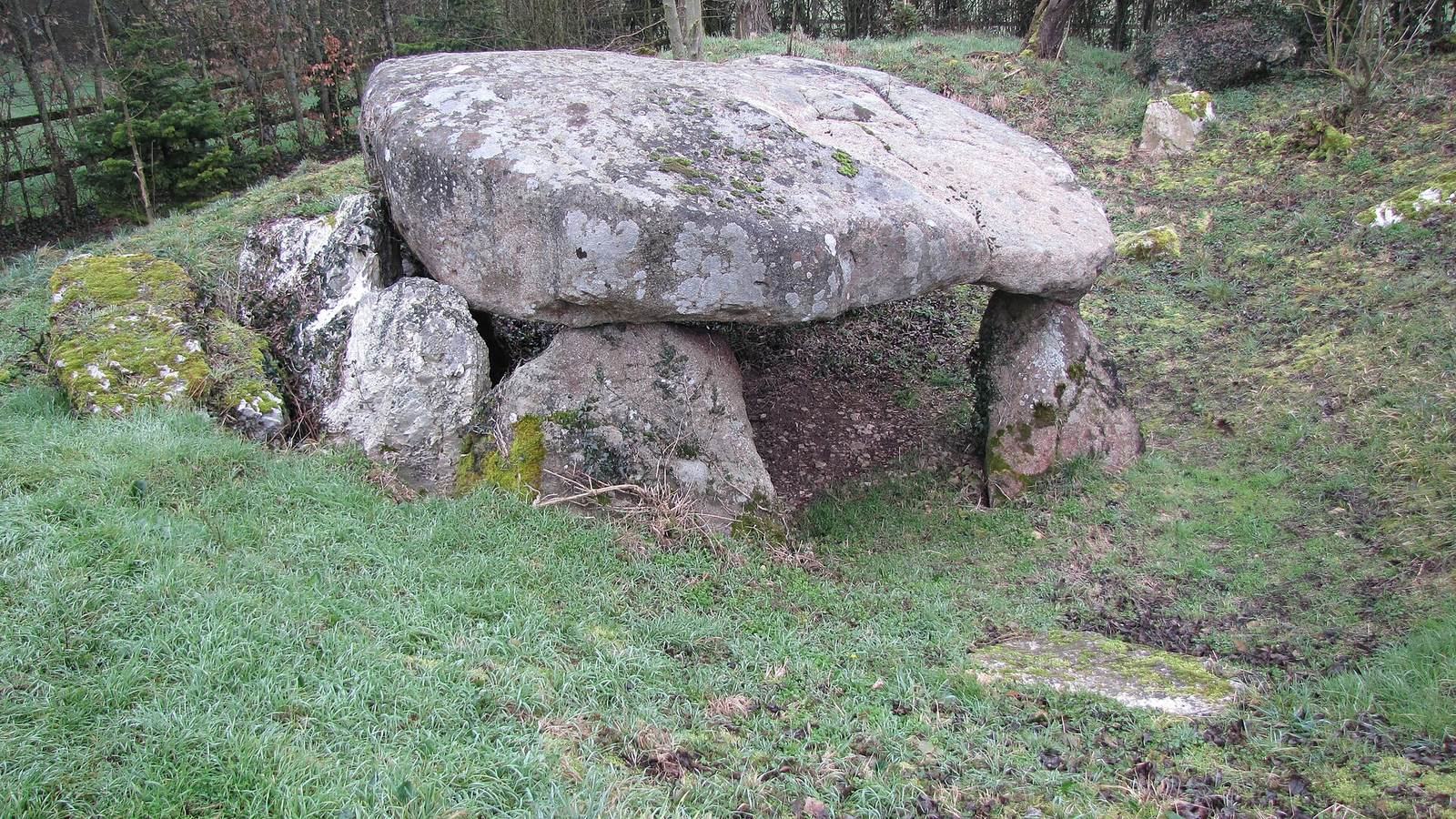
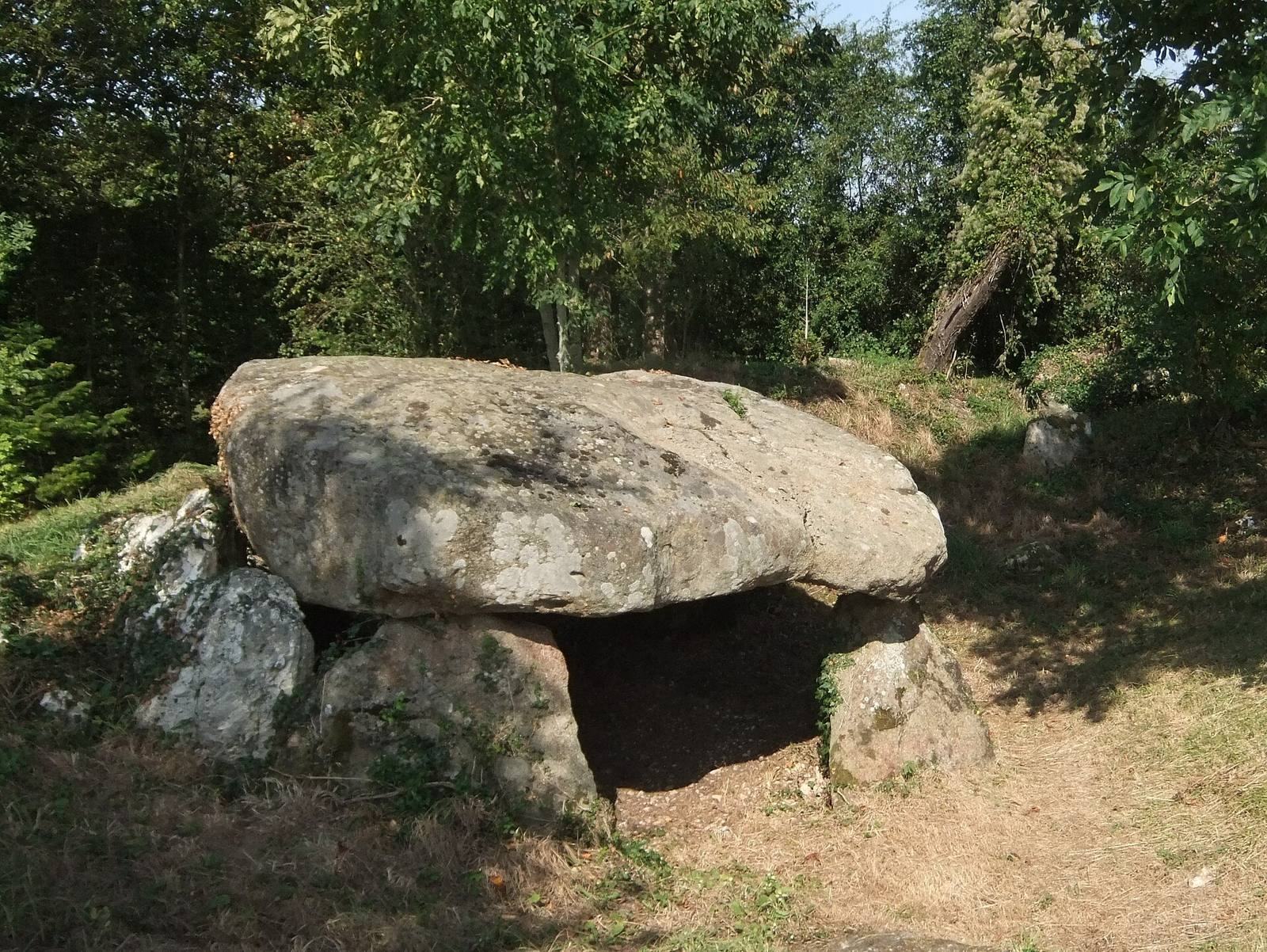
Les Bignes dolmen, also known as Pierre des Bignes, is a Neolithic burial complex on the boundary between Habloville and Neuvy-au-Houlme in Normandy, France. A dolmen is a prehistoric tomb made from upright stones supporting a large cover stone. The complex also included a separate burial cairn, a mound of stones sometimes built over a burial place. Its three mounds stood at the corners of a scalene triangle. Agricultural work later destroyed the third mound. The chambered mound is assigned to the Chasséen, a Neolithic archaeological culture identified in France, by comparison with similar discoveries.
Discovery and interpretation
The dolmen was discovered in 1780 and had been pillaged long before. Local tradition held that a fabulous treasure lay within, guarded by a spirit. In the nineteenth century, natural grooves and cup-shaped marks on its cover stone were mistakenly taken as signs of human and animal sacrifice, an interpretation shaped by beliefs of that period.
Twentieth-century disturbance and investigation
France classified the complex as a historic monument, a legal heritage-protection designation, on 4 November 1931. By 1933, stone extraction at the chambered mound had exposed human bones. During the Falaise Pocket, a major 1944 battle in Normandy in which Allied forces encircled German troops, the mound was used as a grave for German soldiers. Archaeologist and prehistorian Bernard Edeine led a rescue excavation there in 1963.
Remains
The burial complex combined a dolmen chamber with a separate chambered cairn. Its rounded mounds rose above the surrounding plain, giving rise to the local name Pierre des Bignes; in the local dialect, bigne means a bump.
Dolmen
Four upright stones bound the rectangular burial chamber, and three still support its massive cover slab. The slab is a single block of mica-rich granite from the Putanges-Pont-Écrepin region. It measures 3.25 m long and 2.95 m wide, with an average thickness of 0.80 m. The uprights are granite or quartzite. Natural grooves and cup-shaped hollows mark the slab. A hollow on the mound’s northwest side resulted from agricultural work rather than from the original burial construction.
Chambered cairn
Stone construction
Victor Mousset’s 1933 description gives the mound’s dimensions as 25 by 19 m and its height as 4 m. The original structure was a limestone cairn with a carefully built facing wall 2.25–2.30 m thick. The wall now stands 0.80–0.95 m high. At the cairn’s base is a 0.30 m layer of clayey soil, which includes a 10–15 cm band of charcoal and a few animal bones.
Burial remains
Human remains from throughout the cairn represent about twelve individuals, including three complete skulls, other skull remains, and bone fragments. The dead were placed in varied positions and orientations. Some rested on limestone slabs or lay in pits made within the cairn. Some pits were covered with stonework laid in courses that project inward, while others had a stone slab as a cover.